

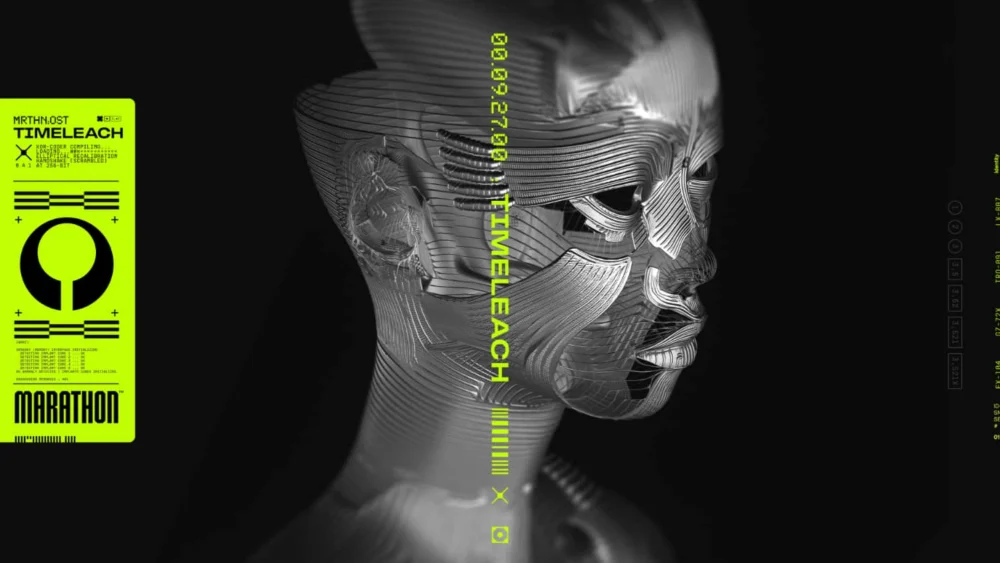
Bungie, the veteran studio behind the Halo and Destiny franchises, has released a comprehensive "Developer Insights" featurette focusing on the auditory identity of its upcoming title, Marathon. The video highlights the collaboration with acclaimed composer Ryan Lott, known for his work with the experimental band Son Lux and his Academy Award-nominated score for Everything Everywhere All At Once. In this behind-the-scenes look, Lott details a highly experimental approach to the game’s soundtrack, utilizing a combination of traditional acoustic manipulation and cutting-edge electronic hardware. The announcement serves as a pivotal update for the project, which reimagines the 1994 Macintosh classic as a high-stakes, sci-fi extraction shooter. According to the studio, the full soundtrack and score are scheduled for a streaming release on March 6, 2025, preceding the game’s official launch on September 23, 2025.
The Sonic Architecture of a Reimagined Universe
In the newly released footage, Ryan Lott provides a deep dive into the specific tools and philosophies driving the Marathon score. Central to his workflow is the Expressive E Osmose, a specialized synthesizer that has gained significant traction in the electronic music community for its unique MIDI Polyphonic Expression (MPE) capabilities. Unlike standard keyboards, the Osmose allows for granular control over every note through gestures, pressure, and lateral movement, providing a level of nuance that Lott describes as essential for capturing the "uncanny" nature of Marathon’s futuristic setting.
Lott’s methodology extends beyond digital synthesis into the realm of the "prepared piano." This technique involves placing objects—such as screws, mutes, or rubber—directly onto or between the strings of a grand piano to alter its timbre. The result is a percussive, metallic, and often dissonant sound that bridges the gap between organic instrumentation and industrial noise. By layering these prepared piano tracks with manipulated vocal samples, Lott aims to create a soundscape that feels both ancient and technologically advanced. This dualistic approach mirrors the game’s narrative themes, which often deal with the intersection of human consciousness and artificial intelligence.
Historical Context: From 1994 to the Present
To understand the weight of this musical direction, one must look at the legacy of the original Marathon trilogy. First released in 1994 for the Apple Macintosh, the original game was a pioneer in the first-person shooter (FPS) genre. It introduced features that would later become industry standards, such as dual-wielding weapons, vertical aiming, and a deep, terminal-based narrative structure. Developed by Bungie co-founders Jason Jones and Alex Seropian, Marathon established the studio’s reputation for intricate world-building and philosophical storytelling.
The original games were noted for their atmospheric tension, often relying on silence or minimalist ambient tracks to heighten the player’s sense of isolation in deep space. By bringing in Ryan Lott for the 2025 reimagining, Bungie appears to be honoring that tradition of atmospheric density while modernizing it for a contemporary audience. While the 1994 version was a single-player narrative experience, the new Marathon is a PvP (player-versus-player) extraction shooter. This shift in genre necessitates a dynamic audio environment where sound serves not only as an emotional backdrop but also as a critical gameplay mechanic for locating threats and navigating the environment.
The Role of Audio in the Extraction Shooter Genre
The decision to focus a developer diary specifically on music and sound design reflects a broader trend in the gaming industry, particularly within the extraction shooter subgenre. Games like Escape from Tarkov and Hunt: Showdown have demonstrated that "acoustic legibility" is paramount. Players must be able to distinguish between different types of footsteps, weapon reloads, and environmental cues to survive.
By employing Lott’s experimental textures, Bungie is positioning Marathon to have a distinct "audio fingerprint" that separates it from the military-realism aesthetics of its competitors. The use of the Expressive E Osmose suggests a focus on fluid, shifting frequencies that can adapt to the high-intensity moments of a "run" (the term used for matches in Marathon). Analysts suggest that Bungie’s investment in high-fidelity, avant-garde audio is a strategic move to appeal to "hardcore" players who value immersion and technical precision.
Composer Profile: Ryan Lott’s Transition to Gaming
Ryan Lott’s involvement represents a significant "get" for Bungie. As the founder of Son Lux, Lott has spent over a decade pushing the boundaries of alternative and electronic music. His work is characterized by complex rhythmic structures and a "post-genre" sensibility. His transition into film scoring culminated in the critically acclaimed soundtrack for the A24 film Everything Everywhere All At Once, which earned him and his bandmates an Oscar nomination.
In the Marathon insights video, Lott emphasizes that scoring a video game requires a different mindset than scoring a film. While a film score is linear, a game score must be modular and reactive. Lott’s use of vocal samples is particularly noteworthy; he describes treating the human voice as an instrument that can be stretched, pitch-shifted, and granulated until it becomes unrecognizable, yet retains a haunting, biological quality. This reflects the "Runner" characters in the game—cybernetic mercenaries who have traded much of their humanity for the ability to survive the harsh environments of the planet Tau Ceti IV.
Technical Specifications and Availability
Bungie has confirmed that Marathon is being developed as a multi-platform title, signaling a departure from the studio’s earlier history of platform exclusivity. The game is slated for release on the following systems:
- PC: Distributed via Steam and the Epic Games Store.
- PlayStation 5: Leveraging the console’s Tempest 3D AudioTech, which will likely complement Lott’s complex soundscapes.
- Xbox Series X|S: Supporting spatial audio and high-dynamic-range performance.
The game will feature full cross-play and cross-save functionality, ensuring that the community remains unified across different hardware ecosystems. The release date of September 23, 2025, places the launch in the high-traffic autumn window, suggesting Bungie’s confidence in the title’s ability to compete with established annual franchises.
Strategic Implications for Bungie and Sony Interactive Entertainment
The development of Marathon comes at a critical juncture for Bungie. Following its $3.6 billion acquisition by Sony Interactive Entertainment (SIE) in 2022, the studio has faced internal restructuring and the pressure of maintaining the long-running Destiny 2. Marathon represents Bungie’s first entirely new project in over a decade and is seen as a cornerstone of Sony’s "live service" initiative.
The choice of a bold, neon-soaked visual aesthetic combined with Ryan Lott’s experimental music indicates that Bungie is not interested in a safe, iterative sequel. Instead, they are attempting to redefine the Marathon IP for a new generation. Industry observers note that the success of Marathon will be a litmus test for Bungie’s ability to innovate outside of the Destiny universe. The studio’s emphasis on "developer insights" is also part of a broader transparency campaign aimed at rebuilding player trust and generating organic interest through the artistry of the game’s production.
Anticipation for the Soundtrack Release
For fans of electronic music and game scores, the announcement of the "Marathon EP" and full soundtrack release on March 6, 2025, is a significant milestone. Releasing the music months before the game is a marketing strategy often used to build "lore" and atmosphere before players even step into the digital world. The soundtrack will be available on all major streaming platforms, including Spotify, Apple Music, and Amazon Music.
The EP is expected to showcase the core themes Lott has developed, providing a preview of the "sonic palette" of Tau Ceti IV. Early reactions from the synth community have been positive, particularly regarding the use of the Osmose, which many enthusiasts believe is underutilized in mainstream media.
Conclusion
Bungie’s Marathon reboot is shaping up to be as much an experimental art project as it is a competitive shooter. By centering the game’s identity around the unconventional compositions of Ryan Lott and the tactile possibilities of instruments like the Expressive E Osmose, the studio is signaling a commitment to high-concept sci-fi. As the March 6 soundtrack release approaches, the industry will be watching closely to see if this unique auditory direction can successfully bridge the thirty-year gap between the franchise’s origins and its ambitious future. With a firm release date now set for September 2025, the countdown to Bungie’s next major era has officially begun.
