

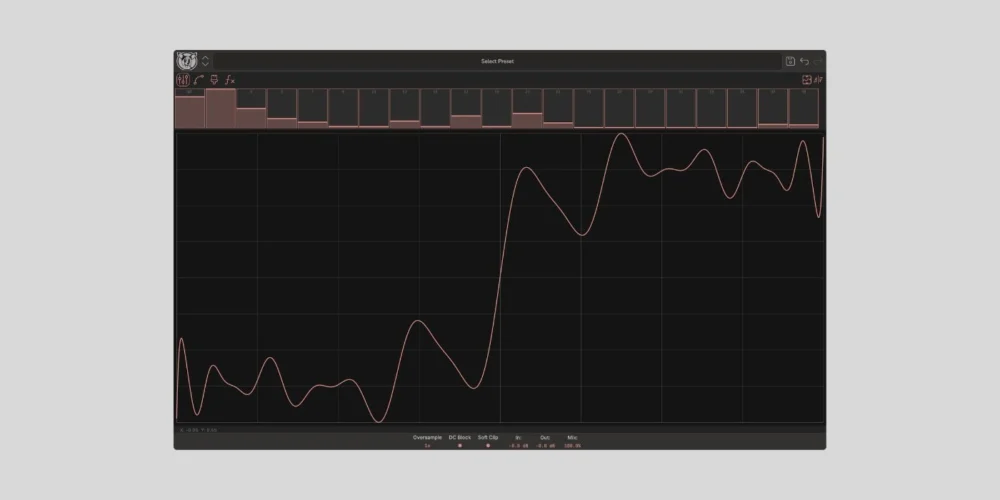
Aspen Instruments, a newcomer to the digital audio processing landscape, has officially launched its inaugural products, Black Diamond Distortion and its companion plugin, Black Diamond Probe. This groundbreaking release introduces a sophisticated, yet user-friendly, system designed to simulate virtually any distortion effect, whether derived from software or hardware sources. Available as a free download and currently in its early beta phase, this suite represents a significant leap forward in the quest for versatile and authentic digital audio saturation, offering both meticulous emulation capabilities and expansive creative tools for sound designers and music producers worldwide.
Background: The Ever-Evolving World of Digital Distortion
For decades, audio engineers and musicians have pursued the elusive "perfect" distortion. From the gritty warmth of vintage tube amplifiers to the aggressive bite of modern guitar pedals and the subtle glue of tape saturation, distortion is a fundamental element in shaping sound. The transition from analog to digital audio brought about a new challenge: how to accurately replicate the complex, non-linear behaviors that define these cherished analog circuits within the sterile, linear world of digital signal processing (DSP). Early digital distortion plugins often struggled to capture the nuances, leading to a proliferation of specialized emulations, each attempting to model a specific piece of hardware with varying degrees of success.
The market for distortion plugins is vast and highly competitive, ranging from affordable software emulations to high-end, meticulously modeled suites that can cost hundreds of dollars. Many established developers have built their reputations on the authenticity of their analog emulations. Against this backdrop, Aspen Instruments’ debut with a free plugin suite promising universal distortion simulation and creation capabilities is particularly noteworthy, signaling a potential paradigm shift in how producers approach saturation, overdrive, and fuzz effects in their digital audio workstations (DAWs). The company’s emergence, with such an ambitious and technically advanced offering as its first release, positions it as a bold innovator in an already crowded field.
Black Diamond Probe: The Heart of the Emulation Engine
At the core of Aspen Instruments’ innovative approach lies Black Diamond Probe, the companion plugin responsible for its most striking feature: the ability to reverse-engineer and capture the unique distortion character of almost any hardware or software unit. This functionality is not merely an approximation but a precise analytical process designed to extract the fundamental non-linear behavior of a given device.
The operational concept of Black Diamond Probe is remarkably streamlined for the power it wield wields. A user places the Probe plugin immediately after the distortion-inducing device they wish to analyze. This could be a physical piece of gear, such as a tube preamp, a tape machine, a vintage guitar pedal, or even another software plugin within the DAW. The Probe plugin’s sidechain input is then routed to read the input of the target device, while audio is passed through the device itself and then into the Probe. Through this carefully orchestrated signal flow, Black Diamond Probe meticulously analyzes the relationship between the input signal and the output signal of the device.
What the Probe extracts is a "nonlinear transfer function" – essentially, a mathematical fingerprint that precisely defines how the device’s output deviates from its input in a non-linear fashion, which is the very definition of distortion or saturation. This captured data is then saved as a compact ".tfunc" file. Once generated, this .tfunc file can be loaded directly into Black Diamond Distortion, transforming it into a precise digital replica of the original hardware or software unit’s distortion profile. In essence, this allows producers to "capture" the sonic essence of their favorite, often expensive or rare, analog gear and deploy it instantly within their digital environment, consolidating a multitude of unique distortion characteristics into a single, versatile plugin.
Technical Nuances and Limitations: Understanding "Memoryless" Devices
While the potential of Black Diamond Probe is immense, it operates under specific technical prerequisites to ensure accuracy. The device being captured must ideally be "memoryless." In the context of signal processing, a memoryless system is one where its output at any given moment depends solely on its input at that exact same moment, without any reliance on past inputs or internal states. Most common distortion, saturation, and waveshaping effects inherently fit this requirement, making them ideal candidates for accurate profiling. Examples include static clipping circuits, many types of overdrive and fuzz pedals (when their internal dynamics are not heavily involved), and fundamental harmonic exciters.
However, devices with time-dependent behavior present a challenge. These include dynamic processors like compressors, preamps with active equalization (where filter stages can introduce phase shifts and time-variant responses), or systems exhibiting hysteresis, which is common in many forms of tape saturation. Hysteresis, for instance, means the output depends not just on the current input, but also on the direction of the input signal’s change and its immediate history. Such time-dependent systems can cause "loops" in the plot of the transfer function, making it impossible to define a single, stable, and accurate transfer function that fully encapsulates their behavior. While Black Diamond Probe can still attempt to capture these devices, any exported curve should be treated as an approximation rather than an exact replica. This limitation is a crucial detail for users to understand, ensuring realistic expectations for profiling complex, dynamically responsive hardware. The developer’s humorous inclusion of "your toaster" in the list of approximations underscores this technical boundary.
Black Diamond Distortion: A Multi-faceted Creative Hub
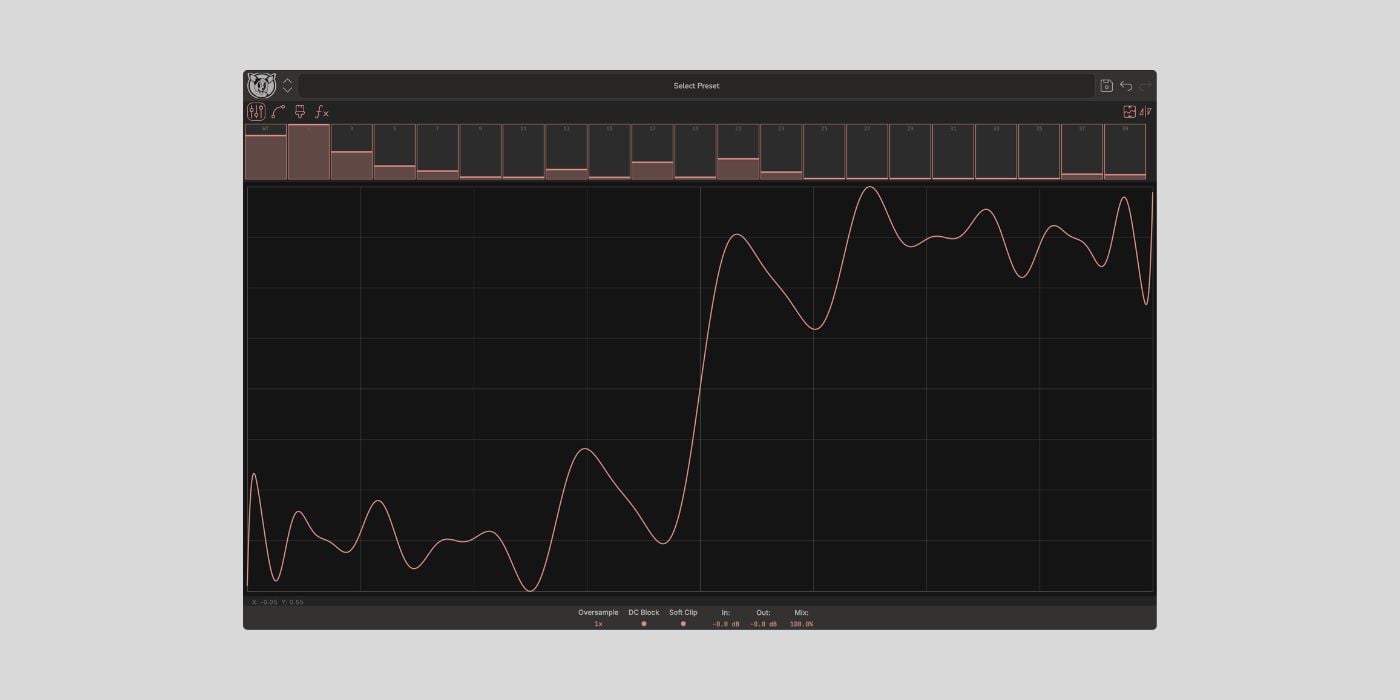
Beyond its unparalleled emulation capabilities via the Probe, Black Diamond Distortion stands as a powerful and versatile distortion design tool in its own right. It offers four distinct editing modes, each providing a unique approach to crafting bespoke distortion characteristics, catering to different levels of technical expertise and creative desires.
-
Harmonic Mode: This mode empowers users with intuitive sliders to precisely control which harmonics the distortion excites. Distortion, by its nature, introduces new harmonic content into a signal. Harmonic Mode allows producers to dial in the desired balance of even and odd harmonics, which are crucial for defining the character of saturation. Even harmonics (e.g., octaves) often contribute to a warmer, smoother, and more musical saturation (like that found in tube amplifiers), while odd harmonics (e.g., fifths, thirds) typically result in a harsher, more aggressive, and edgier sound (common in transistor-based fuzz pedals). The plugin’s design ensures that nearly any combination of these sliders produces a musically usable result, making it accessible even for those without deep theoretical knowledge of harmonic series.
-
Spline Mode: For users who prefer a more visual and direct approach, Spline Mode allows for the shaping of the transfer curve by dragging anchor points. The transfer curve graphically represents the input-output relationship of the distortion, illustrating how the input signal is transformed. By manipulating these points, users can intuitively sculpt the curve, creating gentle saturation, hard clipping, asymmetrical distortion, or complex waveshaping effects. This mode offers a high degree of precision and visual feedback, making it ideal for fine-tuning the intensity and character of the distortion.
-
Brush Mode: Pushing the boundaries of creative freedom, Brush Mode enables users to draw the distortion curve freehand. This highly artistic approach is complemented by specialized tools, including a smoothing roller brush for refining drawn curves and various texture brushes. These texture brushes introduce controlled randomness and subtle variations to the curve, allowing for the creation of organic, gritty, or uniquely characterful distortions that might be difficult to achieve with traditional parameter-based controls. It’s an innovative way to introduce sonic imperfections and unique textures into the distortion profile.
-
Equation Mode: The deepest and most technically oriented option, Equation Mode caters to sound designers, programmers, and those with a mathematical inclination. Here, users can directly enter mathematical equations that compute the distortion. This feature effectively opens the door to an infinite range of algorithmic possibilities, allowing for the creation of completely novel and complex distortion characteristics that transcend traditional analog emulations. From simple squaring functions to intricate trigonometric and exponential equations, Equation Mode transforms Black Diamond Distortion into a powerful DSP development sandbox, offering unparalleled creative control for those willing to delve into its depths.
Supplemental Features and Community-Driven Growth
Beyond its core design functionalities, Black Diamond Distortion ships with a comprehensive library of presets. These presets include designs inspired by classic hardware units, providing users with immediate access to familiar and sought-after distortion tones. A built-in softclipper further enhances the plugin’s utility, offering a gentler form of signal limiting that prevents harsh digital clipping while adding subtle warmth and saturation.
However, the true long-term vision for Black Diamond Distortion extends beyond its initial offerings. Aspen Instruments is actively fostering a community-driven ecosystem around the plugin. The developer encourages users to capture and share their own .tfunc presets, creating a collaborative library of unique and classic gear captures. This initiative promises to significantly expand the available preset collection over time, transforming the plugin into a living, evolving repository of global distortion sounds. This community aspect not only enriches the user experience but also democratizes access to a vast array of distortion profiles that would otherwise be geographically or financially inaccessible to many producers.
Accessibility, Technical Specifications, and Future Outlook
Aspen Instruments has made both Black Diamond Distortion and Black Diamond Probe freely available, requiring no user account for download or activation. This low barrier to entry is a strategic move that encourages widespread adoption and facilitates rapid feedback during its early beta phase. The developer actively welcomes bug reports and constructive feedback from its user base, underscoring a commitment to refinement and improvement.
The plugins are compatible with major operating systems and DAW environments, supporting VST3 and AU formats. For macOS users, the plugins require version 10.15 (Catalina) or later, while Windows users need version 10 or later. Crucially, the macOS installers are signed and notarized, ensuring a secure and trusted installation process that aligns with modern operating system security standards.
The release of Black Diamond Distortion and Probe is more than just another plugin launch; it represents a significant step towards a future where digital audio tools offer unprecedented flexibility and authenticity. By providing a free, powerful, and extensible platform for distortion emulation and creation, Aspen Instruments has positioned itself as a disruptor in the audio plugin market. The implications for music producers are profound: the ability to faithfully replicate cherished analog tones, to invent entirely new sonic textures, and to consolidate a vast array of distortion effects into a single, efficient workflow. As the community-driven .tfunc library grows, Black Diamond Distortion is poised to become an indispensable tool for sound design, mixing, and creative production, promising to continually evolve and expand its capabilities based on the collective contributions of its users. The early beta phase marks the beginning of an exciting journey for this innovative suite, with its full potential yet to be realized as it matures through user feedback and ongoing development.
