

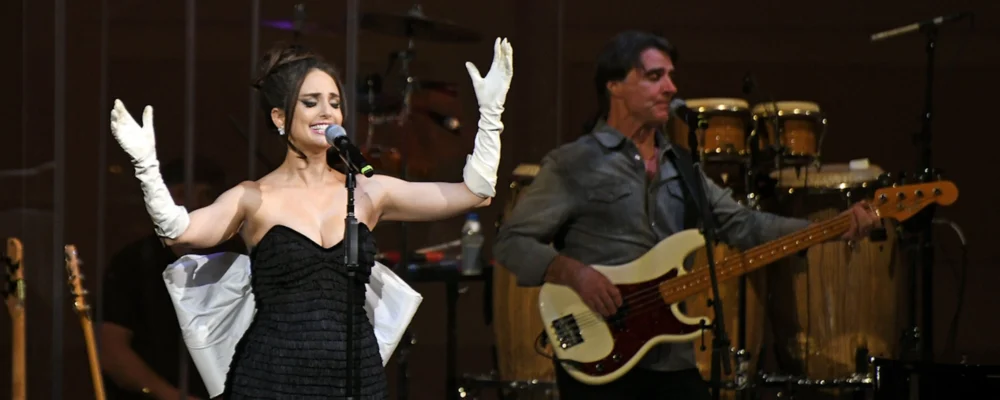
The atmosphere inside Carnegie Hall shifted from anticipation to electric reverence on the evening of March 12, as a sold-out crowd realized that the guest of honor, legendary singer-songwriter Billy Joel, was in physical attendance for the 21st annual "Music Of" tribute concert. Halfway through the event, the storied venue—the same stage where Joel made his Carnegie Hall debut in 1977—echoed with rhythmic chants of “Let’s Go, Billy,” as the audience rose to acknowledge the presence of the "Piano Man" himself. While Joel remained in the audience rather than on the stage, the evening served as a comprehensive retrospective of his 50-year career, interpreted by a diverse roster of contemporary stars and veteran collaborators, all while setting a new financial benchmark for the charity series.
The concert, produced by Michael Dorf, founder of City Winery, achieved a historic milestone by raising more than $225,000. This figure represents the largest single-night total in the 21-year history of the "Music Of" series, which began in 2004. According to organizers, 100 percent of the net proceeds are designated for non-profit music education organizations. The primary beneficiaries include Music Will (formerly known as Little Kids Rock), Young Audiences NY, Church Street School of Music, Partnership with Children, the Jazz Foundation of America, The Orchestra Now, and The Perlman Music Program. By surpassing its internal goals, the event underscored the enduring commercial and cultural weight of Joel’s catalog, even as the artist enters a new phase of his life and career.
A Legacy of Philanthropy and Performance
Michael Dorf opened the proceedings by contextualizing the evening’s success within the broader history of the series. Since its inception, the "Music Of" concerts have honored a prestigious lineage of musical icons, including Paul McCartney, Crosby, Stills & Nash, Led Zeppelin, Patti Smith, and David Bowie. The selection of Billy Joel for the 21st installment was particularly poignant given his deep roots in the New York City music scene and his longstanding commitment to the city’s cultural infrastructure.
The musical direction was overseen by David Rosenthal, Joel’s longtime musical director and keyboardist. To ensure the authenticity of the arrangements, Dorf and Rosenthal assembled a house band with an unprecedented connection to the source material. The ensemble featured musicians who have worked with Joel for a cumulative 218 years, including Mark Rivera, Crystal Taliefero, Tommy Byrnes, Andy Cichon, Chuck Burgi, and Carl Fischer. This continuity provided a foundation of technical precision that allowed the guest vocalists to explore the emotional depths of Joel’s songwriting.
Chronology of the Evening: From "Movin’ Out" to "You May Be Right"
The concert followed a carefully curated arc that balanced chart-topping hits with deeper cuts from Joel’s extensive discography. The show opened with a high-energy performance by British singer Yola, who delivered a soulful rendition of “Movin’ Out (Anthony’s Song),” the lead track from Joel’s 1977 masterpiece, The Stranger. This was followed by Rob Thomas, who offered a nuanced take on “Vienna,” a song that has seen a massive resurgence in popularity among younger generations in recent years.
The evening frequently returned to the 1977-1978 era, widely considered Joel’s creative zenith. Pat Monahan of the band Train performed “She’s Always a Woman,” while Mary Chapin Carpenter provided what many attendees described as a “pin-drop moment” with a sparse, haunting delivery of the 1989 ballad “And So It Goes.” The technical complexity of Joel’s work was a recurring theme among the performers. Matt Nathanson, who performed both “I Go to Extremes” and “Miami 2017 (Seen the Lights Go Out on Broadway),” joked about the “Joel hole”—a deep dive into the artist’s discography—and noted the difficulty of the piano-driven chord structures, carrying sheet music onto the stage as a safeguard.
The middle of the set highlighted the personal and familial dimensions of Joel’s legacy. His daughter, Alexa Ray Joel, performed “This Night” from the 1983 album The Innocent Man, dedicating the performance to her father and her mother, Christie Brinkley. Rufus Wainwright further emphasized the family connection by singing “Lullabye (Goodnight, My Angel),” a song Joel originally wrote for Alexa Ray.
Intersectional Performances and the Role of Music Education
A core component of the "Music Of" series is the direct involvement of the students supported by the fundraising efforts. The second half of the concert opened with Wyclef Jean, who was joined on stage by students from the Music Will program. Their collaborative performance of “My Life” served as a live demonstration of the event’s mission, showcasing the tangible results of music education in public schools.
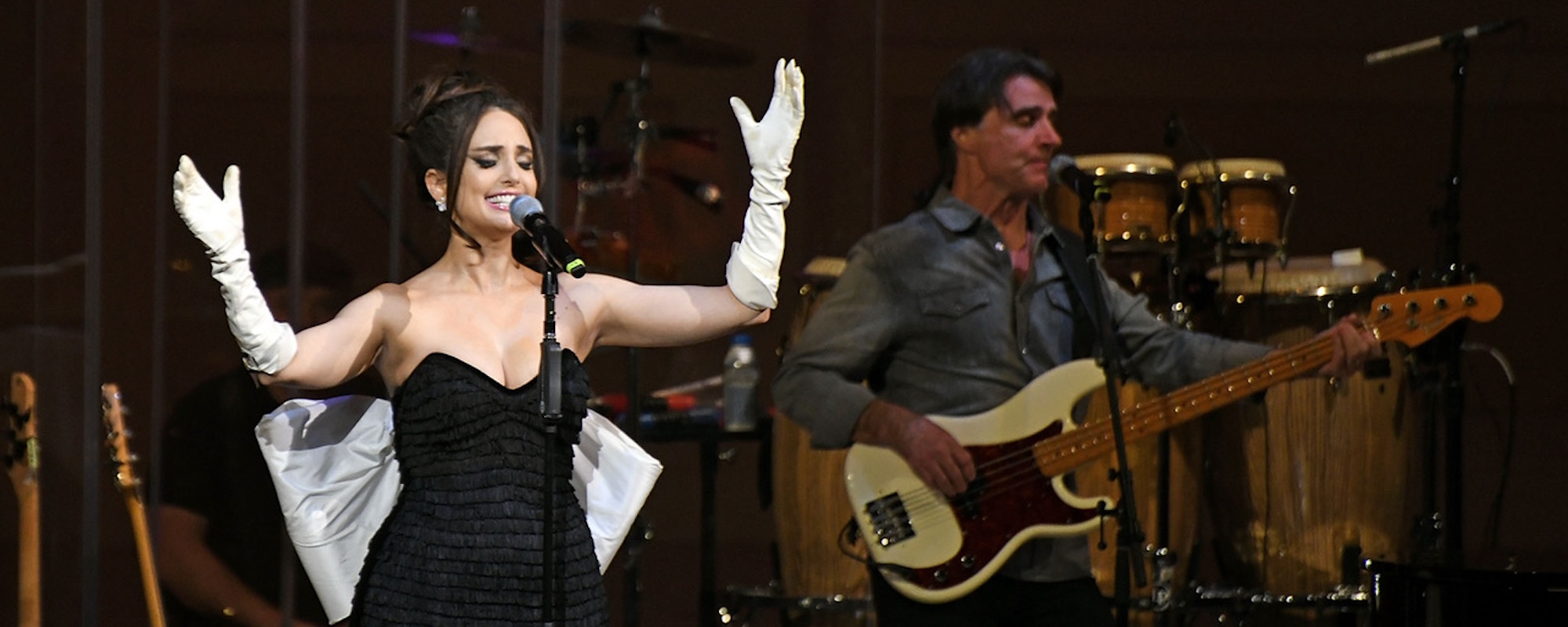
The evening also featured appearances by classical and soul luminaries. Violinist Itzhak Perlman, a longtime friend of Joel, delighted the audience by confirming he was indeed the “World Famous Incognito Violinist” credited on the 1989 album Storm Front. Perlman joined O.A.R.’s Marc Roberge for a sonorous version of “The Downeaster Alexa,” a song that highlights the struggles of working-class fishermen on Long Island.
Other highlights included:
- Ledisi: A powerful rendition of Joel’s 2024 single “Turn the Lights Back On,” his first new pop song in decades.
- Natalie Merchant: A poignant performance of “Allentown,” preceded by a reflection on how Joel’s music resonated with working-class families in Upstate New York.
- Gavin DeGraw: An energetic delivery of “Big Shot,” accompanied by a story of how seeing Joel perform at age 15 inspired his own career.
- Andrew McMahon: A solo-piano version of “Piano Man” that invited a venue-wide sing-along, bringing the main set to a close.
Supporting Data: The Impact of Music Education Funding
The $225,000 raised at Carnegie Hall is expected to provide significant resources for the beneficiary organizations. In the current economic climate, arts funding in public schools is often the first to face budget cuts. Data from the National Association for Music Education (NAfME) suggests that students involved in music programs have higher graduation rates and better performance in STEM subjects.
Michael Dorf’s "Music Of" series has now cumulatively raised millions of dollars since 2004. By focusing on net proceeds, the organization ensures that the majority of the ticket price and sponsorship revenue goes directly to the classroom. For organizations like Music Will, these funds are used to purchase instruments, train teachers in modern band curriculum, and provide performance opportunities for thousands of children who would otherwise lack access to musical instruction.
Contextualizing the Guest of Honor’s Absence from the Stage
While the night was a celebration, it was also marked by a somber awareness of Billy Joel’s current health challenges. At 76, Joel has faced recent medical hurdles that have necessitated a change in his performance schedule. In 2025, Joel was diagnosed with Normal Pressure Hydrocephalus (NPH), a neurological condition characterized by an accumulation of cerebrospinal fluid in the brain’s ventricles.
NPH can significantly affect balance, gait, vision, and hearing—elements critical for a live performer. Consequently, Joel was forced to cancel several tour dates and has taken a hiatus from his legendary residency at Madison Square Garden. His presence in the audience at Carnegie Hall, seated alongside fellow artist Pink and her daughter Willow Sage Hart, was viewed by fans and peers as a testament to his resilience and his desire to support the next generation of musicians despite his own physical limitations.
Implications and Future Outlook
The success of the Billy Joel tribute signals a robust appetite for legacy-based charity events. From a market perspective, the "Music Of" series demonstrates that high-value catalogs can be leveraged effectively for philanthropic purposes without the primary artist needing to perform. This model is likely to become more prevalent as the "Classic Rock" generation of artists enters retirement or faces age-related health issues.
The event concluded with a full-cast finale of “You May Be Right,” a high-energy rock anthem that brought the entire room to its feet one last time. In a statement released following the concert, Michael Dorf emphasized the dual nature of the evening. “It was an incredible honor to celebrate Billy Joel’s extraordinary songbook at Carnegie Hall and to have Billy himself in the room,” Dorf said. “What makes the night even more meaningful is the impact it has beyond the stage, helping support music education programs and ensuring the next generation of musicians has the opportunity to learn, create, and be inspired.”
Organizers have already confirmed that the "Music Of" tribute concert will return to Carnegie Hall on March 10, 2027, with the next honoree to be announced later this year. For now, the record-breaking night for Billy Joel stands as a definitive highlight in the series’ history, bridging the gap between a legendary past and a musically literate future.
