

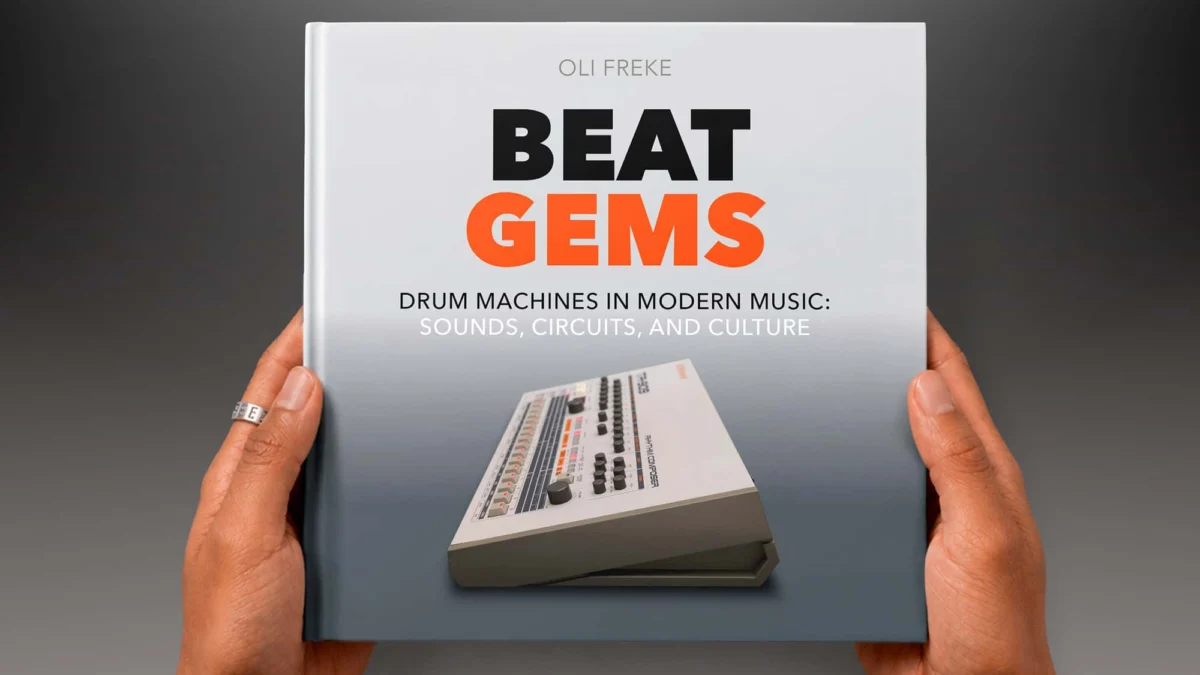
The specialized music technology publisher Bjooks has officially marked the annual industry celebration known as 909 Day by announcing the commencement of shipping for its latest comprehensive volume, BEAT GEMS: Drum Machines in Modern Music. Authored by electronic instrument historian and artist Oli Freke, the publication represents a significant addition to the documentation of electronic music history, offering a 336-page exploration into the evolution of rhythm technology. The timing of the announcement is strategically aligned with September 9th, a date celebrated globally by electronic music producers and enthusiasts in honor of the Roland TR-909 Rhythm Composer, a machine that fundamentally altered the trajectory of house, techno, and contemporary pop music.
Beyond the physical release of the book, Bjooks has expanded its digital ecosystem through the PATCH & TWEAK CLUB, offering members exclusive early access to specialized content. This includes a deep-dive feature on the TR-909 and the completion of a three-part interview series titled "Capturing the Invisible," featuring the pioneering British electronic artist Robin Rimbaud, widely known as Scanner. These initiatives reflect a broader trend in the music industry toward the preservation of technical heritage and the celebration of the symbiotic relationship between human creativity and machine logic.
The Significance of BEAT GEMS in Music Historiography
BEAT GEMS: Drum Machines in Modern Music is positioned as a definitive reference work, chronicling six decades of rhythmic innovation. The narrative arc of the book begins with the early, rudimentary "rhythm boxes" designed as accompaniment for home organs and follows the technological lineage through to the sophisticated grooveboxes and digital workstations of the 21st century.

Oli Freke, whose previous work includes the acclaimed Synthesizer Evolution, brings a meticulous archival approach to the subject. The book profiles approximately 100 machines, categorized not merely by their technical specifications but by their cultural impact. By detailing the engineers who designed these circuits and the artists who subverted their original purposes, Freke provides a roadmap of how "percussion in a box" evolved from a practice tool into a primary instrument for genre-defining composition.
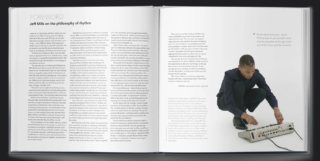
A focal point of the publication is the inclusion of a foreword developed from a dialogue with Jeff Mills. As a foundational figure in Detroit techno and a virtuoso of the TR-909, Mills’ insights provide a philosophical grounding for the book. His participation underscores the transition of the drum machine from a utilitarian device to a medium for high-level artistic expression, particularly within the context of live performance and minimalist electronic structures.
The Legacy of the Roland TR-909
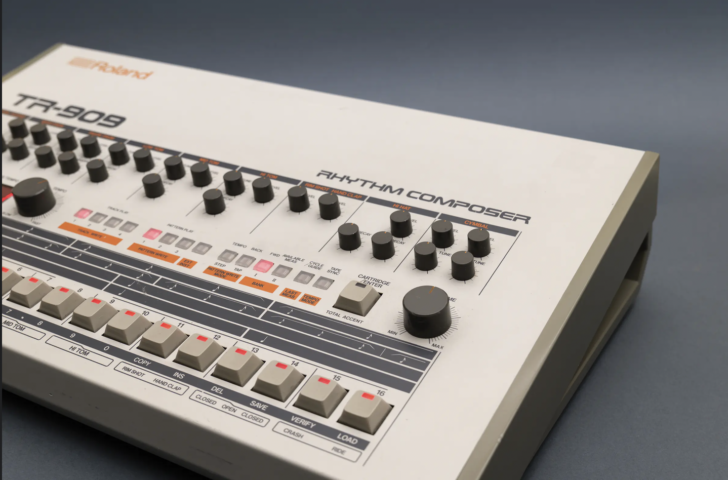
The choice of the TR-909 for the book’s cover art is a deliberate nod to the machine’s unparalleled status in the electronic music pantheon. Released by the Roland Corporation in 1983, the TR-909 was the successor to the now-legendary TR-808. While the 808 relied entirely on analog synthesis to mimic drum sounds, the 909 was a hybrid machine. It utilized analog synthesis for the kick, snare, and toms, but employed 6-bit digital samples for its cymbals and hi-hats.
This hybrid architecture gave the 909 a "punchy" and "metallic" character that sat perfectly in the mix of high-energy dance tracks. Despite its eventual status as a cornerstone of music history, the TR-909 was initially considered a commercial failure. At the time of its release, the industry was moving toward high-fidelity digital realism, as exemplified by the LinnDrum. The 909 was discontinued after approximately 10,000 units were produced, only to be rediscovered by underground producers in Chicago and Detroit who appreciated its aggressive sound and integrated MIDI (Musical Instrument Digital Interface) capabilities—the first of its kind on a Roland drum machine.
Chronology of the Drum Machine: From Accompaniment to Center Stage
To understand the scope of BEAT GEMS, one must look at the timeline of innovation that Freke documents within its pages:
- The Early Era (1940s–1960s): The journey begins with early pioneers like the Chamberlin Rhythmate (1949) and the Wurlitzer Sideman (1959). These were large, vacuum-tube-based units intended to provide simple backing tracks for lounge performers.
- The Preset Revolution (1970s): The rise of the "rhythm box," such as the Roland CR-78, introduced programmable elements and the use of integrated circuits, allowing for smaller form factors and more reliable performance.
- The Golden Age of Analog (1980–1984): This period saw the release of the Roland TR-808 and TR-909, as well as the Oberheim DMX and the Linn LM-1. These machines moved away from preset "Bossa Nova" and "Waltz" rhythms toward user-programmable patterns that allowed for the syncopation necessary for Hip-Hop and early House music.
- The Digital and Sampling Shift (Late 1980s–1990s): The emergence of the E-mu SP-1200 and the Akai MPC series shifted the focus from synthesis to sampling, allowing producers to manipulate any recorded sound into a rhythmic sequence.
- The Boutique Revival (2010s–Present): A modern resurgence in analog hardware has seen companies like Arturia, Elektron, and Korg release "modern classics," bridging the gap between vintage tactile workflows and modern digital stability.
Expanding the Narrative: The Scanner Series and Digital Integration
Parallel to the physical release of the book, Bjooks has emphasized the importance of the human element in electronic music through its "Capturing the Invisible" series on the PATCH & TWEAK CLUB platform. The three-part conversation with Robin Rimbaud (Scanner) offers an intellectual counterpoint to the technical focus of BEAT GEMS.
Rimbaud is renowned for his work in the 1990s using radio scanners to intercept cellular phone conversations and incorporate them into ambient soundscapes. His career serves as a case study in "finding music in unexpected places." By including this series in the 909 Day celebrations, Bjooks highlights that the history of electronic music is as much about the philosophy of listening as it is about the hardware used to generate sound.
The PATCH & TWEAK CLUB represents a shift in how music technology information is consumed. By moving toward a membership-based digital portal, the publisher is creating a living archive that can be updated more frequently than a printed volume, providing a space for community interaction and technical tutorials that complement the aesthetic value of the "coffee table" books.
Industry Analysis: The Rise of Technical Documentation as Culture
The success of publishers like Bjooks indicates a significant shift in the music technology market. Historically, information about drum machines and synthesizers was relegated to technical manuals or niche hobbyist magazines. However, as electronic music has moved from the periphery to the center of global culture, there is a growing demand for high-quality, aesthetically pleasing documentation of the tools used to create it.
Industry analysts suggest that the "physicality" of these books mirrors the "hardware revival" seen in the music industry over the last decade. As software instruments (VSTs) became ubiquitous and often overwhelming in their complexity, many musicians returned to dedicated hardware units for their tactile feedback and "happy accidents." Similarly, as digital information becomes increasingly ephemeral, high-production-value books provide a permanent record of the industry’s evolution.
The "909 Day" campaign also serves as a masterclass in community engagement. By leveraging a specific date that already holds meaning for the producer community, Bjooks has successfully integrated a product launch into a broader cultural moment. This approach not only drives sales but also reinforces the publisher’s role as a steward of electronic music culture.
Broader Implications for Electronic Music Education
The release of BEAT GEMS and the accompanying digital content have implications beyond the collector market. For educators and students of music production, these resources provide a historical context that is often missing from purely technical training. Understanding the limitations of a TR-909—such as its specific swing timing or the way its analog circuits saturate—allows modern producers to better utilize the digital emulations they use in contemporary DAWs (Digital Audio Workstations).
Furthermore, the documentation of the people behind the machines—the engineers like Ikutaro Kakehashi (founder of Roland) or Roger Linn—helps humanize the technology. It reminds the next generation of creators that every "standard" sound in modern music was once a radical experiment or a technical compromise.
As physical copies of BEAT GEMS begin to reach readers this month, the electronic music community continues to reflect on the enduring legacy of the machines that started it all. From the first clicks of a 1950s rhythm box to the thunderous kick drum of a 909, the history of the drum machine is the history of modern music itself—a story of innovation, subversion, and the rhythmic heartbeat of the digital age. For more information on the publication and the ongoing series of artist interviews, enthusiasts are encouraged to visit the official Patch & Tweak website.
