

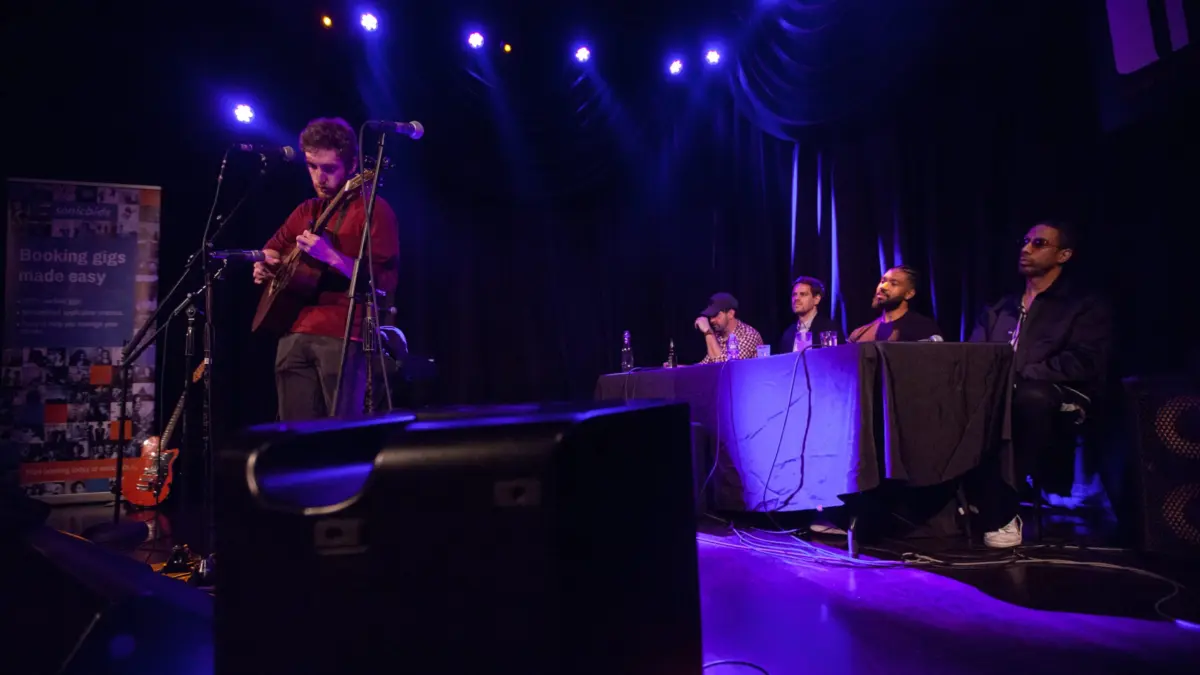
The global music landscape is currently undergoing a structural transformation where independent artists now represent the fastest-growing segment of the industry. According to recent market reports from Midia Research, independent artists—those not signed to major labels—generated over $1.2 billion in 2023, a significant increase from previous years. However, this growth has created a saturated market where more than 100,000 tracks are uploaded to streaming platforms daily. In this hyper-competitive environment, industry analysts and veteran creators are identifying strategic networking and cross-disciplinary collaboration as the primary differentiators for career sustainability. For the modern independent musician, the ability to build a community is no longer a peripheral skill but a core business requirement.
Professional networking within the music industry has historically been gatekept by major labels and high-level management agencies. Yet, the democratization of production technology has shifted the focus toward grassroots connectivity. Events such as the Feedback Collective Panel Discussion and the Songwriting Workshop, both hosted by Sonicbids, exemplify a growing trend of organized, peer-to-peer professional development. These initiatives reflect a broader industry shift toward "co-opetition," a model where artists cooperate to expand their collective reach while maintaining their individual brand identities.
The Evolution of the Local Creative Cluster
The concept of the "creative cluster," popularized by urban economists, is now being applied to the music industry as a primary networking strategy. For independent musicians, the traditional path of looking solely within the music industry for opportunities is being replaced by a multi-disciplinary approach. Engaging with local art galleries, theater troupes, and performance poetry circles provides a fertile ground for "cross-pollination."

Market data suggests that cross-disciplinary collaborations often lead to higher engagement rates on social media and streaming platforms because they allow artists to tap into pre-existing, non-competing audiences. For instance, a musician providing a bespoke soundtrack for a visual art installation is introduced to a demographic of collectors and gallery-goers who might not otherwise frequent live music venues. This "lateral networking" creates a resilient local ecosystem. Chronologically, this mimics the development of historic music scenes, such as the Seattle grunge movement or the Bristol trip-hop scene, where diverse artists shared spaces and resources before achieving global recognition.
Strategic Collaborative Workshops and the Co-Writing Economy
The rise of the "co-writing economy" has transformed how music is composed and marketed. Data from the Billboard Hot 100 indicates that the number of credited songwriters per hit song has increased by nearly 50% over the last decade. While this trend began in major label "hit factories," it has trickled down to the independent level through organized jam sessions and songwriting workshops.
Hosting a jam session or a technical workshop serves a dual purpose: it establishes the host as a community leader and creates a low-stakes environment for talent scouting. Industry experts note that these sessions often break down genre barriers, such as the fusion of traditional jazz instrumentation with modern electronic production. These interactions are critical for "sound innovation," which is a key driver for editorial playlisting on platforms like Spotify and Apple Music. By facilitating these spaces, independent artists transition from being mere content creators to being cultural curators, a role that carries significant weight in the eyes of festival bookers and talent buyers.
Digital Infrastructure and the Globalization of the Home Studio
While physical proximity remains vital, the digital infrastructure for networking has expanded beyond traditional social media. Platforms like BandLab, which recently surpassed 60 million users, and SoundCloud have integrated collaborative tools directly into their interfaces. This allows for a "globalized home studio" model where an artist in London can collaborate in real-time with a producer in Tokyo.

The implications of this digital connectivity are profound. Analysis of streaming data shows that "collaborative singles" (tracks featuring two or more artists) consistently perform better in algorithmic recommendations than solo releases. This is due to the "Network Effect," where the song is pushed to the followers of all involved parties simultaneously. This strategy is particularly effective for independent artists looking to break into new geographical markets without the need for an expensive touring budget. The shift from "static" social media posting to "active" collaborative production on these platforms represents a maturing of the digital music economy.
Festival Ecosystems and the Entry-Point of Labor
The live music sector remains a trillion-dollar global industry, yet for many independent artists, the barrier to entry for major festivals is high. Volunteering and working within the festival infrastructure has emerged as a tactical "backdoor" for networking. By participating in the operational side of events, artists gain direct access to industry professionals—stage managers, sound engineers, and talent buyers—in a professional rather than a promotional context.
A timeline of career trajectories for many mid-tier independent artists reveals a period of "industry immersion." By understanding the logistical pressures of a large-scale event, musicians can better tailor their pitches and professional conduct when they eventually transition to the stage. Furthermore, the "shared goal" environment of a festival production builds stronger professional bonds than the brief interactions typical of post-show networking. This immersion provides a first-hand look at the "industry standard" for performance and technical delivery, which is essential for artists aiming to scale their operations.
The Fan-Centric Networking Paradigm
Perhaps the most overlooked asset in an independent musician’s network is their existing fanbase. The shift from "passive consumption" to "active participation" is a hallmark of the modern creator economy. Platforms like Patreon and Discord have enabled artists to treat their fans as a decentralized street team or an advisory board.

Utilizing surveys and direct engagement to identify potential collaborators is a data-driven approach to networking. Fans often have a better pulse on "up-and-coming" talent within their specific sub-genres than the artists themselves. When a fan facilitates a connection between two artists, the resulting collaboration arrives with a built-in "proof of concept" and an audience that feels a sense of ownership over the project. This "Direct-to-Fan" (D2F) networking model reduces the marketing costs associated with new releases and increases the "Lifetime Value" (LTV) of a listener by deepening their emotional investment in the artist’s journey.
Broader Impact and Industry Implications
The transition of networking from a "daunting task" to a "strategic adventure" has significant implications for the future of the music industry. As independent musicians adopt these five strategies—local cross-pollination, collaborative workshops, digital platform utilization, festival immersion, and fan-led networking—the traditional "top-down" power structure of the industry continues to erode.
Economic analysis suggests that this decentralized model of growth leads to a more diverse and resilient music market. By diversifying their professional connections across different industries and geographies, independent musicians insulate themselves against the volatility of any single platform or market. The "middle-class musician," once thought to be an endangered species in the digital age, is finding a new path to sustainability through these collaborative frameworks.
The Feedback Collective and similar initiatives underscore a vital truth: in the modern era, an artist’s "net worth" is increasingly tied to their "network." As the industry moves toward 2025, the successful independent musician will likely be defined as much by their ability to foster community and facilitate collaboration as by their musical output. The "isolationist" model of the tortured artist is being replaced by the "connector" model of the creative entrepreneur. For those ready to amplify their efforts, the current landscape offers an unprecedented array of tools and entry points to turn a solitary career into a collective movement. This shift not only enhances the career prospects of individual artists but enriches the global cultural fabric by ensuring that diverse, innovative voices continue to find their way to the ears of the public.
