

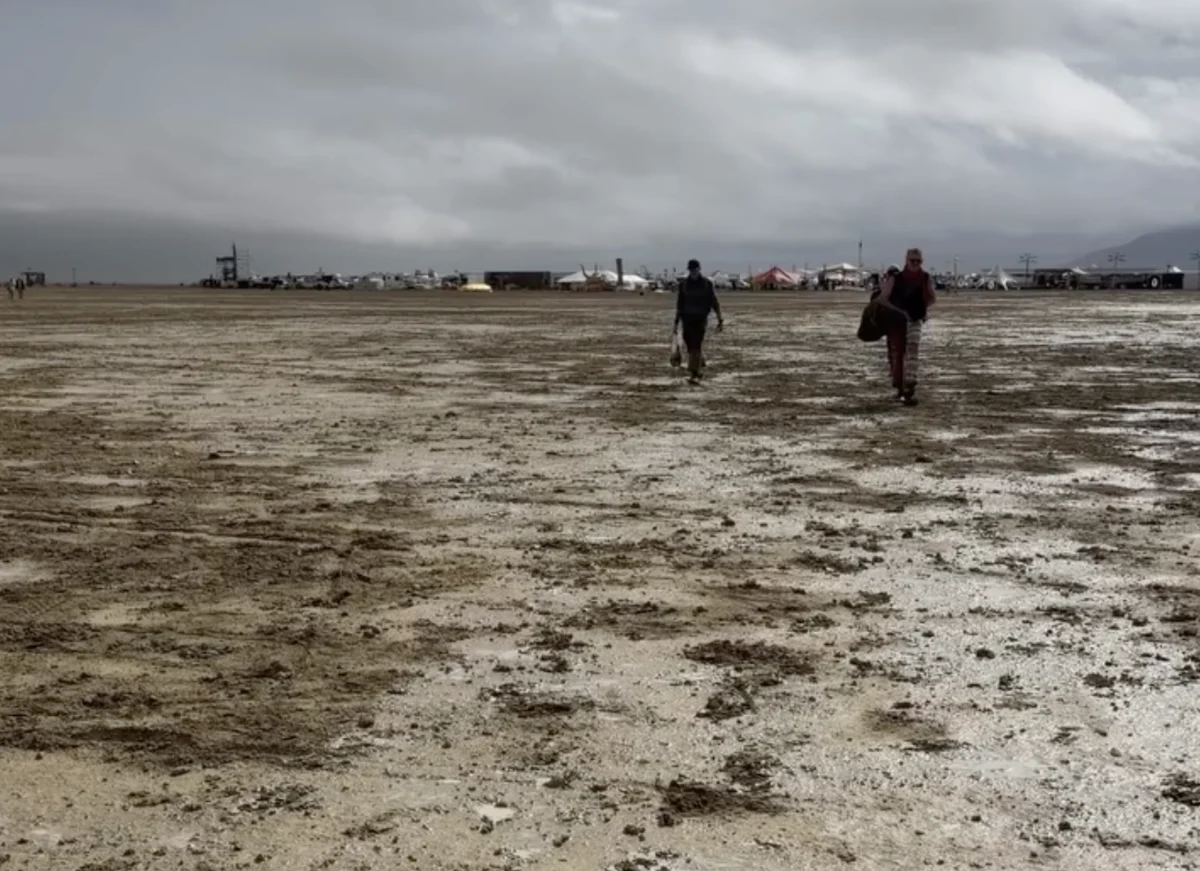
The annual gathering in Nevada’s Black Rock Desert, known globally as Burning Man, concluded this year under a cloud of significant challenges, marked by an attendee fatality, severe weather disruptions, and an intensifying debate over the event’s core identity. A participant passed away on Friday, September 4th, following a medical emergency, marking the fourth such death in as many years. Authorities have stated that no foul play is suspected in this latest incident, yet it casts a somber shadow over a festival already grappling with a previous, unsolved homicide from the preceding year. Compounding the human tragedy, Black Rock City, the temporary metropolis erected for the event, faced repeated ingress and egress closures, first on Thursday, September 3rd, due to powerful winds and whiteout conditions, and again later in the festival run because of unseasonal heavy rains. These events collectively underscore a pivotal moment for Burning Man, as it navigates not only the inherent unpredictability of its desert setting but also a profound internal struggle regarding its evolution and future direction.
A Festival Under Duress: Incidents of Black Rock City 2026
The 2026 iteration of Burning Man was fraught with difficulties from its earliest days. The tragic death of an attendee on Friday, September 4th, immediately brought a serious tone to the proceedings. While details surrounding the medical emergency remain under investigation by local authorities, the incident serves as a stark reminder of the inherent risks associated with participating in an event held in such an extreme and remote environment. This fatality follows a concerning trend, marking the fourth death at Burning Man in four consecutive years. The previous year’s festival was marred by a homicide, the details of which remain unresolved, contributing to a growing unease about safety protocols and oversight within Black Rock City. Each year, the event attracts tens of thousands of participants to a harsh, arid landscape where medical facilities are temporary and logistical challenges immense, making the management of such incidents exceptionally complex.
Beyond the human element, weather emerged as a dominant and disruptive force throughout the festival. On Thursday, September 3rd, the primary gate controlling entry and exit to Black Rock City was abruptly closed. This decision was necessitated by severe dust storms, generating whiteout conditions that rendered travel perilous and visibility almost nonexistent. Such conditions are not entirely unprecedented on the playa, yet their intensity and timing proved particularly challenging, stranding participants and delaying essential supplies. Just days later, the gate was again shuttered, this time due to heavy rainfall, transforming sections of the playa into a treacherous, muddy expanse. These recurring weather phenomena not only disrupted the flow of attendees but also highlighted the fragility of the temporary infrastructure and the logistical vulnerabilities inherent in an event of this scale. The unpredictable nature of the desert environment consistently tests the resilience of both participants and organizers, forcing adaptations and sometimes leading to significant discomfort and operational delays.
The practical implications of these disruptions were widely felt and documented by attendees. Among them was renowned DJ Diplo, who shared his arduous journey out of Black Rock City via his Instagram Story. His account detailed a six-mile trek through the difficult terrain, highlighting the physical and mental stamina required to navigate the festival’s challenges. "Here I am, walking out of Burning Man again… six miles in, we’re almost to the road… It’s fucked up, but I love it. Life presents many challenges, you’ve just got to persevere," he posted. Such personal testimonials painted a vivid picture of the harsh realities that can underpin the often-glamorized Burning Man experience, underscoring that for all its utopian ideals, the event remains a test of endurance against the elements.
Burning Man’s Identity Crisis: From Anarchy to Affluence
The challenges faced in 2026 extended far beyond immediate safety and weather concerns, touching upon a deeper existential crisis for Burning Man. For years, a persistent undercurrent of debate has questioned whether the festival, once a bastion of radical self-expression and decommodification, has irrevocably lost its soul. This sentiment found a prominent voice last week when John Law, a co-founder of Burning Man, penned a guest piece for the San Francisco Standard. In his article, Law critically asserted that the "festival lost its soul," lamenting its transformation from "an anarchistic collaboration of equals" into "a commercialized escape hatch for the wealthy."
Law’s critique resonates with a growing number of long-time Burners who feel alienated by the festival’s perceived shift. Burning Man originated in 1986 on Baker Beach in San Francisco, founded by Larry Harvey and Jerry James, before relocating to the Black Rock Desert in 1990. Its foundational principles, enshrined in the "Ten Principles of Burning Man" — including radical inclusion, gifting, decommodification, radical self-reliance, radical self-expression, communal effort, civic responsibility, leaving no trace, participation, and immediacy — were designed to foster a temporary experimental community built on creative freedom and shared experience, eschewing commercial transactions and corporate sponsorship. However, in recent decades, as attendance swelled from a few hundred to over 70,000, and ticket prices escalated (ranging from several hundred to over a thousand dollars), the demographic profile of participants has visibly shifted.
This demographic transformation is a key point of contention. Data analysis and anecdotal observations suggest a significant change in the attendee base. The New York Post bluntly summarized this shift with the headline, "Burning Man has become a wrinkled sausage fest of aging millennial men, data shows." While this characterization may be hyperbolic, it highlights a perceived lack of diversity and an increasing prevalence of an older, predominantly male, and affluent demographic. This trend contrasts sharply with the original ethos of radical inclusion and challenges the notion of a truly diverse and representative temporary community. Critics argue that the rising costs of tickets, transportation, and elaborate camp infrastructure effectively price out younger, less affluent, and more diverse participants, thereby undermining the festival’s foundational principles and contributing to its perceived commercialization. The influx of "plug-and-play" camps, offering luxury amenities and pre-built experiences for a premium, further exacerbates this divide, creating a two-tiered system that many argue is antithetical to the spirit of decommodification and communal effort.
Cultural Collisions and Controversies on the Playa
Beyond the structural critiques, the 2026 festival also generated its share of specific cultural controversies, reflecting the diverse and often clashing values present on the playa. One of the most widely discussed narratives involved Bethenny Frankel, the star of Real Housewives of New York City. Her attendance, extensively documented on platforms like TikTok, brought a distinct reality television sensibility to an event that traditionally prided itself on eschewing mainstream media and celebrity culture. Frankel’s posts, including a widely shared video of her performing Notorious B.I.G.’s "Juicy" at karaoke, sparked debates among Burners about authenticity, the commodification of the experience, and the increasing media footprint of the festival. While some viewed her presence as harmless or even a form of radical self-expression, others saw it as emblematic of the "influencer" culture infiltrating and diluting the unique ethos of Burning Man.
Another significant incident involved a Christian missionary camp called "Shift The Atmosphere." The group, intending to spread their message within Black Rock City, claimed they were "kicked out" of the festival. In an Instagram post, they expressed outrage, stating, "Burning Man is discriminating us and breaking their own rules of being ‘radically inclusive’ and KICKING us out for being Christians?!" This incident ignited a discussion about the boundaries of "radical inclusion" and "radical self-expression." While Burning Man embraces a vast spectrum of beliefs and lifestyles, its principles do not necessarily extend to proselytizing, especially if perceived as disruptive or infringing upon the experience of others. The tension between the desire for open-mindedness and the need to protect the established culture of the playa became acutely visible through this conflict, highlighting the complexities of maintaining a radically inclusive environment while preserving the community’s distinct identity.
Amidst these debates, the physical landscape of self-expression also saw a notable return: the Orgy Dome. After being reportedly destroyed in the previous year’s festival, its re-establishment for 2026 was widely noted. The Orgy Dome is a long-standing, albeit controversial, fixture of Burning Man, symbolizing a facet of radical self-expression that embraces sexual liberation and non-traditional communal experiences. Its return, following its destruction, underscores the enduring presence of these elements within the festival’s culture, even as it continues to attract new demographics and face internal scrutiny. The discussion around such spaces often intersects with broader conversations about public health and safety within the temporary city, with some outlets like The Mirror even jokingly noting its return meant "everyone can get STIs," albeit without further elaboration on specific health protocols or risks.
Broader Implications and The Road Ahead
The confluence of these events — the tragic death, the relentless weather, the co-founder’s critique, the demographic shifts, and the cultural clashes — presents Burning Man with arguably its most significant existential challenge to date. The festival, once a counter-cultural phenomenon, now finds itself at a crossroads, pressured by its own success and the forces of mainstream appropriation.
Safety and Risk Management: The recurrence of fatalities, including an unsolved homicide, places immense pressure on the Burning Man Project, the non-profit organization that oversees the event, to enhance safety measures. Operating in a remote, harsh environment complicates medical response and law enforcement. The organization continuously invests in emergency services, including medical personnel, rangers, and mental health support, but the scale and nature of the event mean inherent risks persist. Moving forward, greater transparency regarding incident reports and further investment in preventative measures will likely be demanded by participants and the public alike.
Environmental Resilience: The increasing frequency and intensity of extreme weather events, from dust storms to heavy rains, highlight the vulnerability of Black Rock City to climate change and the need for enhanced environmental resilience strategies. The "Leave No Trace" principle is fundamental to Burning Man, but managing mud, preventing runoff, and ensuring sustainable infrastructure in adverse conditions presents growing logistical hurdles. Future planning will undoubtedly focus more heavily on weather mitigation and environmental impact assessments.
Reclaiming the Ethos: John Law’s powerful criticism, echoing sentiments from many long-term Burners, necessitates a critical self-assessment by the organization. How can Burning Man genuinely uphold its principles of decommodification and radical inclusion when it is perceived as increasingly exclusive and commercial? This involves not just rhetoric but tangible actions, such as exploring alternative ticketing models, actively fostering diverse participation, and potentially reining in the proliferation of luxury camps. The tension between growth and core values will define its future.
Cultural Identity in Flux: The presence of figures like Bethenny Frankel and the conflict with groups like Shift The Atmosphere underscore a broader struggle for cultural identity. As Burning Man gains global recognition, it attracts a wider, more diverse audience, many of whom may not fully grasp or subscribe to its founding principles. The challenge for organizers is to educate new participants while also adapting to evolving societal norms, all while preserving the unique spirit that has defined the event for decades.
In conclusion, the 2026 Burning Man festival was more than just another gathering in the desert; it was a microcosm of the profound transformations and challenges facing the event as a whole. From the very real dangers posed by its extreme environment to the philosophical debates about its soul, Burning Man stands at a pivotal juncture. Its ability to navigate these complex issues, adapt to external pressures, and potentially rediscover its founding ethos will determine whether it remains a unique experiment in community and art, or evolves into something far removed from its radical origins. The eyes of both its dedicated community and the curious outside world will be watching to see which path Black Rock City chooses to forge in the years to come.
