

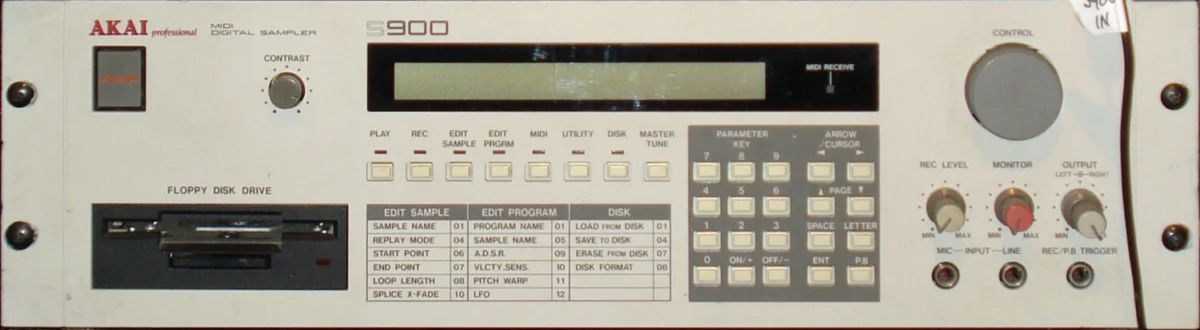
The landscape of vintage music production has been fundamentally altered with the release of SuperOS v4.0, a comprehensive custom firmware update designed specifically for the Akai S900 digital sampler. This software intervention breathes new life into one of the most iconic pieces of hardware from the 1980s, effectively bridging the technological gap between the Akai S900 and its more advanced successors, the S950 and S1000. By introducing features that were previously thought to be hardware-dependent, such as real-time MIDI filter modulation and the legendary Akai timestretch algorithm, SuperOS v4.0 represents a significant milestone in the preservation and enhancement of legacy music technology.
The Historical Significance of the Akai S900
To understand the impact of the SuperOS v4.0 update, one must first consider the historical weight of the Akai S900. Released in 1986, the S900 was Akai’s first truly professional rack-mount sampler. It arrived at a time when sampling was a nascent art form, dominated by prohibitively expensive machines like the Fairlight CMI or the Synclavier. The S900 democratized high-quality sampling, offering a 12-bit resolution and a maximum sampling rate of 40 kHz.
For the producers of the late 1980s and early 1990s, the S900 became a cornerstone of the "golden age" of hip-hop and the burgeoning electronic dance music scene. Its distinctive sound—characterized by a certain "crunch" and warmth attributed to its 12-bit architecture and its unique analog output filters—defined the sonic palette of an entire era. However, as the industry progressed, the S900 was quickly overshadowed by the S950, which introduced more memory, higher sampling rates, and, most importantly, the ability to timestretch audio. For decades, S900 owners were left without these capabilities, relegated to a more static workflow compared to users of later models.
Technical Breakdown of SuperOS v4.0 Features
The release of SuperOS v4.0 addresses these long-standing limitations through sophisticated reverse-engineering of the original Akai operating system. The developer, operating under the SuperOS 303 moniker, has successfully implemented a suite of features that transform the S900 into a much more versatile modern instrument.
The Implementation of Timestretch
Perhaps the most significant addition in v4.0 is the timestretch algorithm. In the original hardware ecosystem, timestretching was the hallmark of the S950. This process allows a producer to change the duration of a sample without altering its pitch, or vice versa. The "Akai timestretch" is famous for its specific digital artifacts—a metallic, grainy texture that became a staple of jungle, drum and bass, and hardcore techno in the 1990s.
By porting this algorithm to the S900, SuperOS v4.0 allows users to manipulate loops and breakbeats with the same flexibility as the S950. This is achieved through a software-based manipulation of the sample data within the S900’s internal memory, proving that the hardware was always capable of such tasks, provided the right instructions were present in the firmware.
Real-Time MIDI Filter Modulation
The Akai S900 is equipped with a series of proprietary analog filter chips (the MF6-01) which provide a low-pass filter for each of its eight voices. While these filters sound musical and pleasing, the original firmware offered limited ways to control them in real-time. Producers were generally restricted to static settings or basic envelope modulation.
SuperOS v4.0 introduces live MIDI filter modulation, a feature that allows users to map MIDI Continuous Controller (CC) data to the filter cutoff frequency. This enables dynamic, sweeping filter movements during a performance or via automation from a modern Digital Audio Workstation (DAW). This addition effectively turns the S900 into a hybrid sampler-synthesizer, allowing for the kind of expressive sound design usually reserved for dedicated analog synths or modern software samplers.
S950 and S1000 Feature Parity
Beyond the headline features, the firmware update incorporates various workflow improvements and utility functions found in the S950 and S1000 series. This includes improved MIDI handling and more intuitive menu navigation. By streamlining the interface, the firmware reduces the friction often associated with using vintage menu-driven hardware, making the S900 a more viable tool in a fast-paced modern studio environment.
Chronology and Development of the SuperOS Project
The development of SuperOS did not happen overnight. It is the result of years of community-driven interest in extending the life of vintage Akai samplers. The project began as an effort to fix bugs and limitations in the original Akai v1.2 and v2.0 firmwares.
- Early Research Phase: Developers began analyzing the EPROM (Erasable Programmable Read-Only Memory) chips of the S900 to understand the assembly code used by Akai engineers in the mid-80s.
- The S950 Bridge: Once the code for the S950 was also deconstructed, developers realized that much of the architecture was similar enough to allow for the porting of specific subroutines.
- Beta Testing: Early versions of SuperOS focused on MIDI stability and basic feature additions. These were tested by a small group of enthusiasts and professional producers who still rely on the "S900 sound."
- Version 4.0 Release: The current iteration, v4.0, represents the pinnacle of this development cycle, integrating the complex timestretch and filter modulation features into a stable, commercial-grade release.
Market Context and Industry Reaction
The release of SuperOS v4.0 comes at a time when interest in "out-of-the-box" production is at an all-time high. Despite the infinite power of modern software, many producers are returning to 12-bit samplers for their perceived "soul" and the limitations they impose, which can often spark creativity.
Industry analysts note that the secondary market for Akai S900 units has seen a steady increase in prices over the last five years. An S900 that might have sold for $200 in 2015 now frequently commands prices upwards of $600 to $800. The introduction of a $50 firmware update that adds the functionality of a more expensive S950 (which often sells for over $1,000) creates a significant value proposition for owners of the older hardware.
While Akai Professional (now a part of inMusic Brands) has not officially commented on the third-party firmware, the move is seen by the community as a positive step in "right-to-repair" and legacy support. As official manufacturer support for 40-year-old hardware is non-existent, the burden of maintenance and improvement falls to independent developers and enthusiasts.
Technical Installation and Requirements
The SuperOS v4.0 is provided as a digital download, consisting of binary files intended to be burned onto physical EPROM chips. For the average user, this requires either an EPROM burner and the necessary technical skill to open the S900 chassis or the purchase of pre-burned chips from authorized resellers.
The installation involves replacing the original "Operating System" EPROMs located on the main logic board of the S900. Because the S900 uses a modular internal design, this process is relatively straightforward for those familiar with electronics, though it does carry the inherent risks associated with handling vintage integrated circuits. The firmware is compatible with all standard Akai S900 units, regardless of whether they have been upgraded with additional memory or third-party floppy disk emulators like the Gotek USB drive.
Analysis of Implications for the Future of Vintage Gear
The success of SuperOS v4.0 highlights a growing trend in the music technology industry: the transformation of "static" vintage hardware into "evolving" platforms. Similar projects have emerged for other classic machines, such as the Tauntek firmwares for Sequential Circuits synthesizers or the JJOS for the Akai MPC series.
This movement suggests that the value of vintage gear is no longer tied solely to its original factory specifications. Instead, the value is increasingly tied to the ecosystem of modifications and community support surrounding it. For the Akai S900, SuperOS v4.0 ensures that the machine remains relevant not just as a historical curiosity, but as a functional, competitive tool for modern music production.
Furthermore, the addition of MIDI filter modulation points toward a future where the line between sampling and synthesis continues to blur in the analog-digital hybrid space. By giving users real-time control over the S900’s internal voices, the firmware encourages a more performative approach to sampling, moving away from the "set and forget" mentality of early digital sequencing.
Conclusion
The Akai S900 SuperOS v4.0 firmware update is more than a mere software patch; it is a revitalization of a legendary instrument. By providing timestretching and real-time modulation—features that defined the subsequent generation of samplers—it effectively grants the S900 a second life. At a price point of $50, it offers a cost-effective way for producers to enhance their hardware’s capabilities while maintaining the classic 12-bit sound that made the S900 a staple of music history. As the community of vintage hardware enthusiasts grows, the release of SuperOS v4.0 serves as a definitive example of how modern coding can unlock the hidden potential of the past.
