

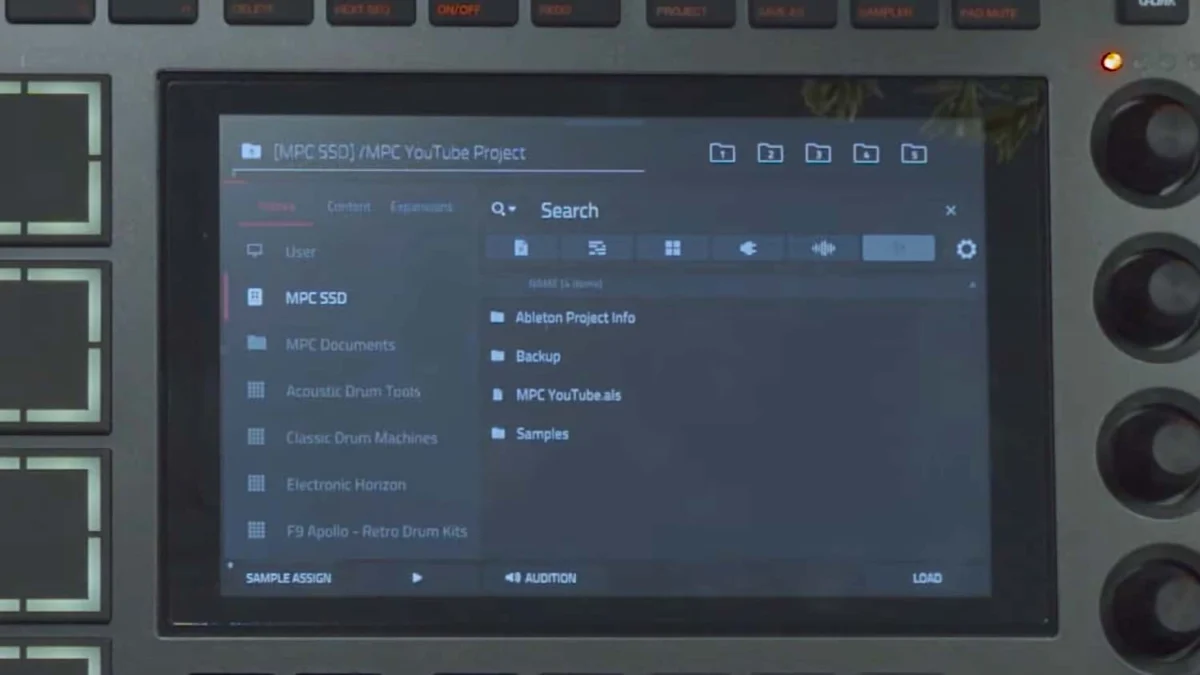
The landscape of standalone music production has undergone a significant shift as new demonstrations reveal the increasing interoperability between traditional Digital Audio Workstations (DAWs) and hardware controllers. In a recent technical showcase by industry commentator jtn.project, the workflow capabilities of the Akai Pro MPC Live III—the latest iteration in Akai Professional’s venerable line of music production centers—were put to the test. The demonstration highlighted a streamlined process for migrating Ableton Live projects directly onto the MPC hardware, a feature that addresses long-standing demands from electronic musicians for a more cohesive bridge between studio composition and live performance. By utilizing a simple drag-and-drop methodology, producers can now move complex arrangements from a computer-based environment into a portable, standalone unit without the traditional friction of manual sample remapping or MIDI reconfiguration.
The Evolution of Standalone Workflows
For decades, the Akai MPC series has been the cornerstone of beat-making and sampling. However, the rise of powerful DAWs like Ableton Live in the early 2000s created a digital-analog divide. Producers often found themselves caught between the tactile, rhythmic immediacy of the MPC pads and the deep sequencing and arrangement power of Ableton. While Akai has previously offered "MPC Software" that functions as a DAW plugin, the ability to natively host Ableton Live sets (.als files) on the hardware itself represents a fundamental evolution in the platform’s internal architecture.
The jtn.project video illustrates that the MPC Live III, running the latest iteration of Akai’s specialized Linux-based operating system, can interpret the structural data of an Ableton project. This includes the placement of audio clips, MIDI sequences, and basic mixer settings. This development follows years of incremental steps toward integration, such as the introduction of Ableton Link support in previous MPC firmware versions, which allowed for wireless tempo synchronization across devices on the same network.
Technical Mechanics of Project Translation
The transition from a desktop environment to a standalone hardware unit involves significant data translation. Ableton Live projects are essentially XML-based files that point to various audio assets and plugin parameters. When a user drags an Ableton project into the MPC Live III ecosystem, the hardware’s software layer must parse this XML data and map it to the MPC’s internal "Program" and "Sequence" structure.
Supporting data suggests that this integration is most effective when projects utilize standard audio clips and MIDI data. While the MPC cannot natively run third-party VST or AU plugins designed for macOS or Windows, it compensates by mapping MIDI tracks to its own internal library of high-quality synth engines, such as Fabric XL, OPx4, and Stage Piano. For producers who rely heavily on Ableton’s native instruments, the workflow often involves "freezing" or "flattening" tracks into audio stems before the transfer, ensuring that the sonic character remains intact when the computer is disconnected.
A Chronology of Akai and Ableton Synergy
The relationship between Akai Professional and Ableton AG is one of the most productive partnerships in the music technology industry. Understanding the current state of the MPC Live III requires a look at the timeline of their collaborative history:
- 2009: Akai releases the APC40, the first hardware controller designed specifically for Ableton Live. This established the "clip launching" paradigm that would define modern electronic performance.
- 2013: The launch of the original Ableton Push, manufactured in partnership with Akai, further blurred the lines between hardware and software.
- 2017: Akai returns to its roots with the MPC Live and MPC X, reintroducing the "standalone" concept but adding a touchscreen interface that mimicked DAW workflows.
- 2020: The MPC Live II introduces internal monitors and CV/Gate outputs, expanding the hardware’s role as a studio centerpiece.
- 2023-2024: The emergence of the MPC 3.0 software update and the MPC Live III hardware. This era is defined by "DAW-less" integration, where the hardware is no longer just a controller but a functional mirror of the software environment.
This chronology demonstrates a clear trajectory: the industry is moving away from the "controller-only" model toward "autonomous integration," where the hardware possesses enough processing power to handle the heavy lifting of a modern DAW.
Hardware Specifications and the Role of the MPC Live III
The MPC Live III arrives at a time when mobile processing power has reached a tipping point. To handle the requirements of an Ableton Live project, the hardware utilizes a multi-core ARM processor paired with expanded RAM (typically 4GB in the latest models). This allows the device to manage multiple audio tracks, real-time time-stretching, and a suite of internal effects without the latency issues that plagued earlier standalone samplers.
One of the key features of the Live III mentioned in recent technical reviews is its enhanced NVMe SSD slot, which provides the high-speed data transfer necessary for loading large Ableton projects with hundreds of samples. The inclusion of a multi-touch capacitive screen allows users to navigate the Ableton-style "Session View" with gestures similar to those used on a tablet, making the transition from mouse-and-keyboard to hardware pads more intuitive.
The Significance of the MPC 3.0 Firmware Update
While the hardware of the MPC Live III provides the "muscle," the recent MPC 3.0 firmware update provides the "brain." This software overhaul represents the most significant change to the MPC workflow since the transition from the legacy 2000XL/3000 era. The update introduces a "Linear Arrangement" mode that closely resembles the Arrangement View in Ableton Live, making the process of dragging and dropping projects much more logical.
In previous versions of the MPC OS, users were confined to a "Sequence" based workflow, which could be restrictive for those used to the free-flowing clip-launching of Ableton. The new firmware allows for a more fluid movement of data, where an Ableton "Scene" can be mapped directly to an MPC "Sequence," and individual clips can be triggered or arranged along a timeline with greater precision.
Market Analysis and Competitive Landscape
The push for better DAW-to-hardware integration is driven by a competitive market. Akai’s primary competitors, such as Native Instruments with the Maschine+ and Ableton itself with the Push 3 Standalone, are all vying for the same demographic: the "DAW-less" producer.
Market data from 2023 indicates that while 85% of music producers still use a computer as their primary production hub, there has been a 22% increase in the purchase of standalone hardware units. This suggests that producers are looking for ways to escape "screen fatigue" without sacrificing the complexity of their digital projects. By allowing Ableton projects to run on the MPC Live III, Akai is effectively positioning itself as the bridge between these two worlds. It captures the Ableton user base—which remains one of the largest in the world—and offers them a hardware exit ramp that doesn’t require them to start their projects from scratch.
Community Reception and Producer Workflows
The reaction from the production community to the jtn.project demonstration has been largely positive, though tempered by technical realism. Prominent users on platforms like Reddit’s r/MPC808 and the Gearspace forums have noted that while the "drag and drop" feature is a breakthrough, it still requires a disciplined approach to project management.
"The ability to take an Ableton set I started on a plane and move it to my MPC for a live set without exporting thirty individual stems is a game changer," noted one professional touring DJ. However, others have pointed out that the lack of VST support remains a hurdle. The consensus among power users is that this integration serves as an "arrangement bridge" rather than a 1:1 software clone. The goal is to move the creative intent and structural data of a track into a tactile environment where it can be performed and tweaked in real-time.
Broader Implications for the Music Industry
The successful integration of Ableton Live projects into Akai hardware signals a broader trend toward platform agnosticism in music technology. As hardware becomes more powerful and software becomes more modular, the specific "box" or "program" a producer uses is becoming less important than the ecosystem’s ability to share data.
This shift has several long-term implications:
- Live Performance Reliability: By moving projects to standalone hardware, performers reduce the risk of computer crashes or OS-related glitches during live shows.
- Collaborative Versatility: Producers using different platforms can now find common ground. An Ableton user can send a project file to an MPC user, who can then contribute using the hardware’s unique sampling tools.
- Educational Accessibility: For new students of music production, the barrier between learning a DAW and learning hardware is being lowered, as the logic of one increasingly applies to the other.
Conclusion
The demonstration of Ableton Live projects running on the Akai Pro MPC Live III marks a milestone in the convergence of studio and stage technology. By breaking down the barriers between the world’s most popular DAW and the industry-standard standalone sampler, Akai Professional has provided a roadmap for the future of music production. As firmware continues to evolve and processing power increases, the distinction between "in the box" and "out of the box" production will likely continue to fade, leaving producers with a unified creative environment that offers the best of both worlds. The integration showcased by jtn.project is not merely a convenience; it is a reflection of a maturing industry that prioritizes workflow fluidity and creative freedom over proprietary isolation.
