

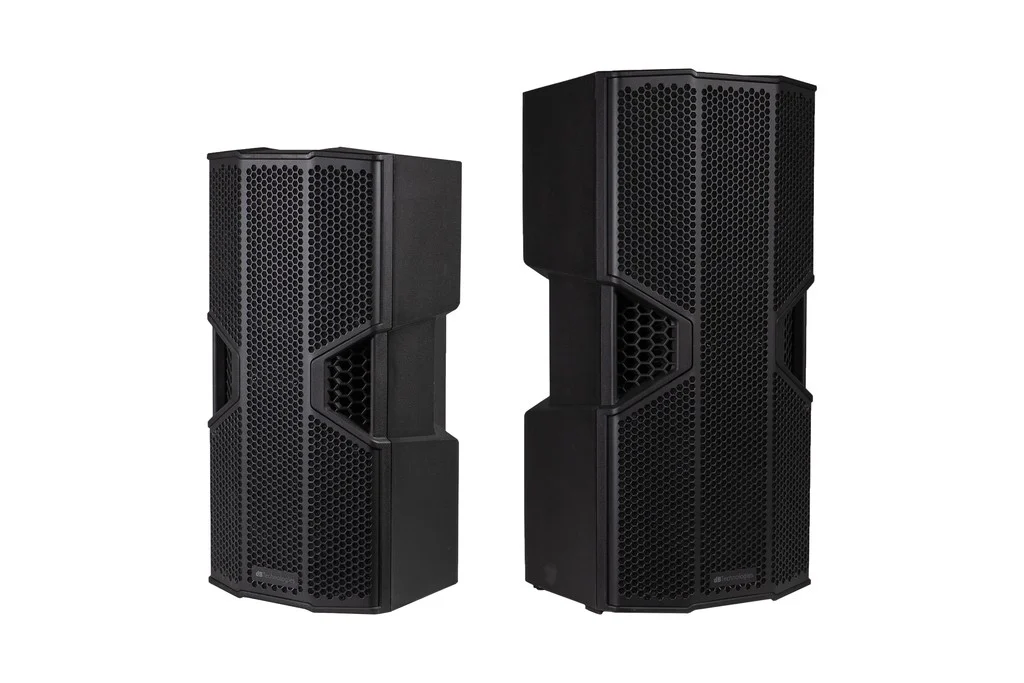
The professional audio landscape is witnessing a significant evolution with the introduction of the dBTechnologies Opera Nona series, a new generation of active loudspeakers designed to bridge the gap between portable convenience and high-end acoustic performance. By expanding the legendary Opera family, dBTechnologies has introduced two distinct models—the Opera Nona 210 and the Opera Nona 212—which utilize a sophisticated quasi-three-way architecture. These systems are engineered to meet the rigorous demands of modern live sound reinforcement, high-energy DJ setups, and flexible mobile PA applications. This launch marks a strategic move by the Italian manufacturer to offer a more nuanced solution for audio professionals who require high sound pressure levels (SPL) without sacrificing the phase coherence and clarity typically associated with more expensive point-source systems.
A New Architectural Approach: The Quasi-Three-Way Coaxial Design
At the heart of the Opera Nona series lies a design philosophy that departs from the traditional two-way format common in portable active speakers. Both the Nona 210 and Nona 212 employ a quasi-three-way configuration, which effectively utilizes two woofers to manage the low and lower-mid frequencies, paired with a coaxial mid-high section. This arrangement is specifically chosen to optimize the transition between drivers, ensuring that the critical midrange frequencies remain transparent and free from the "beaming" effects often found in large-format two-way speakers.
The Opera Nona 210 is equipped with two 10-inch ceramic woofers, each featuring a 2.5-inch voice coil. This dual-woofer setup allows the system to move a significant volume of air, providing a punchy and articulate low-end response that belies its compact footprint. In contrast, the Opera Nona 212 steps up the performance with two 12-inch woofers, also featuring 2.5-inch voice coils. This larger model is designed for applications requiring greater low-frequency extension and higher overall output, making it an ideal choice for outdoor events or larger club environments.
The high-frequency duties in both models are handled by a 1-inch exit compression driver with a 1.4-inch voice coil, mounted coaxially. This coaxial placement ensures that the sound originates from a single point in space, significantly improving the phase relationship between the drivers. With a crossover frequency set at 1,900 Hz and a dispersion pattern of 90° horizontal by 60° vertical, the Opera Nona series provides a consistent and predictable coverage area, which is essential for both front-of-house (FOH) duties and stage monitoring.
Power Management and Advanced DSP Integration
To drive these sophisticated driver configurations, dBTechnologies has integrated a high-efficiency Class-D power amplifier capable of delivering 1,000 Watts RMS (split as 2 × 500 Watts) and reaching peak outputs of 2,000 Watts. A critical feature for the mobile professional is the inclusion of an auto-range power supply. This technology allows the speakers to operate reliably across various voltage standards, protecting the internal components from fluctuations and ensuring consistent performance regardless of the local power grid’s stability.
The internal Digital Signal Processing (DSP) is where the Opera Nona series truly distinguishes itself from its predecessors. The system utilizes linear-phase FIR (Finite Impulse Response) filters. Unlike traditional IIR filters, FIR filtering allows for the independent manipulation of magnitude and phase, resulting in a much more accurate impulse response and a more natural sound stage. This level of processing is typically reserved for high-end touring arrays but has been successfully implemented here to enhance the "pro-sumer" and professional mobile market offerings.
Users can tailor the speaker’s response to specific environments using seven onboard DSP presets:
- Club: Optimized for high-energy music playback with a slight emphasis on the frequency extremes.
- Vocal: Enhances the 1kHz to 4kHz range for maximum speech and singing intelligibility.
- Bass Reduction: Ideal when using the speakers in conjunction with subwoofers.
- Playback: A balanced curve for general background music or presentations.
- Bass Boost: Provides additional low-end warmth for standalone use in smaller rooms.
- Wedge Vocal: Adjusted for floor monitor use to minimize feedback while emphasizing the voice.
- Wedge Playback: Optimized for musicians who need a full-range reference on stage.
Safety is also a primary concern, and the DSP includes a comprehensive suite of limiters, including Peak, RMS, and thermal protection, ensuring that the system remains operational even under extreme conditions.
Mechanical Design and Multi-Functional Versatility
The physical construction of the Opera Nona series reflects a deep understanding of the daily challenges faced by sound engineers and event technicians. The enclosures are crafted from high-grade polypropylene, a material chosen for its durability and relatively low weight. A 1.2 mm thick metal grille protects the drivers, ensuring longevity in transport and during rigorous live use.
One of the standout features of the Opera Nona design is its multi-functional geometry. The cabinets are designed with two different "wedge" angles, allowing them to be used as high-performance stage monitors. This versatility is further enhanced by the input section, which features two independent XLR/TRS combo inputs. Each input has its own gain control and sensitivity switch (Mic/Line), allowing a microphone and a playback source (or instrument) to be mixed directly within the speaker without the need for an external console.
For permanent installations or flown applications, the speakers are equipped with three M10 rigging points—two on the top and one on the rear. This allows for safe and easy suspension in theaters, houses of worship, or fixed-venue stages. For standard portable use, a 36 mm pole mount is integrated into the bottom. Portability is facilitated by three ergonomically placed handles (two on the sides and one on top), making the 19.2 kg (Nona 210) and 22.5 kg (Nona 212) units manageable for a single operator.
Technical Specifications and Performance Data
A closer look at the data sheets reveals the performance gap between the two models, allowing users to choose the right tool for their specific needs.
Opera Nona 210:
- Max SPL: 131.5 dB
- Frequency Response (-6 dB): 60 Hz – 20,000 Hz
- Dimensions: 300 mm (W) × 615 mm (H) × 324 mm (D)
- Weight: 19.2 kg
Opera Nona 212:
- Max SPL: 132.5 dB
- Frequency Response (-6 dB): 52 Hz – 20,000 Hz
- Dimensions: 350 mm (W) × 717 mm (H) × 371 mm (D)
- Weight: 22.5 kg
The Nona 212’s ability to reach down to 52 Hz makes it particularly effective for full-range applications where a dedicated subwoofer might not be feasible due to space or budget constraints. Meanwhile, the Nona 210 offers a more compact profile that is easier to integrate into tight stage setups or as a discreet fill speaker.

Chronology and Industry Context: The Path to LEATCON 26
The unveiling of the Opera Nona series is timed to coincide with the upcoming LEATCON 26 (Live Entertainment and Technology Convention), scheduled to take place from October 6th to 8th, 2026, in Hamburg, Germany. dBTechnologies will be showcasing these new units at Hall A1-F15. This event is a critical hub for the European AV industry, and the introduction of the Nona series at this venue underscores the manufacturer’s commitment to the professional "live" segment.
Historically, the Opera series has been one of dBTechnologies’ most successful product lines, evolving over nearly two decades from basic active speakers to sophisticated digital systems. The "Nona" designation (Latin for "ninth") suggests this is the ninth major iteration or a significant branch in the Opera lineage, representing years of research and development in transducer technology and digital processing.
The industry’s reaction to the announcement has been one of calculated interest. Market analysts suggest that by adopting the quasi-three-way coaxial design, dBTechnologies is directly challenging competitors who have traditionally dominated the high-output portable market with standard two-way 12-inch and 15-inch models. The coaxial driver, in particular, is a feature often associated with premium brands, and its inclusion in the Opera Nona series suggests a democratization of high-fidelity sound for the mobile sector.
Broad Implications for the Pro Audio Market
The introduction of the Opera Nona 210 and 212 has several implications for the broader pro audio market. First, it highlights the increasing importance of DSP as a tool for "fixing" acoustic challenges. By using FIR filters and specific presets, dBTechnologies allows users with varying levels of technical expertise to achieve a professional sound quickly.
Second, the move toward "quasi-three-way" designs in portable cabinets suggests that manufacturers are finding new ways to increase SPL without significantly increasing cabinet size. By using two smaller woofers instead of one large one, the Opera Nona 210 can achieve a slim profile while still providing the surface area equivalent of a much larger driver. This is a crucial advantage for rental companies and mobile DJs who need to maximize van space.
Finally, the availability of specialized accessories—such as the magnetic rain cover, custom tripod sets, and versatile wall brackets for both horizontal and vertical mounting—indicates that dBTechnologies is targeting not just the rental market but also the high-end installation sector. The magnetic rain cover, in particular, is a practical innovation that addresses the reality of outdoor festivals and pop-up events where weather can be unpredictable.
As the industry prepares for the LEATCON 26 showcase, the Opera Nona series stands as a testament to the ongoing refinement of active loudspeaker technology. It offers a blend of Italian engineering, practical functionality, and advanced digital processing that is likely to make it a staple in the inventory of sound companies and performers worldwide for the foreseeable future. Professionals interested in experiencing the Opera Nona 210 and 212 firsthand are encouraged to visit the dBTechnologies exhibit in Hamburg to see how these units perform in a real-world environment.
