

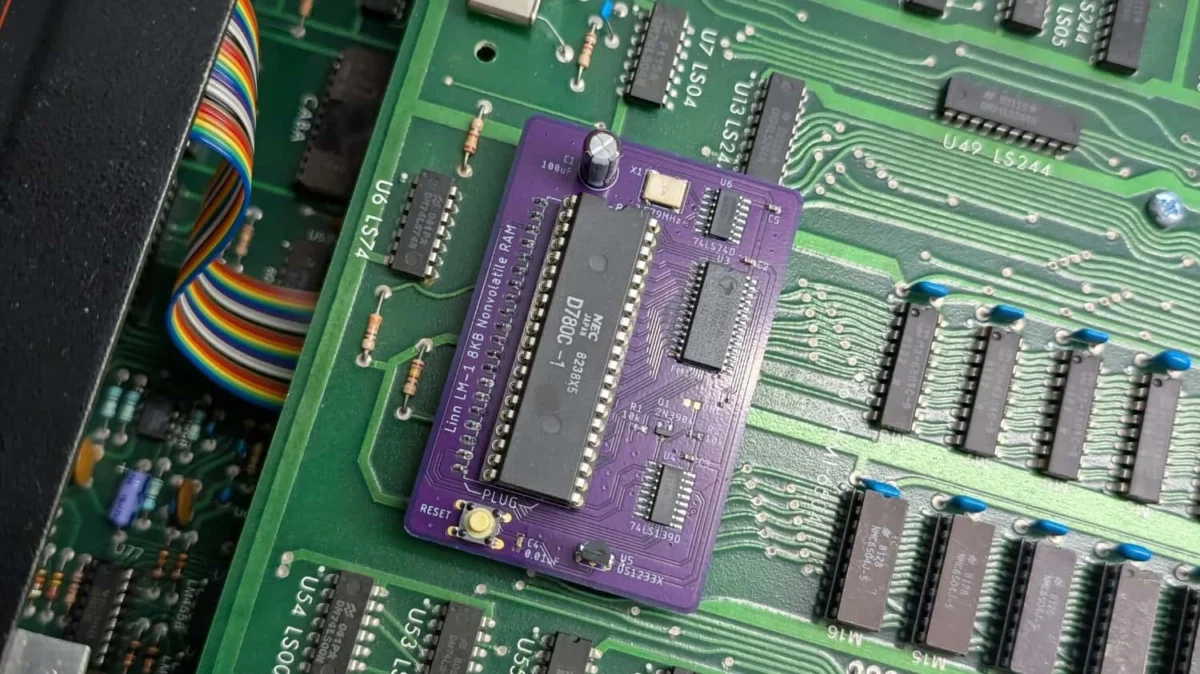
The landscape of vintage electronic music synthesis and percussion is witnessing a significant technological revival as Deft Audio reveals a comprehensive suite of hardware upgrades and maintenance solutions slated for the 2026 calendar year. This announcement centers on the Linn LM-1 Drum Computer, a seminal instrument in the history of digital music production, and its modern, authentic recreation, the Luma-1. By bridging the gap between late-1970s engineering and contemporary manufacturing standards, Deft Audio is positioning itself as a primary steward of the Roger Linn legacy, ensuring that the distinctive sonic characteristics of early digital sampling remain accessible to professional studios and enthusiasts alike.
The Historical Significance of the Linn LM-1
To understand the weight of Deft Audio’s recent announcement, one must look back to 1979, when Roger Linn designed the LM-1. Released in 1980, the LM-1 was the first drum machine to utilize digital samples of acoustic drums. Unlike its predecessors, which relied on analog synthesis to approximate percussive sounds, the LM-1 offered a level of realism that was previously unattainable. It featured 12 samples of real drums recorded at roughly 27kHz, including a bass drum, snare, hi-hat, cabasa, tambourine, two toms, two congas, cowbell, and claves.
The impact of the LM-1 on the music industry was immediate and profound. It became a cornerstone of the 1980s sound, favored by artists such as Prince, Peter Gabriel, The Human League, and Stevie Wonder. However, with only approximately 525 units ever produced, the LM-1 has become one of the rarest and most sought-after pieces of music technology in the world. Current market valuations for original units often exceed $20,000, making the preservation of existing hardware and the development of authentic recreations a matter of high priority for the vintage audio community.
The Genesis of the Luma-1 Recreation
The Luma-1 project, spearheaded by Deft Audio, represents a meticulous effort to recreate the LM-1 from the ground up. Unlike modern "clones" that often rely on digital signal processing (DSP) or field-programmable gate arrays (FPGA) to simulate vintage behavior, the Luma-1 is a hardware-accurate recreation. It utilizes the original Z80 microprocessor architecture and runs the exact software code found in the 1980 units.
Crucially, the Luma-1 retains the original audio signal path. This includes the use of vintage-specification digital-to-analog converters (DACs) and the specific filtering circuits that gave the LM-1 its "crunchy," punchy, and sought-after low-fidelity charm. The Luma-1 was born out of a necessity for spare parts for original units, eventually evolving into a full-scale production model that allows users to experience the LM-1 workflow and sound without the fragility and astronomical cost of a 45-year-old original machine.
Technical Overview of the 2026 Upgrade Suite
The video overview shared by Deft Audio outlines a series of hardware upgrades designed to enhance both the original LM-1 and the Luma-1 recreation. These upgrades are not merely cosmetic; they address fundamental engineering challenges inherent in vintage digital hardware.
Enhanced Power Supply Modules
One of the primary failure points in vintage LM-1 units is the power supply. The 2026 roadmap includes a modernized power delivery system designed to provide cleaner voltage rails with significantly lower noise floors. This is particularly vital for the LM-1’s sensitive analog output stages, where electromagnetic interference can degrade the clarity of the sampled sounds.
Advanced Component Replacements
Deft Audio has identified a steady supply of high-grade replacements for the AM6012 DACs and the CEM3320 filters (or their modern high-fidelity equivalents). By providing these components, Deft Audio ensures that the "heart" of the machine remains functional even as original 1980s components reach their end-of-life cycle.
Interface and Connectivity Expansions
While the original LM-1 lacked MIDI (which was not standardized until 1983), the Luma-1 incorporates modern connectivity. The 2026 upgrades are expected to further refine the USB-MIDI implementation and provide more robust synchronization options for modern DAW (Digital Audio Workstation) integration. This allows the vintage sound to sit seamlessly within a 21st-century production environment.
Chronology of Development and Availability
The timeline for these developments reflects a long-term commitment to the platform:
- 1979–1980: Original design and release of the Linn LM-1.
- 2020–2022: Initial development and open-source release of the Luma-1 project files.
- 2023–2024: Small-batch production and refinement of the Luma-1 hardware.
- Late 2024: Announcement of the 2026 hardware upgrade roadmap and spare parts availability.
- 2026: Projected wide availability of the new hardware modules and comprehensive support kits.
Supporting Data and Market Context
The demand for authentic vintage drum sounds has created a bifurcated market. On one side, companies like Behringer and Roland offer affordable, mass-produced recreations (such as the RD-8 or the TR-08). On the other side, boutique manufacturers like Deft Audio cater to a "purist" market that demands 1:1 hardware accuracy.
According to industry sales data from platforms like Reverb and eBay, the resale value of high-end boutique recreations has remained remarkably stable, often retaining 90% or more of their original MSRP. This stability is driven by the fact that these machines use authentic components that are increasingly difficult to source. Deft Audio’s move to formalize an upgrade path for 2026 is seen by analysts as a strategy to bolster the long-term value of the Luma-1, positioning it as a professional-grade instrument rather than a hobbyist project.
Official Responses and Industry Reception
While Roger Linn, the original creator, has moved on to other innovations such as the LinnStrument, he has historically been supportive of projects that respect the integrity of his original designs. While no official statement was released by Linn regarding the Deft Audio 2026 roadmap, the engineering community has praised the project for its transparency.
A spokesperson for the vintage restoration firm "Synth Spa" noted, "The availability of new, high-quality PCBs and specific DAC components for the LM-1 architecture is a game-changer. For years, we’ve had to cannibalize lesser machines to save LM-1s. Deft Audio is providing a sustainable future for these instruments."
In the shared video, Deft Audio emphasizes that the goal is not to replace the original LM-1, but to provide a "safety net" for owners. By creating a market for these parts, they reduce the risk associated with owning a piece of music history.
Broader Impact and Implications for the Music Industry
The implications of Deft Audio’s 2026 roadmap extend beyond the niche world of drum machine collectors. It represents a broader trend in the music industry toward "heritage technology." Much like the automotive industry has a market for "restomod" classic cars—vintage bodies with modern, reliable internals—the electronic music world is embracing hardware that offers vintage sonics with modern reliability.
The Preservation of Digital Heritage
There is a common misconception that digital technology does not age. In reality, the early digital era (1975–1985) is particularly vulnerable. Integrated circuits from this era are prone to "chip rot," and early firmware stored on EPROMs can suffer from data degradation over decades. By recreating the LM-1 software environment and hardware path, Deft Audio is performing a vital act of digital archaeology.
Aesthetic Influence on Modern Production
The "Linn sound"—characterized by its specific swing, the slight grit of 8-bit companding, and the punch of its analog filters—continues to influence modern genres from Synthwave to Contemporary R&B. By ensuring that the hardware remains available and upgradable, Deft Audio facilitates a "hands-on" creative process that software emulations struggle to replicate. The tactile experience of the LM-1’s faders and buttons is considered by many producers to be an integral part of the instrument’s "groove."
Conclusion: A Forward-Looking Legacy
As 2026 approaches, the focus for Deft Audio remains on quality and authenticity. The planned hardware upgrades signify more than just a product launch; they represent a commitment to a specific era of musical innovation. For the professional recording studio, these upgrades offer the peace of mind that their centerpiece gear will remain operational for another generation. For the artist, it offers a connection to the sounds that defined a decade, modernized for the demands of the current era.
The Luma-1 and the accompanying upgrade suite from Deft Audio stand as a testament to the enduring power of Roger Linn’s 1979 vision. By providing the parts, the knowledge, and the hardware to keep these sounds alive, Deft Audio ensures that the heartbeat of the 1980s will continue to drum well into the future. Detailed specifications and pre-order information for the upcoming hardware components are expected to be updated periodically on the Deft Audio official site as the 2026 rollout nears.
