

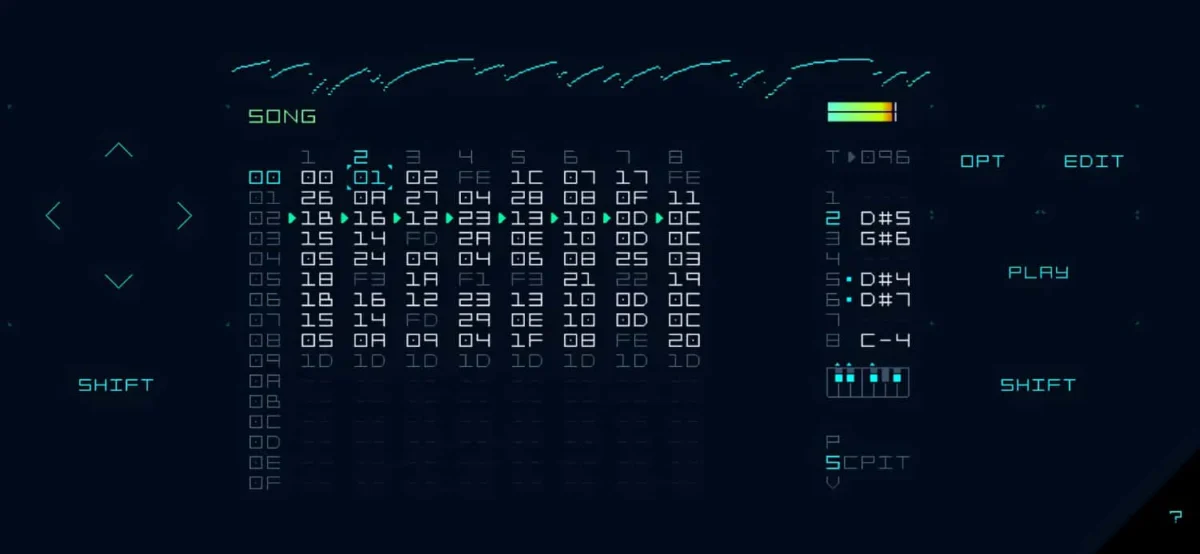
The landscape of mobile music production has undergone a significant transformation with the official release of the M8 Music Tracker for iOS. Developed by Dirtywave, the application is a comprehensive port of the acclaimed M8 hardware tracker, a boutique handheld sequencer and synthesizer that has gained a cult following among electronic musicians, chiptune artists, and sound designers. This new digital iteration brings the full functionality of the hardware—including its eight-track sequencer, diverse synthesis engines, and advanced sampling capabilities—to the iPhone and iPad, marking a pivotal moment for the accessibility of tracker-based workflows.
The M8 Music Tracker operates on a vertical sequencing paradigm, a methodology that traces its roots back to the late 1980s and early 1990s with software like Ultimate Soundtracker and ProTracker on the Commodore Amiga. Unlike the horizontal timeline found in traditional Digital Audio Workstations (DAWs), trackers utilize a top-to-bottom scroll where note data, volume, and effects are entered into a grid. The M8 optimizes this workflow for modern hardware, offering a hierarchical structure where individual musical ideas are organized into "Phrases," which are then sequenced into "Chains," and finally arranged into "Songs."
Technical Architecture and Synthesis Engines
At the core of the M8 Music Tracker is a sophisticated sound engine that belies its minimalist interface. The application features eight independent tracks, each of which can be assigned to one of several internal synthesis engines or used as a MIDI controller for external hardware and software. The inclusion of these diverse engines ensures that the M8 is a self-contained production powerhouse.
The "Macrosynth" engine is perhaps the most versatile component, based on the open-source code of the Mutable Instruments Braids module. It provides a wide array of synthesis models, ranging from classic analog waveforms and FM to more exotic types like physical modeling, vowel synthesis, and granular noise. This allows users to generate complex timbres that would typically require a modular synthesizer setup.
Complementing the Macrosynth is the "FMSynth," a dedicated four-operator Frequency Modulation engine. This engine allows for the creation of the crystalline bells, metallic percussions, and deep basses characteristic of 1980s digital synthesis. For those seeking more contemporary textures, the "Hypersynth" provides a "supersaw" style architecture, ideal for dense, harmonically rich pads and lead sounds.
The "Wavsynth" engine caters to fans of classic digital synthesis, offering a variety of 8-bit and subtractive waveforms. This is particularly useful for chiptune production or for adding a lo-fi grit to modern tracks. Additionally, the "Sampler" engine allows users to import, play back, and manipulate audio files. It includes advanced features such as slice points, looping, and real-time pitch shifting, making it a robust tool for beat-making and atmospheric sound design.
Historical Context and the Evolution of Dirtywave
The release of the iOS version follows years of development by Timothy Lamb, known in the music community as Trash80. The project began as a personal quest to create a portable music-making device inspired by the Little Sound Disk Jockey (LSDJ) software for the Nintendo Game Boy. The hardware version, known as the M8 Tracker, was built around the Teensy 4.1 micro-controller and featured a high-resolution display and mechanical keys.
The M8 hardware (Model:01 and the updated Model:02) quickly became known for its power-to-size ratio. However, due to global supply chain issues and the boutique nature of the production, the hardware has frequently been out of stock, leading to high demand on the secondary market. To mitigate this and increase accessibility, Dirtywave previously supported a "Headless" version of the M8, which allowed users to run the firmware on a standalone Teensy 4.1 connected to a computer.
The transition to iOS represents the next logical step in the platform’s evolution. By porting the software to Apple’s mobile operating system, Dirtywave has eliminated the hardware barrier to entry, allowing a much broader audience to experience the tracker workflow at a fraction of the cost of the physical unit.
Integration with the iOS Ecosystem and External Hardware
One of the most significant advantages of the M8 Music Tracker on iOS is its integration with modern mobile production standards. The app supports CoreMIDI input and output, enabling it to function as the brain of a larger studio setup. Users can connect MIDI keyboards, pad controllers, or even other iOS music apps to trigger sounds or record sequences.
A standout feature is the dedicated support for the Novation Launchpad Pro MKIII. This integration allows the Launchpad to act as a physical interface for the M8, providing a tactile experience that mimics the hardware’s grid-based navigation. Furthermore, the inclusion of Inter-App Audio support allows the M8 to route audio to other applications, such as effects processors or recording suites like AUM and AudioBus.
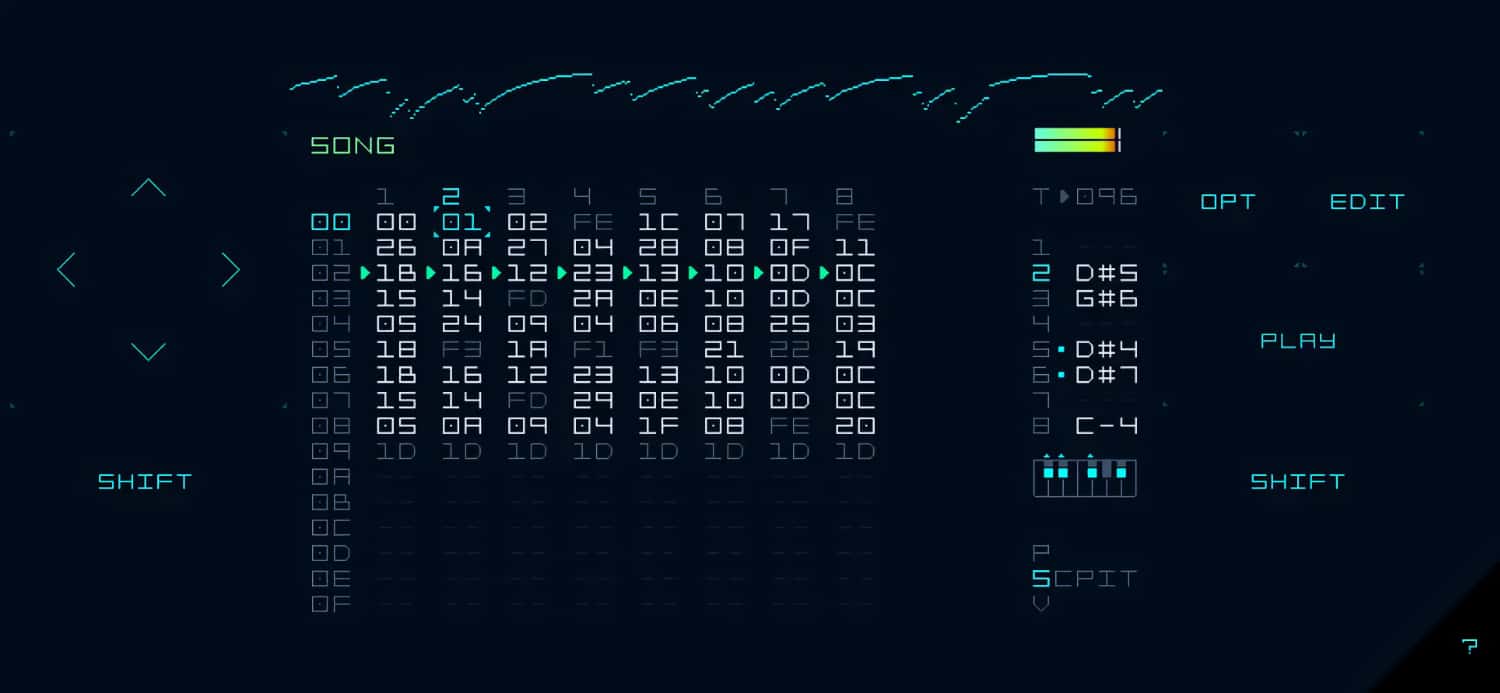
The iOS version also leverages the Apple Files app, providing a streamlined way to manage projects, instruments, and samples. Users can easily import their own sample libraries or export rendered audio files for final mastering in a traditional DAW. Critically, the software maintains full file compatibility with the M8 hardware. Musicians can start a project on their iPhone during a commute and later transfer the files to their M8 Model:02 hardware for a live performance, ensuring a seamless cross-platform workflow.
The Tracker Workflow: Precision and Modulation
The M8 is distinguished by its "per-step" modulation capabilities. In the tracker interface, every single note can be accompanied by "FX Commands." These commands can control a vast array of parameters, including filter cutoff, pitch slides, arpeggiation, and even the probability of a note triggering. This level of granular control is a hallmark of the tracker genre and allows for the creation of highly complex, evolving patterns that are difficult to achieve in a standard piano-roll interface.
The "Table" system further enhances this power. Tables are essentially mini-sequencers that run at a much higher speed than the main song. They can be used to create custom envelopes, complex vibratos, or rapid-fire percussion rolls. By automating these tables, users can design sounds that feel alive and reactive, moving beyond static loops.
Market Implications and Professional Reception
The release of the M8 Music Tracker for $29.99 USD significantly disrupts the mobile music market. Compared to the $600+ price tag of the hardware unit, the app offers an identical feature set for a fraction of the cost. This move is expected to attract a new generation of producers who may have been intimidated by the learning curve or the price of boutique hardware.
Industry analysts suggest that the M8’s arrival on iOS puts pressure on other tracker manufacturers and software developers. While there are other trackers available on the App Store, few offer the specific combination of high-end internal synthesis and the rigorous, "pro-grade" sequencing logic found in the M8. The app competes directly with established mobile DAWs by offering a specialized, high-efficiency alternative for those who prefer algorithmic and mathematical approaches to composition.
Initial reactions from the electronic music community have been overwhelmingly positive. Early adopters have praised the app’s stability and the faithfulness of the port. The touch interface has been optimized to ensure that the "shortcuts" and "button combos" that make the hardware version so fast to operate are effectively translated to gestures and on-screen controls.
Technical Specifications and Availability
The M8 Music Tracker is currently available on the Apple App Store and is compatible with devices running iOS 15.0 or later. Despite the complexity of its synthesis engines, the app is optimized for the ARM architecture of Apple’s A-series and M-series chips, ensuring low-latency performance even in dense projects.
Key technical specifications include:
- Tracks: 8 monophonic tracks (internal or MIDI).
- Sequencer: 256 phrases, 256 chains, and a song arranger.
- Synthesis: Macrosynth, FM, Wavsynth, Hypersynth.
- Sampling: 16-bit/44.1kHz support with real-time manipulation.
- Effects: Global reverb, delay, and chorus, along with per-track filters and distortions.
- Connectivity: CoreMIDI, Inter-App Audio, Game Controller support.
- File Management: Full compatibility with .m8z (song) and .m8i (instrument) files used by the hardware.
Broader Impact on the Music Production Landscape
The democratization of the M8 platform reflects a broader trend in the music industry toward "software-first" accessibility for boutique hardware. As processing power in mobile devices continues to rival that of dedicated hardware, the distinction between a "gadget" and a "professional tool" becomes increasingly blurred.
By providing a bridge between the niche world of trackers and the mainstream mobile market, Dirtywave is not only expanding its user base but also preserving a unique method of musical composition. The M8 Music Tracker stands as a testament to the enduring relevance of the tracker workflow, proving that a system designed decades ago can still provide the most efficient and powerful way to compose complex electronic music in the modern era.
As the community around the M8 continues to grow, the sharing of "bundles"—complete project folders containing samples and instruments—is expected to flourish on social platforms and dedicated forums. This collaborative aspect, combined with the portability of the iOS version, positions the M8 Music Tracker as a central hub for a new era of mobile-first electronic music innovation. For the professional producer and the hobbyist alike, the M8 on iOS offers a deep, uncompromising environment that challenges the limitations of traditional mobile music software.
