

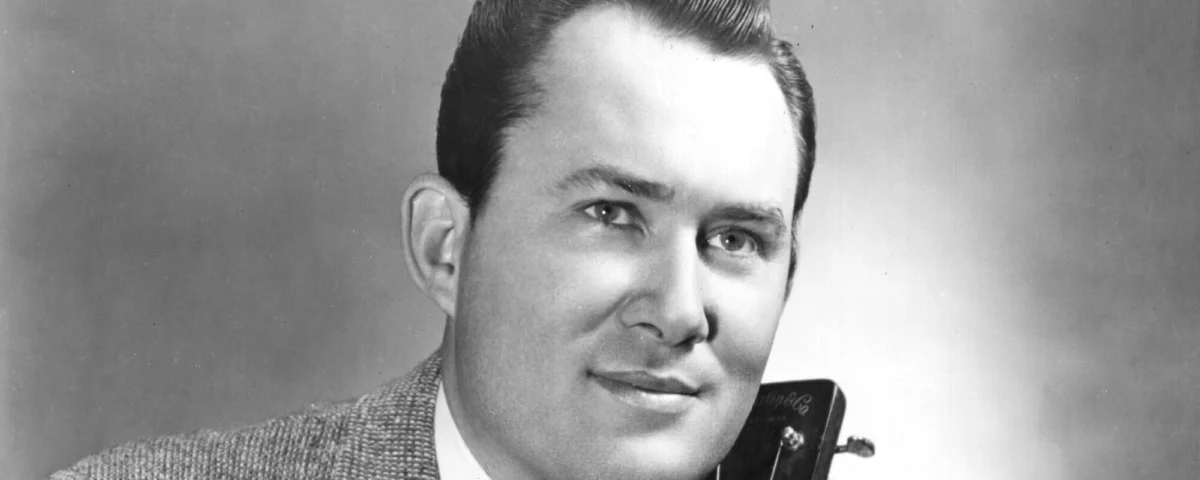
On April 14, 1958, the landscape of American popular music witnessed a pivotal moment as Don Gibson’s "Oh Lonesome Me" solidified its position at the summit of the country charts. This date marks the height of a dominant run where the single remained at the No. 1 spot for eight non-consecutive weeks, signaling a shift in the sonic direction of the genre. Beyond its success within the country music circuit, "Oh Lonesome Me" represented Gibson’s most significant crossover achievement, peaking at No. 7 on the Billboard Hot 100. The track’s enduring popularity and its subsequent adoption by a diverse array of artists over the following six decades highlight its status as a foundational element of the "Nashville Sound."
The Genesis of a Double-Sided Masterpiece
The story of "Oh Lonesome Me" is inextricably linked to its B-side, "I Can’t Stop Loving You." Both songs were written by Gibson during a single afternoon in 1957 while he was living in a trailer park in Knoxville, Tennessee. At the time, Gibson was struggling to find his footing as a songwriter and performer. The simultaneous creation of two songs that would eventually become standards in the Great American Songbook is often cited by music historians as one of the most productive creative bursts in the history of the industry.
Gibson recorded the tracks in December 1957 at RCA’s Studio B in Nashville. The session was produced by the legendary Chet Atkins, who was instrumental in developing the "Nashville Sound." This production style was a conscious effort by RCA and other major labels to reclaim market share lost to the rising tide of rock and roll. By stripping away the traditional, twangy elements of honky-tonk—such as the prominent fiddle and steel guitar—and replacing them with smooth backing vocals and a more polished, rhythmic arrangement, Atkins and Gibson created a sound that appealed to both rural and urban audiences.
Chronology of Chart Dominance and Crossover Success
Upon its release in late 1957, "Oh Lonesome Me" began a rapid ascent. By early 1958, it had become a fixture on national radio. The song’s chart trajectory is a testament to its broad appeal:
- December 1957: Single released on RCA Victor.
- February 1958: The song enters the Billboard Country and Western charts.
- April 14, 1958: The song holds the No. 1 position, a status it would maintain for a total of eight weeks throughout the spring.
- May 1958: The song reaches its peak of No. 7 on the Billboard Hot 100, a rare feat for a country artist during the era of Elvis Presley and Buddy Holly.
The success of "Oh Lonesome Me" was mirrored by its B-side, "I Can’t Stop Loving You," which also reached the Top 10 on the country charts. This "double-sided hit" established Don Gibson as a premier songwriter, earning him the nickname "The Sad Poet" for his ability to articulate themes of loneliness and heartbreak with deceptive simplicity.
Supporting Data: The Evolution of the Nashville Sound
The production of "Oh Lonesome Me" serves as a primary case study for the modernization of country music. Data from the late 1950s suggests that country music sales had been declining as younger listeners flocked to rockabilly and pop. The "Nashville Sound," characterized by the use of the "slip-note" piano style (popularized by Floyd Cramer on Gibson’s records) and the Anita Kerr Singers’ vocal harmonies, successfully pivoted the genre toward a more "middle-of-the-road" (MOR) listener.
Gibson’s recording featured a distinct drum beat that leaned closer to the "shuffle" rhythm of early rock than the traditional 2/4 beat of hillbilly music. This rhythmic innovation, combined with Gibson’s smooth baritone, allowed the song to be programmed on pop stations alongside artists like Perry Como or The McGuire Sisters without sounding out of place.
The Phenomenon of the B-Side: "I Can’t Stop Loving You"
While "Oh Lonesome Me" was the primary hit for Gibson in 1958, the B-side, "I Can’t Stop Loving You," eventually achieved a level of cultural saturation that surpassed the A-side. The song’s longevity is evidenced by the sheer volume of high-profile covers.
In 1958, Kitty Wells recorded a version that reached the Top 5, proving the song’s versatility across genders. However, the most transformative moment for the composition came in 1962 when Ray Charles recorded it for his landmark album, Modern Sounds in Country and Western Music.
The circumstances surrounding the release of Charles’ version are a notable chapter in music industry lore. Charles initially did not intend to release "I Can’t Stop Loving You" as a single. However, after ABC-Paramount noticed that Tab Hunter had recorded a cover and was preparing to market it, the label rushed Charles’ version to radio. Supported by a massive promotional campaign, including full-page advertisements in Billboard, Ray Charles’ rendition became a global sensation. It topped the Pop, R&B, and Adult Contemporary charts simultaneously, ultimately winning a Grammy Award and being ranked by Rolling Stone as one of the greatest songs of all time.
A Timeline of Notable Interpretations
The simplicity of Gibson’s writing provided a canvas upon which artists of various genres could project their own styles. The following timeline highlights the song’s enduring presence in the cultural zeitgeist:
- 1961: Johnny Cash releases a stripped-down version of "Oh Lonesome Me," which reaches No. 13 on the country charts, bringing a darker, more somber tone to the lyrics.
- 1962: Ray Charles’ cover of the B-side redefines the relationship between soul and country music.
- 1963: Count Basie records an instrumental version of "I Can’t Stop Loving You," which wins the Grammy for Best Instrumental Arrangement.
- 1967: The Everly Brothers include "Oh Lonesome Me" on their album The Hit Sound of the Everly Brothers, emphasizing the song’s melodic pop sensibilities.
- 1970: Neil Young records a slow, melancholic version for his album After the Gold Rush, demonstrating the song’s appeal to the folk-rock movement.
- 1978: Loretta Lynn performs the song on The Muppet Show, accompanied by a chorus of Muppet dogs, illustrating the song’s transition into the realm of general Americana and family entertainment.
- 1990: The Kentucky Headhunters release a blues-rock infused version of "Oh Lonesome Me." It reaches No. 8 on the Billboard Hot Country Songs chart, becoming the band’s highest-charting single and proving the song’s viability in the "New Country" era.
Analysis: The Power of Universal Simplicity
Musicologists often point to Gibson’s work as a masterclass in "universal songwriting." Unlike the complex narratives found in the work of his contemporaries, Gibson’s lyrics for "Oh Lonesome Me" and "I Can’t Stop Loving You" avoided specific regionalisms or intricate metaphors.
The lyrics of "Oh Lonesome Me"—"Everybody’s going out and having fun / I’m just a fool for staying home and having none"—express a fundamental human experience: social alienation and the lingering pain of a breakup. By utilizing a straightforward AABB rhyme scheme and a repetitive, catchy chorus, Gibson ensured that the song was easily memorized and widely relatable. This "simplicity by design" is what allowed the song to be successfully reinterpreted by artists as diverse as Frank Sinatra, Elvis Presley, and Bryan Adams.
Official Responses and Industry Recognition
The industry’s recognition of Gibson’s contribution to the 1958 musical landscape has been consistent. Don Gibson was inducted into the Country Music Hall of Fame in 1991, with his songwriting prowess cited as his primary legacy.
In retrospectives provided by the Country Music Association (CMA), Gibson is frequently credited with helping the genre survive the "existential threat" posed by the initial rise of rock music. By providing "Oh Lonesome Me" as a blueprint, he showed that country music could be sophisticated, commercially competitive on a global scale, and emotionally resonant without relying on outdated stereotypes of rural life.
Broader Impact and Implications
The legacy of April 14, 1958, extends beyond the charts. The success of "Oh Lonesome Me" and its B-side fundamentally changed the business model for Nashville songwriters. It demonstrated the immense financial value of the "crossover hit" and the importance of publishing rights. Gibson, who retained his songwriting credits, became one of the wealthiest figures in Nashville, proving that the pen was indeed as mighty as the voice.
Furthermore, the song played a subtle but significant role in the desegregation of the airwaves. When Ray Charles took a Don Gibson song to the top of the charts in 1962, it broke down cultural barriers, showing that "white" country music and "Black" soul music shared the same emotional DNA. This cross-pollination, which began with the crossover success of Gibson’s original 1958 recording, paved the way for the eclectic nature of modern American music.
Today, "Oh Lonesome Me" remains a staple of classic country radio and a frequent inclusion in television and film soundtracks. Its 68-year journey from a Knoxville trailer park to the heights of the Billboard charts serves as a definitive example of how a simple melody and an honest lyric can capture the imagination of the world. Don Gibson may have written the song out of a sense of personal isolation, but in doing so, he created a communal anthem for the "lonesome" in everyone.
