

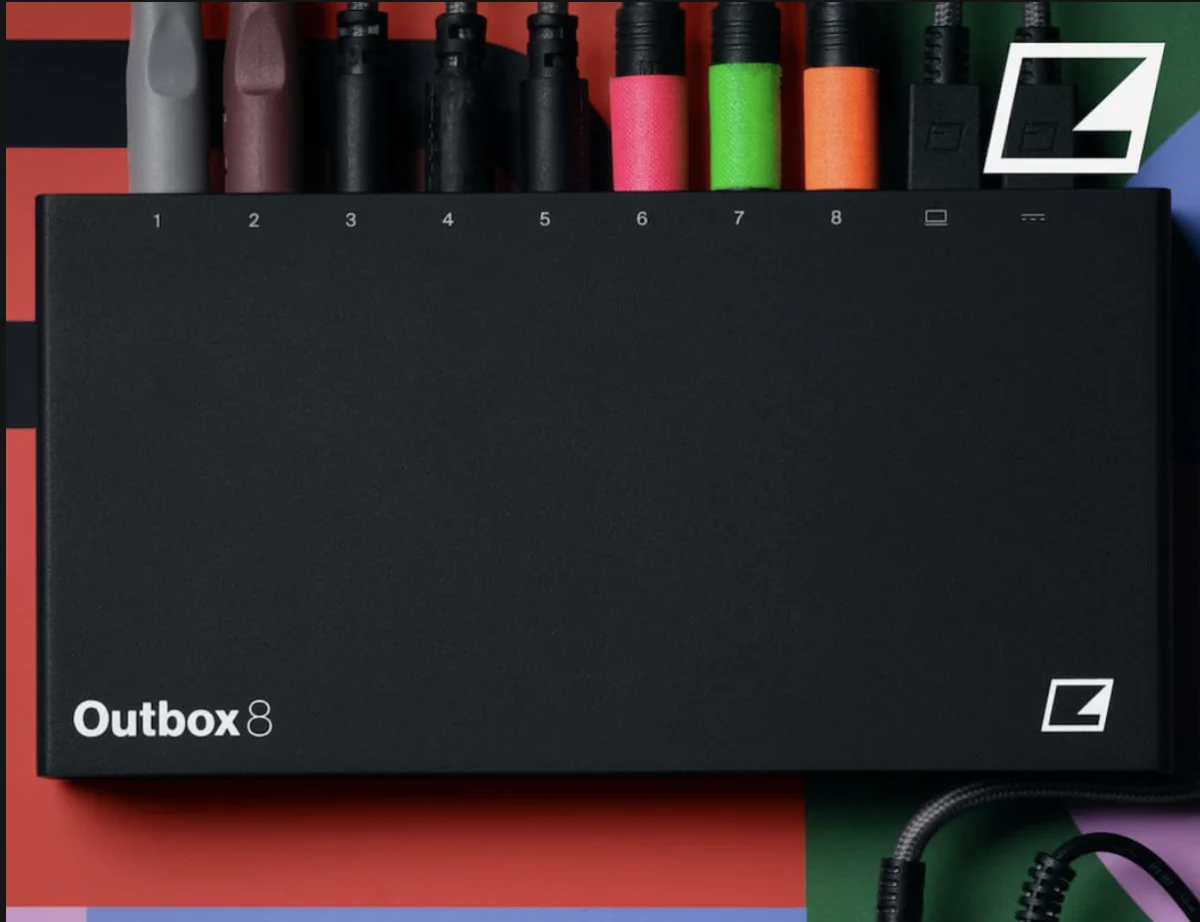
The release of the Elektron Outbox 8 marks a significant milestone for the Swedish music hardware manufacturer, addressing a long-standing demand for expanded physical connectivity within its compact instrument lineup. As demonstrated in a comprehensive technical walkthrough by Matthew Piecora, a prominent figure in the electronic music community known as EZBOT, the Outbox 8 functions as an eight-channel audio and Control Voltage (CV) breakout box. This hardware serves as a bridge between the digital flexibility of Elektron’s "Digi" series—including the Digitakt, Digitone, and the recently launched Digitone II—and the tactile, analog world of modular synthesizers and external signal processors. By offering eight fully configurable physical outputs, the device transforms the routing capabilities of compatible USB-enabled instruments, allowing users to move beyond the limitations of standard stereo outputs.
Technical Specifications and Core Functionality
At its core, the Outbox 8 is designed to function as both a USB host and a USB device, facilitating a high degree of interoperability between various hardware components. The primary feature of the unit is its eight DC-coupled outputs. DC coupling is a critical technical specification for modern hybrid setups, as it allows the interface to transmit not only high-frequency audio signals but also the low-frequency direct current required for Control Voltage. This enables the Outbox 8 to act as a MIDI-to-CV converter, allowing an Elektron sequencer to control pitch, gates, and modulation parameters on Eurorack modules or semi-modular synthesizers like the Moog Mavis.
The device’s architecture supports eight-channel audio routing, which effectively bypasses the internal summing of a connected instrument. For example, in a standard configuration, a Digitakt or Digitone outputs a stereo mix. With the Outbox 8, individual tracks—such as a kick drum, a snare, and a lead synth—can be routed to their own dedicated physical outputs. This allows for discrete processing through external hardware, such as analog compressors, distortion pedals, or high-end outboard equalizers, before the signal reaches a front-of-house mixer or a Digital Audio Workstation (DAW).
Chronology of Development and Market Context
The development of the Outbox 8 follows years of evolution in Elektron’s connectivity ecosystem. Historically, Elektron’s flagship "large-format" machines, such as the Analog Rytm and the Analog Four, featured individual outputs for every track. However, the more compact and affordable "Digi" line, while powerful in terms of sequencing and sound engines, was restricted to a single stereo output pair. To circumvent this, Elektron developed Overbridge, a proprietary software suite that allows for multitrack audio streaming via USB to a computer.
While Overbridge solved the multitracking issue for studio environments, live performers often sought a "DAW-less" solution that did not require a laptop on stage. The Outbox 8 represents the hardware realization of this need. Its release coincides with the launch of the Digitone II, suggesting a strategic move by Elektron to create a more modular and expandable hardware ecosystem. By offloading the output stage to an external breakout box, Elektron can maintain the compact footprint of its primary instruments while providing professional-grade routing options for those who require them.
Integration with the Elektron Ecosystem and Third-Party Hardware
During his technical demonstration, Matthew Piecora highlighted the seamless integration between the Outbox 8 and the Digitone II. One of the primary advantages discussed was the ability to define "Audio Routing Rules." In the Digitone II’s internal settings, users can designate which internal tracks are sent to the Outbox 8’s physical outputs. This allows for complex live performance setups where certain elements are processed internally with digital effects, while others are sent "dry" to external gear.
The Outbox 8 also extends its utility to non-Elektron hardware. Piecora demonstrated the device’s compatibility with the M8 Tracker, a portable sequencer and synthesizer. Through the use of the Outbox Web Configurator—a browser-based utility—the Outbox 8 can be profiled to recognize different hardware devices. This configurator allows users to map MIDI channels to specific CV outputs and manage the internal signal path of the breakout box. The ability to "profile" devices automatically simplifies the setup process, ensuring that the Outbox 8 recognizes the specific channel configurations and sample rates of the connected host.
Advanced Applications: MIDI-to-CV and Modular Control
The Outbox 8’s impact on modular synthesis integration cannot be overstated. For musicians utilizing Eurorack systems, the device serves as a central hub. By converting MIDI data from an Elektron sequencer into CV and Gate signals, the Outbox 8 allows users to leverage Elektron’s famous "Parameter Locks" and generative sequencing capabilities to control analog oscillators and filters.
In the demo, Piecora showcased the sequencing of a Moog Mavis, illustrating how the Outbox 8 manages clock and trigger settings. The precision of the Outbox 8’s internal clock ensures that modular sequences remain perfectly synchronized with the digital host. Furthermore, the DC-coupled nature of the outputs means that LFOs (Low Frequency Oscillators) and envelopes generated within the Elektron box can be sent as modulation sources to the modular rig, effectively expanding the synthesis architecture of the analog hardware.
Live Performance and External FX Processing
A significant portion of the recent technical analysis focused on the "Octacosm V2" setup, which involves using the Outbox 8 in conjunction with the Elektron Octatrack. The Octatrack is widely regarded as a powerful performance sampler and sequencer, but it is often limited by its four physical inputs and four physical outputs. By adding the Outbox 8 to the signal chain, the Octatrack can function as a massive external effects processor.
Signals from other instruments can be routed through the Outbox 8 into the Octatrack for real-time sampling and manipulation, and then sent back out to the mixer via the Outbox 8’s additional outputs. This creates a "dual-bus" architecture that is highly conducive to live improvisation. Piecora demonstrated this by creating ambient textures and synth processing chains that would be impossible with a standalone unit. This workflow allows for "Pseudo-Delay" tricks—using re-triggers and volume fades—to create complex rhythmic and spatial effects that are routed independently of the main mix.
Analysis of Implications for the Music Industry
The introduction of the Outbox 8 signifies a broader trend in the music technology industry toward modularity and hybrid workflows. As more musicians move away from computer-centric production, there is an increasing demand for hardware that offers the same level of routing flexibility found in a DAW. The Outbox 8 addresses this by providing a high-bandwidth, low-latency hardware interface that prioritizes physical connectivity.
From a manufacturing perspective, the Outbox 8 allows Elektron to cater to two distinct market segments. The "entry-level" user can purchase a Digitakt or Digitone and enjoy a powerful, self-contained instrument. The "power user" or professional performer can then choose to expand that instrument’s capabilities by adding an Outbox 8, rather than being forced to upgrade to a much more expensive, larger-format machine. This "modular" approach to hardware ownership is likely to be mirrored by other manufacturers in the coming years.
Furthermore, the inclusion of a web-based configurator reflects a shift toward platform-agnostic software support. By using a browser-based tool rather than a dedicated application that requires frequent OS-specific updates, Elektron ensures that the Outbox 8 remains functional and easy to configure across various operating systems and devices, including tablets and mobile phones.
Supporting Data and Diagnostic Capabilities
Technical diagnostics performed during the hands-on sessions revealed that the Outbox 8 maintains a high level of signal integrity, with minimal noise floor interference even when routing multiple channels of audio and CV simultaneously. The device supports high-resolution audio, ensuring that the digital-to-analog conversion process does not degrade the sound quality of the host instrument.
The Outbox 8’s hardware specifications include:
- Connectivity: USB-C for host/device connection.
- Outputs: 8 x 1/4" TRS jacks, DC-coupled.
- Power: Flexible power options via USB or external DC input.
- Software: Outbox Web Configurator for MIDI mapping and output assignment.
- Compatibility: Optimized for Elektron "Digi" series, Octatrack, and Class Compliant USB audio devices.
Official Responses and Community Reception
Initial reactions from the electronic music community have been largely positive, particularly among modular enthusiasts and live performers. Early adopters have noted that the Outbox 8 solves the "bottleneck" issue often associated with compact setups. While official statements from Elektron emphasize the device’s role as a connectivity "expander," community feedback suggests it may become an essential component for anyone looking to integrate an Elektron-centric setup into a larger studio or stage environment.
Matthew Piecora’s final thoughts in his demonstration emphasized the device’s versatility, noting that it "opens up the box" in ways that were previously only possible through complex workarounds or by using a computer as a middleman. The ability to perform a live jam using a dual-bus system, as demonstrated in the final segment of his video, provides a glimpse into the creative potential the Outbox 8 unlocks.
Conclusion and Future Outlook
The Elektron Outbox 8 is more than a simple breakout box; it is a sophisticated routing matrix that enhances the utility of the modern hardware studio. By providing a bridge between USB audio, MIDI, and CV, it addresses the technical requirements of a diverse range of musicians—from Eurorack hobbyists to professional touring artists. As firmware updates continue to expand the device’s profiling capabilities and feature set, the Outbox 8 is poised to become a staple in hybrid music production. Its release confirms Elektron’s commitment to a hardware-first philosophy, ensuring that their instruments remain at the center of the electronic music landscape for years to come.
