

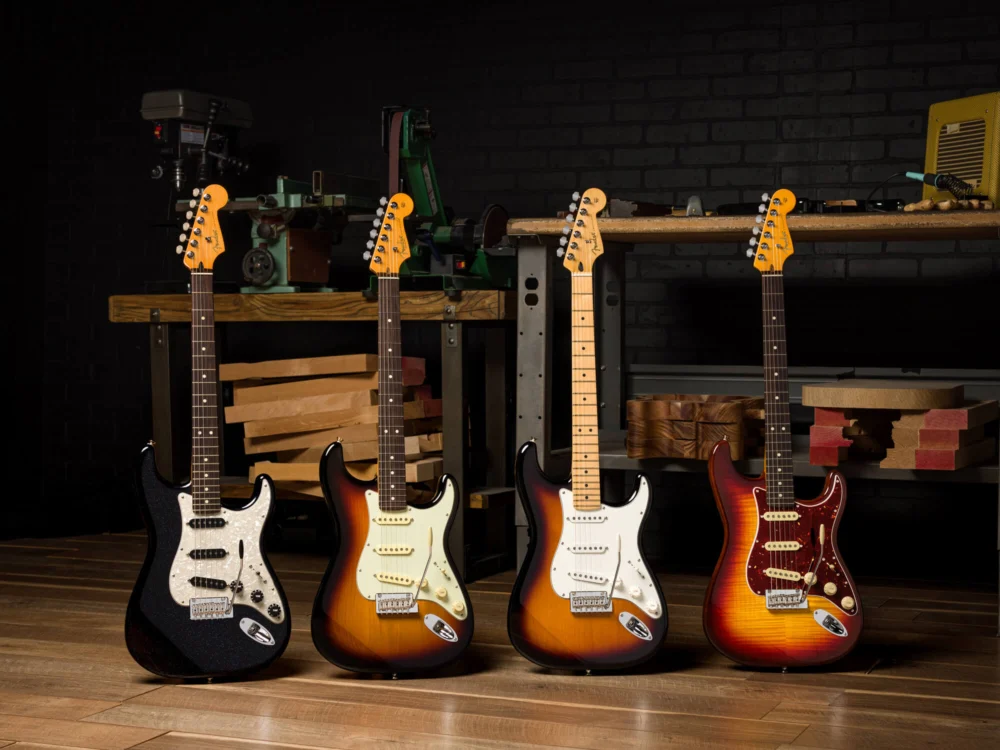
Fender Musical Instruments Corporation, a global leader in musical instrument manufacturing, has recently announced a significant legal victory in Germany against a Chinese guitar manufacturer, Yiwu Philharmonic Musical Instruments Co. The ruling, issued by the Düsseldorf Regional Court, posits that the iconic Stratocaster body design is not merely a functional trademark but qualifies as a "copyrighted work of applied art" under German and European law. Fender claims this decision establishes a new legal precedent that substantially strengthens its intellectual property protection over the universally recognized Stratocaster shape across the European Union.
The Iconic Stratocaster: A Legacy of Design and Innovation
The Fender Stratocaster, first introduced in 1954, stands as one of the most recognizable and influential electric guitars ever designed. Conceived by Leo Fender, George Fullerton, and Freddie Tavares, its revolutionary contoured body, three-pickup configuration, and synchronized tremolo system quickly set new industry standards. Beyond its technical innovations, the Stratocaster’s sleek, futuristic aesthetic made it an instant classic, appealing to a vast array of musicians from rock and blues to jazz and country. Over nearly seven decades, the Stratocaster has been wielded by legends like Jimi Hendrix, Eric Clapton, David Gilmour, and countless others, embedding itself deeply into global music culture and becoming synonymous with the electric guitar itself.
The enduring popularity and cultural cachet of the Stratocaster translate into significant commercial value for Fender. Protecting this asset, both in terms of its brand name and its distinctive visual identity, is paramount for the company. The global market for musical instruments is a multi-billion dollar industry, with electric guitars representing a substantial segment. The unique shape of the Stratocaster is not just a visual identifier; it is a core component of Fender’s brand equity, distinguishing its products from a multitude of competitors and countless imitations.
The Legal Battleground: Germany’s Düsseldorf Regional Court
The recent legal action was initiated by Fender Europe against Yiwu Philharmonic Musical Instruments Co., a Chinese entity known for manufacturing and distributing budget-friendly guitars and other musical instruments, often through large online marketplaces like AliExpress. Fender’s contention was that Yiwu had imported guitars into Germany that directly "reproduced" the Stratocaster body design, infringing upon Fender’s intellectual property rights.
The Düsseldorf Regional Court found in favor of Fender, agreeing with the company’s assertion that the Stratocaster’s design transcends simple utility or trademark recognition. Instead, the court recognized it as a "copyrighted work of applied art" (Gebrauchskunst in German legal terminology). This distinction is crucial under German and European intellectual property law. While trademarks primarily protect brand names, logos, and specific product identifiers to prevent consumer confusion regarding origin, copyright protection safeguards original artistic and literary works. For industrial designs, the "work of applied art" category bridges the gap, extending copyright protection to designs that possess sufficient artistic originality and individuality, even if they serve a functional purpose.
This classification offers Fender potentially broader and longer-lasting protection than a standard design patent or a three-dimensional trademark. Copyright protection in Germany and the EU generally extends for the life of the author plus 70 years, a significantly longer period than many design patents or the renewable but often more narrowly defined scope of trademarks. By successfully arguing that the Stratocaster is a work of applied art, Fender potentially secures a more robust legal tool to combat unauthorized reproductions, moving beyond the often-complex arguments of trademark dilution or consumer confusion.
Chronology and Procedural Nuances: The Default Judgment
While the outcome is a clear win for Fender, the procedural nature of the judgment adds a layer of complexity to its immediate interpretative weight. Reports from German music industry publication Backstagepro.de indicate that the judgment was not the result of an extensive, contested legal battle, but rather a default judgment.
In legal terms, a default judgment occurs when a defendant fails to respond to a court summons or does not appear in court to defend themselves against the plaintiff’s claims. In this instance, Yiwu Philharmonic Musical Instruments Co. reportedly did not engage legal representation or submit a defense within the stipulated timeframe, leading the court to rule in favor of Fender based on the presented evidence and arguments without the benefit of counter-arguments.
Timeline of Events (Inferred):
- Prior to 2023/2024: Fender identifies Yiwu Philharmonic Musical Instruments Co. as a manufacturer importing guitars with Stratocaster-like body shapes into Germany/EU.
- Late 2023/Early 2024 (Inferred): Fender Europe initiates legal proceedings against Yiwu Philharmonic Musical Instruments Co. at the Düsseldorf Regional Court.
- Early 2024 (Inferred): Court summons are issued to Yiwu Philharmonic Musical Instruments Co.
- February/March 2024: Yiwu Philharmonic Musical Instruments Co. fails to respond to the summons or appear in court.
- March 2024: The Düsseldorf Regional Court issues a default judgment in favor of Fender, declaring the Stratocaster design a "copyrighted work of applied art" and prohibiting Yiwu from further infringement.
- March 2024: Fender officially announces its victory and the perceived strengthening of its IP protection.
The immediate implication of this default judgment is that it is fully enforceable against Yiwu Philharmonic Musical Instruments Co. The company is now legally prohibited from "manufacturing, offering, or distributing" guitars featuring the Stratocaster body shape in Germany and across the EU. Non-compliance could lead to substantial fines or, in extreme cases, even imprisonment if fines cannot be enforced.
However, the nature of a default judgment means that Fender’s core claims—specifically that the Stratocaster shape is a "copyrighted work of applied art"—have not yet been rigorously tested through a full legal contest involving opposing arguments and expert witnesses. This nuance is critical when assessing the broader precedential value of the ruling. While it serves as a powerful declaration in Fender’s favor against a non-responsive defendant, its strength as a binding precedent in a future, fully contested case remains to be seen.
The Defendant: Yiwu Philharmonic Musical Instruments Co. and the Budget Market
Yiwu Philharmonic Musical Instruments Co. represents a segment of the global musical instrument market that frequently produces instruments at lower price points, often distributed through online platforms like AliExpress. These manufacturers often operate with a business model focused on volume and affordability, sometimes drawing heavily on the established designs of iconic brands. The proliferation of such "look-alike" or "S-type" (referring to Stratocaster-style) guitars presents a persistent challenge for major brands like Fender.
Enforcing intellectual property rights against companies operating internationally, particularly those with a strong presence in regions known for less stringent IP enforcement or complex cross-border litigation, is a formidable task. This case highlights the persistent efforts required by established brands to police their designs and trademarks globally, navigating diverse legal systems and the complexities of international trade. For budget manufacturers, the cost of mounting a legal defense in a foreign court, especially against a well-resourced multinational corporation like Fender, can be prohibitive, often leading to default judgments as seen in this instance.
Broader Context: Intellectual Property in the Guitar Industry
The music instrument industry has a long history of intellectual property disputes, reflecting the significant value attached to iconic designs and brand recognition. Companies like Fender, Gibson, and PRS Guitars consistently engage in efforts to protect their unique aesthetics and technologies. The challenge often lies in distinguishing between legitimate inspiration, the development of generic body shapes over time, and outright infringement.
The term "S-type" guitars has become common parlance to describe instruments that share the general aesthetic and functional characteristics of the Stratocaster but are manufactured by other companies, often with minor alterations to avoid direct infringement. This ruling, while strong against Yiwu, raises questions about where the line will be drawn between a "reproduction" of the Stratocaster body and a permissible "S-type" guitar in future, more contested cases. Fender may need to articulate a clearer distinction as it pursues further enforcement actions.
Comparative Analysis: The Gibson vs. Dean Precedent
This German ruling for Fender arrives shortly after a high-profile intellectual property case in the United States involving Gibson Brands and Dean Guitars. In that long-running dispute, Gibson secured an overall victory, affirming its trademarks for several iconic shapes, including the Flying V, Explorer, and SG. However, Gibson notably lost its trademark protection for the ES body shape (associated with models like the ES-335).
The reason for the loss of the ES trademark was significant: expert witnesses for both Dean and Gibson acknowledged that numerous guitar manufacturers had utilized the ES-style semi-hollow body shape over many decades since its introduction. This widespread adoption led the court to rule the ES shape as "generic," meaning it had become so commonplace in the industry that it no longer exclusively identified Gibson as the sole source of that design.
This aspect of the Gibson vs. Dean case serves as a crucial cautionary tale for Fender. While Fender has secured a favorable ruling in Germany by classifying the Stratocaster as a "copyrighted work of applied art," the "genericness" argument could potentially be raised in a fully contested future case. The Stratocaster’s shape is arguably even more ubiquitous than the ES shape, with countless manufacturers producing "S-type" guitars globally. If a defendant in a future case successfully argues that the Stratocaster shape has become generic in the public domain of guitar design, despite its artistic merits, it could challenge the breadth of this "work of applied art" designation.
Implications for Fender and the European Market
For Fender:
This ruling undeniably provides Fender with a stronger legal foundation in the EU to pursue other alleged infringers. The classification of the Stratocaster design as a "copyrighted work of applied art" is a powerful declaration, potentially offering broader protection than traditional trademarks or design patents. It arms Fender with a new, potent legal argument for future litigation. However, the company must be prepared for the eventuality of a fully contested case where its claims will face rigorous legal scrutiny and counter-arguments, which could include the "genericness" defense seen in the Gibson vs. Dean case.
For Other Manufacturers:
The ruling sends a clear signal to other manufacturers, particularly those producing "S-type" guitars for the European market. It suggests increased legal risk for designs that closely mimic the Stratocaster. Companies may need to review their current product lines and design processes to ensure they maintain sufficient distinctiveness to avoid potential infringement claims from Fender. This could lead to a diversification of guitar body shapes in the budget and mid-range markets within the EU, or at least more cautious design choices.
For Consumers:
In the short term, consumers in Germany and the EU may see a reduction in the availability of direct Stratocaster copies from certain budget manufacturers. In the long term, if Fender aggressively enforces this ruling, it could potentially impact the variety and pricing of "S-type" guitars available, pushing manufacturers towards more original designs or away from the EU market for such products.
For EU IP Law:
If this ruling stands and is upheld in future contested cases, it could set a significant precedent for how "works of applied art" are interpreted and protected within the EU, particularly for iconic industrial designs. It could encourage other brands with similarly recognizable product shapes to seek similar copyright protection, potentially strengthening design rights across various industries.
Challenges Ahead: Testing the Precedent
The true test of this "new legal precedent" will come when Fender attempts to use this decision against another manufacturer that chooses to challenge the ruling in court. Such a scenario would necessitate a much more thorough legal proceeding, allowing for counter-arguments against Fender’s claims that the Stratocaster design is a "work of applied art" rather than simply a functional or generic shape.
Fender would likely have to present detailed evidence regarding the artistic originality, individuality, and non-functional aspects of the Stratocaster’s design, demonstrating how it transcends mere utility to achieve artistic merit. Conversely, a defendant might argue that the design, while iconic, has become so widespread and functionally adapted over decades that it no longer merits exclusive copyright protection as an "applied art" piece.
Furthermore, Fender will need to meticulously define the boundary between an infringing "reproduction" of the Stratocaster body and a non-infringing "S-type" guitar that draws inspiration from the classic design without directly copying it. This distinction is often a source of contention in design infringement cases and will be crucial for the consistent application of this new precedent. The global nature of manufacturing and distribution also means that enforcing such rulings across different jurisdictions remains an ongoing challenge for major brands like Fender.
Conclusion
Fender’s recent victory in the Düsseldorf Regional Court marks a significant development in its ongoing efforts to protect the iconic Stratocaster design. By securing a ruling that classifies the Stratocaster as a "copyrighted work of applied art," Fender has acquired a potentially powerful new legal instrument for intellectual property enforcement within the European Union. While the default nature of the judgment means its full precedential strength remains to be tested in contested litigation, it undeniably strengthens Fender’s position against unauthorized reproductions and sends a clear message to manufacturers of look-alike guitars. This case underscores the enduring value of classic designs in the music industry and highlights the complex, continuous legal battles required to safeguard these invaluable assets in a global marketplace increasingly populated by diverse manufacturers and distribution channels. The industry will closely watch how Fender leverages this ruling in future actions and how courts, in turn, interpret and apply this nuanced precedent.
