

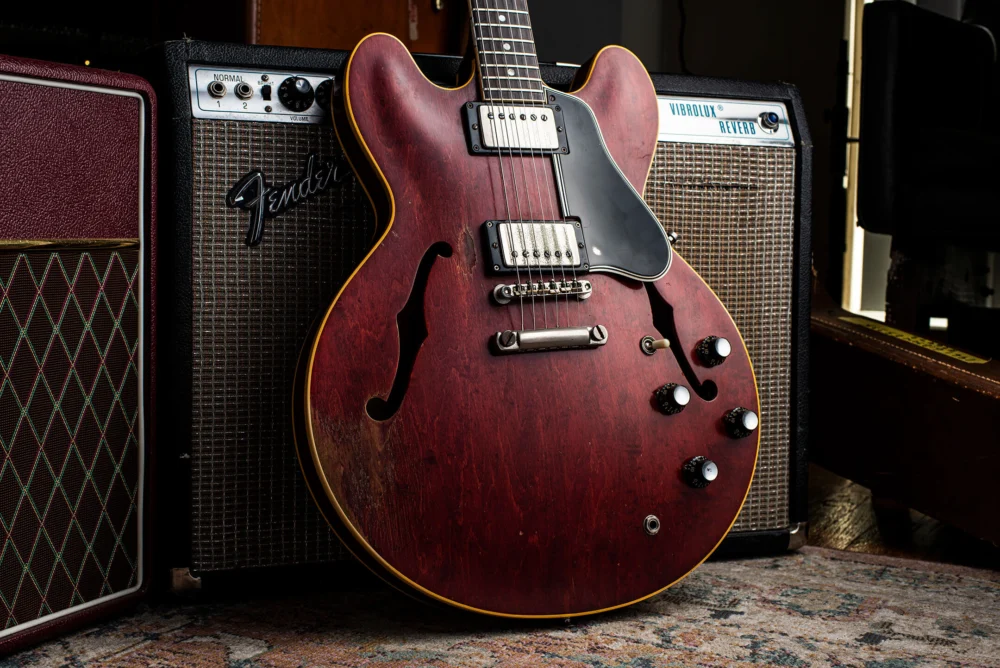
The protracted legal saga between iconic guitar manufacturer Gibson Brands and Armadillo, the parent company of Dean Guitars, has finally drawn to a close, culminating in a complex verdict that both reaffirmed Gibson’s intellectual property rights over several of its distinctive body shapes while simultaneously striking a significant blow to its trademark portfolio regarding the ES body shape. After years of litigation, appeals, and re-evaluations, a recent filing in February 2026 solidified the previous rulings, denying Gibson’s final attempt to appeal the genericization of its revered ES body shape trademark. This conclusion marks a pivotal moment in the ongoing discourse surrounding intellectual property in the musical instrument industry, offering a nuanced outcome that leaves both parties with victories and setbacks.
A Decades-Long Battle for Design Dominance
The roots of this extensive legal confrontation can be traced back to Gibson’s long-standing commitment to safeguarding its celebrated designs, which have become synonymous with rock and roll history. For decades, Gibson has vigorously defended its intellectual property, pursuing legal action against numerous manufacturers perceived to be infringing upon its iconic guitar shapes, headstocks, and other trade dress elements. This aggressive stance is understandable given the immense cultural and commercial value attached to designs like the Les Paul, SG, Flying V, and Explorer, which have achieved near-mythical status among musicians and collectors worldwide. Gibson contends that these shapes are not merely functional designs but proprietary brand identifiers, instantly recognizable and crucial to its market identity.
Dean Guitars, under Armadillo, has historically positioned itself as a manufacturer offering designs that often draw inspiration from or present interpretations of classic guitar aesthetics, alongside its own unique creations. This approach has, on occasion, led to friction with established brands like Gibson, whose design patents and trademarks form the bedrock of their market differentiation. The specific dispute at hand centered on several Dean models – the Gran Sport, the V, and the Z – which Gibson alleged were direct infringements of its SG, Flying V, and Explorer trademarks, respectively. Additionally, the case brought into question the trademark status of Gibson’s classic ES (Electric Spanish) semi-hollow body shape, a design dating back to the late 1950s and famously associated with models like the ES-335.
Chronology of a Complex Legal Journey
The legal proceedings between Gibson and Armadillo have spanned several years, characterized by a series of trials, jury verdicts, and appeals that underscore the intricate nature of intellectual property law.
- Initial Filings and Early Rulings (Pre-2021): While the original article points to a 2021 jury ruling as a significant turning point, the litigation itself likely commenced much earlier, with Gibson initiating proceedings to protect its trademarks against Armadillo’s allegedly infringing models. These initial stages would have involved extensive discovery, expert testimony, and preliminary legal skirmishes.
- The 2021 Jury Verdict: A pivotal moment occurred in 2021 when a jury delivered a verdict largely in favor of Gibson. This ruling found Dean/Armadillo liable for counterfeiting a number of Gibson trademarks. Specifically, the jury determined that Dean’s Gran Sport infringed on the Gibson SG, the Dean V on the Gibson Flying V, and the Dean Z on the Gibson Explorer. This verdict led to a significant injunction, legally barring Dean from advertising or selling these infringing guitar models. For Dean, this represented a substantial blow, as the V and Z models, in particular, were considered flagship products and cornerstones of their brand identity.
- The Unexpected Twist: ES Genericization (2021): Despite the clear victory on infringement, the 2021 jury verdict also contained a surprising element: it ruled that Gibson’s trademark for the ES body shape should be declared "generic." This finding introduced a significant complication, as it challenged Gibson’s proprietary claim over one of its iconic designs. The jury awarded Gibson a nominal sum of $1 in damages for the infringements, alongside approximately $170,000 in legal fees, reflecting the symbolic nature of the victory against the backdrop of the ES genericization.
- Attempts at Reconsideration and Retrial (2021-2024): Following the 2021 verdict, both parties engaged in various post-trial motions and appeals. Gibson, keen to overturn the ES genericization ruling, indicated its strong intent to appeal this specific aspect of the judgment. Armadillo likely sought to challenge the infringement findings and the associated sales ban. The legal process became a back-and-forth, with each side attempting to adjust the final outcome.
- March 2025: Reassertion of Initial Findings: A new jury opinion was entered in March 2025, which, according to reports, "essentially reasserted Dean’s initial defeat." This confirmed the prior findings of trademark infringement against Armadillo concerning the Gran Sport, V, and Z models, reinforcing the ban on their sale and advertising. Crucially, this ruling also reaffirmed the previous jury’s determination regarding the generic status of the ES body shape.
- September 2025: Final Judgment and Interest Accrual: A final judgment in September 2025 consolidated the outcomes, reiterating the findings of infringement, the $1 in damages, and the genericization of the ES body shape. Gibson’s request for treble damages, which would have increased Armadillo’s liability to over $500,000, was denied by the court, deeming it "unnecessarily punitive." However, the court did allow Gibson to charge interest on the initial amount of legal fees ($168,399.22), imposing a daily rate of 3.61% from September 22, 2025, compounded annually. This addition means Armadillo’s financial obligation to Gibson would steadily grow.
- February 2026: The Ultimate Closure: The finality of the case came with a filing in February 2026. In this latest development, the presiding judge, Amos L. Mazzant, definitively struck down Gibson’s appeal for a new trial specifically regarding the ES trademark’s genericization. This decision effectively closed the door on any further attempts to reverse that particular ruling, solidifying the ES body shape as generic within the US legal framework.
The Court’s Reasoning: "Collective Wisdom of the Jury"
Judge Mazzant’s filing offered clear insight into the court’s rationale for denying Gibson’s appeal concerning the ES body shape. As stated in the official document, "The Court finds that the jury’s verdict that the ES Body Shape Design was generic as of 1996 is not against the great weight of the evidence […] Plaintiff is again asking the Court to substitute its wisdom for the collective wisdom of the jury – the Court refuses to do so. […] Indeed, contrary to Plaintiff’s arguments otherwise, there was ample evidence to support the jury’s finding that the ES Body Shape Design is generic."
This judicial statement underscores a fundamental principle of the US legal system: the deference given to jury findings, especially when supported by "ample evidence." The court emphasized that it was not its role to re-evaluate the factual determinations made by the jury unless those findings were demonstrably contrary to the overwhelming weight of the evidence presented. In this instance, the court found no such disparity, concluding that the jury’s conclusion regarding the ES body shape’s generic status by 1996 was well-supported.
The concept of a trademark becoming "generic" is a critical legal principle. It occurs when a brand name or design becomes so commonly used that it refers to the product category itself rather than a specific brand. Famous examples of word marks that have faced genericization include "aspirin," "thermos," and "zipper." When a trademark becomes generic, it loses its legal protection, meaning anyone can use the term or design without infringing on the original owner’s rights. The jury’s finding that the ES body shape was generic as of 1996 implies that by that year, the design had, in the public’s mind, come to represent a type of semi-hollow guitar rather than exclusively identifying a Gibson product. This could be due to widespread adoption by other manufacturers, common usage in the industry, or perhaps even Gibson’s own marketing over time.
Implications for Gibson: A Pyrrhic Victory?
For Gibson, the conclusion of this lawsuit presents a dual outcome. On one hand, the company achieved a significant victory by reaffirming the protected status of its iconic SG, Flying V, and Explorer body shapes. The permanent injunction against Dean’s Gran Sport, V, and Z models validates Gibson’s aggressive intellectual property enforcement strategy and sends a clear message to other manufacturers about the risks of mimicking its core designs. This strengthens Gibson’s position in protecting its brand identity and market share.
However, the loss of the ES body shape trademark in the US is undeniably a major setback. While Gibson possesses a vast portfolio of other trademarks – including specific headstock designs, word marks (like "ES," "ES-335"), and overall trade dress – the genericization of the body shape itself represents a dent in its previously impenetrable IP armor. It suggests that even the most iconic designs, if widely adopted or perceived as a standard category, can eventually lose their exclusive protection. The substantial legal costs incurred by Gibson over many years of litigation, contrasted with the symbolic $1 damage award for infringement, also highlight the expensive nature of defending intellectual property, even when successful. Gibson’s future IP strategy will likely need to adapt, focusing even more intensely on the remaining protected elements of its designs and reinforcing their distinctiveness in the marketplace.
Implications for Dean Guitars: Survival and Adaptation
For Armadillo and Dean Guitars, the immediate impact of the case’s closure is primarily financial. The company is now obligated to pay Gibson the previously determined legal fees of $168,399.22, plus the accrued interest at 3.61% daily from September 22, 2025. Additionally, the final ruling stipulates that "all costs of court spent or incurred in this cause are adjudged against Armadillo," which will add an undisclosed but potentially significant sum to their financial burden.
The more profound and long-term impact, however, lies in the permanent legal prohibition against marketing and selling its Gran Sport, V, and Z guitars. These models were, for many years, key components of Dean’s product lineup, with the V and Z being particularly recognizable and popular. The loss of these models has necessitated a strategic pivot for Dean. In the years since the initial rulings, the company has actively refocused its efforts, emphasizing new designs such as its ML body shape and promoting signature models, notably the Kerry King series. This proactive adaptation has allowed Dean to continue operating and innovating despite the legal challenges.
While some observers initially speculated that the lawsuit could be a "death-blow" for Dean, the company has demonstrably weathered the storm. However, this legal battle has been just one of several challenges Dean has faced, including the loss of notable signature artists and periods of "chaotic leadership changes and a separate set of ensuing legal kerfuffles," as noted by industry reports. The cumulative effect of these adversities on Dean’s long-term market position and financial health remains an ongoing story.
Broader Industry Ramifications: A Precedent for Guitar Design?
The ruling on the ES body shape being declared generic in the US has generated considerable discussion within the broader musical instrument industry. It raises questions about the extent to which other manufacturers can now produce "ES-shaped" guitars. However, the practical implications are more nuanced than a simple opening of the floodgates.
While the ES body shape is now legally generic in the United States, it is crucial to understand that Gibson retains a robust portfolio of other intellectual property related to its ES models. This includes its distinctive headstock design, which remains strongly trademarked, and the ES word mark itself. Therefore, while a manufacturer might technically be able to produce a guitar with a body shape similar to an ES model in the US, they cannot legally use the "ES" name or incorporate Gibson’s specific headstock design without risking further litigation. Any attempt to create a full "ES-335 clone marketed as such" would still run afoul of Gibson’s remaining trademarks and trade dress protections.
Furthermore, the genericization of the ES body shape is currently limited to the United States. Gibson still holds the trademark for the ES shape in numerous other territories, including the European Union. This geographical limitation means that even if a manufacturer produces an ES-shaped guitar in the US, advertising and selling it internationally could lead to infringement claims in other jurisdictions. As the article aptly puts it, even in the US, any builder "flying pretty close to the sun" by solely relying on the genericized body shape might still face legal scrutiny over overall trade dress, especially if the intent to confuse consumers is perceived.
This case serves as a powerful reminder to all musical instrument manufacturers about the delicate balance between innovation, inspiration, and intellectual property respect. It underscores the immense cost and complexity of trademark litigation and the potential for unexpected outcomes, even for well-established brands. The ruling on the ES body shape could potentially encourage more manufacturers to explore semi-hollow body designs without fear of direct body-shape infringement claims in the US, potentially leading to a greater diversity of such instruments. Conversely, the reaffirmation of Gibson’s other core body shapes (SG, Flying V, Explorer) as protected trademarks reinforces the message that direct copying of iconic designs carries severe legal consequences.
In conclusion, the resolution of the Gibson vs. Dean Guitars lawsuit marks a significant chapter in the history of intellectual property in the music industry. It highlights Gibson’s unwavering commitment to defending its heritage while simultaneously revealing the vulnerabilities even the most iconic designs can face in the ever-evolving landscape of trademark law. For Dean, it signifies a forced but successful adaptation to significant legal constraints. The full reverberations of this landmark decision will continue to be felt and analyzed by legal scholars, industry players, and musicians alike for years to come.
