

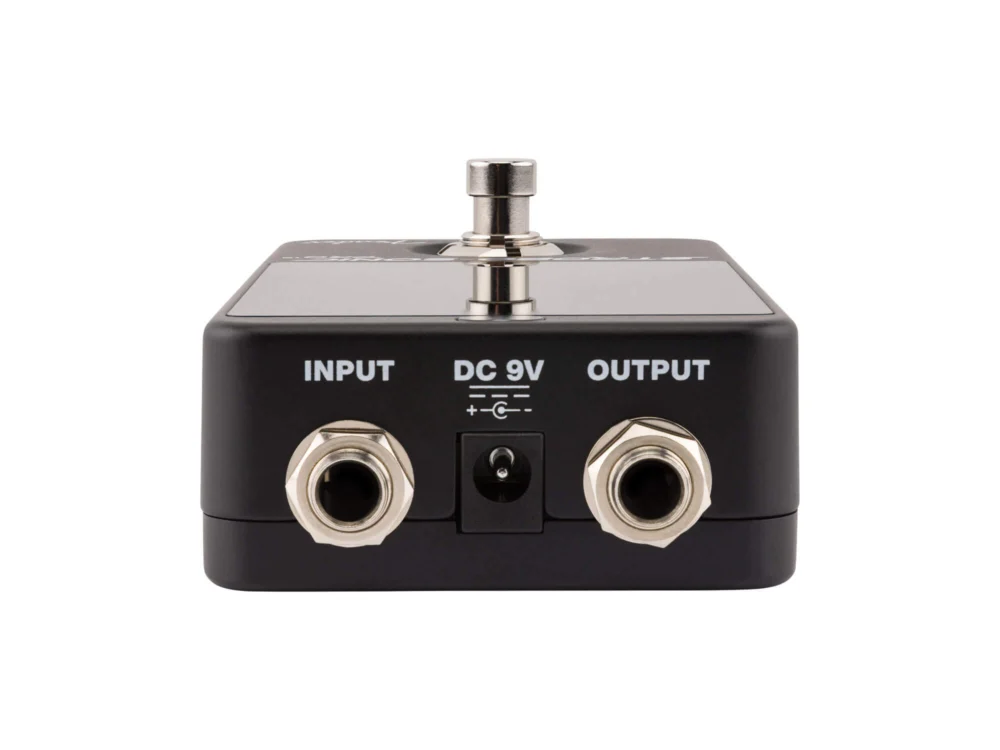
Fender, a global leader in musical instrument manufacturing, has significantly expanded its lineup of utility pedals with the introduction of the Strobo-Sonic Pro Tuner, a new "ultra-precise" tuner pedal boasting an impressive ±0.01 cent accuracy. This launch marks Fender’s deliberate move to cater to the exacting demands of performing musicians and studio professionals who require uncompromising tuning stability and clarity in their sound. The Strobo-Sonic Pro Tuner is designed not merely as another accessory but as a critical component in achieving optimal sonic performance, integrating cutting-edge technology with user-centric design principles.
Precision at Its Core: Understanding ±0.01 Cent Accuracy
The headline feature of the Strobo-Sonic Pro Tuner is its remarkable ±0.01 cent accuracy. To fully appreciate this specification, it’s essential to understand what a "cent" represents in musical tuning. A cent is a logarithmic unit of measure used for musical intervals, where one semitone (the interval between two adjacent notes on a piano, e.g., C to C#) is divided into 100 cents. An octave, encompassing 12 semitones, therefore spans 1200 cents. A ±0.01 cent accuracy means the tuner can detect deviations as minute as one-hundredth of a cent, which is an almost imperceptible difference to the human ear but crucial for perfect intonation, especially in recording environments or complex orchestral arrangements where multiple instruments must blend seamlessly.
Traditional chromatic tuners typically offer accuracy in the range of ±1 to ±5 cents. While sufficient for many casual players, these tolerances can lead to subtle discrepancies that become noticeable in professional settings, particularly when recording layered tracks or performing with instruments tuned to very precise standards. Even high-quality polyphonic tuners, which allow simultaneous tuning of multiple strings, generally operate with an accuracy of around ±0.5 to ±1 cent. The Strobo-Sonic’s specification places it firmly in the elite category of tuners, rivaling dedicated strobe tuners from specialist manufacturers known for their unparalleled precision. This level of accuracy is paramount for maintaining instrument intonation across the fretboard, ensuring chords ring true, and preventing the "sour" notes that can arise from even slight inaccuracies.
Dual Tuning Modes: Strobe and Needle for Every Player
Recognizing that musicians have diverse preferences and needs, the Strobo-Sonic Pro Tuner offers two distinct tuning modes: Strobe and Needle.

The Strobe tuning method, from which the pedal derives part of its name, is widely regarded as the most accurate way to tune an instrument. Historically, strobe tuners utilized a physical rotating disc illuminated by a strobe light. When a string’s pitch matched the target frequency, the pattern on the disc would appear to freeze. In modern digital implementations, like that of the Strobo-Sonic Pro Tuner, this principle is replicated digitally. The display shows a pattern that spins or moves at a rate corresponding to the detected pitch. As the string approaches perfect tune, the pattern slows down, appearing to "freeze" when the pitch is precisely correct. This visual feedback offers immediate, high-resolution information, allowing players to fine-tune their instruments with exceptional exactitude. The continuous, real-time nature of strobe tuning provides instant feedback on even the slightest pitch variations, enabling users to achieve a level of precision that needle-based tuners often cannot match. For professional guitarists, bassists, and other stringed instrument players, mastering strobe tuning can significantly enhance their ability to achieve and maintain perfect intonation.
Complementing the advanced strobe functionality is the Needle mode, offering a more familiar and intuitive tuning experience for many players. This mode emulates the traditional analog meter or digital needle display found on countless tuners. A central needle or bar indicates whether the pitch is flat, sharp, or in tune. While not offering the granular detail of a strobe display, Needle mode is quick, easy to interpret, and ideal for rapid tuning adjustments, especially in live settings where speed and clarity are paramount. Fender’s inclusion of both modes underscores its commitment to versatility, ensuring that the Strobo-Sonic Pro Tuner is accessible and effective for players of all skill levels and preferences, from those seeking absolute scientific precision to those who prefer a familiar visual cue.
Optimized for Performance: Display and Ergonomics
The Strobo-Sonic Pro Tuner is built with the demands of live performance and studio work firmly in mind. It features a large, high-visibility 2.3″ x 2.1″ LED display. This generous screen size ensures that tuning information is easily readable from a distance, whether on a dimly lit stage or in a brightly lit studio. Furthermore, the display incorporates auto-brightness dimming, a thoughtful feature that automatically adjusts the screen’s luminosity based on ambient light conditions. This prevents the display from being overly bright and distracting in low-light environments, while ensuring it remains perfectly visible under stage lights or in daylight. The clarity and adaptability of the display are crucial for reducing eye strain and allowing musicians to focus on their performance rather than struggling to read their tuner.
The physical design of the pedal also reflects Fender’s understanding of a musician’s needs. Occupying a pedalboard-friendly form factor, the Strobo-Sonic measures 115mm x 66mm x 44mm and weighs just half a pound. These compact dimensions and lightweight construction ensure it can seamlessly integrate into virtually any pedalboard setup without consuming excessive space or adding unnecessary bulk. For comparison, a standard Boss compact pedal measures approximately 129mm x 73mm x 59mm, making the Strobo-Sonic slightly smaller in footprint, a welcome attribute for crowded boards. The robust construction, a hallmark of Fender utility pedals, suggests it is built to withstand the rigors of touring and frequent use, providing reliability night after night.
Advanced Control and Signal Integrity
Beyond its core tuning capabilities, the Strobo-Sonic Pro Tuner offers deep control over essential parameters, demonstrating Fender’s attention to detail for serious musicians. Convenient side switches provide access to two critical functions: reference pitch adjustment and bypass modes.

The reference pitch is adjustable between A = 430Hz and 450Hz. The standard concert pitch for A is 440Hz, but musicians often need to deviate from this. Classical ensembles, for instance, sometimes tune to A=442Hz or even higher for brighter tones, while some older recordings or period instruments might require tuning to A=432Hz or A=435Hz. The ability to precisely adjust the reference pitch allows the Strobo-Sonic Pro Tuner to integrate seamlessly into diverse musical contexts, from orchestral pits to jazz clubs and recording studios, ensuring perfect harmony with other instruments or specific historical tunings. This flexibility is a significant advantage for multi-genre musicians and studio professionals working on varied projects.
Perhaps one of the most significant features for pedalboard enthusiasts is the inclusion of three distinct bypass modes: true bypass, buffered bypass, and buffered always-on. This thoughtful design choice addresses the perennial debate among guitarists regarding signal integrity.
- True Bypass mode ensures that when the tuner is disengaged, the instrument’s signal passes directly through the pedal without any electronic interference or coloration. This is highly prized by purists who want to preserve the original tone of their instrument and amplifier, ensuring no "tone suck" or degradation of high frequencies. It’s often favored for minimal pedal setups or when the tuner is placed early in the signal chain.
- Buffered Bypass mode, when engaged, employs an active electronic buffer circuit. Buffers are crucial for maintaining signal strength and clarity over long cable runs, which are common on large pedalboards. They prevent signal degradation, high-frequency loss, and impedance mismatches that can occur when connecting multiple true-bypass pedals. For musicians with extensive pedalboards, a well-designed buffer can be indispensable for preserving tonal integrity. Fender’s inclusion of this option acknowledges the practical realities of complex setups.
- The Buffered Always-On mode offers a unique combination of functionality. In this mode, the tuner remains active and visible at all times, even when the pedal’s footswitch is not engaged to mute the signal. This allows for continuous pitch monitoring during performance or practice, which can be invaluable for instruments prone to drifting out of tune. When the footswitch is engaged, it mutes the output signal, allowing for silent tuning without interrupting the performance. This mode is particularly useful for stage musicians who need to make quick, discreet adjustments between songs or during breaks without broadcasting their tuning process to the audience.
By providing all three bypass options, Fender empowers musicians to choose the bypass method that best suits their specific signal chain, performance needs, and tonal philosophy, further cementing the Strobo-Sonic Pro Tuner’s position as a versatile and professional-grade tool.
Fender’s Vision: Beyond Guitars and Amplifiers
The release of the Strobo-Sonic Pro Tuner is indicative of Fender’s broader strategy to solidify its presence across the entire spectrum of musical equipment, moving beyond its iconic guitars and amplifiers into essential utility pedals and accessories. While Fender has offered tuners and various pedals for many years, the Strobo-Sonic represents a significant step forward in the precision tuner category, directly competing with established high-end offerings from brands like Peterson (StroboStomp HD) and TC Electronic (Polytune 3).
Fender’s statement, "Made for the stage, the pedalboard-friendly tuner offers a high-visibility display, two easily trackable tuning display modes, and accessible side switches for deeper control – perfect for players of all skill levels," encapsulates their design philosophy. It highlights a blend of professional-grade accuracy with user-friendly features, ensuring that while the technical specifications meet the highest standards, the pedal remains intuitive for musicians across the experience spectrum. This approach makes the Strobo-Sonic Pro Tuner an attractive option for a wide audience, from aspiring guitarists taking their first steps into advanced tuning to seasoned touring professionals who demand absolute reliability and precision.
The competitive landscape for tuner pedals is robust, with numerous options available at various price points. Budget-friendly clip-on tuners dominate the entry-level, while pedal tuners like the Boss TU-3 have long been industry standards for their reliability and sturdy construction. However, the market has seen a growing demand for ultra-precise strobe tuners, driven by increased awareness of intonation’s importance in modern music production and live performance. Fender’s entry into this segment with a feature-rich, highly accurate pedal at a competitive price point of $129.99 / £95 positions the Strobo-Sonic Pro Tuner as a formidable contender. This pricing places it slightly below some of the most expensive boutique strobe tuners but significantly above basic chromatic pedal tuners, reflecting its advanced capabilities and professional target audience.

Implications for Musicians and the Industry
The introduction of the Strobo-Sonic Pro Tuner carries several implications for musicians and the wider music industry. For musicians, it offers an accessible path to professional-grade tuning accuracy, previously only available in more specialized or expensive units. This means clearer recordings, more harmonious live performances, and a greater understanding of instrument intonation. The multiple bypass options also empower players to optimize their signal chain without compromise, a crucial consideration for tone enthusiasts.
For Fender, this release reinforces its commitment to innovation and diversification. By offering a top-tier utility pedal, Fender not only caters to its existing customer base but also attracts new users who prioritize precision and versatility in their gear. It strengthens the brand’s reputation as a comprehensive provider of musical solutions, extending beyond its core instrument offerings. This move also signifies a broader industry trend where manufacturers are continually pushing the boundaries of what essential accessories can achieve, integrating advanced digital processing and user-configurable options into even the most fundamental tools.
The Strobo-Sonic Pro Tuner is available now, marking its immediate entry into the market. Its combination of ultra-high precision, versatile tuning modes, intelligent display, flexible bypass options, and robust, pedalboard-friendly design positions it as a significant new option for any musician serious about their sound. As Fender continues to innovate across its product lines, the Strobo-Sonic Pro Tuner stands as a testament to the company’s enduring commitment to empowering musicians with tools that enhance their craft and elevate their performance.
