

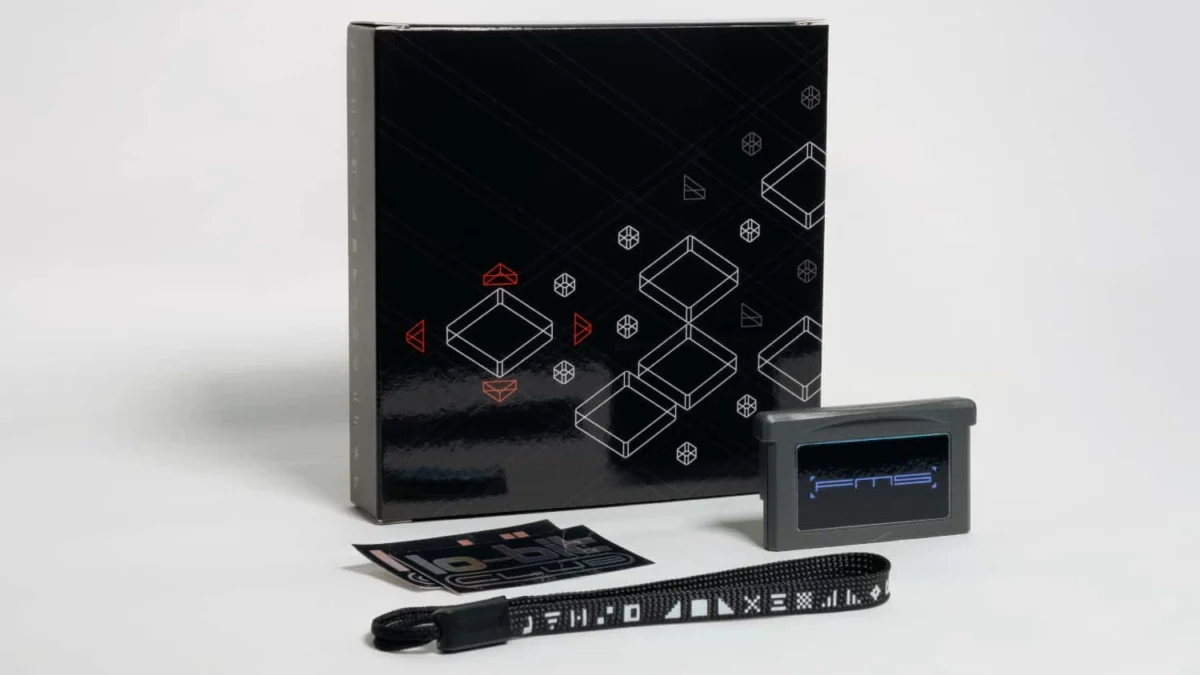
The landscape of portable music production has witnessed a significant resurgence in hardware-based synthesis, particularly within the niche of "chiptune" and retro-computing communities. The latest entry into this field is the FMS Cartridge Edition, a dedicated physical release of the FMS groovebox software designed specifically for the Nintendo Game Boy Advance (GBA) ecosystem. Priced at $59 USD, this release transitions FMS from a digital software tool into a high-performance hardware instrument, utilizing a specialized 1M flash memory cartridge to provide a seamless, integrated user experience.
Unlike traditional software trackers that often require complex navigation or emulation layers, the FMS Cartridge Edition is engineered to function as a native GBA application. It bypasses the typical hurdles associated with flash cartridges, such as long boot times or menu navigation, by booting directly into the synthesis environment upon powering the console. This "instant-on" capability is coupled with a focus on real-time performance, positioning the Game Boy Advance not just as a gaming handheld, but as a legitimate four-track synthesizer and sequencer for studio and live applications.
Technical Architecture and Synthesis Engine
At the heart of the FMS Cartridge Edition is a sophisticated audio engine that leverages the GBA’s 32-bit ARM7TDMI RISC processor. The software features a four-track, 2-operator (2-OP) Frequency Modulation (FM) synthesis engine running in real-time. This represents a technical milestone for the platform, as real-time FM synthesis is computationally demanding for the aging hardware. By optimizing the code to run natively, the developers have achieved a world-first for the GBA: a multi-track FM groovebox that does not rely on pre-rendered samples.
The synthesis engine is complemented by the inclusion of the GBA’s legacy noise channel, derived from the original 8-bit Game Boy (DMG) hardware integrated into the GBA’s circuitry. This combination creates a unique sonic palette, blending the clean, mathematical precision of 16-bit FM synthesis with the gritty, low-resolution textures of classic 8-bit noise. This hybrid approach allows musicians to craft everything from percussive metallic strikes and atmospheric pads to the aggressive, distorted leads characteristic of lo-fi electronic music.
The user interface of FMS is designed for "live" interaction. Eschewing the vertical scrolling list format of traditional trackers like LittleSoundDJ (LSDJ), FMS adopts a groovebox workflow. This emphasizes tactile control, allowing users to manipulate parameters and trigger sequences with minimal latency. The software’s design philosophy prioritizes a "no-menu" approach, ensuring that all vital performance controls are accessible through the GBA’s physical buttons, thereby reducing the cognitive load during live performances.
Hardware Specifications and Power Efficiency
The physical cartridge itself is a high-quality production unit featuring 1 megabyte (1M) of flash memory. This storage capacity is dedicated entirely to the FMS software and user-generated data, ensuring that projects and patches are saved directly to the hardware without the need for external SD cards. One of the primary advantages of this dedicated cartridge format is the elimination of additional battery drain. Many modern multi-game flash carts require significant power to run their onboard operating systems and FPGA chips; the FMS Cartridge Edition, however, draws power at a rate comparable to original Nintendo retail games, maximizing the battery life of the host handheld.

The cartridge is housed in a standard GBA-sized shell, ensuring physical compatibility across a wide range of devices. This includes the original horizontal GBA (AGB-001), the flip-screen GBA SP (AGS-001 and AGS-101), and the diminutive Game Boy Micro. Furthermore, the cartridge is fully compatible with the Nintendo DS and DS Lite, which include a secondary slot for GBA media. Beyond first-party hardware, the FMS Cartridge Edition has been verified for use with high-end third-party devices such as the Analogue Pocket and the FunnyPlaying FPGBC, ensuring that modern enthusiasts with updated screens and rechargeable batteries can utilize the tool without compatibility issues.
Historical Context and Evolution of GBA Music Software
To understand the significance of the FMS Cartridge Edition, one must look at the evolution of music software on the Game Boy Advance. Historically, the GBA has been overshadowed in the chiptune scene by its predecessor, the original Game Boy. While the DMG-01 was lauded for its distinct four-channel sound chip, the GBA’s audio capabilities were often criticized for their reliance on software-based PWM (Pulse Width Modulation) which could result in "hiss" or "noise" if not programmed correctly.
However, in recent years, a new wave of developers has begun to unlock the GBA’s potential. Previous software like Nanoloop 2.x paved the way for minimalist, loop-based synthesis on the platform. FMS builds upon this legacy but shifts the focus toward the complexity of FM synthesis. By implementing 2-OP FM, FMS provides a broader frequency spectrum and more complex harmonic possibilities than the standard square and pulse waves found in earlier 8-bit software.
The transition from a digital ROM to a physical "Cartridge Edition" also reflects a broader trend in the boutique synthesizer market. Musicians are increasingly seeking "distraction-free" hardware. By locking the software into a dedicated physical medium, the FMS Cartridge Edition transforms the GBA into a "fixed-function" instrument, similar to the workflow found in devices produced by companies like Teenage Engineering or Korg.
Community Impact and Artistic Implementation
The release of the FMS Cartridge Edition has already garnered attention from prominent figures in the electronic music and chiptune scenes. The developer has showcased the device’s capabilities through demonstrations by artists such as Nullsleep (Jeremiah Johnson), a pioneer in the low-bit music movement. Nullsleep’s track "EGAK" serves as a primary example of the FMS engine’s versatility, demonstrating its ability to handle complex rhythmic structures and melodic FM textures simultaneously.
The response from the community suggests a growing demand for portable, hardware-based sequencing. On social media platforms and synthesizer forums, users have noted that the $59 price point makes it an accessible entry point for those interested in FM synthesis, especially when compared to the rising costs of vintage Yamaha DX series synthesizers or modern FM modules.
Furthermore, the "plug-and-play" nature of the cartridge is seen as a significant benefit for live performers. In a concert environment, the reliability of hardware is paramount. Flash carts can occasionally suffer from file corruption or slow load times; a dedicated flash memory cartridge like the FMS Edition offers a level of stability that is essential for professional use.

Market Analysis and Future Implications
The FMS Cartridge Edition enters a market where retro-gaming hardware is increasingly being repurposed for creative ends. The rise of the Analogue Pocket, which offers a "Pro Studio" mode and built-in Nanoloop software, has primed the market for high-fidelity GBA audio tools. However, FMS distinguishes itself by offering a dedicated physical product that works on original, unmodified Nintendo hardware.
From a manufacturing perspective, the production of custom GBA cartridges is a complex endeavor. The global supply chain for flash memory and high-quality PCB (Printed Circuit Board) fabrication has fluctuated in recent years, making the $59 price point competitive. By offering a signup list rather than an open-ended pre-order, the developers are managing production expectations and ensuring that each unit meets the required quality standards for professional audio use.
The success of the FMS Cartridge Edition may signal a shift in how independent developers distribute specialized software. As digital storefronts become increasingly crowded, the move toward "physical-only" or "premium physical" editions provides a way for developers to monetize their work while offering a tangible, collectible item to the user.
Conclusion
The FMS Cartridge Edition represents a sophisticated fusion of 20-year-old hardware and modern synthesis techniques. By bringing real-time 2-OP FM synthesis to the Game Boy Advance, it expands the sonic capabilities of the handheld beyond its original design parameters. With its focus on performance-oriented UI, hardware reliability, and power efficiency, it stands as a significant contribution to the world of portable music production.
As the chiptune and modular synth communities continue to overlap, devices like the FMS groovebox bridge the gap between "gaming nostalgia" and "serious instrumentation." For the price of a standard modern video game, users are granted access to a robust, portable synthesis workstation that leverages the unique constraints of the GBA to produce a sound that is both vintage and contemporary. The availability of the FMS Cartridge Edition through its official signup list marks the beginning of a new chapter for GBA-based composition, ensuring that the legacy of Nintendo’s 32-bit handheld continues to resonate in recording studios and on concert stages worldwide.
