

A Strategic Partnership in Music Technology
The launch of Altitude Harmony is the first time Focusrite and Klevgrand have co-branded a product, despite having a professional history that spans nearly a decade. Focusrite, established in 1985 by legendary console designer Rupert Neve, has spent decades dominating the recording interface market, particularly with its Scarlett and Clarett ranges. Their hardware is found in both home setups and world-class studios, emphasizing the "front end" of the recording chain—preamps and converters.
Conversely, Klevgrand, based in Stockholm, has carved out a niche as a developer of "musical" software tools that prioritize workflow and aesthetic simplicity over the dense, knob-heavy interfaces typical of the industry. Their previous offerings, such as the Brusfri noise reducer and the Borsta percussion instrument, have gained acclaim for their "less-is-more" philosophy.
The decision to develop a joint plugin follows years of Klevgrand providing exclusive software offers to Focusrite customers through the "Plug-in Collective" (now known as the Focusrite Sound Collective). This initiative allowed Focusrite hardware owners to access Klevgrand’s tools, fostering a shared user base. According to Tim Dingley, Managing Director at Focusrite, the partnership was a natural evolution of this relationship. Dingley noted that the goal was to create a tool that generates an "instant smile" for creators, removing the technical barriers often associated with vocal production.
Technical Overview and Feature Set
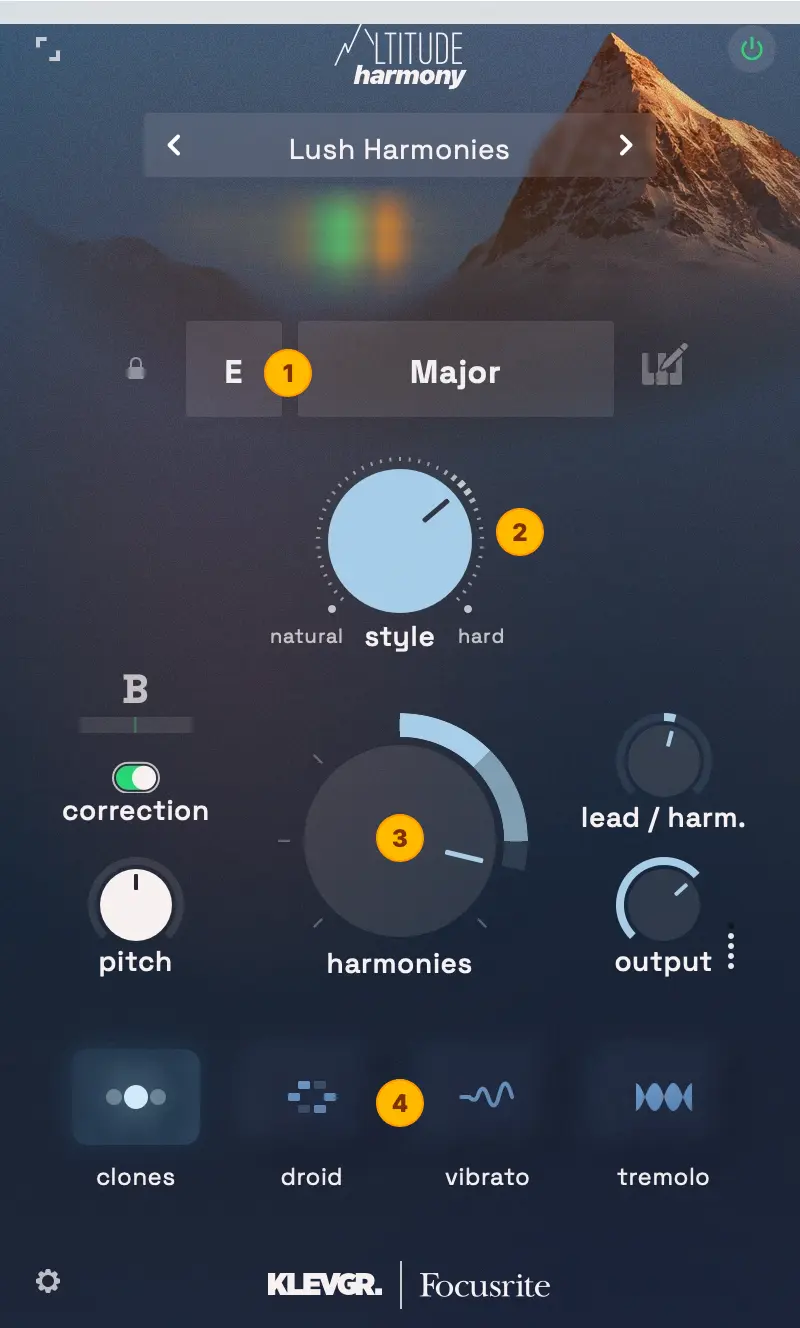
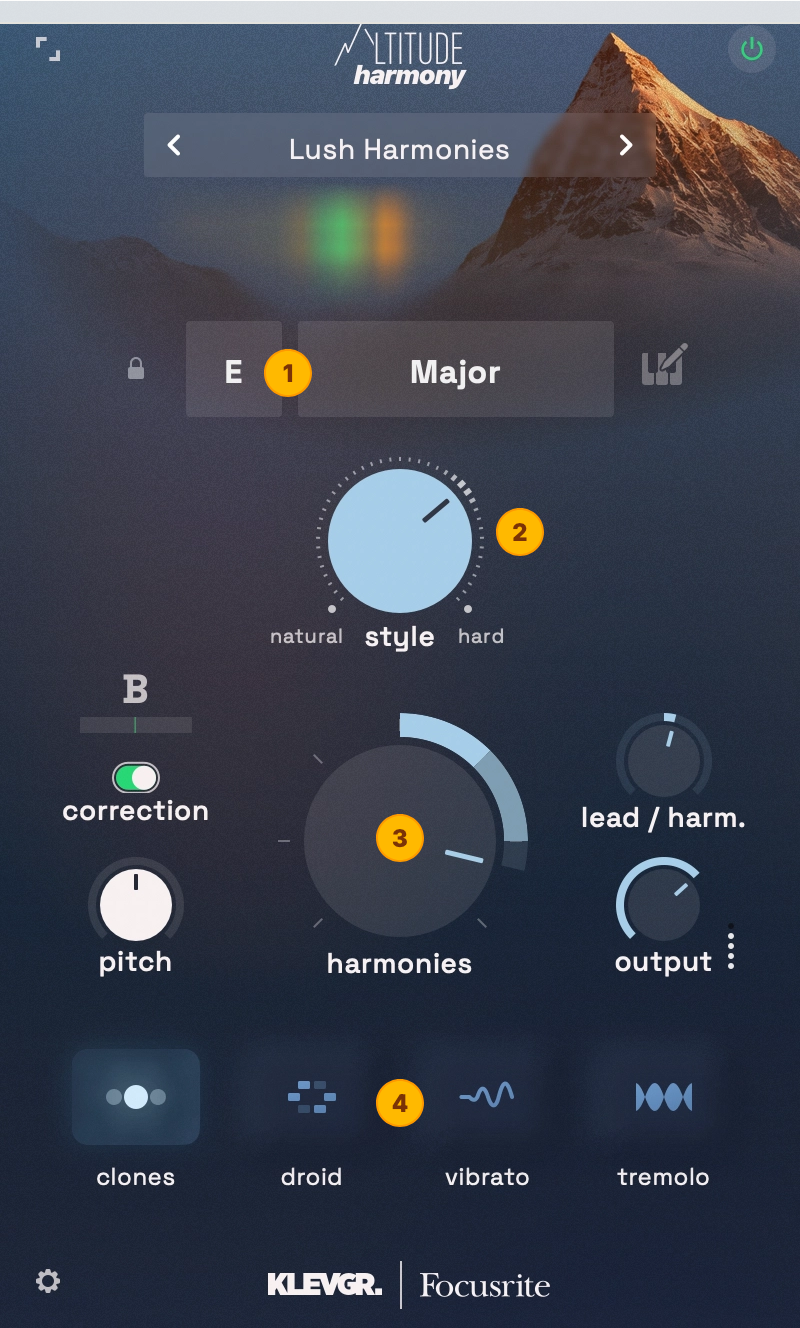
Altitude Harmony is engineered to provide professional-grade vocal tuning and harmony generation with minimal user input. The core functionality revolves around two primary controls: one for pitch correction (tuning) and another for harmony generation (stacking).
Intelligent Pitch Correction
Under the hood, the plugin utilizes an advanced pitch engine designed to analyze incoming monophonic vocal signals in real-time. Unlike traditional pitch correction software that may require the manual input of scales and keys for every session, Altitude Harmony’s engine is optimized to identify the most likely musical context and apply correction transparently. This reduces the "robotic" artifacts often associated with aggressive tuning, unless the user intentionally pushes the parameters for a stylized effect.
Automated Harmony Generation
The harmonization component of the plugin allows users to "stack" voices around the original signal. The software automatically calculates the appropriate intervals—such as thirds, fifths, or octaves—based on the detected key of the performance. This feature is particularly useful for solo artists and producers who need to build a "wall of sound" without the time-consuming process of recording multiple takes or manually shifting pitch in a DAW (Digital Audio Workstation).
Character Effects and Workflow
To further streamline the production process, Altitude Harmony includes four one-button "character effects." These are curated signal processing chains that can be toggled to change the timbre, space, or texture of the vocal output. These effects are designed to provide a "finished" sound directly within the plugin, allowing producers to maintain their creative momentum without switching to external EQ, compression, or modulation plugins.
Chronology of Development and Release
The path to Altitude Harmony began in the early 2020s as the "creator economy" saw an explosion in home recording. As more musicians moved away from traditional studio environments, the demand for "intelligent" plugins that could perform complex tasks automatically surged.
- 2018–2022: Focusrite and Klevgrand collaborate on various promotional bundles. Klevgrand’s "ROVEE" and "REAMP" plugins become staples for Focusrite hardware users.
- Early 2024: Klevgrand releases the full version of "Altitude," a comprehensive vocal workstation. While powerful, the developers identified a need for a more streamlined version for users who require speed over granular control.
- Mid-2024: Development of the joint Focusrite/Klevgrand version begins. The focus is placed on a "two-move" interface to align with the needs of songwriters and live-streamers.
- October 2024: Altitude Harmony is officially launched globally, supported by both companies’ distribution networks.
Tobias Engström, CEO of Klevgrand, stated that bringing the Altitude concept to a wider audience through Focusrite was a logical step, citing Focusrite’s massive reach among entry-level and intermediate producers as a primary driver for the collaboration.
Market Context: The Shift Toward Simplified Production
The release of Altitude Harmony occurs during a broader shift in the music technology industry. For years, the market was dominated by high-complexity tools like Antares Auto-Tune and Celemony Melodyne, which offer surgical control over every vibrato and pitch drift. While these remains industry standards for high-end mixing, a new generation of producers—often referred to as "bedroom producers"—values speed and "vibe" over technical minutiae.
Competitors like Waves (with their "OneKnob" series) and iZotope (with the "Nectar" vocal suite) have seen success by offering "intelligent" assistants that use machine learning or advanced algorithms to handle the heavy lifting. Altitude Harmony enters this space with a specific focus on the synergy between hardware and software. By optimizing the plugin for the clean, transparent signals typically captured by Focusrite interfaces, the two companies are offering a holistic solution for the modern vocal chain.
Supporting Data and Industry Impact
Market analysis from 2023 indicates that the global music production software market is expected to grow at a CAGR (Compound Annual Growth Rate) of approximately 9% through 2030. A significant portion of this growth is attributed to "user-friendly" software that caters to non-engineers.
The partnership also highlights a trend of consolidation and deep integration in the industry. Focusrite has been on an acquisition streak in recent years, bringing brands like Sequential (synthesizers), Oberheim, and Sonnox (high-end plugins) into its portfolio. While Klevgrand remains an independent entity, this joint venture suggests that hardware manufacturers are increasingly looking to provide "end-to-end" solutions where the hardware and software are designed to work in tandem.

Official Responses and Pricing
The industry response to Altitude Harmony has been largely positive, particularly regarding its price point. At a standard retail price of $49.99—and an introductory price of $29.99—it is positioned as an affordable entry point for those who find the $200+ price tags of professional tuning suites prohibitive.
Industry analysts suggest that this pricing strategy is designed to capture the "prosumer" market. "Altitude Harmony isn’t trying to replace Melodyne," says audio engineer and tech consultant Marcus Thorne. "It’s trying to replace the thirty minutes you spend fiddling with settings when you should be writing lyrics. It’s a tool for the ‘flow state’."
The plugin is currently available for download on the Klevgrand website and is compatible with all major DAWs, including Ableton Live, Logic Pro, FL Studio, and Pro Tools. It supports macOS (including Apple Silicon) and Windows environments.
Broader Implications for the Future of Music Tech
The success of Altitude Harmony could pave the way for further joint ventures between hardware and software developers. As digital signal processing (DSP) becomes more powerful and less expensive, the distinction between "the interface" and "the effect" continues to blur.
For Focusrite, this collaboration reinforces their brand as more than just a box-maker; they are positioning themselves as a lifestyle brand for creators. For Klevgrand, the partnership provides a level of visibility and scale that is difficult for a small software house to achieve independently.
As AI and automated pitch engines continue to evolve, products like Altitude Harmony represent a middle ground—tools that use sophisticated technology to empower human creativity rather than replace it. The focus remains on the "moment of joy" mentioned by Tim Dingley, suggesting that the future of music technology lies not just in what the tools can do, but in how quickly and easily they allow the artist to do it.
