

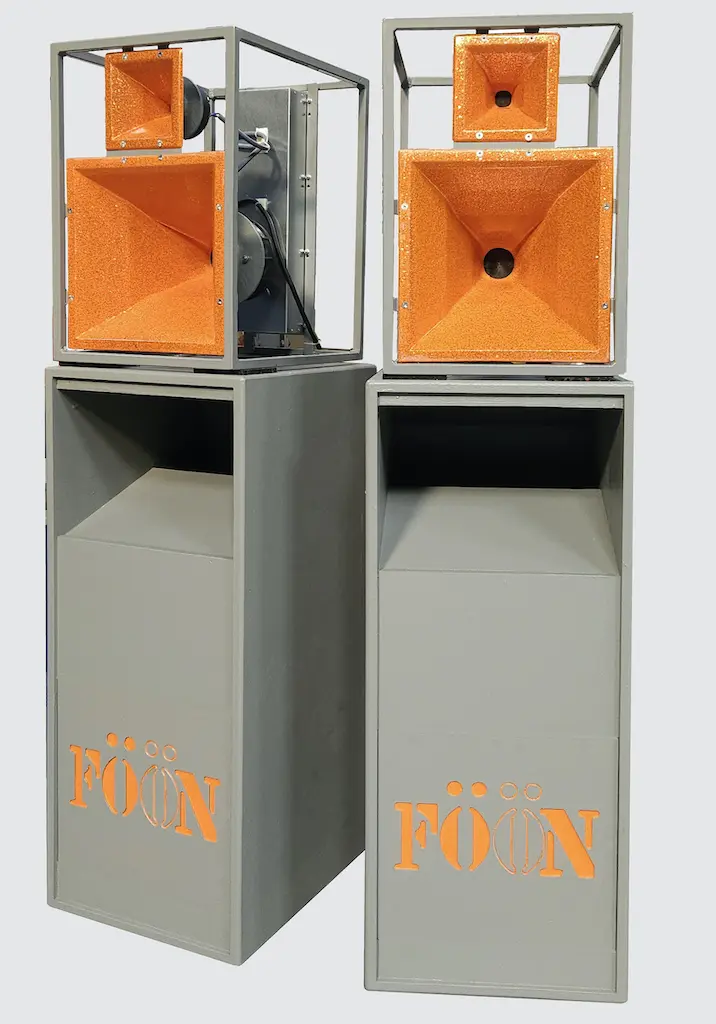
The Solingen-based manufacturer FÖÖN Audiotecture has officially announced the launch of the SM12, a compact loudspeaker system engineered to perform across two traditionally distinct market segments: professional club sound reinforcement and high-fidelity residential audio. By integrating precision-engineered Italian transducers with proprietary horn geometries and advanced digital signal processing, FÖÖN seeks to provide a solution that satisfies the rigorous demands of nightlife environments while maintaining the nuanced transparency required for critical home listening. This dual-purpose positioning reflects a growing industry trend toward "pro-sumer" audio equipment that does not compromise on output or fidelity, regardless of the setting.
Technical Foundations and Component Architecture
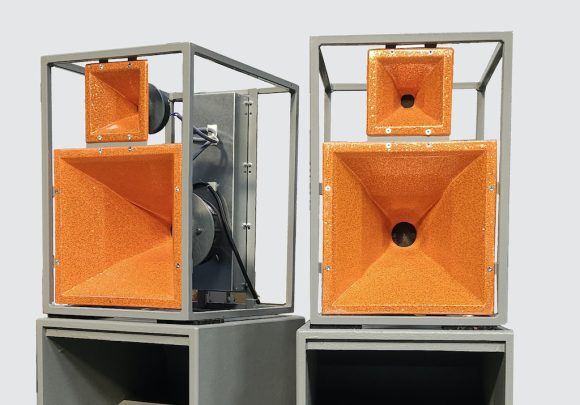
At the core of the SM12’s performance is a commitment to high-efficiency components and robust electronic integration. The system utilizes transducers manufactured in Italy, a region renowned for producing some of the world’s most sophisticated professional audio drivers. These components are paired with FÖÖN’s in-house horn designs, which are meticulously calculated to optimize dispersion patterns and maximize acoustic output without the distortion typically associated with high-pressure levels.
The amplification stage is powered by Pascal L-Pro modules. Pascal, a leader in high-power Class D amplifier technology, provides the SM12 with a reliable and efficient power source that ensures high headroom and thermal stability. This is particularly critical in club environments where systems are often pushed to their limits for extended periods. The signal chain is managed by a Four Audio Digital Signal Processor (DSP), utilizing dedicated system software to handle crossover points, equalization, and protective limiting. The integration of Four Audio’s technology allows for precise phase alignment and frequency response tailoring, ensuring that the SM12 can be tuned to the specific acoustic characteristics of any room, whether it is a dampened home studio or a reflective industrial club space.
Scalability and Modular Versatility
One of the defining characteristics of the SM12 is its inherent scalability. FÖÖN Audiotecture has designed the mid-high unit to be modular, allowing users to expand the system as their requirements grow. According to technical specifications released by the manufacturer, the SM12 can be transformed from a compact stereo setup into a full-scale club rig by adding additional bass horns of the same series.
This modularity is particularly advantageous for venue owners who may wish to start with a smaller installation and expand their sonic footprint as their space or budget grows. In a professional club context, the SM12 is optimized for "four-point" installations—a configuration where four speaker stacks are placed in the corners of a dance floor to create an immersive, high-pressure sound field. Beyond the dance floor, FÖÖN recommends the SM12 for high-stakes monitoring applications, specifically citing its utility as a DJ monitor and as a reference tool for Electronic Dance Music (EDM) production in the studio. The system’s ability to translate the physical energy of a club environment into a controlled studio setting makes it a valuable asset for producers who need to know exactly how their tracks will behave on a large-scale PA.
Historical Context and the Solingen Engineering Heritage
FÖÖN Audiotecture operates out of Solingen, Germany, a city with a deep-rooted history in precision manufacturing and engineering. While Solingen is internationally famous for its cutlery and blade production, this culture of craftsmanship has permeated the region’s boutique audio industry. FÖÖN’s approach to "Audiotecture"—a portmanteau of audio and architecture—suggests that sound systems should be viewed as integral components of a building’s design rather than mere accessories.
The development of the SM12 is the result of several years of research and development aimed at shrinking the physical footprint of horn-loaded speakers without sacrificing the "physicality" of the sound. Traditionally, horn-loaded systems were massive, requiring significant floor space to produce low frequencies. By leveraging modern DSP and high-excursion Italian drivers, FÖÖN has managed to maintain the efficiency and "throw" of a horn system within a cabinet size that is manageable for residential use. This timeline of development reflects a broader shift in the 2020s toward compact, high-efficiency audio solutions that respond to the densification of urban living spaces and the rise of boutique, intimate nightlife venues.
Market Implications and the Rise of the "Listening Bar"
The release of the SM12 arrives at a pivotal moment in the global audio market. Over the last decade, the "Listening Bar" or "Audiophile Bar" trend—originating in Tokyo and spreading to cities like London, Berlin, and New York—has created a demand for sound systems that offer the clarity of a high-end HiFi setup with the durability and volume of a pro-audio rig.
Industry analysts suggest that the SM12 is perfectly positioned to capitalize on this niche. Standard HiFi speakers often lack the cooling and structural integrity to withstand the 10-to-12-hour duty cycles of a commercial venue, while many professional PA systems are criticized for being too "harsh" or "clinical" for close-proximity listening. By bridging this gap, FÖÖN Audiotecture is targeting a demographic of venue owners and private collectors who prioritize "musicality" alongside raw power.
The inclusion of Pascal amplification and Four Audio DSP also points toward a future where professional audio is increasingly software-defined. The ability to load different presets for "HiFi Mode" versus "Club Mode" allows the SM12 to behave like two different speaker systems depending on the user’s needs. This versatility is expected to make the SM12 a popular choice for multi-use spaces, such as art galleries that host quiet exhibitions by day and loud electronic events by night.
Operational Reliability and Professional Standards
For professional installers, the choice of Pascal and Four Audio components is a significant indicator of the SM12’s reliability. Pascal’s L-Pro series is known for its "UMAC" Class D technology, which offers high-frequency PWM (Pulse Width Modulation) and extremely low distortion. In a club setting, where power fluctuations can be common, the robust power supply of these modules provides a layer of protection against hardware failure.

The Four Audio DSP adds another layer of sophistication. Known for their work in high-end touring and installation processors, Four Audio’s software allows for sophisticated FIR (Finite Impulse Response) filtering. Unlike traditional IIR filters, FIR filters can manipulate frequency response without causing phase shifts, resulting in a more coherent and natural soundstage. For the audiophile user, this means a more accurate stereo image and better instrument separation. For the club owner, it means a system that sounds "loud" without being fatiguing to the ears, allowing patrons to stay longer and enjoy the music at higher volumes without discomfort.
Strategic Positioning and Future Outlook
FÖÖN Audiotecture’s decision to market the SM12 as both a club system and a HiFi unit is a strategic move that acknowledges the blurring lines between professional work and private lifestyle. As more DJs and producers build high-end home studios, the demand for equipment that can "do it all" has increased. The SM12 serves as a bridge, offering a consistent sonic signature whether the artist is practicing at home, mixing a new track, or performing in a club.
While the manufacturer has not yet released the full retail pricing for the various configurations, the use of premium European components suggests that the SM12 will be positioned in the mid-to-high-tier segment of the market. Its scalability, however, provides a lower entry point for those who wish to start with a basic stereo pair and expand into a full-horn stack over time.
As the audio industry moves toward 2027, the SM12 stands as a testament to the enduring appeal of horn-loaded technology when combined with 21st-century digital processing. FÖÖN Audiotecture’s commitment to "made in Solingen" quality, combined with the best of Italian and German component engineering, ensures that the SM12 will be a significant contender in both the professional and luxury residential audio markets.
Summary of Key Features
- Manufacturer: FÖÖN Audiotecture (Solingen, Germany).
- Model: SM12.
- Drivers: High-performance Italian-made transducers.
- Design: Proprietary horn-loaded architecture for high efficiency and controlled dispersion.
- Amplification: Pascal L-Pro Class D modules for high power density and reliability.
- Processing: Four Audio DSP with dedicated system software for precise tuning and protection.
- Applications: Club sound (4-point setups), high-end home HiFi, DJ monitoring, and EDM studio production.
- Scalability: Modular design allows for the addition of matching bass horns for larger venues.
The SM12 represents a calculated fusion of power and precision. By focusing on the physics of horn design and the flexibility of modern DSP, FÖÖN Audiotecture has created a tool that is as comfortable in a living room as it is in a warehouse rave. For more detailed technical specifications and configuration options, interested parties are encouraged to visit the official FÖÖN website at www.foeoen.de.
