

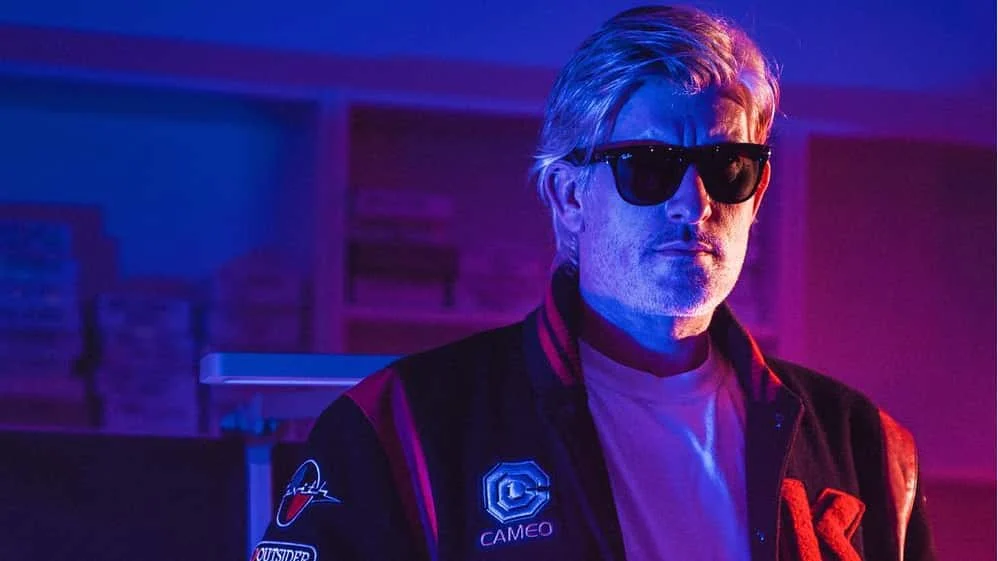
Vincent Belorgey, the influential French electronic musician and producer known professionally as Kavinsky, has been found dead in his Paris apartment at the age of 50. The artist, who rose to international prominence for his role in defining the synthwave genre and providing the signature sound for the 2011 film Drive, was discovered by emergency services on Tuesday evening. According to reports from the French daily newspaper Le Figaro, local police authorities have launched an inquiry into the circumstances of his passing, though initial evidence suggests natural causes.
A police source familiar with the investigation indicated that Belorgey had reportedly been suffering from persistent, severe headaches for several days leading up to his death. Concerns were raised when a neighbor, noting a lack of activity and failing to receive responses to repeated inquiries, alerted emergency responders. Upon entering the residence in the French capital, authorities confirmed the artist was deceased. While a formal autopsy is pending to provide a definitive cause of death, medical examiners currently suspect a stroke.
The news has sent shockwaves through the global electronic music community, marking the end of a career that bridged the gap between 1980s cinematic nostalgia and modern digital production. Belorgey leaves behind a legacy as one of the primary architects of the "retrowave" movement, a cultural phenomenon that reshaped music, fashion, and film aesthetics throughout the 2010s.
The Origin of the Kavinsky Persona
Vincent Belorgey’s career was defined by the meticulously crafted alter ego he inhabited: Kavinsky. Unlike many of his contemporaries in the French electronic scene, Belorgey chose to present himself through a fictional narrative rather than his own civilian identity. The backstory of the Kavinsky character was as much a part of the art as the music itself. According to the lore established by the artist, Kavinsky was a young man who died in 1986 after crashing his Ferrari Testarossa, only to reappear twenty years later as a zombie producer of electronic music.
Belorgey often spoke about the necessity of this character in interviews, explaining that the persona allowed him to merge his personal history with his cinematic influences. "Kavinsky is a character I created because just putting my face on a record sleeve isn’t something that suits me," he once remarked. "I’d much rather make music and tell a story, because for me music is linked to images." This narrative approach allowed Belorgey to channel his childhood memories of 1980s television shows and films—ranging from Miami Vice to the works of John Carpenter—into a cohesive audiovisual experience.
The visual identity of Kavinsky, characterized by a red varsity jacket, dark sunglasses, and the iconic white Ferrari, became a staple of electronic music iconography. This dedication to world-building helped elevate his music from standard club fare to a form of conceptual storytelling that resonated with a generation of listeners enamored with retro-futurism.
Career Chronology and the Rise of Synthwave
Belorgey’s journey into the music industry began in the mid-2000s, a period when the "French Touch" sound was evolving into a harder, more distorted aesthetic. His debut EP, Teddy Boy, was released in 2006 on the Record Makers label. The project introduced the world to his signature sound: heavy analog synthesizers, slow-tempo beats, and a brooding atmosphere. This was followed by the 1986 EP in 2007, which further solidified his standing in the Parisian underground scene.
However, it was his 2010 single "Nightcall" that would fundamentally alter the trajectory of his career. Co-produced by Guy-Manuel de Homem-Christo of Daft Punk and mixed by the acclaimed producer SebastiAn, "Nightcall" featured haunting, vocoded vocals and a guest appearance by Lovefoxxx, lead singer of the Brazilian band CSS. The track was a masterclass in minimalist tension, blending a romantic sensibility with an underlying sense of dread.
The global breakthrough occurred in 2011 when director Nicolas Winding Refn selected "Nightcall" to open his neo-noir thriller Drive. The song’s inclusion in the film’s opening credits, set against a backdrop of a nighttime Los Angeles skyline, became one of the most celebrated moments in modern cinema. The success of the film and its soundtrack propelled Kavinsky into the mainstream, turning "Nightcall" into a multi-platinum hit and establishing the "synthwave" sound as a commercial force.
Following the success of Drive, Belorgey released his debut full-length album, OutRun, in 2013. Named after the classic 1986 Sega arcade racing game, the album was a commercial and critical success, peaking at number two on the French album charts and charting across Europe and North America. OutRun served as a definitive anthology of the Kavinsky sound, featuring tracks like "Roadgame" and "Odd Look," the latter of which was later remixed featuring vocals from The Weeknd, further bridging the gap between underground electronic music and global pop.

Artistic Hiatus and the 2022 Return
Following the whirlwind success of the OutRun era, Belorgey retreated from the public eye for nearly a decade. During this period, his influence continued to grow as a new generation of "retrowave" artists, such as Perturbator and Carpenter Brut, cited him as a primary inspiration. The aesthetic he helped pioneer became a mainstay in popular culture, influencing everything from the visual style of the Netflix series Stranger Things to the fashion of high-end streetwear brands.
In 2022, after a nine-year hiatus, Belorgey returned with his second studio album, Reborn. The title was a literal reference to the evolution of his persona. Recorded at the legendary Motorbass Studio in Paris, the album signaled a shift toward a more organic, sophisticated sound. While still rooted in the 80s aesthetic, Reborn moved away from the aggressive distortion of his early work in favor of lush arrangements and live instrumentation.
The album was supported by singles such as "Renegade" and "Zenith," and was accompanied by a narrative shift in the Kavinsky lore: the zombie character had finally found peace and was "reborn" into a more human state. This era of his career was marked by a more mature approach to production, showcasing Belorgey’s growth as a composer and his ability to innovate within the genre he helped create.
Technical Influence and Production Style
Kavinsky’s music was characterized by a specific technical palette that became the blueprint for the synthwave genre. His reliance on analog synthesis—most notably the Yamaha DX7 and various Roland modules—allowed him to recreate the specific textures of 1980s film scores. His production style often featured:
- Side-chain Compression: A technique that created a "pumping" effect in the rhythm section, a hallmark of the French house and electro scene.
- Arpeggiated Basslines: Rapid, rhythmic synth patterns that provided a sense of forward momentum, reminiscent of car chases.
- Vocoder Processing: The use of synthesized vocal effects to create a detached, robotic emotional tone.
- Cinematic Pacing: Tracks that often prioritized atmosphere and mood over traditional pop structures, designed to function as soundtracks to imaginary films.
By blending these elements with modern production standards, Belorgey created a sound that felt both nostalgic and contemporary, a feat that few of his peers were able to replicate with the same level of cultural impact.
Industry Reactions and Cultural Impact
The news of Belorgey’s passing has prompted a surge of tributes from across the music and film industries. Fellow French producers, including members of Justice and the Ed Banger Records roster, have expressed their grief, noting his kindness and his uncompromising artistic vision.
"Vincent was a pioneer who understood the power of myth-making in music," said a representative from the French electronic music collective. "He didn’t just make songs; he created a world that people wanted to live in. His influence on the ‘French Touch’ and the global electronic scene cannot be overstated."
Beyond the music industry, film directors and visual artists have also acknowledged his contributions. His ability to evoke a specific time and place through sound made him a favorite collaborator for visual media. The "Kavinsky aesthetic" remains a dominant theme in digital art and car culture, where his association with the Ferrari Testarossa helped revitalize interest in 80s automotive design.
Final Reflections on a Decisive Legacy
At 50 years old, Vincent Belorgey’s death marks a premature end to a career that was still in the midst of a creative resurgence. While the character of Kavinsky was born from the idea of death and rebirth, the real-world loss of the man behind the mask leaves a significant void in the electronic music landscape.
Belorgey’s work proved that electronic music could be deeply narrative and emotionally resonant, moving beyond the dancefloor to become a cinematic experience. He successfully navigated the transition from a niche underground artist to a global icon without sacrificing the core elements of his persona.
As authorities continue their investigation into the specifics of his passing, the music world turns its attention to the vast catalog he left behind. From the gritty streets of Paris to the neon-lit highways of his imagination, the sounds of Kavinsky will continue to provide the soundtrack for the late-night drives of future generations. His death marks the conclusion of a story that began with a fictional crash in 1986, but his music ensures that the legend of the undead driver will remain a permanent fixture in the history of electronic music.
