

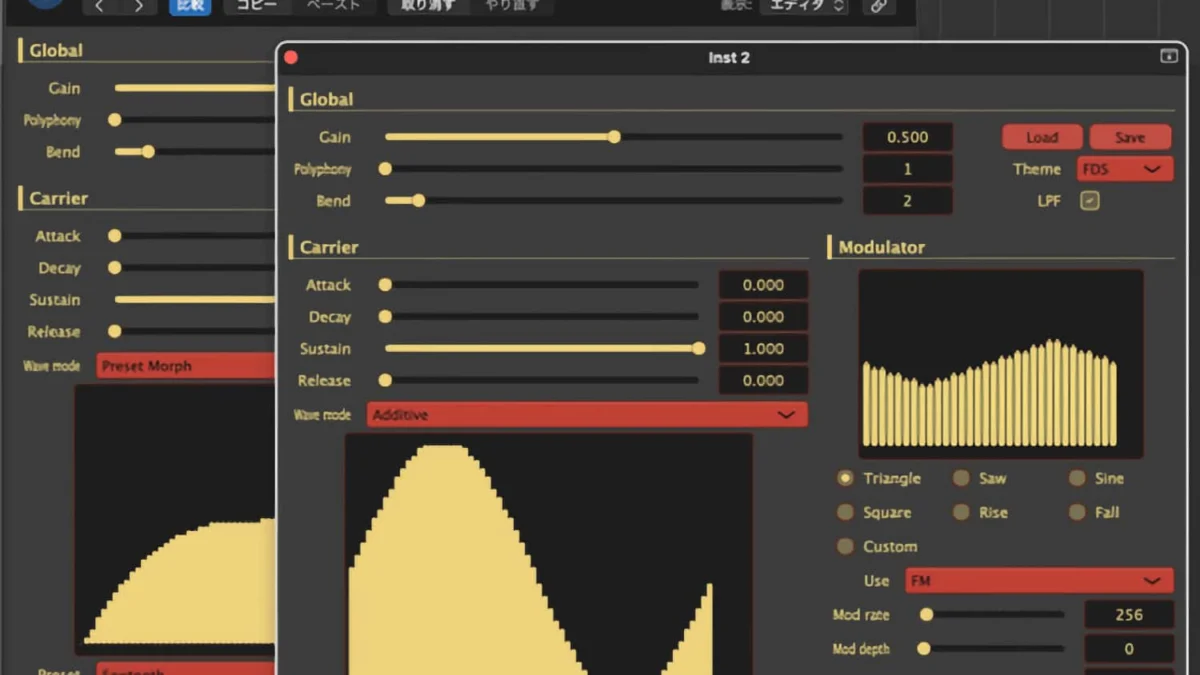
The release of the Magical FDS Plug marks a significant milestone in the preservation and creative utilization of vintage hardware sounds, offering a free and open-source software synthesizer designed to emulate the specific acoustic characteristics of the Nintendo Famicom Disk System (FDS). Developed to operate on both macOS and Windows platforms, the plugin provides musicians, sound designers, and historians with a high-fidelity recreation of the FDS sound chip’s unique architecture. By bridging the gap between 1980s hardware limitations and 21st-century digital audio workstations (DAWs), the Magical FDS Plug allows for the seamless integration of 8-bit wavetable synthesis into modern production environments.
Historical Context: The Legacy of the Famicom Disk System
To understand the technical significance of the Magical FDS Plug, one must examine the history of its hardware inspiration. The Famicom Disk System was launched by Nintendo in February 1986 as a peripheral for the Family Computer (Famicom) in Japan. While the base console utilized cartridges, the FDS used proprietary 2.8-inch double-sided floppy disks known as "Disk Cards." Beyond the increased storage capacity for games, the FDS unit contained an additional sound chip that provided an extra audio channel to the Famicom’s existing five-channel Ricoh 2A03 synthesis.
This extra channel was fundamentally different from the standard pulse, triangle, and noise waves found in the base console. It utilized a primitive form of wavetable synthesis combined with frequency modulation (FM). This allowed composers of the era, such as Koji Kondo and Hirokazu Tanaka, to produce richer, more complex timbres. Iconic titles like The Legend of Zelda, Metroid, and Castlevania II: Simon’s Quest utilized this hardware to create haunting, vibrato-heavy melodies and metallic textures that were impossible to replicate on the Western Nintendo Entertainment System (NES), which lacked the FDS expansion hardware.
Technical Architecture: Carrier and Modulator Mechanics
The Magical FDS Plug meticulously reproduces the internal logic of the original FDS sound chip. The core of its sound generation lies in a unique 64-sample waveform memory, which acts as the "carrier." Unlike modern synthesizers that use thousands of samples or complex mathematical oscillators, the FDS relies on these 64 discrete steps to define its basic timbre. This carrier wave is then subjected to modulation by a separate 32-step instruction sequence, referred to as the "modulator."
In the original hardware, this modulator functioned as a low-frequency oscillator (LFO) capable of altering the pitch of the carrier at high speeds, effectively creating frequency modulation. The Magical FDS Plug preserves this specific interaction, allowing users to craft the "warbling" and "gritty" tones associated with the 8-bit era. However, while the original hardware required painstaking manual entry of values—often through assembly code or specialized development tools—the Magical FDS Plug introduces a logical interface that simplifies the process. It incorporates additive synthesis tools and preset management, allowing users to build complex waveforms by stacking harmonics, a feature that extends the creative potential of the original 6-bit resolution audio.
Development and Developer Profile: The Influence of YMCK
The Magical FDS Plug was developed by YMCK, a prominent Japanese chiptune group consisting of Midori Kurihara, Takeshi Yokemura, and Nakamura. Since their formation in 2003, YMCK has been at the forefront of the global 8-bit music movement, blending jazz and swing sensibilities with the limitations of retro gaming hardware. Their previous software release, the "Magical 8bit Plug," became an industry standard for producers seeking authentic NES-style sounds without the need for hardware modifications.
The decision to release the Magical FDS Plug as an open-source project reflects a commitment to the "democratization" of sound. By providing the source code, YMCK ensures that the emulation logic remains available for future developers to study, refine, and port to other systems. This open-source nature is particularly relevant in an era where digital obsolescence threatens the longevity of software-based musical instruments.

Chronology of Chiptune Sound Synthesis
The evolution of chiptune emulation has moved through several distinct phases, culminating in sophisticated tools like the Magical FDS Plug:
- 1983–1990: The era of hardware dominance. Sound was produced in real-time by dedicated silicon chips like the Ricoh 2A03 (NES), the SID 6581 (Commodore 64), and the Yamaha YM2612 (Sega Genesis).
- 1990s: The rise of "Trackers." Software like ModEdit and Scream Tracker allowed users to arrange samples, but true chip emulation was in its infancy, often restricted to game console emulators like Nesticle.
- 2000s: The emergence of dedicated VST (Virtual Studio Technology) plugins. YMCK’s original Magical 8bit Plug and Tweakbench’s Peach series allowed DAWs to mimic 8-bit sounds through simple oscillators.
- 2010s: The pursuit of "cycle-accuracy." Developers began focusing on the imperfections of hardware, such as aliasing, quantization noise, and voltage-controlled filters, to provide more "analog" digital sounds.
- 2020s: The current era of hybrid synthesis and open-source accessibility. Modern tools now combine the specific limitations of 8-bit chips with the advanced modulation routing and user interfaces of contemporary software.
Supporting Data and System Compatibility
The Magical FDS Plug is designed to be lightweight and compatible with a wide range of production environments. Technical specifications for the release include:
- Operating Systems: macOS (Intel and Apple Silicon native) and Windows (64-bit).
- Plugin Formats: VST3 and Audio Units (AU), ensuring compatibility with major DAWs such as Ableton Live, Logic Pro, FL Studio, and Cubase.
- Bit Depth: The plugin emulates the 6-bit output of the original FDS, maintaining the characteristic "noise floor" and quantization distortion that define the retro aesthetic.
- Sample Rate: Supports standard project rates (44.1 kHz to 192 kHz) while internally downsampling to match the original hardware’s output characteristics.
- Licensing: Released under an open-source license, permitting non-commercial and commercial use without licensing fees.
Broader Impact on Music Production and Digital Preservation
The release of the Magical FDS Plug has implications beyond the niche genre of chiptune. In the broader music industry, there is a growing trend toward "lo-fi" aesthetics and the use of "low-resolution" digital artifacts to add character to modern recordings. Producers in genres such as vaporwave, synthwave, and hip-hop frequently utilize bit-crushing and sample-rate reduction to emulate the warmth of older technology. The Magical FDS Plug provides an authentic alternative to generic bit-crushers by offering a structurally accurate model of how 8-bit sound was actually synthesized.
Furthermore, the plugin serves as an educational tool. By exposing the relationship between the 64-sample carrier and the 32-step modulator, it teaches users the fundamentals of wavetable and FM synthesis in a constrained environment. This "limitation-bred creativity" is often cited by composers as a way to overcome the "paralysis of choice" presented by modern software synthesizers that offer thousands of parameters.
From a preservation standpoint, the Magical FDS Plug ensures that the specific "voice" of the Famicom Disk System is not lost as original hardware continues to degrade. FDS units are notoriously fragile, often suffering from "belt rot" where the internal drive belts disintegrate over time, making the hardware increasingly difficult to maintain. By digitizing the synthesis engine into a portable software format, the unique sonic signature of 1986 is preserved for future generations.
Official Responses and Community Reception
While Nintendo Co., Ltd. has not issued an official statement regarding the plugin—consistent with their general policy on third-party software that does not infringe on specific intellectual property or trademarks—the developer community has reacted with high praise. Early adopters have noted the plugin’s efficiency and the accuracy of its aliasing characteristics.
"The FDS sound is notoriously difficult to get right because it’s not just a simple sine or square wave," noted one independent sound designer in an online forum. "It has a specific ‘jitter’ and a metallic quality when the modulator is pushed. Magical FDS Plug captures that movement in a way that standard wavetable synths usually miss."
Conclusion: The Future of Retro-Synthesis
The Magical FDS Plug represents a successful fusion of historical reverence and modern utility. By focusing on a specific, often overlooked piece of hardware, YMCK has provided a tool that is both a specialized instrument and a piece of living history. As open-source development continues to flourish, it is likely that other obscure sound chips from the arcade and early console eras will receive similar treatment, further enriching the palette available to the modern composer. The availability of the plugin as a free download ensures that the barrier to entry for high-quality 8-bit synthesis remains non-existent, fostering a new wave of creative exploration in the digital domain.
