

The German public has issued a clear mandate for significant political and structural overhauls, with a staggering 83 percent of citizens identifying a critical need for comprehensive reforms to the nation’s current systems. According to a representative survey conducted by the ZVEI (Verband der Elektro- und Digitalindustrie—Association of the Electrical and Digital Industry), this sentiment transcends demographic boundaries, signaling a widespread desire for the federal government to move beyond incremental adjustments and toward fundamental modernization. The findings, released in November 2026, suggest that the German electorate is increasingly concerned that the nation is losing its competitive edge in a rapidly accelerating global economy.
Among the most striking revelations of the data is the public’s willingness to endure personal hardship for the sake of long-term stability. Approximately 41 percent of respondents stated they would be prepared to accept short-term financial or social cuts if those sacrifices guaranteed the future viability of Germany’s social security systems. This readiness for "temporary pain for long-term gain" is notably higher among citizens under the age of 40, suggesting that younger generations are particularly focused on the sustainability of the state’s welfare and pension structures.
A National Consensus on the Need for Change
The ZVEI survey indicates that the call for reform is not a fringe opinion but a solid societal consensus. While 83 percent of the total population supports comprehensive reform, this figure rises even higher among older demographics. In the 50 to 64 age bracket, 86 percent of respondents favor decisive policy shifts, while among those aged 65 and older, the figure reaches an overwhelming 91 percent. This high level of support among seniors, who are often characterized as more conservative regarding systemic changes, underscores a profound level of dissatisfaction with the status quo.
Daniel Hager, President of the ZVEI, characterized the findings as a "groundbreaking" signal of the public’s readiness for change. He noted that the German population has recognized that maintaining the status quo is no longer a viable strategy while the rest of the world advances technologically and economically. Hager emphasized that following various government announcements made during the summer of 2026, the public now expects a "quarter of action" (Quartal des Machens). The industry leader called for a shift away from political infighting and toward a focus on innovation, progress, and the removal of "location brakes" that hinder Germany’s economic performance.
The Burden of Bureaucracy: A Primary Concern
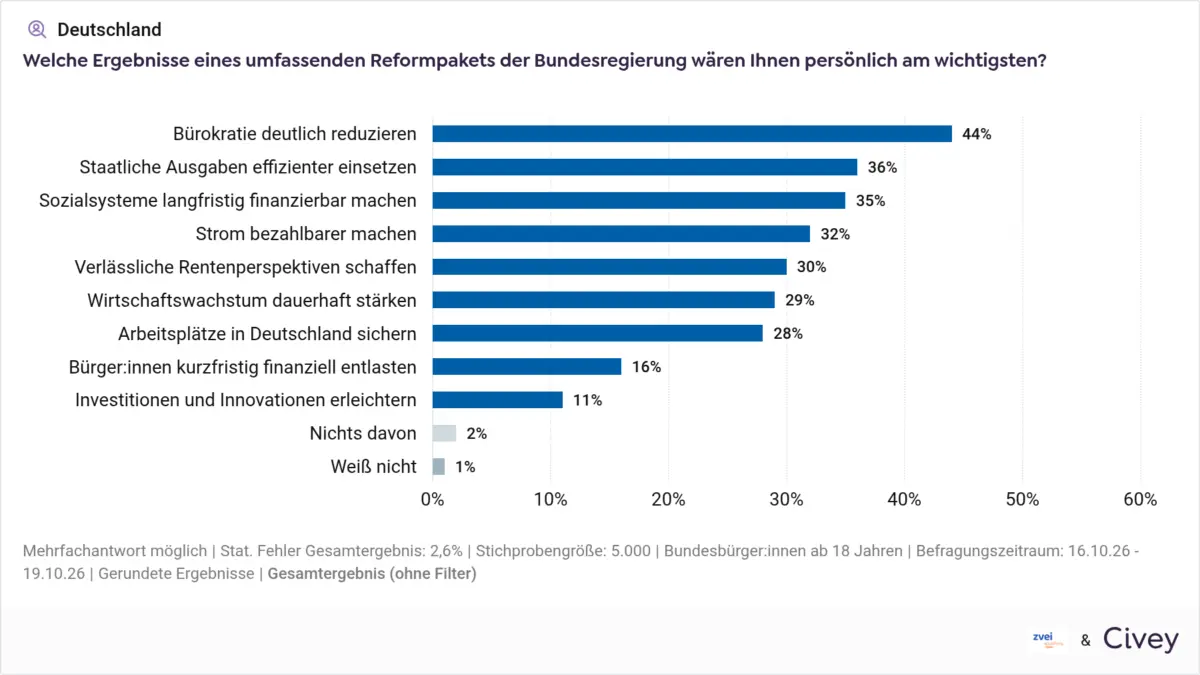
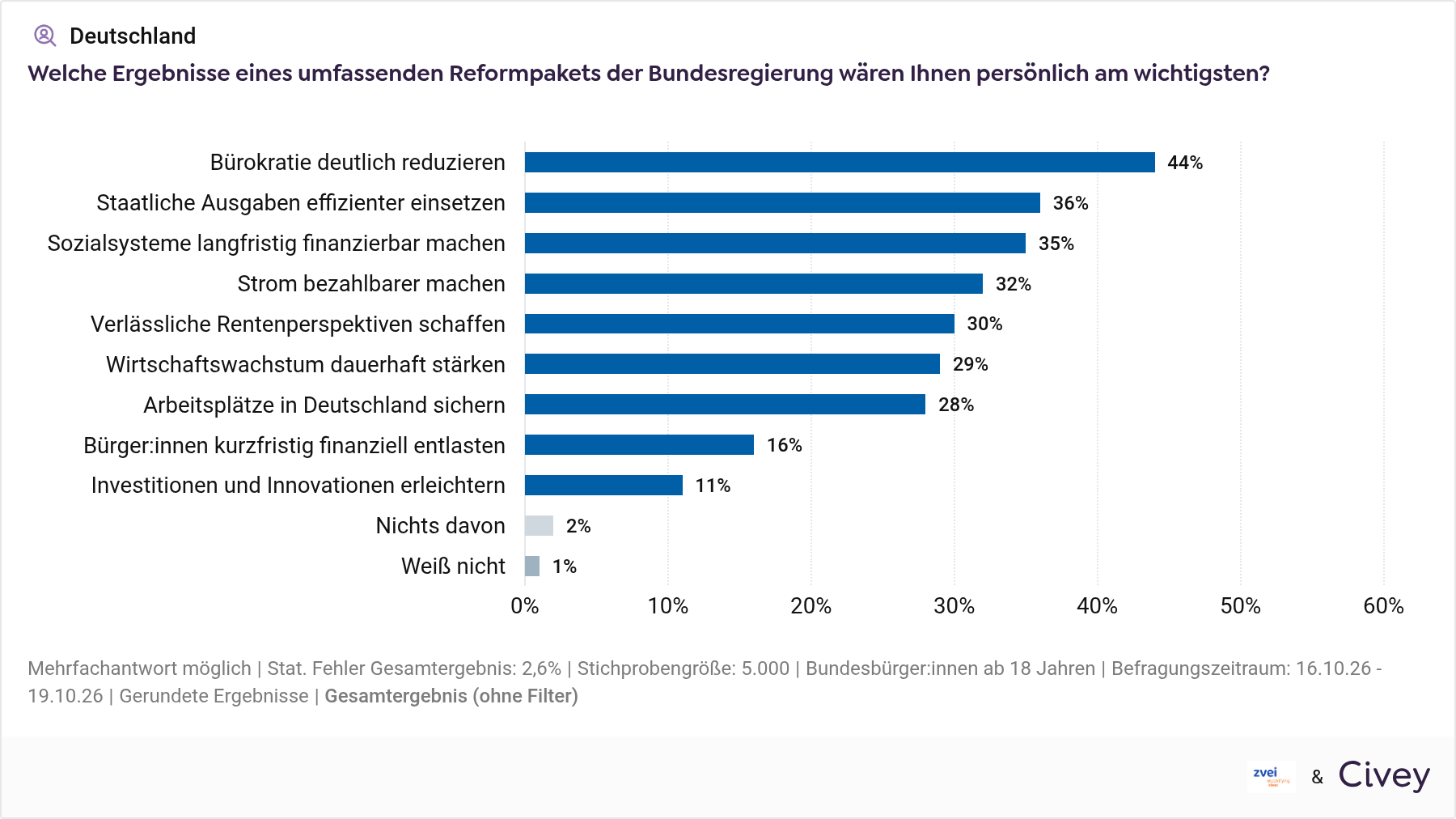
When asked to identify the most critical objectives of a potential reform package, the reduction of bureaucracy emerged as the top priority, cited by 44 percent of respondents. The data reveals a direct correlation between age and the desire for administrative streamlining. While 24 percent of young adults (ages 18 to 29) prioritize the reduction of red tape, that number nearly doubles to 47 percent in the 40 to 49 age group and climbs to 53 percent among those over 65.
This trend suggests that as citizens gain more experience navigating the complexities of German administration—whether through business ownership, property management, or interacting with healthcare and pension systems—their frustration with perceived inefficiencies grows. Daniel Hager remarked that the frustration with "paralyzing bureaucracy" appears to grow faster than one’s own life experience. He argued that a radical dismantling of unnecessary regulations and "encrusted structures" would not only liberate the economy but also significantly improve overall public satisfaction with the state.
Fiscal Responsibility and Energy Security
Beyond administrative reform, the survey highlighted several other key areas where the public expects government action. Efficient state spending was identified as a priority by 36 percent of participants, reflecting a growing demand for the government to demonstrate better value for taxpayer money. Closely following this was the need for long-term financing of social systems (35 percent) and the provision of more affordable electricity (32 percent).
Interestingly, short-term financial relief measures—often a staple of political campaigning—were prioritized by only 16 percent of respondents. This suggests that the German public is looking for structural improvements rather than "flash-in-the-pan" subsidies or one-time payments. Industry leaders have interpreted this as a sign of public maturity and foresight. In response to these findings, the ZVEI has renewed its call for a permanent reduction in the electricity tax for all consumers, arguing that such a move would provide broad-based relief and support the nation’s industrial transition.
Identifying Future Growth Sectors
The survey also sought to identify which industries the German public views as the most promising for the nation’s economic future. Energy and climate technologies led the field, with 30 percent of respondents seeing these as the primary drivers of future prosperity. This reflects the ongoing importance of the "Energiewende" (energy transition) in the public consciousness and the recognition that green technology is a global growth market.

Health and medical technology followed closely at 28 percent, a sector where Germany has traditionally held a strong international position. Meanwhile, emerging fields such as automation, robotics, and Artificial Intelligence (AI) were each identified by approximately 20 percent of the population as key economic opportunities.
The ZVEI has emphasized that its member companies—spanning the electrical and digital sectors—are at the heart of these innovations. However, to maintain and expand Germany’s position in these "key technologies," the association argues that significant investment is required in microelectronics, semiconductors, battery technology, and industrial AI. The prevailing sentiment from industry representatives is that the government must transition from "managing the past" to "enabling the future."
Chronology of the Reform Debate
The release of this survey comes at a pivotal moment in German politics. Throughout the early and mid-2020s, the German economy faced a series of shocks, including high energy costs, labor shortages, and the challenges of digital transformation. By the summer of 2026, the federal government had announced a series of initiatives aimed at boosting growth and streamlining administration.
However, the ZVEI survey, conducted between October 16 and October 19, 2026, suggests that these announcements have yet to translate into perceived progress for the average citizen. The timeline of public sentiment indicates a growing impatience:
- Summer 2026: Government announces "Growth Initiative" and preliminary plans for bureaucracy reduction.
- October 2026: ZVEI commissions Civey to gauge public reform appetite.
- November 2026: Survey results reveal that 83 percent of the public demands more decisive action, setting the stage for the legislative agenda of 2027.
Broader Implications and Analysis
The findings of the ZVEI survey have significant implications for the German political landscape. The high level of reform readiness among the youth (under 40) suggests that political parties focusing on generational equity and long-term systemic stability may find a receptive audience. Conversely, the intense focus on bureaucracy reduction among older voters indicates that administrative reform will be a "make-or-break" issue for any incumbent government.
From an economic perspective, the data reinforces the argument that Germany’s "Standort" (business location) quality is under scrutiny. The demand for lower electricity taxes and investment in semiconductors aligns with broader European efforts to achieve "technological sovereignty." If the German government fails to act on these public demands, there is a risk of further industrial "offshoring" and a decline in public trust in democratic institutions’ ability to solve structural problems.
Furthermore, the survey reflects a shift in the German "social contract." The fact that 41 percent of the population is willing to accept short-term cuts suggests a departure from the traditional expectation of ever-increasing state benefits. This provides a rare window of political opportunity for leaders to implement difficult but necessary reforms to the pension and healthcare systems without facing immediate electoral backlash, provided those reforms are framed as a path to long-term security.
Methodology and Data Integrity
The data was collected by the market research firm Civey on behalf of ZVEI e.V. The survey was conducted online between October 16, 2026, and October 19, 2026, involving a sample size of 5,000 German citizens aged 18 and over. To ensure the results are representative of the general population, Civey utilized a combination of quota sampling and weighting. The statistical margin of error for the overall results is 2.6 percentage points. This methodology provides a high degree of confidence in the findings, reflecting a robust cross-section of the German electorate across all federal states and age groups.
As Germany moves toward the end of the 2026 fiscal year, the ZVEI and its partners in the digital and electrical industries are expected to use this data to lobby for more aggressive policy changes. The message from the public is clear: the time for deliberation has passed, and the era of implementation must begin.
