

The digital audio workstation (DAW) landscape has undergone a significant transformation with Image-Line’s official release of FL Studio Mobile 5. This major version update for iOS and Android platforms represents a pivot toward cloud-integrated production environments, aiming to bridge the gap between mobile convenience and professional-grade desktop resources. By introducing built-in access to FL Cloud Sounds, a refined user interface, and sophisticated new editing capabilities, Image-Line has positioned this update as a cornerstone of its modern mobile strategy. This release follows the company’s long-standing tradition of providing Lifetime Free Updates, ensuring that the existing user base can transition to the new architecture without additional financial hurdles, while simultaneously expanding the software’s utility for new creators entering the mobile music production space.
A New Era of Cloud-Centric Production
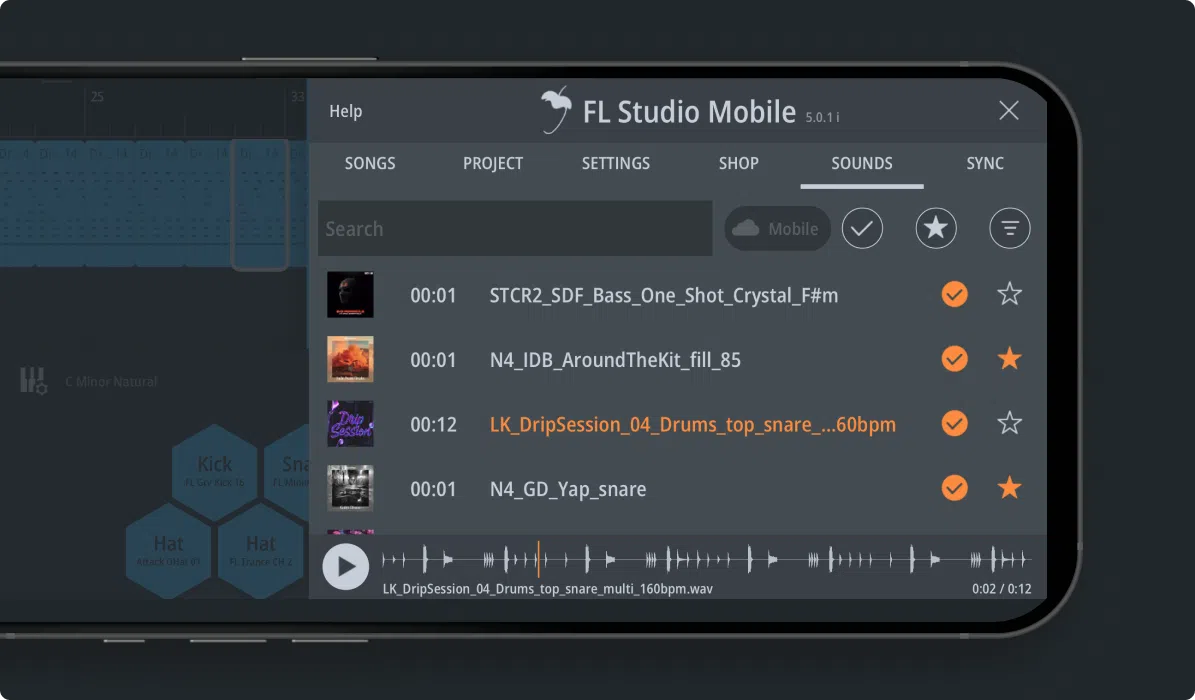
The centerpiece of the FL Studio Mobile 5 update is the integration of FL Cloud Sounds. This feature grants users direct access to a vast repository of professional samples, loops, and presets directly within the application interface. Historically, mobile producers have been limited by the local storage capacity of their devices and the cumbersome process of manually importing sample libraries via file management systems. The integration of FL Cloud aims to eliminate these friction points by providing a searchable, categorized database of sounds that can be auditioned and implemented in real-time.
For the mobile producer, this represents a significant shift in workflow. The update includes thousands of royalty-free sounds available at no additional cost, providing a robust starting point for all users. For those requiring a more extensive palette, the full FL Cloud library—which houses over two million individual assets—is accessible via a subscription model. This hybrid approach allows Image-Line to maintain its "Lifetime Free Updates" promise for the software itself while offering an optional, scalable service for high-volume content consumers.
Interface Refinements and User Experience Enhancements
Beyond the cloud integration, FL Studio Mobile 5 introduces a series of interface updates designed to maximize the limited screen real estate of smartphones and tablets. The development team has focused on streamlining the navigation between the sequencer, the mixer, and the piano roll.
In professional music production, "screen fatigue" and "menu diving" are common obstacles to creativity. Version 5 addresses this by optimizing the touch-target areas and enhancing the visual feedback of the mixing console. The goal is to provide a tactile experience that mimics the precision of desktop hardware while remaining intuitive enough for a touch-based environment. New editing features have also been implemented, including improved automation clip handling and more granular control over MIDI data, allowing for more complex arrangements that were previously difficult to execute on mobile hardware.
The Evolution of FL Studio Mobile: A Chronological Perspective
The journey of FL Studio Mobile reflects the broader evolution of mobile computing. To understand the significance of version 5, one must look at the timeline of the application’s development:
- 2011: The Launch. FL Studio Mobile was first released for iOS, based on the architecture of the "Xewton Music Studio." It was a relatively simple sequencer compared to its desktop counterpart but established a foothold in the nascent mobile market.
- 2013: Android Expansion. The app was ported to Android, significantly broadening its reach and establishing it as one of the few high-quality DAWs available on the Google Play Store.
- 2016: The Version 3 Overhaul. Image-Line released FL Studio Mobile 3, which was a complete ground-up rewrite. It introduced a modular architecture and allowed the mobile app to run as a plugin within the desktop version of FL Studio.
- 2022: Version 4 Integration. This version focused on expanding the internal synthesizer engine and improving the integration with the desktop ecosystem, including better file sharing and project compatibility.
- 2024: Version 5 and the Cloud. The current release marks the transition into the "service-oriented" era, where the DAW is no longer just a tool but a portal to a global library of professional content.
Technical Specifications and Platform Availability
FL Studio Mobile 5 is available across a wide range of devices, ensuring compatibility with the fragmented Android ecosystem and the more standardized iOS environment.
iOS and iPadOS
On Apple devices, the app leverages the high-performance silicon of the M-series chips found in recent iPad Pros and Airs. This allows for higher track counts and more complex plugin chains without thermal throttling. The app is available through the Apple App Store and supports Inter-App Audio and Audio Units (AUv3), allowing it to act as both a host and a client in a wider mobile production setup.
Android
For Android users, the app is available via Google Play. Given the variety of hardware specifications in the Android market, Image-Line has optimized the audio engine to minimize latency, a perennial challenge for Android audio development. The app supports a wide range of screen sizes, from compact smartphones to large-format tablets and ChromeOS devices.
Cross-Platform Plugin Functionality
One of the unique features maintained in version 5 is the ability to load FL Studio Mobile as a plugin within the desktop version of FL Studio (Windows and macOS). This allows producers to start a project on their phone during a commute and seamlessly open the exact same interface and state within their desktop workstation for final mixing and mastering.
Economic Model and the "Lifetime Free Updates" Policy
In an industry where many software developers have moved toward mandatory subscription models (SaaS), Image-Line remains an outlier with its "Lifetime Free Updates" policy. This policy, which has been a staple of the desktop version for decades, applies to the mobile version as well. Users who purchased FL Studio Mobile years ago receive the version 5 update at no additional cost.
This business model creates a high level of brand loyalty. However, the introduction of the FL Cloud subscription within the app suggests a strategic evolution. By offering a "freemium" content layer—where the tool is owned but the content can be subscribed to—Image-Line balances the need for recurring revenue to support server costs with the consumer-friendly practice of perpetual licensing for the software itself.
Market Analysis: The Competitive Landscape
FL Studio Mobile 5 enters a highly competitive market. Its primary rivals include:
- Apple GarageBand/Logic Pro for iPad: While GarageBand is free and highly accessible, Logic Pro for iPad operates on a subscription-only basis. FL Studio Mobile 5 positions itself as a middle ground—more professional than GarageBand but without the mandatory monthly fee of Logic Pro.
- Steinberg Cubasis: A powerful mobile DAW that mirrors the workflow of the desktop Cubase. Cubasis is often seen as the primary professional competitor for FL Studio Mobile, though it lacks the integrated cloud sample library found in Image-Line’s new update.
- BandLab: A free, browser-based and mobile DAW that is built entirely around social collaboration and cloud storage. While BandLab is popular for beginners, FL Studio Mobile offers a more robust synthesis engine and advanced MIDI capabilities.
The integration of FL Cloud is a direct response to the rise of platforms like Splice and Arcade, which have become industry standards for sample-based production. By putting these resources directly inside the mobile DAW, Image-Line reduces the "context switching" that often kills creative momentum.
Industry Implications and Future Outlook
The release of FL Studio Mobile 5 signals a broader trend in the music industry: the "desktop-ification" of mobile devices. As mobile processors become increasingly powerful, the technical limitations that once separated mobile apps from desktop software are evaporating.
Industry analysts suggest that the integration of cloud-based AI tools—such as automated mastering or AI-assisted composition—will be the next logical step for mobile DAWs. Image-Line has already introduced AI-powered mastering in its desktop FL Cloud suite, and it is widely anticipated that these features will eventually migrate to the mobile platform in subsequent version 5.x updates.
Furthermore, the emphasis on cloud access reflects a change in how the "Generation Z" and "Generation Alpha" creators interact with technology. These demographics are less likely to own large local hard drives and more likely to rely on on-demand access to data. By aligning FL Studio Mobile with this behavioral shift, Image-Line is ensuring its relevance for the next decade of music creators.
Conclusion
FL Studio Mobile 5 is more than a simple incremental update; it is a comprehensive refinement of the mobile production experience. By combining the stability of a mature DAW with the flexibility of a modern cloud service, Image-Line has provided a tool that serves both the casual hobbyist and the professional producer on the move. As mobile hardware continues to evolve, the foundation laid by version 5 suggests that the boundary between "mobile music making" and "professional record production" will continue to blur until it eventually disappears altogether. For existing users, the update is a significant value add, and for the broader market, it sets a new benchmark for what a mobile workstation should provide in an interconnected, cloud-driven world.
