

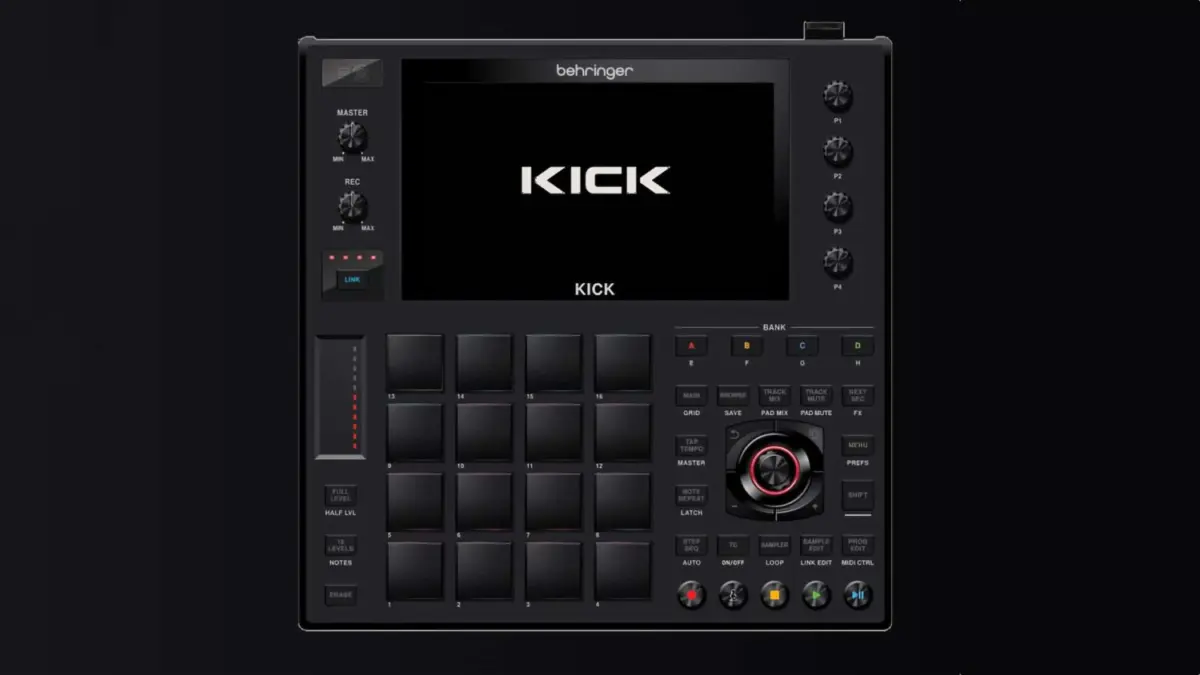
Music Tribe, the parent organization of Behringer, has officially signaled a major shift in its business philosophy and product development strategy with the announcement of the Behringer Kick, a standalone music production center. In a move that deviates from traditional proprietary hardware manufacturing, the company has released an open-source software repository for the device, coinciding with a radical restructuring of the company’s corporate identity. Founder Uli Behringer has confirmed the transfer of Music Tribe’s ownership to the Uli Behringer Foundation, which is currently seeking formal non-profit status. This transition is framed by a manifesto titled "Abundance," in which Behringer argues that the future of the music technology industry lies in open access, artificial intelligence, and community-driven innovation rather than traditional competitive scarcity.
The Behringer Kick represents the company’s first foray into the modern standalone sampler and sequencer market, a territory long dominated by Akai Professional’s MPC series and Native Instruments’ Maschine+. However, the Kick distinguishes itself through its architectural transparency. By publishing the source code for the device’s application, audio engine, and communication protocols on GitHub, Behringer is inviting the global developer community to participate in the evolution of the product’s firmware. This strategy follows the successful trajectory of smaller "open hardware" platforms like the M-Vave FM-1 and the Synthstrom Deluge, but marks the first time a manufacturer of Behringer’s scale has embraced such a model for a flagship production unit.
Technical Specifications and Hardware Architecture
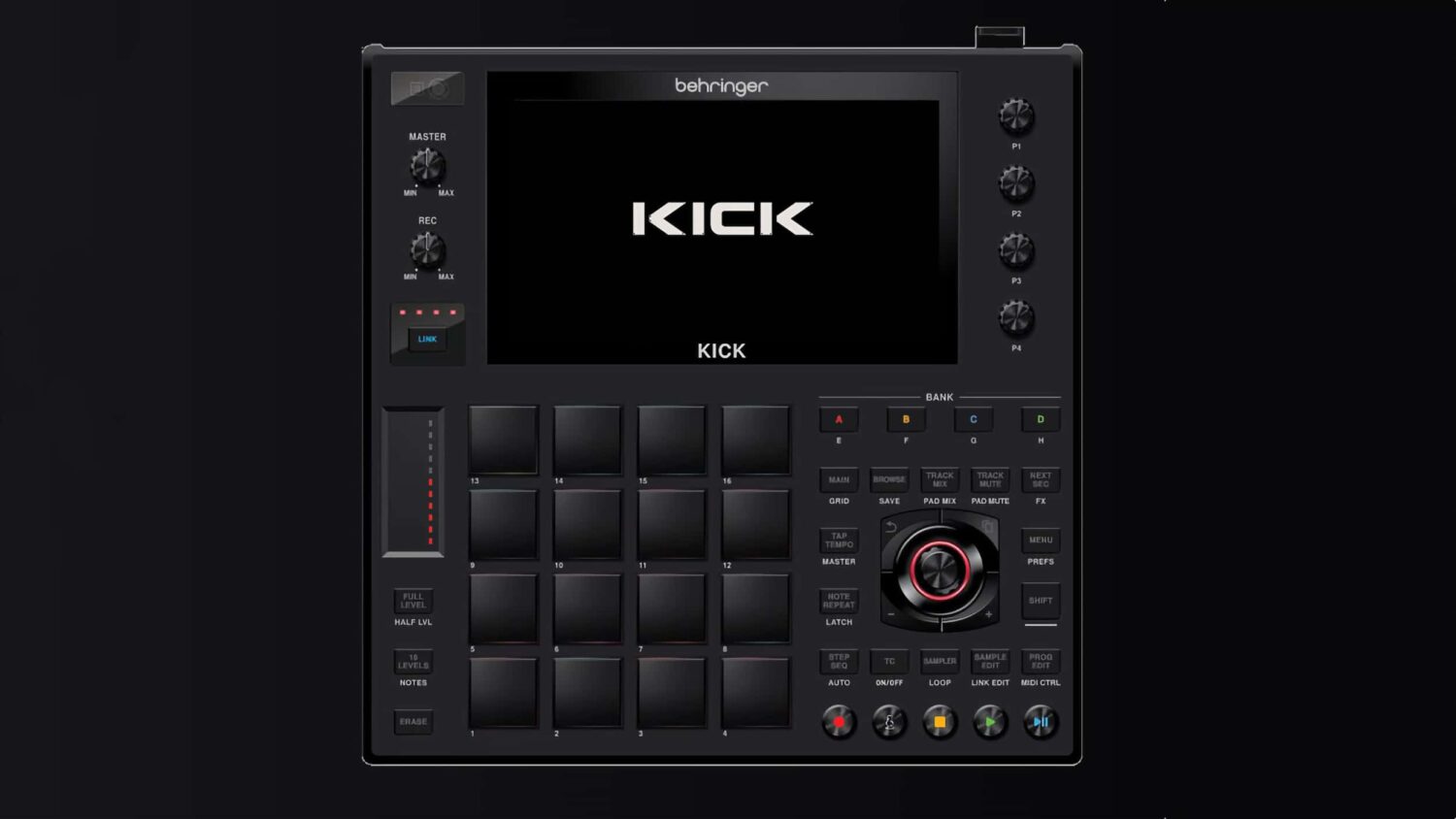
The Behringer Kick is designed as a comprehensive hub for studio production and live performance. Central to its interface is a 7-inch multi-touch color display, which facilitates sample editing, sequencing, and effects routing. The hardware layout includes 16 velocity-sensitive RGB pads arranged in eight banks, providing a total of 128 trigger points for samples and MIDI data. This configuration is a direct nod to the workflow popularized by the Akai MPC, yet the Kick integrates several modern technological flourishes intended to set it apart.
One of the most notable features listed in the GitHub documentation is the inclusion of an AI-powered camera designed for gesture control. This allows performers to manipulate parameters or trigger events through physical movement, potentially offering a more expressive alternative to traditional knobs and faders. For tactile control, the unit is equipped with four assignable endless rotary encoders and a dedicated jog wheel for data entry and timeline scrubbing.
In terms of internal processing, the Kick includes a library of over 300 built-in effects, ranging from standard dynamics processing and spatial effects to more experimental modulation tools. The sampling engine supports extensive on-board editing, including chopping, time-stretching, and pitch-shifting. Connectivity is robust, featuring MIDI In and Out ports, USB-A for external controllers and drives, and USB-C for computer integration. Audio I/O includes stereo inputs for direct sampling and stereo outputs for monitoring. Additionally, the device features four CV/Gate jacks, a critical inclusion for users looking to integrate the Kick with Eurorack modular systems or vintage analog synthesizers. An SD card slot provides expandable storage for user libraries and project data.
The Move to Open Source and the AGPL License
The release of the Kick’s source code on GitHub under the Music Tribe Open Source organization is a pivotal moment for the company. The repository includes the "AudIO" audio engine, the primary KICK application code, and the hardware communication protocols. These elements are published under the GNU Affero General Public License (AGPL), a copyleft license designed specifically for software that is often run over a network.
The choice of the AGPL is significant. It ensures that any modifications made to the software and deployed as a service or within a product must also be made available to the public. This prevents "closed-loop" forks of the software where a third party could improve the code and keep those improvements proprietary. By adopting this license, Behringer is fostering an ecosystem where the community’s contributions benefit all users equally.
This open-source approach addresses a common criticism of standalone music hardware: the "frozen" feature set. Typically, once a manufacturer stops supporting a device with firmware updates, the hardware’s capabilities are locked. By providing the source code and a Linux-based build system, Behringer allows independent developers to fix bugs, optimize performance, and even create entirely new operating systems for the Kick. This model mirrors the success of the Mutable Instruments modules in the Eurorack world, where the open-sourcing of code led to dozens of "alt-firmwares" that significantly expanded the utility of the original hardware.
Uli Behringer’s "Abundance" Manifesto and Non-Profit Transition
The hardware announcement was accompanied by a philosophical statement from Uli Behringer regarding the future of Music Tribe. Behringer’s manifesto posits that the primary challenge facing modern business is no longer competition or technological barriers, but the shift toward "abundance." He suggests that as AI and automated manufacturing lower the cost of production and innovation, the value of a company will be measured by its ability to empower creators rather than its ability to protect intellectual property.
"I believe the greatest AI revolution won’t be replacing humans. It will be unlocking the creator in every human being," Behringer stated. This vision is being codified through the transition of Music Tribe into the Uli Behringer Foundation. While the practical implications of a "non-profit" status for a multi-million dollar manufacturing entity are still being analyzed by industry observers, the stated goal is to reinvest profits into education, open-source development, and the democratization of music technology.
This transition marks a radical departure for a company that has historically been aggressive in its pursuit of market share through high-volume manufacturing and competitive pricing. By moving toward a foundation-based model, Music Tribe appears to be positioning itself as a permanent infrastructure provider for the music community, rather than a traditional corporate entity focused on quarterly shareholder returns.
Chronology of Development and Market Context
The development of the Behringer Kick occurs during a period of intense competition in the standalone production market.
- 2017–2020: Akai Professional revitalizes the MPC line with the MPC Live, One, and X, re-establishing the "standalone" workflow as the industry standard for beatmakers.
- 2021–2023: Competitors like Polyend (Tracker/Play), Dirtywave (M8), and Sonicware (Liven) gain traction by offering unique, often open-ended or highly specialized sequencing workflows.
- 2023: The M-Vave FM-1 gains attention in the budget market for its open-source potential, proving that there is a significant appetite for user-modifiable hardware.
- Late 2024: Behringer publishes the GitHub repository for the Kick, signaling that the hardware development has reached a stage where software integration is the primary focus.
Behringer’s entry into this space is likely to disrupt the pricing tiers currently established by Akai and Native Instruments. While a retail price for the Kick has not yet been confirmed, Behringer’s manufacturing scale typically allows for significantly lower price points than its competitors. If the Kick is positioned in the $300–$500 range, it would represent a formidable challenge to the MPC One and the Maschine+.
Industry Implications and Analysis
The implications of the Behringer Kick and the broader "Music Tribe Open Source" initiative are twofold. First, it challenges the traditional "walled garden" approach to music hardware. For decades, manufacturers have relied on proprietary software to create brand loyalty and force hardware upgrades. By providing an open platform, Behringer is betting that hardware sales will be driven by the flexibility and longevity of the device rather than the exclusivity of its software.
Second, the integration of an AI camera for gesture control suggests a move toward more ergonomic and performative electronic instruments. Most standalone samplers are "box-centric," requiring the user to look down at pads and screens. Gesture control allows for a more "heads-up" performance style, which could appeal to live performers and experimental artists.
However, the success of the Kick will depend heavily on the quality of the initial software release and the level of community engagement. Open-source projects require a critical mass of developers to thrive. If the initial "AudIO" engine is buggy or the build system is too complex for the average hobbyist, the open-source aspect may remain a niche feature rather than a mainstream revolution.
Official Status and Availability
As of the current announcement, the source code for the Behringer Kick is live and accessible on GitHub. This includes documentation for the Linux build environment, allowing advanced users to begin exploring the architecture of the application.
Music Tribe has not yet announced a specific shipping date or a final retail price for the Kick hardware. In line with Behringer’s previous product rollouts, the company is expected to move into a beta testing phase where community feedback from the GitHub repository may influence the final hardware revisions.
The industry is now watching closely to see how competitors respond to this shift. If Behringer succeeds in creating a stable, affordable, and fully open standalone production center, it could force a fundamental change in how music technology is developed, licensed, and sold across the entire sector. For now, the Kick stands as a bold experiment in "abundance," testing whether a major manufacturer can thrive by giving its secrets away to the public.
