

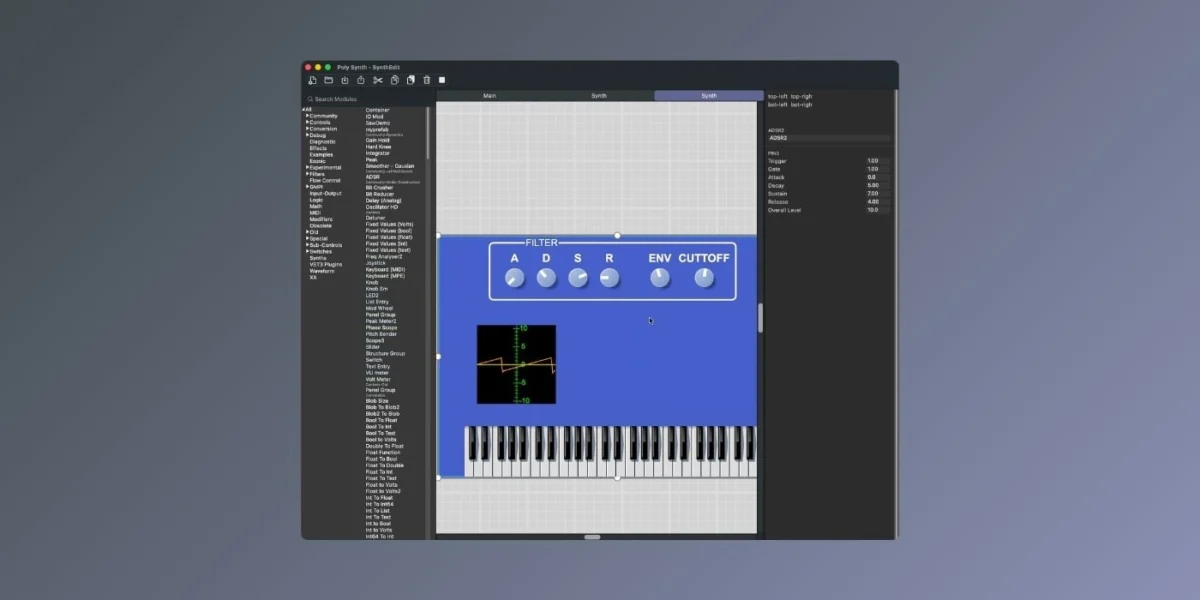
Jeff McClintock, a long-standing figure in the realm of music software development, has officially launched SynthEdit 1.6, marking a pivotal update to the venerable modular plugin development environment. This release signals a significant leap forward for the platform, which has historically been a cornerstone for independent plugin creators on Windows. The headline feature of SynthEdit 1.6 is undoubtedly its long-anticipated native support for macOS, finally allowing developers to export 64-bit VST3 plugins for both Windows and macOS, alongside Audio Unit plugins tailored for Apple’s ecosystem. This cross-platform expansion is poised to broaden SynthEdit’s reach considerably, opening its powerful visual programming capabilities to a much wider audience of music producers and sound designers who predominantly operate within the macOS environment. The update also introduces an experimental preview for Linux, further extending its potential accessibility across major operating systems.
A Legacy of Innovation: SynthEdit’s Historical Context
SynthEdit’s journey began decades ago as a Windows-first tool, quickly establishing itself as a revolutionary platform for those interested in crafting custom audio plugins without the daunting requirement of deep C++ programming knowledge. In the early 2000s, alongside similar tools like SynthMaker, it democratized plugin development, enabling a new generation of bedroom producers and hobbyist developers to build their own virtual instruments and effects. This accessibility was both its greatest strength and, for a time, the source of a peculiar reputation within the music production community.
Many musicians and industry professionals of that era developed a certain skepticism towards plugins created with SynthEdit or SynthMaker. This perception was not entirely unfounded; the ease of use meant that some developers, perhaps lacking a profound understanding of digital signal processing (DSP) optimization, would create generic "bread-and-butter" effects or synthesizers that relied heavily on stock modules. These plugins, while functional, sometimes lacked the unique character or the optimized performance found in meticulously hand-coded alternatives, leading to a stereotype that "SynthEdit plugins" were inherently inferior.
However, this reputation soon became unfair as the platform matured and its community grew more sophisticated. Talented developers began pushing the boundaries of what was possible with SynthEdit, leveraging its modularity to create highly innovative, unique, and well-optimized plugins. These creations often combined custom DSP modules (written in C++ and integrated via SynthEdit’s SDK) with the visual patching environment, proving that the tool was merely a means to an end, and the quality of the output was ultimately dictated by the skill and vision of the developer. This period saw the emergence of numerous beloved freeware and commercial plugins that originated from SynthEdit, challenging and eventually dissipating the initial prejudices. Jeff McClintock, as the principal developer, has maintained a consistent vision for the platform throughout these evolutionary phases, ensuring its continuous development and relevance.
The Evolution of Plugin Creation: From DIY to "Vibe-Coding"
The release of SynthEdit 1.6 arrives at a fascinating juncture in the history of music technology. The current landscape is witnessing a resurgence of accessible, rapid plugin-making tools, driven in part by advancements in artificial intelligence and the increasing demand for personalized digital audio workstations (DAWs) and production workflows. This era has given rise to what some have termed "vibe-coded" plugins – applications or tools that simplify the creation process to an extreme, often with minimal effort from the user beyond conceptual input. The author of the original piece highlighted a sense of "SynthEdit déjà vu" when observing this trend, drawing parallels between the early criticisms of SynthEdit’s ease of use and contemporary concerns regarding the quality and conceptual depth of some modern, quickly generated plugins.
While the democratization of technology is generally beneficial, the concern arises when "zero-effort" products, lacking substantial thought or optimization, are pushed out as finished, sometimes commercial, releases. This phenomenon can dilute the overall quality standard of the plugin market and challenge the perception of genuine innovation. In this context, SynthEdit 1.6’s update is particularly timely. It offers a powerful, yet structured, environment that encourages real software development rather than merely superficial output. McClintock’s philosophy, as articulated on the new SynthEdit website, emphasizes that visual patching, while incredibly potent, is a foundation for serious development, not a "magic checkbox" for instant, effortless creation. This distinction is crucial in an age where the line between genuine development and automated generation is becoming increasingly blurred. SynthEdit’s continued commitment to providing robust tools for both visual and code-based development positions it as a valuable alternative for creators who seek depth and control over their projects.
Technical Deep Dive: The Capabilities of SynthEdit 1.6
SynthEdit 1.6 builds upon a robust foundation, offering a comprehensive modular environment for constructing virtually any type of synthesizer or effect. Developers can visually patch together a vast array of building blocks, including oscillators, filters, envelopes, arithmetic modules, and various DSP components, on a intuitive canvas. This visual approach streamlines the prototyping and development process, allowing for rapid iteration and experimentation.
The platform boasts an impressive array of technical specifications designed to meet the demands of modern audio production. It includes over 300 built-in modules, providing a rich palette for sound design and processing. The internal DSP operates at 32-bit floating-point precision, ensuring high fidelity at any sample rate. Instrument plugins can support up to 128 voices, offering ample polyphony for complex musical arrangements. For debugging and analysis, live signal scopes on pins and wires provide immediate visual feedback on audio and control signals flowing through the patch. The integrated drag-and-drop panel designer simplifies the creation of intuitive and aesthetically pleasing user interfaces for the final plugins. Crucially, the export of finished plugins is included in the normal workflow, with no royalties required, offering a highly attractive economic model for independent developers.
Beyond its visual patching capabilities, SynthEdit 1.6 maintains its commitment to extensibility and advanced development. For those who wish to delve deeper, an open SDK (Software Development Kit) is available, enabling developers to write custom DSP modules in C++ and seamlessly integrate them into their SynthEdit projects. This feature bridges the gap between visual programming and traditional coding, allowing for unparalleled customization and optimization. Furthermore, a vibrant community contributes additional modules, expanding the platform’s capabilities. A significant development in this regard is the SE2JUCE export option, which allows projects to be converted into JUCE-compatible source code. This feature ensures that SynthEdit projects are not locked into a proprietary file format, offering developers the flexibility to transition their work to a widely adopted C++ framework for more extensive development or porting to other platforms. Jeff McClintock’s emphasis that this is "real software development, not a magic checkbox" underscores the platform’s serious intent and its capacity for professional-grade output.
The cross-platform enhancements in version 1.6 are particularly noteworthy. Native macOS support means that developers can now target a significant portion of the professional audio market, exporting 64-bit VST3 and Audio Unit plugins that run seamlessly on Apple’s operating system. The experimental Linux preview further expands this reach. The Linux editor requires a Wayland session, reflecting modern Linux desktop environments, while exported plugins are designed to carry both X11 and Wayland paths within a single binary. This ensures broad compatibility with popular Linux DAWs and hosts, such as Ardour. The Linux build is currently offered free of charge during its preview phase, encouraging early adoption and feedback from the open-source community.
Despite these significant advancements, SynthEdit 1.6 acknowledges certain limitations. Standalone application export is not yet supported, meaning that developers must still rely on host DAWs for their plugins to function. CLAP (Common Language for Audio Plug-ins) support, a newer open-source plugin format gaining traction, is also not yet ready, though its inclusion in future updates is a logical progression. Furthermore, MIDI-effect-style plugins continue to present challenges, primarily due to inherent limitations and complexities within the VST3 MIDI specification, which can make their implementation somewhat awkward.
Market Impact and Future Implications
The release of SynthEdit 1.6, particularly its native macOS support, is expected to have a substantial impact on the independent plugin development landscape. By removing a major barrier to entry for macOS users, SynthEdit is poised to attract a new wave of developers and foster innovation within Apple’s ecosystem. This expansion will likely lead to an increased number of unique plugins available to the wider music production community, potentially diversifying the market beyond offerings from established commercial entities.
The platform’s economic model—a one-time purchase of €170 with royalty-free export—stands in contrast to subscription-based models or those requiring per-product licensing fees. This approach makes SynthEdit an attractive and sustainable option for independent developers, hobbyists, and small studios, enabling them to bring their creative visions to market without ongoing financial burdens. The availability of a fully featured 60-day demo, including plugin export capabilities, further lowers the entry barrier, allowing prospective users to thoroughly evaluate the platform before committing to a purchase.
The re-invigoration of SynthEdit also contributes to a broader conversation about the role of visual programming and modular environments in complex software development. In an era where software often prioritizes abstraction, tools like SynthEdit offer a tangible, intuitive approach to DSP design, making intricate concepts accessible. This enduring appeal of visual programming suggests that SynthEdit will continue to play a vital role in fostering creativity and technical skill within the music technology sector.
Looking ahead, SynthEdit 1.6’s emphasis on flexibility through its SDK and SE2JUCE export option indicates a commitment to long-term viability and interoperability. As the music technology industry continues to evolve, with new plugin formats and operating system requirements emerging, a platform that empowers developers to adapt and extend their projects will remain invaluable. The hope, as expressed by the community, is that this new version will inspire a new generation of "interesting projects," showcasing the continued potential of well-crafted, modular development tools to shape the sound of tomorrow.
SynthEdit 1.6 is currently available for download for Windows and macOS, with the Linux build offered as an experimental preview. The full license costs €170 as a one-time purchase, and a comprehensive 60-day demo is provided for evaluation purposes.
