

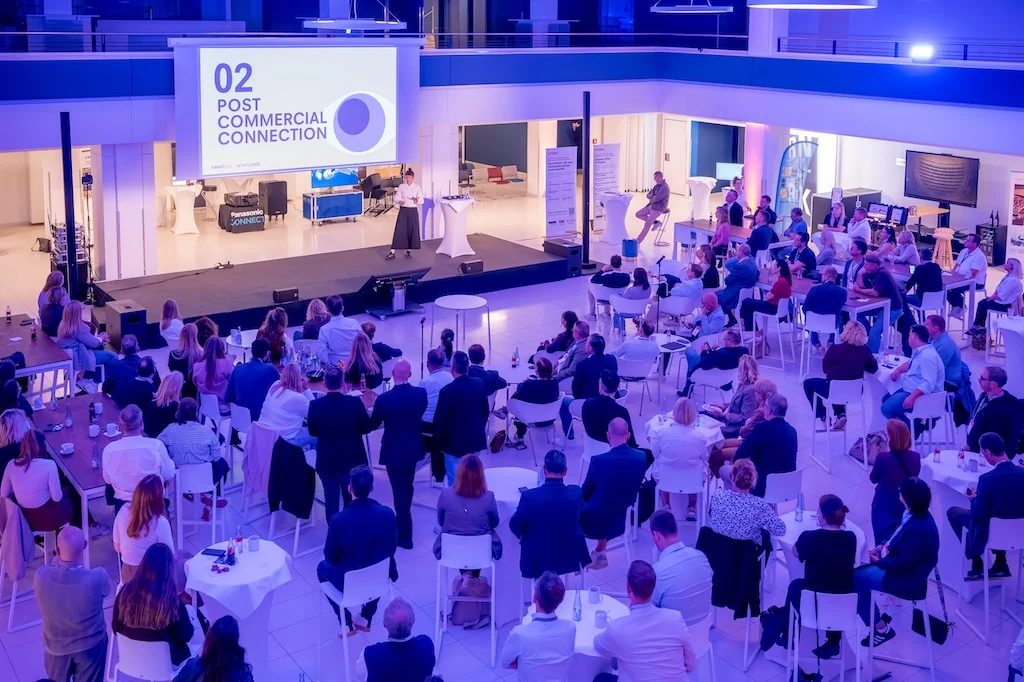
The 27th edition of the Management-Fachtagung (MFT), organized by the European Association of Event Centers (EVVC), concluded its two-day run in Koblenz, reinforcing its reputation as the premier strategic gathering for the German-speaking event industry. Held from September 21 to 22 at the Rhein-Mosel-Halle, the conference attracted more than 300 delegates, including venue directors, technical managers, and industry stakeholders from across Europe. Under the evocative motto #wirgehenrhein—a play on the German word for "going in" and a reference to the Rhine river—the event was once again sold out, highlighting the high demand for professional exchange in a rapidly evolving global market.
A Strategic Hub for the Event Community
The MFT serves as a critical nexus for the EVVC, an organization representing approximately 300 congress centers, arenas, and event halls across Europe. The 2026 gathering in Koblenz was designed not merely as a networking opportunity but as a high-level laboratory for identifying and addressing the structural shifts within the MICE (Meetings, Incentives, Conferences, and Exhibitions) sector.
The proceedings commenced with a formal welcome from Claus Hoffmann, Managing Director of Koblenz-Touristik. His opening remarks emphasized the dual role of event centers as both economic engines for their municipalities and cultural landmarks. Following this, the tone for the conference was established by the opening keynote from renowned trend visionary Sabine Rogg. Her presentation focused on the intersection of human behavior and technological advancement, urging industry leaders to adopt a proactive rather than reactive stance toward digital transformation.
Key Programmatic Pillars: Technology, Resilience, and Sustainability
The curriculum of the MFT 2026 was structured around four primary pillars: new technologies, operational resilience, sustainability, and modern communication strategies.
Technological Integration and AI
A significant portion of the program was dedicated to the practical application of Artificial Intelligence (AI) and Digital Twins in venue management. Discussions centered on how predictive analytics can optimize energy consumption in large-scale arenas and how AI-driven guest management systems can enhance the attendee experience. The consensus among experts was that while technology is a tool for efficiency, the "human factor" remains the core value proposition of live events.
Resilience in a Volatile Economy
In light of fluctuating energy costs and labor shortages, "resilience" has moved from a buzzword to a strategic necessity. Sessions explored diversified revenue models for venues, risk management in the face of geopolitical instability, and the importance of psychological resilience for leadership teams. The EVVC emphasized that the ability of a venue to adapt to sudden market shifts is now a primary indicator of its long-term viability.
Sustainability and ESG Compliance
As the European Union tightens Environmental, Social, and Governance (ESG) reporting requirements, the MFT provided a platform for discussing the implementation of "Green Meetings." Delegates shared best practices for waste reduction, sustainable catering, and the logistical challenges of decarbonizing the supply chain for major international congresses.
Exploring Koblenz: A Case Study in Destination Marketing
The choice of Koblenz as the host city provided a unique backdrop for the conference. Situated at the confluence of the Rhine and Moselle rivers, the city is part of the UNESCO World Heritage Upper Middle Rhine Valley. The MFT utilized the city itself as a living laboratory through six distinct site inspections, allowing participants to analyze various venue types and their integration into the local tourism infrastructure.
The site inspections included:
- Ehrenbreitstein Fortress: One of the largest intact historical fortifications in Europe, offering insights into heritage management and open-air event logistics.
- Koblenz City Theater: A venue highlighting the intersection of traditional cultural programming and modern technical requirements.
- EPG Arena: A modern sports and event facility that served as a case study for multi-functional arena management.
- The Rhein-Mosel-Halle: As the primary host venue, it demonstrated how a mid-sized congress center can leverage state-of-the-art technology to compete on a national level.
Daria Albino, Head of the Rhein-Mosel-Halle, noted that the event allowed Koblenz to showcase its capabilities as a top-tier destination for both tourism and professional conferences. The success of these site visits underscored the importance of "place-making" in the event industry, where the destination’s character becomes a value-add for the conference itself.
Technical Excellence and the Role of AG IV
While the MFT focused on management and strategy, the technical backbone of the industry was also a major point of discussion. The EVVC’s Working Group IV (AG IV Technik), which comprises technical directors and heads of stage, lighting, sound, and video technology, utilized the MFT to prepare for their upcoming meeting.
The AG IV has announced that it will hold its next major session during the leat con 26 in Hamburg, scheduled for October 6 to 8. This move signifies a closer alignment between venue management and technical service providers. By meeting at leat con, the AG IV aims to bridge the gap between theoretical venue management and the practical implementation of high-end event technology. Key topics for the Hamburg meeting are expected to include the standardization of technical safety protocols and the integration of sustainable lighting and sound solutions in aging venue infrastructures.
Leadership Perspectives and Industry Growth
René Tumler, Managing Director of the EVVC, highlighted the evolving nature of the MFT during his address. He noted that the conference has transitioned from a traditional association meeting into a vital foresight platform. According to Tumler, the MFT allows members to identify trends early and collectively shape the development of the industry.

The "out-of-the-box" thinking encouraged at the conference was echoed by participants who praised the high quality of the sessions and the opportunity for cross-border networking. With representatives from several European countries, the MFT 2026 demonstrated that the challenges facing the event industry—such as digitalization and the climate crisis—are universal and require collaborative solutions.
Looking Toward the Future: Europa-Park 2027
As is tradition, the conclusion of the MFT featured the symbolic passing of the host baton. Daria Albino officially handed over the hosting duties to Christine Wenz, Head of Confertainment at Europa-Park. The 28th Management-Fachtagung is set to take place on September 15 and 16, 2027, in Rust, Baden-Württemberg.
The move to Europa-Park, Germany’s largest theme park and a major player in the "confertainment" (conference + entertainment) sector, suggests that the 2027 conference will focus heavily on experiential marketing and the diversification of venue offerings. Europa-Park’s infrastructure provides a different model of venue management, blending leisure tourism with high-capacity professional events, which will likely be a central theme of the 2027 program.
Broader Implications for the MICE Sector
The success of the MFT 2026 in Koblenz reflects a broader recovery and transformation within the European MICE sector. As face-to-face meetings regain their status as the gold standard for professional communication, the role of associations like the EVVC becomes increasingly critical.
The data from the conference suggests several key trends that will define the next three to five years:
- Hyper-Localism within Globalism: While events are becoming more technologically global, the local identity of the host city (as seen in Koblenz) is becoming a more significant draw for attendees.
- Data-Driven Decision Making: Management is shifting toward a model where every aspect of a venue’s operation—from HVAC systems to attendee flow—is monitored and optimized via data.
- The Professionalization of "Soft Skills": Resilience, communication, and marketing are no longer secondary to technical logistics; they are now recognized as the primary drivers of venue profitability.
By successfully integrating these complex themes into a two-day program, the EVVC has solidified the MFT’s position as an indispensable event for anyone in a leadership role within the event center industry. As the community looks toward the upcoming technical sessions in Hamburg and the next management summit in Rust, the insights gained in Koblenz will serve as a roadmap for navigating the challenges of 2027 and beyond.
