

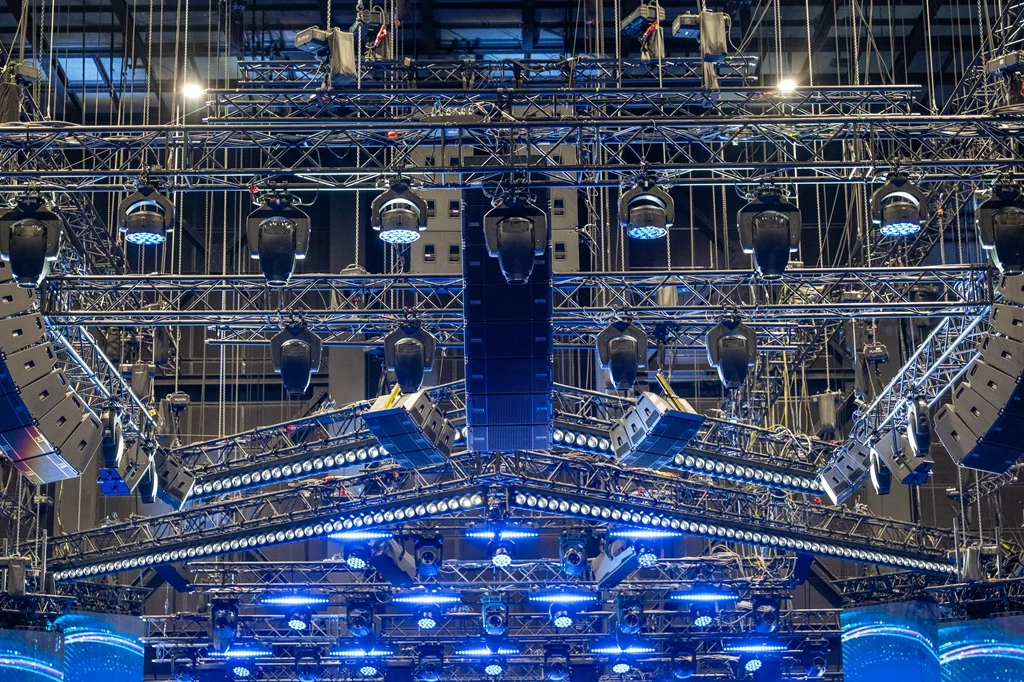
The technical landscape of modern television production has reached a pivotal juncture where the demands of a live studio audience must be seamlessly balanced against the rigid aesthetic and acoustic requirements of a high-definition broadcast. At the Cologne Coloneum, one of Europe’s most prestigious media production hubs, a recent large-scale casting show production served as a masterclass in this balancing act. To accommodate an audience of 1,300 spectators while maintaining a pristine visual field for dozens of cameras, dBTechnologies, in collaboration with MMC Studios and the service provider Atlive, implemented a sophisticated, entirely flown sound reinforcement concept based on the VIO series. This ambitious project aimed to create a homogeneous system design that satisfied both the on-site auditory experience and the complex signal path required for the broadcast mix, all while ensuring that not a single loudspeaker or cable would obstruct the camera’s line of sight.
The production environment of a live-broadcast casting show is widely regarded as one of the most taxing scenarios in event technology. The primary challenge lies in the inherent conflict between live sound and studio recording. In a typical concert setting, large speaker arrays and ground-stacked subwoofers are acceptable, even expected. However, in a television studio, every piece of equipment on the floor represents a potential visual "dead zone" or a source of unwanted shadows. For this specific production, the requirements were particularly stringent: the setup featured a live band, a rotating cast of performers using a mix of headset and handheld microphones, and a panel of judges whose microphones remained open throughout the duration of the show. Achieving high "gain before feedback" under these conditions, without the aid of visible monitors or subwoofers, required a radical departure from traditional sound design.
The Architectural and Acoustic Constraints of Modern TV Studios
In the context of a major studio production at the Coloneum, technical directors must navigate a multifaceted web of restrictions. Jochen Gotzen, Technical Director at dBTechnologies, noted that the project was defined by the simultaneous management of sightlines, shadow casting, and the strict separation of the broadcast audio from the in-studio sound reinforcement. The most critical technical hurdle was maintaining the integrity of the judge’s microphones. Because these microphones are positioned in close proximity to the audience and the primary PA system, the risk of feedback is immense. Furthermore, the audio team had to ensure that the "live" energy of the studio—the cheers, the music, and the atmosphere—was palpable for the audience without bleeding into the performers’ microphones in a way that would muddy the broadcast mix.
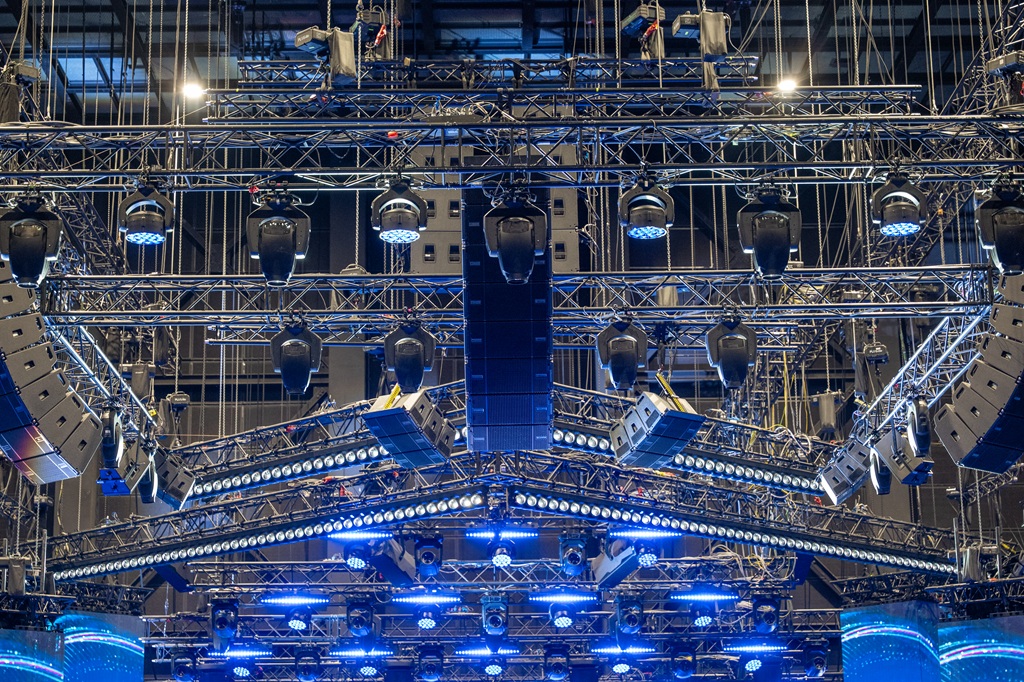
To solve these issues, the team opted for a "flown-only" approach. By suspending the entire audio system from the studio’s rigging grid, the floor was kept entirely clear for camera dollies, jibs, and the movement of the audience. This strategy, however, introduces its own set of acoustic complexities. When loudspeakers are moved away from the ground, the lack of floor coupling can affect low-frequency impact, and the distance between the source and the listener increases the reliance on precise phase alignment and time-domain management.
System Configuration and the VIO Rental Network
The hardware selection for the project was drawn from the VIO Rental Network, a global infrastructure that allows production companies to scale their systems using standardized, high-performance components. The primary sound reinforcement was anchored by 24 VIO L1610 line-array modules, configured into three main arrays. These modules were chosen for their high output-to-size ratio and their ability to provide consistent horizontal coverage across the expansive seating area.
To fill the gaps in the stalls and peripheral zones, the engineers deployed 26 VIO L1608 modules in six shorter arrays. These acted as the secondary layer of the system, ensuring that even those in the farthest corners of the studio experienced the same tonal balance as those in the front rows. For point-source applications where line arrays were not feasible, four VIO X310 systems were utilized, while four VIO X205 modules served as delay lines to maintain intelligibility in the deepest sections of the audience.
Monitoring for the performers on stage was equally discreet. Rather than using traditional floor wedges, which would have been visible in wide shots, the team suspended six VIO W12 monitors. This allowed the band and the contestants to hear their mixes clearly without cluttering the stage floor. Jens Szczygieleski from Atlive, the firm responsible for the implementation, emphasized that the decision to use the VIO family across the board was driven by the series’ consistent acoustic character. Because the different models share the same phase response and sonic signature, the transitions between the main arrays, the delays, and the outfills were virtually imperceptible to the human ear.
Chronology of Planning: From Simulation to Reality
The success of the Coloneum deployment was not merely a result of high-quality hardware but of rigorous pre-production planning. The chronology of the project began weeks before the first truss was lifted. Martin Antulov and Marius Dimke of MMC Studios utilized EASE Focus simulation software to create a digital twin of the studio’s acoustic environment.
- Phase One: Acoustic Modeling: The engineers mapped the 3D geometry of the Coloneum, including the 1,300-seat audience configuration and the specific camera positions. This allowed them to predict how sound would behave in the space and identify potential feedback "hot spots."
- Phase Two: Array Optimization: Using the simulation data, the team determined the exact hang points and splay angles for the VIO L1610 and L1608 arrays. The goal was to achieve a uniform sound pressure level (SPL) across all seats with a variance of less than 3dB.
- Phase Three: Low-Frequency Alignment: The most innovative part of the planning involved the subwoofer cluster. Since ground-stacking was prohibited, the team designed a central, flown sub-cluster consisting of eight VIO S118 units. These were arranged in a "bogenförmig" (arc) configuration to steer the low-frequency energy toward the audience and away from the stage.
- Phase Four: On-Site Integration: Once the physical installation was complete, the digital models were verified using real-world measurements. The Aurora Net control software was then used to fine-tune the delay times and frequency response of each individual cabinet.
The "Acoustic Zero Line" and Low-Frequency Management
One of the most significant technical breakthroughs in this case study was the definition of an "acoustic zero line." In typical live sound, the subwoofers on the ground serve as the temporal reference point for the rest of the system. In this flown configuration, Jochen Gotzen and the MMC team redefined the central flown sub-cluster as the reference point.

By treating the sub-cluster as the "zero line," all other line arrays and point-source speakers were time-aligned and phase-aligned to the subs. This meticulous approach ensured that the entire system operated as a single, coherent wavefront. The result was a dramatic improvement in localization—the audience perceived the sound as coming from the stage, despite the speakers being overhead—and a significantly higher gain before feedback. This was crucial for the jury microphones, which could remain fully active without picking up the low-frequency rumble or phase-shifted artifacts that often plague large studio environments.
Digital Control and Network Redundancy
The complexity of managing over 60 active loudspeakers necessitated a robust control infrastructure. The entire VIO system was networked via Aurora Net, dBTechnologies’ proprietary management software. Because each VIO speaker is an active system with its own onboard DSP (Digital Signal Processor), the need for external amplifier racks or separate matrix processors was eliminated. This not only saved physical space in the studio but also simplified the signal chain.
The system was driven by a redundant A2Net signal distribution, ensuring that even in the event of a cable failure, the audio would continue uninterrupted—a non-negotiable requirement for live television. Jens Szczygieleski highlighted the granularity of control afforded by this setup. Each speaker could be addressed individually, allowing the FOH (Front of House) engineers to group them by seating tier or function. This level of detail meant that the frequency response could be shaded across an array to compensate for the different absorption characteristics of the audience versus the empty studio floor.
Broader Impact on the Broadcast Industry
The successful execution of the Coloneum project has broader implications for the future of broadcast audio. As television productions become more cinematic, with 360-degree camera movements and increasingly elaborate set designs, the "invisibility" of technical infrastructure becomes a paramount concern. The transition to fully flown, active, and networked audio systems represents the next evolution in studio engineering.
From a financial and logistical perspective, the use of the VIO Rental Network demonstrates a sustainable model for high-end productions. Instead of a single studio having to own and maintain a massive inventory of specialized gear, they can draw from a standardized pool of equipment that is guaranteed to perform consistently. This "ecosystem" approach reduces overhead and ensures that the latest technology is always available for flagship productions.
For MMC Studios, the project reaffirms their position as a leader in technical innovation. By successfully integrating a high-SPL live sound system into a sensitive broadcast environment, they have proven that "live atmosphere" and "broadcast clarity" are no longer mutually exclusive. As Martin Antulov and Marius Dimke concluded, the combination of precise simulation and the consistency of the VIO series provided the "safety net" required for a high-stakes live show where there are no second chances.
The Coloneum case study stands as a definitive example of how modern audio engineering can solve the age-old conflict between the ear and the eye. Through the strategic use of flown arrays, phase-coherent sub-clusters, and sophisticated digital networking, dBTechnologies and its partners have set a new standard for what is possible in the demanding world of live broadcast audio.
