

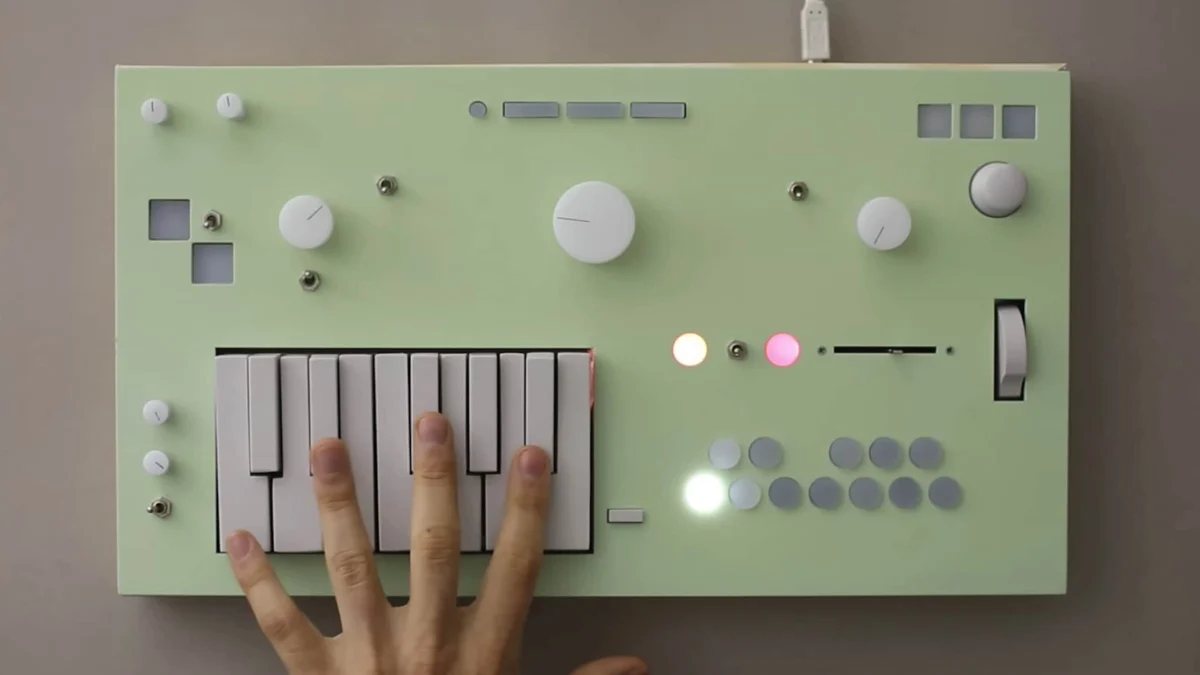
The landscape of hardware synthesis and MIDI orchestration is poised for a significant shift as developer Martin Grieco announces the official launch details for Nopia, a semi-modular harmony generator designed to bridge the gap between complex music theory and intuitive performance. Scheduled for a Kickstarter debut on September 15 at 9 AM ET, the Nopia represents a departure from traditional keyboard layouts, offering a specialized interface where harmonic relationships take precedence over individual note triggering. With an initial Super Early Bird price point of $650, the device enters a competitive boutique market, aiming to provide musicians, producers, and hobbyists with a streamlined workflow for chord progression generation and sound design.
A New Paradigm in Harmonic Interface Design
At the core of the Nopia’s design philosophy is the recontextualization of the musical keyboard. While a standard MIDI controller requires the player to possess an intimate knowledge of fingerings and scales to produce coherent harmony, the Nopia utilizes a single-octave layout where each key acts as a gateway to a full chord. This design choice effectively lowers the barrier to entry for complex songwriting while providing seasoned professionals with a rapid prototyping tool for harmonic exploration.
The interface is divided into several functional zones, including the Chord Builder, Tonal Selector, and Extensions controls. These parameters allow the user to modify the "flavor" of a chord in real-time, shifting from simple triads to complex jazz voicings or suspended harmonies with minimal physical movement. By abstracting the technical requirements of chord construction, Grieco has created an environment where the user can focus on the emotional and structural movement of a piece rather than the mechanical execution of finger placements.
Technical Architecture and Hybrid Synthesis Engine
Beyond its role as a MIDI controller, the Nopia is a fully realized standalone instrument. It features an onboard sound engine that utilizes a hybrid synthesis approach, combining the organic textures of sample-based audio with the flexibility and warmth of virtual-analog synthesis. This dual-engine architecture allows for a broad sonic palette, ranging from realistic acoustic emulations to evolving electronic soundscapes.
The internal architecture is organized into four distinct sound modules:
- Keys: The primary harmonic engine, capable of producing a wide array of polyphonic textures.
- Bass: A dedicated low-end module that automatically tracks the root notes or inversions of the selected chords, ensuring a solid foundation for any progression.
- Arp: A programmable arpeggiator that breaks down the generated chords into rhythmic patterns, adding movement and complexity to the output.
- Pad: A secondary polyphonic layer designed for atmospheric textures and sustained harmonic backing.
These modules are fed into a master effects chain, allowing users to sculpt their sound with spatial and dynamic processing. Furthermore, an integrated looper enables the layering of multiple parts, transforming the Nopia into a comprehensive workstation for live performance or studio sketching.
Tactile Innovation and User Experience
One of the most distinctive features of the Nopia is its use of multitouch capacitive sensors. Eschewing traditional mechanical keys for a more expressive tactile surface, the device supports gestures such as strumming and pitch-bending directly on the interface. This allows for a level of articulation usually reserved for stringed instruments, providing a more "human" feel to digitally generated harmonies.
The visual feedback system is centered around a high-contrast OLED display. This screen provides real-time monitoring of chord names, scale degrees, and parameter values, ensuring that the user remains informed of the device’s state even in low-light performance environments. The inclusion of MIDI connectivity further extends the Nopia’s utility, allowing it to act as the "brain" for external hardware synthesizers or software-based digital audio workstations (DAWs).
Chronology of Development and Launch Roadmap
The journey of the Nopia from concept to commercial product has been marked by a series of iterative design phases led by Martin Grieco. The project first gained traction in the niche music technology community through a series of "sneak previews" and technical demonstrations shared via social media and YouTube. These early glimpses showcased the prototype’s ability to generate sophisticated musical ideas with minimal input, generating significant buzz among electronic music enthusiasts.
The upcoming Kickstarter campaign on September 15 marks the transition from a laboratory project to a mass-produced consumer electronic device. The "limited batch" approach for the first pre-orders suggests a focus on quality control and sustainable growth, a common strategy for boutique hardware developers in the synthesizer industry. Following the initial funding round, the production timeline is expected to include final hardware refinements, firmware optimization, and the establishment of a global distribution network.
Market Context and Competitive Analysis
The Nopia enters a market that has seen a surge in interest for "intelligent" musical instruments. In recent years, products like the TheoryBoard, the KordBot, and various software plugins have attempted to simplify music theory for the modern producer. However, the Nopia distinguishes itself by integrating a high-quality internal sound engine with a semi-modular approach and a unique physical form factor.
At a starting price of $650, the Nopia is positioned as a mid-tier professional tool. It is more expensive than basic MIDI controllers but significantly more affordable than high-end workstations or large-format modular systems. For many users, the value proposition lies in the time saved during the creative process and the inspiration provided by its non-linear interface.
Industry analysts note that the success of such devices often depends on the "stickiness" of the workflow. If the Nopia can prove that its chord-per-key system is not just a novelty but a genuine enhancement to the songwriting process, it could find a permanent home in both professional studios and home setups.
Broader Implications for Music Production and Education
The introduction of the Nopia reflects a broader trend in the music industry: the democratization of complex musical concepts through technology. As the tools for creation become more sophisticated, the focus shifts from the mastery of physical instruments to the mastery of arrangement and sonic selection.
From an educational perspective, the Nopia offers a tactile way to understand harmonic relationships. By seeing and hearing how different extensions and tonal shifts affect a chord, students can gain an intuitive grasp of theory that might take years to develop through traditional piano lessons. For the professional producer, the device serves as a "creative block" breaker, providing a new way to interact with harmony that can lead to unexpected and innovative musical directions.
Potential Impact on the Boutique Hardware Industry
The Nopia’s launch is also a testament to the viability of independent hardware development in the 21st century. Through platforms like Kickstarter and the direct-to-consumer reach of social media, individual developers like Martin Grieco can compete with established industry giants. This fosters a landscape of innovation where "riskier" or more unconventional designs can find their niche and thrive.
However, the transition from a successful prototype to a delivered product is fraught with challenges, particularly regarding supply chain management and component sourcing—issues that have plagued many small-scale tech launches in recent years. The decision to release the Nopia in limited batches suggests a cautious and calculated approach to these potential hurdles.
Conclusion and Outlook
As the September 15 launch date approaches, the music technology community remains focused on the Nopia’s potential to redefine the relationship between the player and the chord. By combining a powerful internal synthesis engine with a revolutionary interface and expressive touch controls, Martin Grieco has created a device that is as much an instrument as it is a compositional assistant.
The Nopia stands as a bridge between the mathematical precision of music theory and the fluid spontaneity of creative expression. Whether it becomes a staple of the modern studio or remains a specialized tool for experimentalists, its arrival signals a continuing evolution in how we think about, interact with, and produce harmony in the digital age. Those interested in securing a unit from the first production run are encouraged to monitor the official Nopia website and prepare for the Kickstarter opening, as the Super Early Bird units are expected to be in high demand.
