

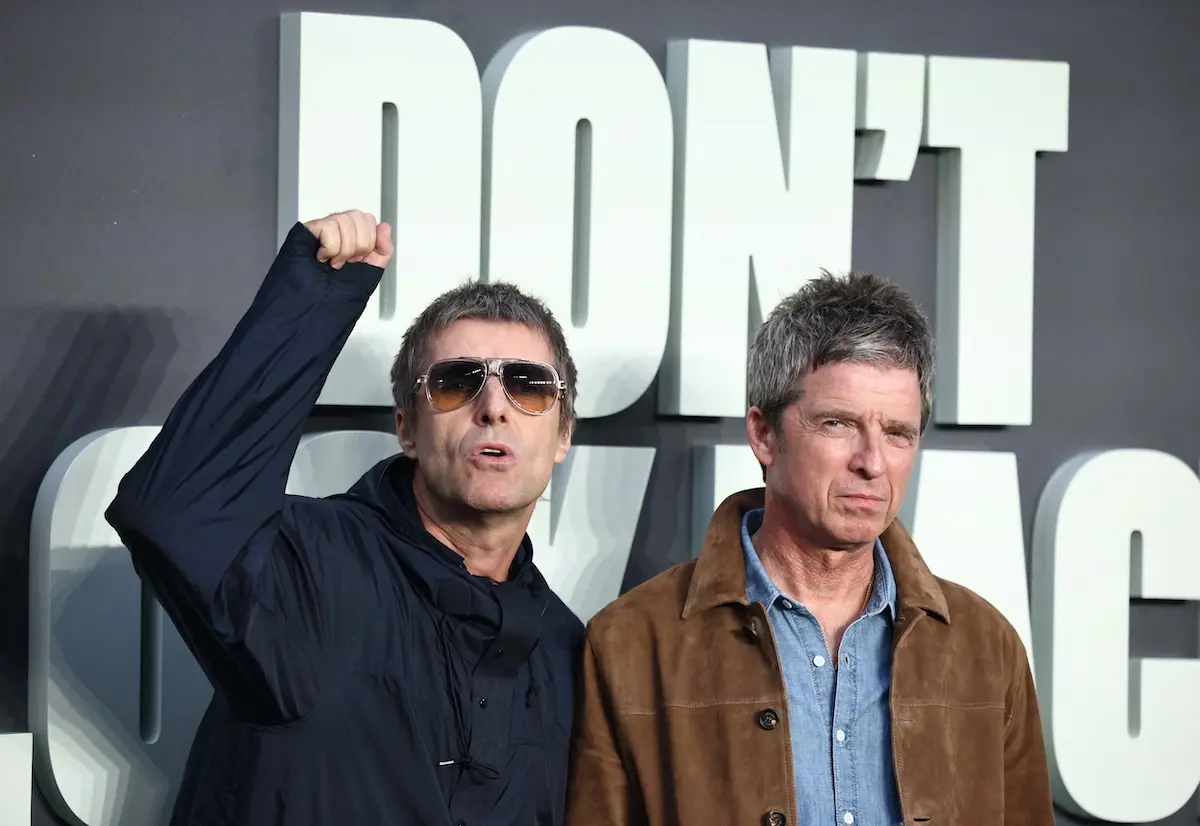
In a development that surprised few but disappointed many, the iconic British band Oasis will not be attending their induction into the Rock and Roll Hall of Fame at the Peacock Theater in Los Angeles on November 14. The confirmation, initially reported by Rolling Stone, underscores the persistent complexities surrounding the Gallagher brothers, Liam and Noel, whose notorious sibling rivalry has defined much of the band’s narrative since their acrimonious split in 2009. This absence marks a significant moment for one of the most influential acts of the Britpop era, as they receive one of music’s highest honours without a collective appearance.
The Path to Induction: From Scorn to Selective Acceptance
The journey for Oasis to the Rock and Roll Hall of Fame has been as tempestuous as their career. In 2024, when the band first received a nomination, Liam Gallagher, known for his unfiltered social media presence, reacted with characteristic disdain. His tweet, "Fuck the Rock n Roll hall of fame its full of BUMBACLARTS LG x," quickly went viral, encapsulating his long-standing skepticism towards institutional accolades. That year, Oasis ultimately did not make the final cut of inductees, a outcome that, given Liam’s public stance, might have secretly pleased him.
However, the tide turned in 2026. The announcement that Oasis had secured a place among the inductees for the upcoming ceremony sparked a different reaction from Liam. He appeared, at least publicly, to embrace the news, even declaring his intention to attend the ceremony. This shift in sentiment led many fans to cautiously hope for a rare public appearance from the estranged brothers, perhaps even a performance. Such hopes, however, were tempered by the deeply ingrained understanding of the Gallagher dynamic, where sincerity and sarcasm often intertwine. The confirmation of their non-attendance now solidifies the reality that any collective celebration remains a distant prospect.
Scheduling Conflicts and Lingering Discord
The primary reason cited for Oasis’s absence is a scheduling conflict involving Noel Gallagher. Earlier this month, it was announced that Noel would be performing his first solo gig since the hypothetical "reunion" of Oasis – a performance at Goldie’s EFG Jazz Festival in London. Crucially, this event is slated for the very same night as the Rock and Roll Hall of Fame Induction Ceremony in Los Angeles. This logistical clash effectively precludes any joint appearance by the brothers, even if they had managed to bridge their personal chasm for the occasion.
While a genuine scheduling conflict provides a convenient explanation, it also highlights the continued independent trajectories of the Gallagher siblings. Since the band’s breakup, both Liam and Noel have pursued successful solo careers, with Liam fronting Beady Eye before embarking on his own acclaimed solo work, and Noel leading Noel Gallagher’s High Flying Birds. Their individual commitments often take precedence, and the notion of a coordinated effort for an event like the Rock Hall induction might simply not align with their current professional or personal priorities. For many, the idea that a band inducted into such a prestigious institution could not find a way to attend due to a solo gig speaks volumes about the enduring rift.
Oasis: A Defining Force in Modern Rock
Oasis’s induction into the Rock and Roll Hall of Fame is a testament to their indelible impact on music history. Formed in Manchester in 1991, the band quickly rose to prominence, becoming synonymous with the Britpop movement of the 1990s. Their debut album, Definitely Maybe (1994), set the stage, but it was (What’s the Story) Morning Glory? (1995) that catapulted them to global superstardom. Featuring anthems like "Wonderwall," "Don’t Look Back in Anger," and "Champagne Supernova," the album sold over 22 million copies worldwide, cementing their status as one of the biggest bands of their generation.
Oasis embodied a raw, unapologetic rock ‘n’ roll spirit, blending classic British rock influences with a working-class swagger. Their music resonated with millions, offering a sense of hope and defiance in an era grappling with cultural shifts. Beyond their musical prowess, the band’s larger-than-life personalities, particularly the often-combative dynamic between Liam and Noel, became a significant part of their public persona. Their consistent presence in the charts, their stadium-filling tours, and their cultural ubiquity made them more than just a band; they were a phenomenon. Their induction, coming just over 25 years after their seminal works, acknowledges not only their commercial success but also their profound influence on subsequent generations of musicians and their lasting legacy in the rock canon.
The Rock and Roll Hall of Fame: Honouring Legacy and Sparking Debate
The Rock and Roll Hall of Fame, established in 1983 and located in Cleveland, Ohio, is dedicated to archiving the history of some of the best-known and most influential artists, producers, engineers, and other figures who have had a major influence on the development of rock and roll. To be eligible for induction, an artist or band must have released their first commercial recording at least 25 years prior to the year of nomination. The selection process involves a voting body of over 1,000 artists, historians, and music industry members, alongside a public fan vote.
While induction into the Hall is widely considered one of the highest honours in music, the institution has not been without its controversies. Debates frequently arise over the selection criteria, perceived snubs of deserving artists, and the inclusion of acts that some argue do not fit the "rock and roll" mould. Despite these criticisms, the Hall remains a significant cultural institution, providing a platform to celebrate and preserve the legacies of music’s most impactful figures. For many artists, induction represents a career-defining moment, a public acknowledgment of their enduring contribution to the musical landscape. Oasis’s addition to this esteemed roster, regardless of their attendance, validates their place among rock’s pantheon.
A Missed Encounter: Noel Gallagher vs. Phil Collins
The non-attendance of Oasis also means a missed opportunity for a potentially legendary, albeit awkward, encounter between Noel Gallagher and fellow inductee Phil Collins. The animosity between the two dates back to the 1990s, a period when Noel, known for his outspoken opinions, famously branded Collins as "the Antichrist." This incendiary comment became a memorable piece of rock ‘n’ roll lore, emblematic of the Britpop era’s often confrontational attitude towards established artists.
More recently, upon hearing of Oasis’s induction, Phil Collins expressed a surprisingly lighthearted perspective, stating he was "looking forward" to meeting the Gallagher brothers. His remark suggested a willingness to bury the hatchet or, at the very least, to engage with the historical friction with a sense of humour. The potential for a televised interaction, perhaps even a moment of reconciliation or good-natured banter, would have been a highlight of the ceremony. Alas, with Oasis absent, this chapter of rock history will remain unwritten, leaving fans to ponder what might have been.
The Diverse Class of 2026
Oasis joins an eclectic and highly influential class of inductees for 2026, reflecting the diverse tapestry of modern music. Alongside the Manchester stalwarts, the Hall will welcome heavy metal titans Iron Maiden, the genre-defying Phil Collins (both as a solo artist and for his work with Genesis), hip-hop pioneers the Wu-Tang Clan, the enigmatic and soulful Sade, R&B legend Luther Vandross, punk icon Billy Idol, and the seminal post-punk/electronic acts Joy Division and New Order. This diverse group represents a broad spectrum of musical styles and enduring influence, from hard rock and progressive rock to hip-hop, R&B, synth-pop, and new wave, highlighting the Rock Hall’s evolving definition of what constitutes "rock and roll" and its broader cultural impact.
Implications and the Enduring Oasis Saga
Oasis’s non-attendance at their own Rock and Roll Hall of Fame induction ceremony is more than just a logistical hiccup; it’s a profound statement that resonates with their entire career narrative. It reinforces the notion that the Gallagher brothers, even in receiving one of music’s highest honours, remain defiantly individualistic and unwilling to compromise their personal differences for a collective moment of glory. For fans who have yearned for an Oasis reunion, this event serves as a stark reminder of the deep-seated issues that led to their breakup and continue to prevent any meaningful collaborative public appearance.
The decision also subtly challenges the institutional power of the Rock and Roll Hall of Fame itself. While most artists would jump at the chance to attend and accept such an accolade, Oasis’s absence, particularly with Noel prioritizing a solo gig, suggests a degree of indifference that is both characteristic of their rebellious image and potentially frustrating for the Hall’s organisers. It signals that for some artists, their legacy is forged on their own terms, irrespective of external validation or industry pomp.
Ultimately, this incident adds another layer to the complex, often contradictory, and endlessly fascinating saga of Oasis. They were a band that defined an era with their anthemic music and confrontational attitude, a band whose brilliance was almost always matched by its internal strife. Their induction into the Rock and Roll Hall of Fame enshrines their musical legacy, but their absence from the ceremony ensures that the drama, the discord, and the unyielding independence of the Gallagher brothers will continue to be as much a part of the Oasis story as the music itself. The Rock and Roll Hall of Fame will celebrate Oasis, but Oasis, true to form, will do it their way, or not at all.
