

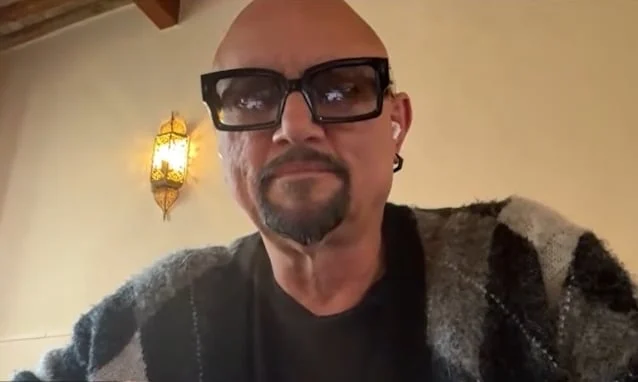
In a recent, in-depth interview with Canada’s The Metal Voice, former Queensrÿche frontman Geoff Tate has provided significant new details regarding the upcoming third and final installment of his ambitious "Operation: Mindcrime" album series. Scheduled for release in May, the LP’s lead single, "Power," is anticipated to drop as early as next week, signaling a pivotal moment for fans of the acclaimed concept album saga. Tate elaborated on his enduring fascination with the narrative and characters that have defined the "Mindcrime" universe, revealing a deliberate artistic choice to delve into the psyche of Dr. X, a character who has remained largely enigmatic throughout the first two chapters.
The Genesis of a Final Chapter: Shifting Perspectives and Age-Old Wisdom
Tate’s decision to revisit the "Operation: Mindcrime" narrative, which began with the seminal 1988 album and continued with 2006’s "Operation: Mindcrime II," stems from a deep-seated interest in the characters of Nikki, Dr. X, and Sister Mary. While Nikki’s journey as a drug-addicted assassin manipulated by a shadowy organization has been extensively chronicled, Dr. X’s motivations and origins have remained largely unexplored. "I’m interested in it," Tate stated in the interview. "It’s a subject I’ve always been interested in, the ‘Mindcrime’ saga, the story of these three characters, really: Nikki, Dr. X and Sister Mary. A fascinating triangle there of… Oh, it’s an interesting relationship between all three of them."
A significant catalyst for this new direction appears to be Tate’s own life experiences and evolving worldview. "Especially at the age I’m at now, where I’m probably very close to Dr. X’s age, I’m looking at life differently now, and [I have] different goals, [and I have] a different reason to be, really," he explained. This personal resonance with the character’s stage in life offers a unique lens through which to explore Dr. X. Tate believes that as individuals age, their priorities and perspectives shift, moving beyond past accomplishments and the pursuit of youthful dreams. "So Dr. X is a character study, really, of where he is at and how he got to where he is."
"Operation: Mindcrime III": A Parallel Narrative in the Same Universe
Clarifying the chronological placement of "Operation: Mindcrime III," Tate indicated that it is not a direct prequel or sequel in the traditional sense. Instead, it exists within the same narrative universe but offers a distinctly different viewpoint. "I’d say it’s in the same universe, but a different perspective. It’s X’s perspective. It’s happening in time at the same time as ‘Mindcrime I’," Tate revealed. This approach allows for a richer, more layered understanding of the events, presenting a parallel narrative that complements and potentially recontextualizes the established story. This strategy echoes narrative techniques seen in other ambitious concept albums where multiple viewpoints enrich a singular, overarching plot.
Sonic Evolution: A Heavier, More Modern Soundscape
Musically, Tate expressed confidence that "Operation: Mindcrime III" will resonate with the sonic intensity of its predecessors, potentially even surpassing them. When questioned about its heaviness compared to the original "Operation: Mindcrime," he responded, "Oh, yes. The new one is probably, I guess in the same realm. It’s heavier than ‘Mindcrime I’." He further elaborated on the production and sound quality, highlighting the contributions of producer John Moyer, bassist for the band Disturbed.
"John [Moyer] did an amazing job putting it all together, and the sound, especially of the rhythm section – oh, it’s phenomenal. It’s really, really crunchy, punchy, big… I think it’s miles above ‘Mindcrime I’ – absolutely," Tate enthused. He specifically praised the modern, powerful low end, stating, "Especially the bottom end – the bass and drums, rhythm section. It’s so modern, so huge." This emphasis on a contemporary, robust sound contrasts with the technological limitations of the early digital recording era that influenced the original "Operation: Mindcrime." Tate noted, "If you listen back to the ‘Mindcrime I’ album, it sounds like… I think it was one of the three first digital recordings made, and so it has a brittleness to it that you just don’t hear anymore, ’cause the technology has gotten so much better now." The sophisticated analog-to-digital converters used in modern production have clearly allowed for a sonic depth that Tate feels significantly elevates the new album.
A Deep Dive into Concept Albums and Thematic Exploration
The "Operation: Mindcrime" series has always been rooted in Tate’s profound interest in social science and human behavior. "I am fascinated by social science – why human beings do what we do, and groups of people that seem to have patterns over time, following in the footsteps of their generation," he shared. This intellectual curiosity forms the bedrock of the saga, exploring complex themes such as human nature, revenge, and the consequences of societal manipulation.
"Mindcrime II," for instance, delved into the revenge aspect of Nikki’s story, following his release from prison after two decades. The narrative explored whether his motivation for vengeance remained intact after such a prolonged period of incarceration. "Operation: Mindcrime III," by shifting focus to Dr. X, promises to offer a different kind of exploration. As Tate confirmed to Meltdown of Detroit’s WRIF, the album will narrate the story from Dr. X’s viewpoint, presenting a stark contrast to Nikki’s victimhood. "Dr. X’s perspective is completely different, ’cause he’s not the victim at all. So it’s very aggressive, and, yeah, I’m looking forward for people to hear it." This inversion of perspective is likely to inject a new level of intensity and complexity into the overarching narrative.
A Musical Homage to Queensrÿche’s Legacy
When asked if "Operation: Mindcrime III" represents a musical throwback to earlier Queensrÿche material, Tate acknowledged the connection. "Yeah, I guess so. It’s got some complex arrangements, which Queensrÿche was pretty into during our writing. It’s just very aggressive sound-wise. And stylistically, I would say, it’s very Queensrÿche." This suggests a return to the intricate songwriting and progressive leanings that characterized the band’s classic era, fused with a modern, heavy production. Tate also previously described the new material as "super heavy, and some of ’em are incredibly technical. They’re like algebra," indicating a willingness to push musical boundaries within the established framework.
The Creative Process: From Spark to Saga
Tate’s approach to songwriting is multifaceted, drawing inspiration from various sources. "It’s all different, really. Sometimes it’s a musical figure that you’re fiddling around with in the studio that leads to a complete song or a few songs. And sometimes it’s the lyrical idea. Sometimes it’s a sentence that just sparks your imagination and gets you rolling on something," he explained to Larry Mac of 96.1 KLPX. However, the "Operation: Mindcrime" albums had a unique genesis. "With the ‘Operation: Mindcrime’ albums, it was a story that came about really quickly, actually – I wrote it very quickly – and then expanded on it over the years to explain a little bit more in depth as to what was happening within the story." This rapid initial conception allowed for the thematic depth that has defined the series, with subsequent albums providing further layers of detail and character exploration.
Historical Context: The "Operation: Mindcrime" Legacy and The Band’s Split
The original "Operation: Mindcrime," released in May 1988, was a landmark album that propelled Queensrÿche to international acclaim. Its concept, centered on Nikki, a manipulated assassin navigating a world of political intrigue and personal disillusionment, resonated deeply with audiences. The album, featuring the late British actor Anthony Valentine as the voice of Dr. X, explored themes of religion, drug abuse, and radical politics, earning platinum certification in the U.S. and widespread critical acclaim, including rankings in "Top 100 Metal Albums Of All Time" by Kerrang! and Billboard. Rolling Stone notably commented on its enduring relevance.
In contrast, "Operation: Mindcrime II," released in 2006, was met with a more divided reception. While a competent album in its own right, many critics and fans viewed it as an unnecessary sequel that diluted the impact of the original. During the contentious legal battle over the Queensrÿche name in 2012, guitarist Michael Wilton submitted a sworn declaration that shed light on the creation of "Operation: Mindcrime II." Wilton alleged that the idea originated with Tate’s then-wife and manager, Susan Tate, and that the band members were largely excluded from the creative process, leading to a product that suffered from a lack of collaborative input. He claimed that he and other band members were "squeezed out of having any input in the musical direction or business decisions," and that songs were written without his involvement. This legal dispute ultimately led to a settlement in April 2014, where Wilton, Scott Rockenfield, and Eddie Jackson retained the right to perform as Queensrÿche, while Tate secured the sole right to perform "Operation: Mindcrime" and "Operation: Mindcrime II" live in their entirety. The current Queensrÿche, fronted by Todd La Torre, has since released four albums.
The "Mindcrime" Trilogy: A Defining Artistic Statement
Geoff Tate’s dedication to completing the "Operation: Mindcrime" trilogy signifies a significant artistic endeavor, aiming to provide a definitive conclusion to a narrative that has captivated fans for decades. The exploration of Dr. X’s perspective promises to offer a compelling new dimension to the saga, while the commitment to a heavier, sonically advanced sound suggests a powerful and relevant final chapter. The anticipation surrounding the release of "Power" and the album in May indicates that this concluding installment is poised to be a significant event in the progressive and conceptual metal landscape. Tate’s personal connection to the material, coupled with his artistic vision for sonic innovation, suggests that "Operation: Mindcrime III" will be a fitting capstone to one of metal’s most enduring concept series. The album is being positioned as a headphone-listening experience, underscoring the intricate details and sonic craftsmanship invested in its production, with Tate aiming for a sound that transcends the limitations of its predecessors and delivers a modern, impactful listening experience.
