

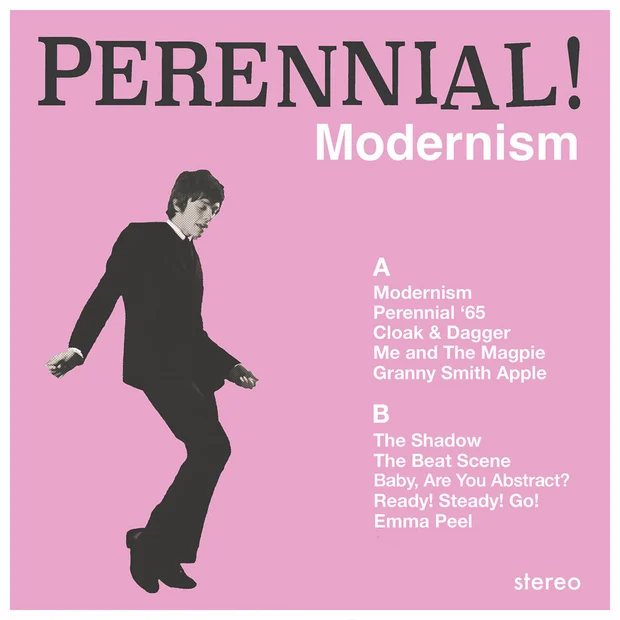
The New England musical collective Perennial continues its compelling trajectory within the contemporary indie landscape, generating significant buzz with the release of their latest single, "Ready! Steady! Go!" This vibrant new track serves as the third official preview from their forthcoming album, Modernism, slated for release on September 18th via Ernest Jenning Record Co. Following the critically acclaimed singles "What’s New On The Beat Scene" and the album’s eponymous track "Modernism," "Ready! Steady! Go!" further cements Perennial’s reputation for crafting infectious, genre-bending music that is both intellectually stimulating and undeniably danceable. The trio, known for its dynamic soundscapes and evocative songwriting, is poised to deliver one of the most intriguing albums of the year, blending historical musical influences with a distinctly contemporary sensibility.
The Sonic Unveiling of "Ready! Steady! Go!"
Chad Jewitt, a principal voice within Perennial, articulated the essence of "Ready! Steady! Go!" as a reflection of the band’s exuberant creative process. "’Ready! Steady! Go!’ is us having an absolute blast in the studio; probably both our most POP song and our most psychedelic too," Jewitt remarked, offering a concise yet potent description of the track’s dual nature. This statement immediately signals a departure or an evolution within Perennial’s already diverse sound, suggesting a deliberate embrace of accessibility alongside experimental inclinations. The juxtaposition of "POP" and "psychedelic" hints at a sophisticated blend, where catchy melodies might be underpinned by intricate, mind-altering sonic textures.
The band’s conscious nod to specific historical influences is a hallmark of their craft, and "Ready! Steady! Go!" is no exception. Jewitt detailed the track’s foundational elements: "We definitely had mid/late-60s Motown in mind with the vibraphones and electric organ and fuzz bass groove, then by the end you have a backwards guitar solo and wah-wah pedals showing up." This detailed account provides a clear blueprint of the song’s construction, illustrating Perennial’s meticulous approach to arrangement and production. The invocation of mid to late-1960s Motown immediately conjures images of rhythmic precision, sophisticated arrangements, and an infectious, soulful groove that defined an era of popular music. Motown, celebrated for its "Sound of Young America," pioneered a distinct blend of soul, pop, R&B, and rock and roll, characterized by prominent basslines, melodic hooks, and lush instrumentation, often including vibraphones and organs.
A Deep Dive into Sonic Influences and Instrumentation
The specific instruments mentioned by Jewitt — vibraphones, electric organ, and fuzz bass — are critical to understanding the track’s unique sonic identity. Vibraphones, with their shimmering, sustained tones, evoke a sense of cool jazz and sophisticated pop, often adding a dreamy or ethereal quality. Their presence in a contemporary "pop" song with psychedelic leanings is a testament to Perennial’s innovative use of instrumentation, bridging eras and genres. The electric organ, particularly in the context of 1960s music, could range from the bright, cutting tones of a Hammond B3 often associated with soul and blues, to the more whimsical sounds of a Vox Continental or Farfisa, frequently heard in garage rock and psychedelic acts. Its inclusion suggests a foundation of rich, harmonic texture, providing both rhythmic drive and melodic counterpoint.
The "fuzz bass groove" is another significant detail. Fuzz bass, achieved through a distortion effect pedal, introduces a gritty, overdriven quality to the bassline, providing a powerful, often menacing or aggressive edge. This technique gained prominence in the mid-to-late 1960s with bands like The Rolling Stones ("Satisfaction") and various psychedelic rock outfits, adding weight and character that a clean bass tone could not. The combination of Motown-inspired grooves with a fuzz bass suggests a subversion of traditional pop smoothness, injecting a raw, rock-and-roll energy into the track’s foundation. This fusion is where Perennial likely achieves its "pop" sensibility while simultaneously hinting at something more adventurous.
As the song progresses, the introduction of a "backwards guitar solo and wah-wah pedals" firmly pushes "Ready! Steady! Go!" into its psychedelic domain. Backward recording techniques were famously popularized by The Beatles, particularly on albums like Revolver and Sgt. Pepper’s Lonely Hearts Club Band, creating surreal, disorienting sound effects that became synonymous with psychedelic music. A backward guitar solo, in particular, often sounds otherworldly, defying conventional melodic and rhythmic expectations. Similarly, the wah-wah pedal, which modulates the frequency spectrum of an instrument’s sound to create a "wailing" or "crying" effect, was a staple of late 1960s and early 1970s funk, psychedelic rock, and blues. Its dynamic filtering capabilities add a vocal-like expressiveness, transforming the guitar into a more fluid and emotive instrument. The combination of these two effects at the song’s climax would undoubtedly contribute to the "psychedelic" experience Jewitt described, creating a vibrant, immersive soundscape that transports the listener beyond conventional pop structures.
The Road to Modernism: A Chronology of Releases
The journey to Modernism has been carefully orchestrated by Perennial and Ernest Jenning Record Co., building anticipation with each subsequent release. The album announcement itself, which coincided with the unveiling of the first single, "What’s New On The Beat Scene," set the stage for a record that promised both innovation and a reverence for musical history. "What’s New On The Beat Scene" immediately established a high bar, likely showcasing the band’s knack for sharp, energetic songwriting and tight musicianship. The title itself hinted at a dialogue with historical music movements, perhaps referencing the beat generation or the British beat movement of the early 1960s, both of which emphasized rhythmic drive and a youthful, rebellious spirit. This initial offering provided listeners with a glimpse into the album’s overarching thematic and sonic intentions.
Following this, the release of the album’s title track, "Modernism," further elaborated on Perennial’s artistic vision. The term "Modernism" itself refers to a philosophical and art movement that, broadly speaking, rejected traditional forms and embraced experimentation, individualism, and a re-evaluation of past conventions. In a musical context, this could imply a band striving to break new ground while acknowledging and reinterpreting historical precedents. The single "Modernism" likely delved deeper into these themes, perhaps featuring more complex structures or a broader sonic palette that showcased the band’s compositional prowess. Each single has functioned as a distinct chapter in the unfolding narrative of Modernism, preparing the audience for the full scope of the album. "Ready! Steady! Go!" now acts as a dynamic crescendo in this pre-release campaign, offering a high-energy, infectious track that distills many of the album’s promised elements into a compelling three-minute package.
Perennial’s Evolving Sound and Artistic Vision
Perennial’s ability to seamlessly weave together disparate influences — from the soulful precision of Motown to the expansive, mind-bending textures of psychedelia — speaks volumes about their sophisticated artistic vision. The "New England trio" moniker, while geographically precise, belies the global reach of their musical ambition. Their music transcends regional boundaries, drawing from a rich tapestry of sound that resonates with a broad audience. The repeated assertion that Perennial is "making us dance" is not a throwaway line; it underscores the fundamental, visceral appeal of their music. This isn’t just music for passive listening; it’s designed to provoke movement, to elicit a physical response, which is often a hallmark of truly engaging pop and rock music.
The band’s approach to songwriting and production appears to be deeply rooted in a reverence for musical craftsmanship, combined with a willingness to push boundaries. By acknowledging and reinterpreting historical genres, Perennial positions itself not merely as revivalists, but as innovators who understand that true progress often comes from a deep understanding of the past. Their work could be seen as a form of musical archaeology, unearthing forgotten sounds and techniques and recontextualizing them for a contemporary audience. This allows their music to feel both familiar and refreshingly new, appealing to listeners who appreciate both classic sounds and forward-thinking artistry.
The Role of Ernest Jenning Record Co.
The release of Modernism on Ernest Jenning Record Co. also provides important context. Ernest Jenning is an independent record label known for its discerning taste and commitment to supporting artists who defy easy categorization. Their roster often features bands that are critically acclaimed for their unique sound and artistic integrity, operating outside the mainstream while building dedicated fanbases. The label’s involvement suggests a mutual alignment of artistic values, where Perennial’s experimental yet accessible approach finds a supportive and understanding home. For a band like Perennial, being on an independent label like Ernest Jenning often means greater creative control and a direct connection to a community of like-minded artists and listeners, fostering an environment where innovation can thrive. This partnership is crucial for the successful dissemination and reception of an album as conceptually rich as Modernism.
Anticipated Impact and Broader Implications
The release of "Ready! Steady! Go!" and the impending arrival of Modernism carry several implications for Perennial and the broader independent music scene. Firstly, the consistent quality and distinctiveness of their pre-release singles suggest that Modernism is likely to be a cohesive and impactful album, not merely a collection of singles. This builds critical momentum and enhances the band’s reputation as serious artists. The blend of "pop" and "psychedelic" elements in "Ready! Steady! Go!" could attract a wider audience, appealing to those who enjoy catchy, accessible tunes as well as listeners who seek more adventurous, sonically intricate experiences. This crossover appeal is often a key factor in a band’s breakout success within the indie sphere.
Furthermore, Perennial’s detailed discussion of their influences and production techniques provides valuable insight into their creative process, allowing critics and fans to engage with their music on a deeper level. This transparency fosters a sense of authenticity and craftsmanship, qualities highly valued in contemporary music culture. The choice to include a video for "Ready! Steady! Go!" further amplifies its impact, offering a visual dimension to the auditory experience and potentially reaching new audiences through platforms like YouTube. The video’s aesthetic and narrative choices would undoubtedly complement the song’s dual pop and psychedelic nature, enhancing the overall artistic statement.
As the September 18th release date approaches, anticipation for Modernism will continue to mount. The album is poised to be a significant entry in Perennial’s discography, showcasing their evolution and solidifying their place as a compelling voice in modern music. Their ability to fuse historical reverence with contemporary innovation, all while maintaining an infectious, dance-inducing energy, positions Modernism as a record that promises to resonate widely and enduringly. The party, it seems, is just getting started, with "Ready! Steady! Go!" serving as an exhilarating invitation to the main event.
