

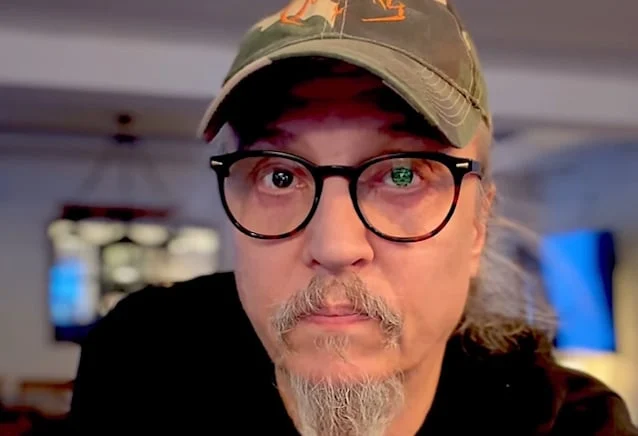
Swedish music industry titan Peter Tägtgren, a formidable presence known for his work with death metal pioneers Hypocrisy and industrial metal outfit Pain, has recently shared his perspectives on the burgeoning role of artificial intelligence (AI) in music production. In an exclusive interview with Poland’s Noise Magazine, conducted on March 26, 2026, Tägtgren expressed a clear stance against utilizing AI as a primary tool for songwriting, championing the intrinsic value of human ideation and artistic expression.
The discussion arose amidst a growing debate within the music community regarding the integration of AI algorithms and machine learning models into the creative process, particularly for generating melodies, harmonies, and lyrical content. When directly asked about his personal engagement with AI in his songwriting endeavors, Tägtgren unequivocally stated, "Nope. I know sometimes [social media users go] on our Instagram or Facebook and [post] AI stuff, and I see people [going], ‘Well, no, no.’ … They hate it. But, no, I never even thought about doing that. I don’t need to – I have ideas. And that’s the whole point of writing – to get your ideas out."
Tägtgren’s response highlights a fundamental philosophical difference in his approach to music creation. For him, the act of writing is intrinsically linked to the personal journey of translating internal concepts and emotions into tangible artistic output. The idea of outsourcing this process to a non-sentient entity, regardless of its technological sophistication, appears to contradict the core tenets of his artistic identity. This sentiment resonates with a broader segment of the artistic community that views creativity as a deeply human endeavor, rooted in lived experience, intuition, and emotional depth.
AI as a Tool: A Question of Purpose and User
Expanding on his reservations, Tägtgren elaborated on his perception of AI’s current utility in the music sphere. He posited that these AI tools might be more suited for individuals who lack extensive musical training or experience, drawing a distinction between professional musicians and hobbyists. "Those, those tools are for – I don’t know – truck drivers who want to write their own music," Tägtgren explained. "Just in particular, anything except a musician – it’s good tools for them to write, ‘Oh, my brother’s birthday. It’s [his] 40th birthday. I need to write him a song.’ Okay, AI. ‘Happy birthday,’ blah, blah, blah. I think it’s more a tool for that. But, of course, I’m sure there’s other people who’s trying to write music in the band. But I never tried, so… I am not interested."
This perspective suggests a tiered view of AI’s application in music. Tägtgren does not necessarily dismiss AI outright but rather categorizes its potential use cases. He envisions it as a convenient aid for creating simple, personalized musical tributes or for individuals seeking a basic musical outlet without the commitment of learning traditional composition. However, he clearly demarcates this from the complex, nuanced, and often deeply personal work undertaken by professional musicians. The implication is that while AI might facilitate rudimentary musical expression, it cannot replicate the artistic intent, emotional resonance, and unique voice that a seasoned artist brings to their craft.
The rise of AI music generators has seen an exponential increase in their capabilities. Platforms like Amper Music, AIVA, and Soundraw now offer sophisticated tools capable of generating entire songs across various genres, often with user-defined parameters for mood, tempo, and instrumentation. These platforms are increasingly being adopted by content creators, advertisers, and even some independent musicians for their speed and cost-effectiveness. However, as Tägtgren points out, the perceived "soullessness" or lack of genuine artistic intention in AI-generated music remains a significant point of contention for many established artists.
AI in Visual Arts: A More Permissive Stance
Shifting the focus to the visual aspect of music production, Tägtgren also offered his thoughts on artists employing AI-generated imagery for album covers. In contrast to his firm stance on AI in songwriting, his opinion here was more pragmatic and less prescriptive. "Whatever works. It’s up to every person, I think, to decide what they wanna do," he stated. "Like I said, I wanna stay away from AI as long as I can, put it that way. And there’s a lot of talent out there that can [come up with] really cool covers for you – without AI."
This nuanced position suggests that while Tägtgren personally prefers to avoid AI across the board, he acknowledges the autonomy of artists in making creative choices. The visual realm, in his view, might offer more flexibility for AI integration, provided it serves the artist’s overall vision. However, he reiterates his preference for human talent, hinting that the unique contributions of human artists, whether in music or visual art, remain paramount in his estimation. The availability of skilled human illustrators and designers, he implies, should not be overlooked in favor of automated solutions.
The trend of AI-generated album art has indeed gained traction. Tools like Midjourney and DALL-E 2 have enabled artists to produce striking and often surreal visuals with remarkable ease. While some see this as democratizing art creation, others, like Tägtgren, express concerns about devaluing human artistic skills and the potential for homogenization of visual styles. The debate often centers on whether AI is a collaborator or a replacement for human artists, and what constitutes "authentic" artistic creation in the age of artificial intelligence.
A Legacy of Innovation and Authenticity
Peter Tägtgren’s extensive career provides a rich backdrop to his views on AI. As the leader and co-creator of the legendary death metal band Hypocrisy, he has been at the forefront of shaping extreme metal for decades. His involvement in the project Lindemann, alongside Rammstein frontman Till Lindemann, showcased his versatility and ability to craft impactful industrial metal. Furthermore, his ownership and operation of Abyss Studio in Sweden have positioned him as a pivotal producer for numerous globally recognized metal acts. Bands such as Amon Amarth, Dimmu Borgir, and Sabaton have all benefited from his production expertise, solidifying his reputation as a tastemaker and craftsman within the genre.
Tägtgren’s history is one of pushing boundaries within established genres and consistently delivering high-quality, authentic music. This long-standing commitment to artistic integrity and the cultivation of human talent likely informs his cautious approach to AI. His studio work, in particular, involves intricate collaboration with musicians, guiding them to achieve their best performances and sonic visions. This human-centric process is a stark contrast to the algorithmic generation of music.
The timeline of AI’s integration into music is still relatively nascent, with significant advancements occurring in the last decade. While AI has been used for music analysis and recommendation systems for longer, its application in direct music creation is a more recent development. The early 2020s saw a surge in accessible AI music generation tools, sparking widespread discussion and debate among musicians, producers, and fans. Tägtgren’s comments, made in early 2026, reflect an ongoing conversation that continues to evolve as AI technology matures.
Broader Implications for the Music Industry
Tägtgren’s perspective offers a valuable insight into the ongoing dialogue surrounding AI’s place in the creative industries. His emphasis on human ideation and the inherent value of personal artistic expression resonates with many who fear that an overreliance on AI could lead to a dilution of genuine creativity and a homogenization of artistic output.
The implications of AI in music are far-reaching. For established artists like Tägtgren, the primary concern is the potential devaluation of their skills and the unique artistic voice they have cultivated over years of dedication. For emerging artists, AI tools might offer a pathway to create music more rapidly and affordably, potentially democratizing access to music production. However, this also raises questions about market saturation and the ability of human artists to stand out in an increasingly crowded digital landscape.
The music industry, historically adaptable to technological shifts, is now grappling with one of its most profound challenges. The debate about AI touches upon fundamental questions of authorship, originality, and the very definition of art. As AI capabilities continue to advance, the industry will need to navigate complex ethical, legal, and creative considerations. Will AI become an indispensable tool for all musicians, or will it remain a niche utility, as Tägtgren suggests? The answer will likely depend on how artists, audiences, and the industry itself choose to embrace or resist this transformative technology, with voices like Tägtgren’s serving as important anchors in the pursuit of authentic human artistry.
