

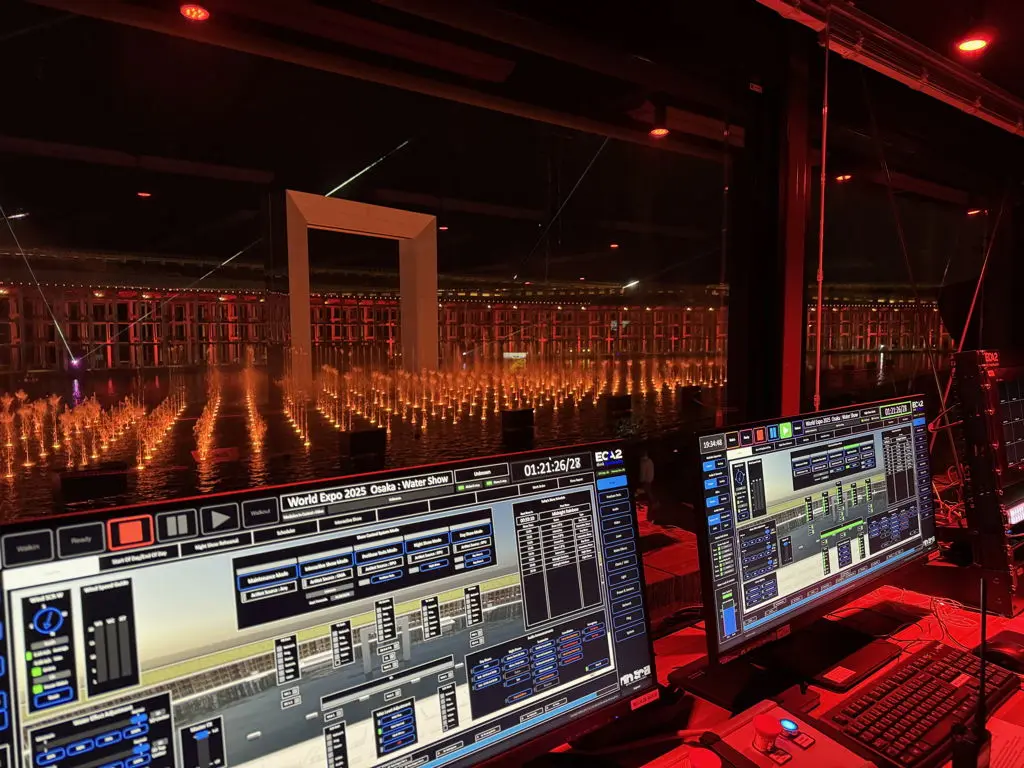
At the World Exposition 2025 in Osaka, Japan, the multimedia water show Under the Midnight Rainbow served as the emotional nightly finale, captivating up to 2,500 spectators per performance with a masterclass in synchronized technology. To achieve the seamless coordination of 300 water fountains, 30 flame effect stations, and a vast array of laser, video, and audio components across an 8,800-square-meter arena, the production firm ECA2 collaborated with db Show Control & Automation to implement a sophisticated control architecture. The technical foundation of this massive undertaking was provided by Beckhoff, utilizing industrial-grade automation hardware and software to ensure that the complex choreography remained flawless throughout the six-month event.
The Scale and Vision of Under the Midnight Rainbow
Expo 2025, held on the artificial island of Yumeshima in Osaka Bay, centered on the theme "Designing Future Society for Our Lives." As part of this global stage, the Water Plaza became a central hub for evening entertainment. Under the Midnight Rainbow was designed to be more than just a light show; it was a narrative experience told through the medium of water, fire, and light. The technical requirements were staggering: the installation featured 280 stationary water jets, eight 3D water jets equipped with dynamic kinematics for fluid movement, two massive water screens, and a specialized cascade screen.
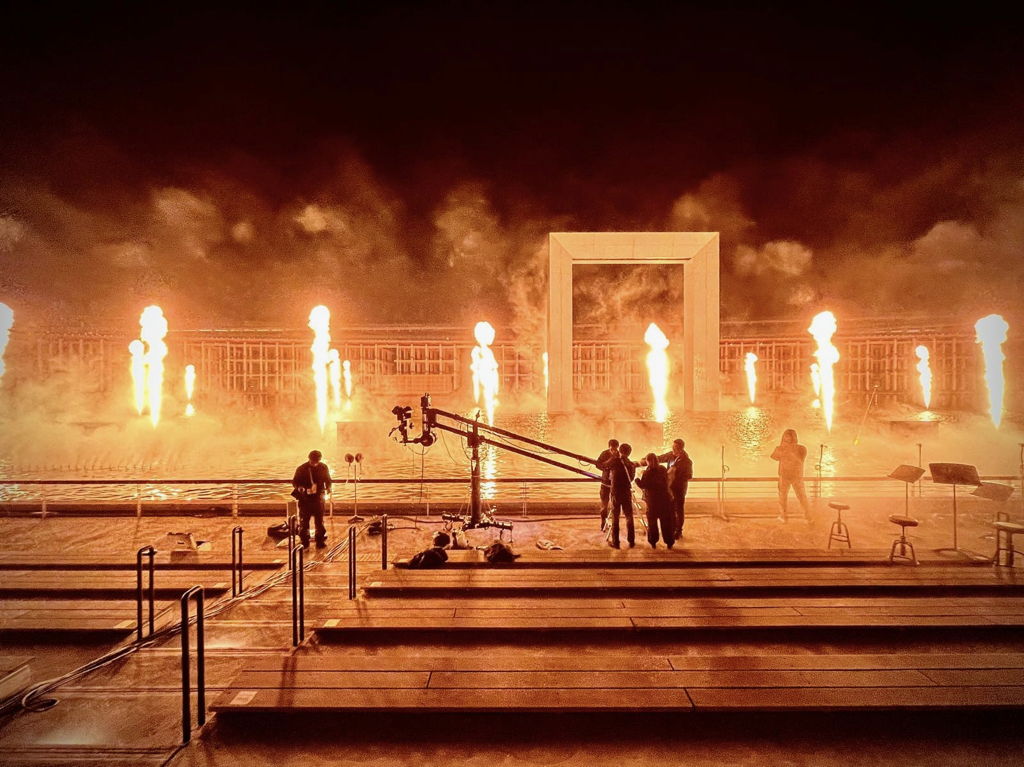
In addition to the aquatic elements, the show integrated 30 flame effect stations and fog pumps to add texture and heat to the performance. These physical elements were layered with high-resolution video mapping, laser projections, and a central audio system that required millisecond-perfect synchronization to maintain the "emotional resonance" cited by the production team. Aurelien Bouvier, Technical Director at ECA2, emphasized that for an audience of 2,500 people to remain immersed in the story, the background technology must operate with absolute invisibility and reliability. Any stutter in the synchronization would break the theatrical illusion.
A Distributed Automation Topology
The logistical challenge of managing an 8,800-square-meter performance space required a decentralized yet highly integrated control system. At the heart of the automation topology was a Beckhoff CX5240 Embedded PC, located in the main control room, acting as the primary show controller. This unit managed the high-level logic and timing for the entire production.
To bridge the gap between the central control and the hundreds of physical devices scattered around the Water Plaza, the engineering team deployed eleven distributed control racks. These racks were networked via EtherCAT, an industrial Ethernet system known for its high-speed data transmission and deterministic performance. By using EtherCAT, the system could control nearly 300 frequency converters with the precision required for complex water choreography.
Craig Pow Chong, Director of Engineering at db Show Control & Automation, noted that the cycle times achieved through this setup were essential for the show’s success. The ability to communicate natively with AV systems via standard UDP/TCP Ethernet protocols meant that the automation system was not an isolated island of hardware but a fully integrated participant in the multimedia ecosystem. This convergence of industrial automation and entertainment technology allowed for a level of control traditionally reserved for high-speed manufacturing lines.
Environmental Intelligence and Safety Integration
Operating a large-scale multimedia show in an outdoor, coastal environment like Osaka Bay presents significant safety and operational risks. High winds, humidity, and fluctuating water levels can turn a choreographed fountain into a hazard for the audience or the sensitive flame equipment. To mitigate these risks, the team utilized TwinCAT software-based environmental monitoring.

Sensors were installed throughout the site to continuously track temperature, humidity, wind speed, wind direction, and water depth. This data was fed directly into the TwinCAT control environment in real-time. If the sensors detected a critical wind gust blowing toward the spectator stands, the system was programmed to react in a fraction of a second. The control logic would automatically throttle down the affected water jets or deactivate specific flame effects to prevent water from reaching the audience or extinguishing the fire elements.
Safety was further bolstered through the integration of TwinSAFE terminals. By using Fail Safe over EtherCAT (FSoE), the functional safety protocols were embedded directly into the existing network. This eliminated the need for complex, redundant parallel wiring, reducing both the cost and the potential points of failure within the system. The result was a safety architecture that was as agile as the creative elements of the show.
Paradigm Shifts in Show Playback and Diagnostics
One of the most significant innovations in the Osaka installation was the move away from traditional, large-scale server racks for show playback. db Show Control & Automation developed a proprietary recording and playback platform built entirely on Beckhoff’s TwinCAT software. The hardware for this platform consisted of two C6017 ultra-compact industrial PCs operating in a master-backup configuration.
Despite their small size—roughly the footprint of a human palm—these PCs were capable of handling the playback of 32 DMX universes autonomously. This capability represents a significant shift in the entertainment industry, where massive, power-hungry servers have long been the standard for complex shows. The reliability of industrial-grade hardware, designed to run 24/7 in harsh factory environments, proved to be a superior choice for the rigorous demands of a world-class exhibition.
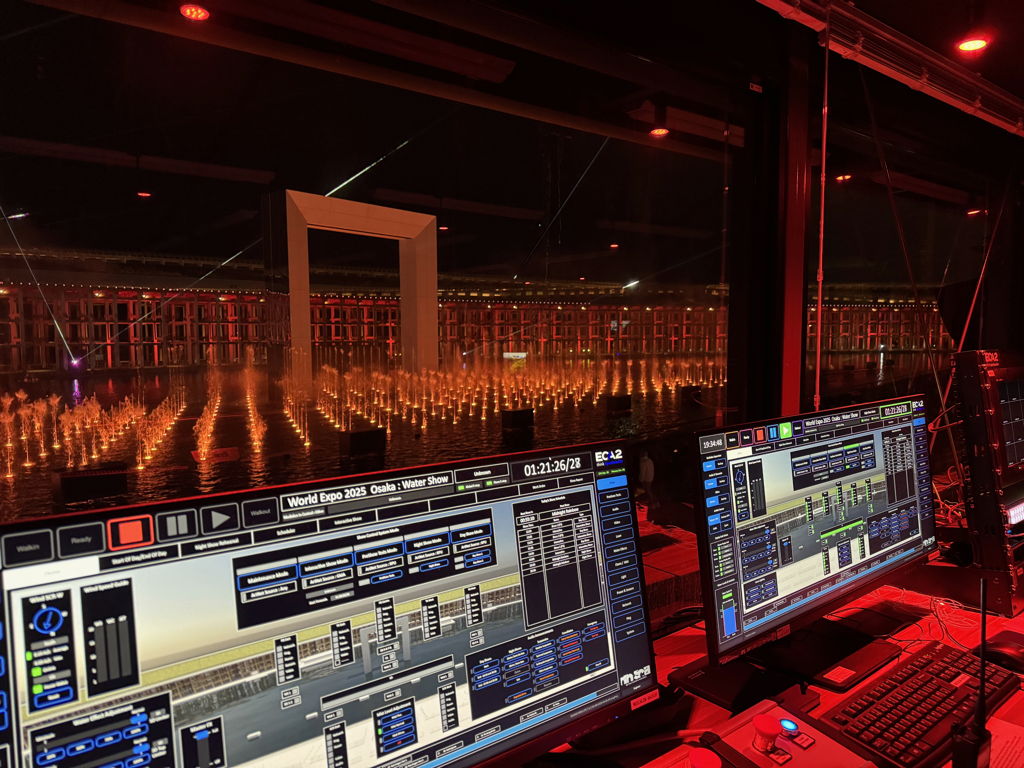
Furthermore, the TwinCAT Database Server was utilized to log every piece of data from the sensors and the machinery. This allowed for deep-dive diagnostics and real-time monitoring throughout the duration of the Expo. If a component began to show signs of wear or if an environmental anomaly occurred, the technical team could identify and address the issue before it resulted in a technical failure.
Operational Success and Industry Implications
The performance of the system over the six-month duration of Expo 2025 was a testament to the robustness of industrial automation in the creative arts. During the event’s run, approximately two million people viewed Under the Midnight Rainbow. According to project leaders, the show did not suffer a single technical failure or cancellation due to control system issues.
David Birchall, CEO of db Show Control & Automation, highlighted that Beckhoff stands out in the market as one of the few manufacturers capable of merging industrial-grade reliability with native support for entertainment protocols like DMX, sACN, and QSC integration. This hybrid approach is increasingly becoming the standard for permanent and semi-permanent large-scale installations where downtime is not an option.
The success of the Osaka project has already paved the way for future collaborations. Reports indicate that a follow-up installation of a similar magnitude is currently in development, utilizing the same Beckhoff-based architecture. This trend suggests a broader shift in the "medialization" of public spaces, where the lines between architecture, art, and automation continue to blur.
Chronology of Technical Implementation
The development of Under the Midnight Rainbow followed a strict timeline to meet the rigid opening dates of the World Expo.
- Conceptualization (2023-2024): ECA2 finalized the creative vision, determining the number of jets and the scale of the 8,800-square-meter footprint.
- Engineering Design (Early 2024): db Show Control & Automation designed the control topology, selecting Beckhoff components for their deterministic capabilities and compact form factor.
- On-site Installation (Late 2024): The eleven control racks and the central CX5240 were installed at the Yumeshima site. The EtherCAT network was laid out to connect the nearly 300 frequency converters.
- Programming and Calibration (Early 2025): The "anti-wind" algorithms and TwinSAFE protocols were tested against simulated environmental conditions. The playback platform was loaded with the 32 DMX universes of show data.
- The Run (April – October 2025): The show operated nightly, serving 2 million visitors with zero technical outages.
- Post-Expo Analysis (Late 2025): Data logged via the TwinCAT Database Server was analyzed to refine future designs for upcoming projects.
Analysis of the Technological Impact
The use of Beckhoff technology at Expo 2025 Osaka serves as a case study for the future of the "Experience Economy." As cities and developers look to create more immersive, permanent attractions, the demand for systems that offer both high-level creative flexibility and industrial-level stability is growing.
Traditional entertainment consoles, while powerful for live lighting design, often lack the deep integration with safety sensors and mechanical feedback loops that a PLC-based (Programmable Logic Controller) system provides. By using TwinCAT, ECA2 and db Show Control & Automation were able to treat the entire 8,800-square-meter plaza as a single, intelligent machine. This "machine-centric" view of a multimedia show allows for a level of precision—such as the exact height of a water jet relative to wind speed—that was previously difficult to automate reliably.
Moreover, the reduction in hardware footprint through the use of ultra-compact PCs like the C6017 aligns with the broader Expo theme of sustainability. Smaller hardware requires less cooling, less rack space, and less power, all while providing higher processing overhead for complex tasks. As the industry moves forward, the "Osaka model" of distributed, EtherCAT-driven show control is likely to be replicated in theme parks, stadium ceremonies, and urban landmarks worldwide.
