

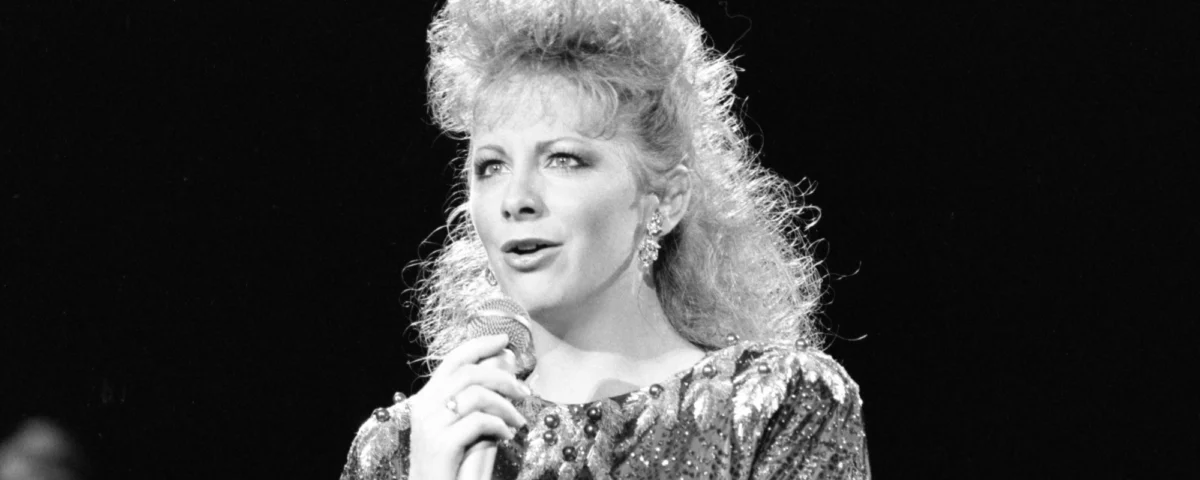
Thirty-five years have passed since the darkest day in the storied career of country music icon Reba McEntire, yet the memory of the eight lives lost in a 1991 aviation disaster remains a central pillar of her personal and professional legacy. On March 16, marking the 35th anniversary of the tragedy, McEntire released a poignant tribute to her lost band and crew members, accompanying her words with a significant financial contribution to MusiCares, the philanthropic arm of the Recording Academy. The gesture serves not only as a memorial to those who perished but as a vital investment in the health and safety of the modern music community.
In an exclusive statement provided to PEOPLE, the 70-year-old Country Music Hall of Fame inductee reflected on the enduring bond she shared with her team. McEntire noted that the individuals who died on that foggy morning in Southern California were far more than employees; they were the backbone of her touring operation and some of her closest confidants. She described them as "talented angels" who shared the grueling demands and the exhilaration of life on the road, emphasizing that their absence continues to be felt within the industry three and a half decades later.
The donation to MusiCares is intended to address the unique vulnerabilities faced by touring professionals. Founded in 1989, just two years before the crash, MusiCares provides a critical safety net for musicians and industry workers, offering services ranging from mental health support and addiction recovery to emergency financial assistance and disaster relief. By directing her tribute toward this organization, McEntire highlighted her desire to ensure that the current generation of "the people who take care of the music" has access to the resources her own team might have needed in the wake of such a profound catastrophe.
The Chronology of a Tragedy: March 16, 1991
To understand the weight of this anniversary, one must look back at the specific circumstances of the 1991 accident. On the night of March 15, Reba McEntire and her band had just completed a private performance for IBM executives at the San Diego Convention Center. The tour schedule was demanding, and the group was slated to perform next in Fort Wayne, Indiana. Due to the size of the entourage, the group was divided between two Hawker Siddeley DH.125-1A private jets.
McEntire, who was recovering from a bout of bronchitis and had been joined on the trip by her then-husband and manager Narvel Blackstock, opted to stay overnight in San Diego to rest. She planned to depart on a separate flight the following morning. The first of the two planes carrying her band took off from Brown Field Municipal Airport at approximately 1:40 a.m. on March 16.
Within minutes of takeoff, tragedy struck. The aircraft, operating under visual flight rules despite the darkness and patchy visibility, struck the side of Otay Mountain, located just a few miles from the airport. The impact was catastrophic, killing all ten people on board instantly. The victims included tour manager Jim Hammon; band leader and keyboardist Kirk Cappello; fellow keyboardist Joey Cigainero; drummer Tony Saputo; guitarists Michael Thomas and Chris Austin; bassist Terry Jackson; and backup singer Paula Kaye Evans. The two pilots, Donald Holms and Robert Williams, also perished in the wreckage.
The news reached McEntire at her hotel just hours later. The second plane, carrying the remainder of her crew, had taken off shortly after the first and arrived safely in Indiana, unaware of the fate of their colleagues until they landed. The National Transportation Safety Board (NTSB) later investigated the incident, citing pilot error and poor visibility as contributing factors, noting that the aircraft had failed to maintain a safe altitude over the mountainous terrain.
A Legacy of Loss: The Names Behind the Music
The 35th anniversary serves as a reminder of the individual lives that comprised McEntire’s "road family." Each member of the 1991 band was an accomplished professional in the Nashville scene. Chris Austin, for instance, was a rising star in his own right, a talented fiddler and singer who had signed a recording contract with Warner Bros. Records shortly before his death. Kirk Cappello had been a mainstay in McEntire’s musical arrangements, helping to craft the sophisticated country-pop sound that defined her 1990s era.
The loss of Paula Kaye Evans was particularly devastating to the vocal harmony of the live show, while the rhythm section—consisting of Jackson, Saputo, and Thomas—was considered one of the tightest in the business. Tour manager Jim Hammon was the logistical glue of the operation, responsible for the safety and coordination of dozens of staff members.
In the years following the crash, McEntire has made it a point to name these individuals annually, ensuring that they are remembered as people rather than statistics. This year’s tribute reaffirms that commitment, casting the band members as "dear friends" whose contributions to her career were foundational.
The Musical Response: For My Broken Heart
In the immediate aftermath of the crash, the country music world watched as McEntire retreated from the public eye to grieve. However, she eventually channeled her sorrow into what many critics consider her most profound artistic achievement: the album For My Broken Heart. Released in October 1991, the record was dedicated entirely to the eight members of her band and crew.
The album represented a tonal shift for McEntire. While her previous work often featured upbeat, feisty anthems like "Fancy," For My Broken Heart was steeped in melancholy and resilience. The title track, along with songs like "The Greatest Man I Never Knew" and "Is There Life Out There," resonated deeply with a public that had followed the news of the tragedy.
The commercial and critical response was unprecedented. The album debuted at number one on the Billboard Top Country Albums chart and spent 20 consecutive weeks in the top 10 of the Billboard 200. It eventually earned triple-platinum certification, selling over three million copies in the United States alone. For McEntire, the success of the album was bittersweet, serving as a permanent monument to her lost friends and a vehicle for her own healing process.
Industry Support and the Road to Recovery
The 35th-anniversary reflection also brings to light the overwhelming support McEntire received from the Nashville community in 1991. In her recent statements, she recalled the pivotal roles played by fellow stars Vince Gill and Dolly Parton. At a time when McEntire felt unable to return to the stage, Gill offered his personal support, while Parton famously offered to loan McEntire her own band so that she could fulfill her professional obligations without the immediate pressure of auditioning new musicians.
This spirit of camaraderie is a hallmark of the country music industry, but the 1991 crash remains one of the most significant collective traumas in its history. It echoed previous tragedies, such as the 1963 crash that killed Patsy Cline, Cowboy Copas, and Hawkshaw Hawkins, and the 1964 accident that claimed Jim Reeves. The scale of the loss in McEntire’s case, however—losing almost an entire touring band in one moment—prompted a re-evaluation of touring safety protocols and the psychological toll of the road.
The Role of MusiCares in Modern Touring
By making a substantial donation to MusiCares on this 35th anniversary, McEntire is addressing the long-term needs of a community that she knows intimately. MusiCares has evolved significantly since its inception in 1989. In 2023 and 2024, the organization reported a surge in requests for mental health services, a trend that McEntire’s gift will help address.
The music industry is characterized by high-pressure environments, irregular schedules, and significant physical and emotional strain. For touring crews, the risks are not limited to aviation; they include the mental health challenges of isolation, the financial instability of contract work, and the physical demands of set construction and travel. McEntire’s statement—"MusiCares… takes care of the people who take care of the music"—underscores the importance of the technical and support staff who work behind the scenes.
Data from industry reports suggest that road crews often lack the comprehensive insurance and benefits packages available to corporate employees. Organizations like MusiCares bridge this gap, providing a safety net that can be life-saving in times of crisis. McEntire’s donation is seen by analysts as a "full-circle" moment, using her platform and resources to provide the kind of support system that was still in its infancy when her own team was lost.
Broader Implications and the Future of Tour Safety
The 35th anniversary of the San Diego crash also invites a look at how aviation safety and tour logistics have changed. Since 1991, advancements in GPS technology, terrain awareness and warning systems (TAWS), and stricter FAA regulations regarding private charters have made air travel significantly safer for touring artists. Most major labels and management firms now implement rigorous safety audits for charter companies used by their talent.
Furthermore, the conversation around grief and mental health in the music industry has become far more transparent. McEntire’s openness about her struggle to return to the stage in 1991 paved the way for other artists to speak about the trauma associated with the industry. Her continued advocacy serves as a reminder that while the music must go on, the well-being of those who create it is paramount.
As Reba McEntire continues her tenure as a coach on The Voice and a leading figure in entertainment, her actions on March 16 demonstrate that success has not distanced her from her roots or her losses. The donation to MusiCares ensures that the legacy of Chris Austin, Kirk Cappello, Joey Cigainero, Paula Kaye Evans, Jim Hammon, Terry Jackson, Tony Saputo, and Michael Thomas is not just one of tragedy, but one of ongoing protection and care for the musical community they loved.
The 35-year milestone is a somber one, but through her philanthropy and public remembrance, McEntire has transformed a moment of profound brokenness into a lasting contribution to the industry’s future. The "talented angels" she lost in 1991 continue to influence the way the country music family looks after its own, proving that while voices may be silenced, their impact can resonate for decades.
