

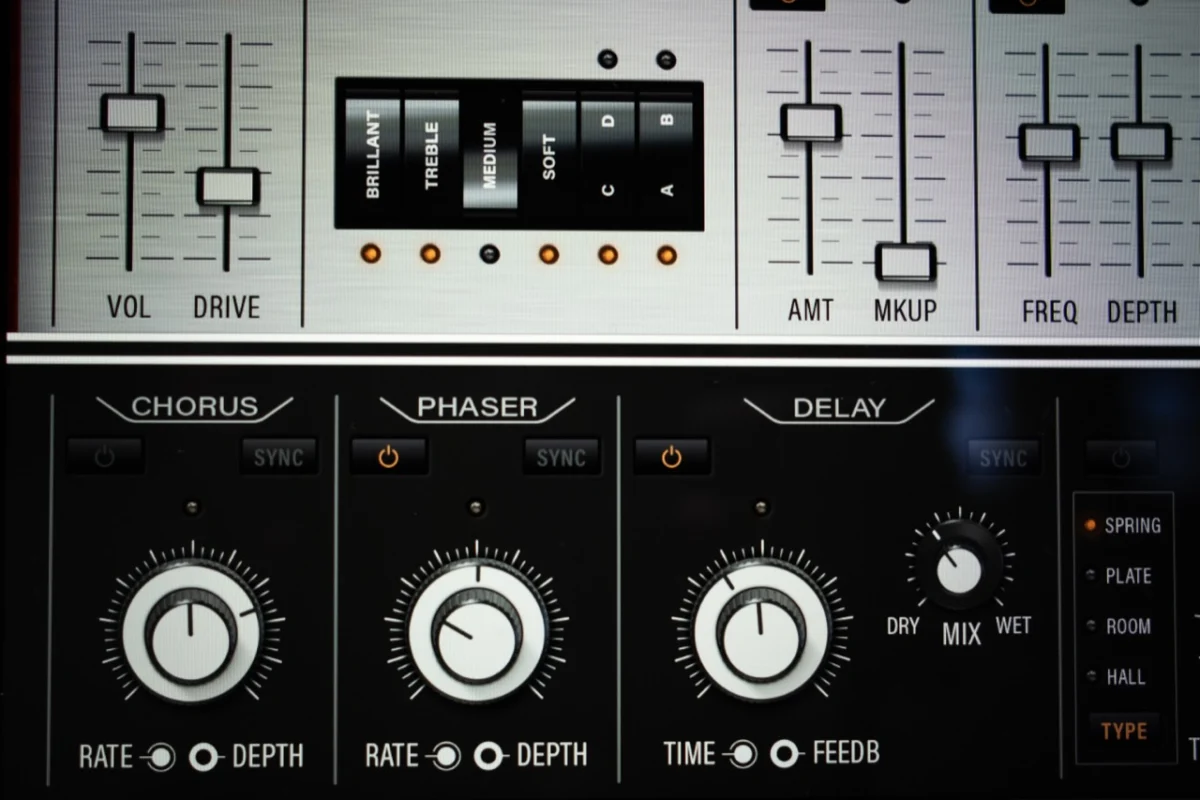
Rhodes Music Group has officially announced the release of the Clav Pro, a dedicated virtual instrument designed to bring the iconic sound of the vintage clavinet into the modern digital audio workstation (DAW) environment. This new addition to the Rhodes software catalog marks a significant expansion of the company’s digital strategy, moving beyond the traditional electric piano simulations that have defined the brand for decades. The Clav Pro is now available for both macOS and Windows platforms, launching with an introductory price of $89.95 USD before reverting to its standard retail price of $129.95. As part of a growing suite that includes the Anthology, Pianology, and the critically acclaimed V8 series, the Clav Pro seeks to provide musicians and producers with a high-fidelity, highly customizable recreation of the percussive, string-based keyboard instrument that defined the sound of funk, soul, and rock throughout the 1970s.
Technical Architecture and Performance Characteristics
The Clav Pro is engineered to bridge the gap between historical authenticity and contemporary production requirements. At its core, the plugin utilizes a sophisticated sampling engine designed to capture the unique mechanical nuances of a physical clavinet—an instrument that functions similarly to an electric guitar but is played via a keyboard. Unlike traditional digital pianos that rely on oscillators or simple wavetables, the Clav Pro focuses on the complex interaction between the instrument’s internal strings, the hammers that strike them, and the pickups that translate those vibrations into an electrical signal.
One of the primary features of the Clav Pro is its detailed control over pickup configurations. In a vintage clavinet, such as the Hohner Clavinet D6, the tone is largely determined by the selection of two electromagnetic pickups located above and below the strings. The Clav Pro replicates this functionality, allowing users to toggle between different pickup combinations to achieve everything from thin, biting trebles to warm, resonant mid-tones. Furthermore, the software introduces modern editing capabilities that were physically impossible on the original hardware. Users can adjust the "age" of the virtual strings, manipulate the mechanical noise of the key action, and fine-tune the velocity response to suit their specific MIDI controller.
The processing chain within the Clav Pro is equally comprehensive. It includes a dedicated amplification section, simulating various classic tube amps and cabinets that are historically paired with the instrument. Additionally, the plugin features an integrated effects suite, including a wah-pedal simulation—an essential component for the "quack" sound associated with funk music—as well as chorus, flanger, and delay modules. These effects are not merely generic additions but are modeled to interact with the clavinet’s specific frequency range and dynamic profile.
Historical Context: The Legacy of the Clavinet
To understand the significance of the Clav Pro, one must look at the history of the instrument it emulates. The clavinet was originally invented by Ernst Zacharias and manufactured by Hohner in the 1960s. It was initially intended to be a portable version of a clavichord for playing classical music, but its sharp, percussive attack and ability to be run through guitar amplifiers and effects pedals made it a favorite among contemporary musicians.
The instrument achieved legendary status through its use by artists such as Stevie Wonder, most notably on the 1972 hit "Superstition," which remains the definitive example of the clavinet sound. Other prominent users included Billy Preston, Herbie Hancock, and Bernie Worrell of Parliament-Funkadelic. By the late 1970s, the clavinet had become a staple of the disco and reggae genres as well. However, the original hardware was notoriously difficult to maintain; the strings required frequent tuning, and the internal rubber pads (hammers) would degrade over time, leading to a sticky or inconsistent feel. By offering a digital version in the Clav Pro, Rhodes provides the sonic character of these temperamental machines without the associated maintenance burdens.
The Evolution of Rhodes Music Group
The release of the Clav Pro represents a pivotal moment in the recent history of Rhodes Music Group. Following the brand’s acquisition and relaunch in 2021 under new leadership, the company initially focused on reclaiming its hardware legacy with the introduction of the Rhodes MK8. The MK8 was designed as a premium, hand-built electric piano that honored the original Harold Rhodes designs while incorporating modern boutique electronics.
However, the company quickly recognized that the high price point and physical footprint of the MK8 made it inaccessible to a large portion of the music-making community. To address this, Rhodes began translating the "Rhodes Sound" into the digital realm. The journey started with the V8 plugin, a direct digital recreation of the MK8 hardware. This was followed by the Anthology series, which explored the historical variations of the Rhodes piano, and Pianology, which focused on acoustic and hybrid textures.

The Clav Pro is the first major departure from the Rhodes piano family, signaling the company’s intent to become a comprehensive provider of classic keyboard sounds. By applying the same rigorous sampling and modeling standards used for the MK8 to the clavinet, Rhodes is positioning itself as a direct competitor to established software giants like Arturia and Spectrasonics.
Industry Implications and Market Analysis
The digital instrument market is currently characterized by a high demand for "vintage-correct" sounds. Modern producers often seek the organic imperfections of analog gear to balance the clinical precision of digital recording. The Clav Pro enters a competitive landscape where several high-quality clavinet emulations already exist, such as the Arturia Clavinet V and the clavinet patches found within Spectrasonics Keyscape.
Rhodes’ entry into this specific niche is strategically significant. The brand name carries a level of prestige that few other manufacturers can match. By marketing the Clav Pro as a "pro" level tool, the company is targeting a demographic of professional composers, session players, and high-end hobbyists who prioritize sound quality over low-cost alternatives. The inclusion of modern features—such as deep modulation matrices and advanced internal routing—allows the Clav Pro to function not just as a historical archive, but as a creative tool for contemporary sound design.
Market analysts suggest that this move toward software is a necessary diversification for Rhodes. While the MK8 hardware remains a flagship product, the software division provides a scalable revenue stream with significantly lower overhead and global reach. The introductory pricing of $89.95 is viewed as a competitive move to encourage early adoption among users who might already own other clavinet plugins.
Workflow Integration and User Experience
In a studio setting, the Clav Pro is designed to be a "plug-and-play" solution. It supports VST, AU, and AAX formats, ensuring compatibility with major DAWs such as Ableton Live, Logic Pro, Pro Tools, and Cubase. The user interface (UI) follows the aesthetic established by the V8 plugin, featuring a clean, photorealistic layout that mimics the experience of sitting in front of a physical instrument.
For live performers, the Clav Pro addresses the need for reliability. Carrying a vintage Hohner Clavinet to a gig is a logistical challenge due to its weight and fragility. The plugin allows keyboardists to run the sound from a laptop or dedicated plugin host, providing a consistent tone every night. The low-latency performance of the software engine is crucial in this regard, as the clavinet’s percussive nature requires an immediate response to the player’s touch.
Future Outlook for Rhodes Digital
The launch of the Clav Pro is likely a precursor to further software developments from Rhodes Music Group. Industry insiders speculate that the company may eventually tackle other classic keyboard instruments, such as the electric reed pianos (Wurlitzer style) or vintage tonewheel organs. By building a unified ecosystem where all instruments share a common interface and high-fidelity philosophy, Rhodes is creating a "virtual studio" of classic keys.
Furthermore, the integration of Rhodes’ proprietary V-Pan technology—a signature stereo panning effect found on their hardware—into the Clav Pro suggests that the company is looking for ways to create a "house sound" across its digital products. This cross-pollination of features ensures that even when the company is simulating a non-Rhodes instrument, it still carries the brand’s unique sonic signature.
As the music production landscape continues to shift toward hybrid workflows, where hardware and software coexist, Rhodes Music Group appears committed to maintaining its status as a leader in both domains. The Clav Pro stands as a testament to this commitment, offering a bridge between the analog triumphs of the 20th century and the digital innovations of the 21st. The product is available for immediate download via the Rhodes Music website, marking a new chapter in the company’s storied history.
