

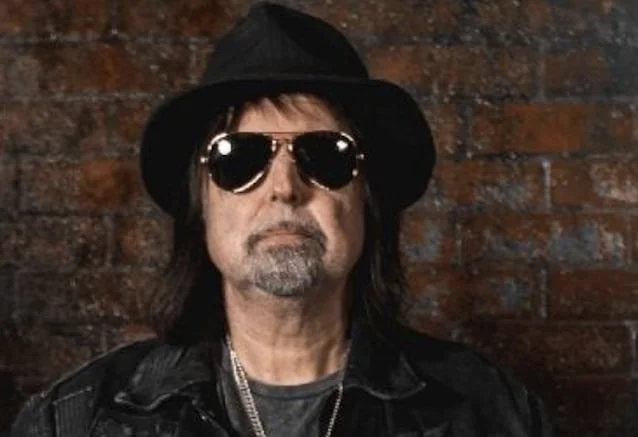
March 14, 2026 – The global music community is in mourning today following the announcement of the death of Philip Anthony Campbell, the legendary guitarist whose blistering solos and powerful riffs defined the sound of Motörhead for over three decades. Campbell, affectionately known as “Phil” to fans and friends, passed away peacefully last night at the age of 64, after a prolonged and courageous battle with complications following a major surgery. The somber news was shared by his band, Phil Campbell and the Bastard Sons, through an emotional statement released on their official social media channels.
The statement, issued by his sons Todd, Dane, and Tyla, who are also members of Phil Campbell and the Bastard Sons, conveyed the profound loss felt by his family. "It is with great sadness that we announce the passing of our beloved father, Philip Anthony Campbell, who passed away peacefully last night following a long and courageous battle in intensive care after a complex major operation," the message read. "Phil was a devoted husband, a wonderful father, and a proud and loving grandfather, known affectionately as ‘Bampi.’ He was deeply loved by all who knew him and will be missed immensely. His legacy, music, and the memories he created with so many will live on forever." The family has requested privacy during this exceptionally difficult period.
Campbell’s passing comes after a period of concerning health issues that led to the cancellation of Phil Campbell and the Bastard Sons’ scheduled tour dates in Australia and Europe, originally slated for March to May of this year. In February, the band announced the postponement of these shows, citing "medical advice Phil has just received," without providing further specific details at the time. This news had already cast a shadow of worry over his dedicated fanbase.
A Guitarist Who Defined an Era
Phil Campbell’s tenure with Motörhead, spanning an impressive 31 years from 1984 to 2015, cemented his status as one of rock and roll’s most influential guitarists. As the sole guitarist for the latter two decades of the iconic band’s existence, he was instrumental in crafting the sound of seminal albums such as "Orgasmatron" (1986), "1916" (1991), and "Bastards" (1993). His distinctive playing style, characterized by its raw energy, intricate solos, and relentless power, became an inseparable part of Motörhead’s ferocious sonic identity. The band, fronted by the inimitable Lemmy Kilmister, was a constant force in the hard rock and heavy metal scene, renowned for their uncompromising attitude and electrifying live performances. Motörhead officially disbanded in 2015 following the death of Lemmy, marking the end of an era for the band and its devoted followers.
Campbell’s journey with the guitar began at the tender age of 10. By 13, he was already performing semi-professionally in a cabaret band named Contrast. His early career saw him honing his skills across South Wales with the band Rocktopus before forming the heavy metal outfit Persian Risk in 1979. This formative period laid the groundwork for the prodigious talent that would later captivate audiences worldwide.
The Audition That Changed History
A pivotal moment in Campbell’s career, and indeed in the history of Motörhead, occurred in the early 1980s. Having admired Lemmy from afar – even securing an autograph from the Motörhead frontman at a Hawkwind gig when he was just 12 – Campbell seized the opportunity to audition for Motörhead when guitarist Brian Robertson departed in 1983. While Lemmy was initially only seeking one replacement guitarist, the audition proved to be a watershed moment. The explosive synergy that developed between Campbell and fellow auditionee Michael "Wurzel" Burston was so compelling that Lemmy made the decision to enlist both guitarists. This dual-guitar assault became a defining feature of Motörhead’s sound for years to come, adding layers of power and complexity to their already formidable attack.
A Solo Voice and Continued Musical Evolution
Beyond his monumental contributions to Motörhead, Phil Campbell pursued his own artistic endeavors. In October 2019, he released his debut solo album, "Old Lions Still Roar." This ambitious project, which had been in development for over five years, showcased Campbell’s versatility and vision, featuring collaborations with a stellar lineup of rock royalty, including Rob Halford of Judas Priest, Dee Snider of Twisted Sister, and Alice Cooper. The album was a testament to his enduring passion for music and his ability to connect with fellow artists across different generations.
More recently, Campbell fronted his band Phil Campbell and the Bastard Sons, a powerful outfit featuring his sons Todd, Dane, and Tyla. The band released their third studio album, "Kings Of The Asylum," in September 2023 via Nuclear Blast Records. This album marked a significant milestone as their first and only studio release to feature singer Joel Peters. The band’s continued output underscored Campbell’s unwavering dedication to creating and performing music, even as his health challenges became more pronounced.
Challenging Perceptions of His Guitar Prowess
In a candid interview conducted in 2025 with Andrew McKaysmith of the Scars And Guitars podcast, Phil Campbell offered insightful reflections on his role within Motörhead, particularly addressing common perceptions of his guitar playing. When asked about the biggest misconception regarding his contributions, Campbell stated, "Well, most of the [Motörhead] riffs [during my time with the band] are mine all the way through. They’d change ’em a bit and whatever, but basically, ’cause when we were the three-piece, everyone was waiting for me to come up with something to start the songs. Lemmy would have one or two of his own rock songs, rock and roll songs ready usually. But the majority of the stuff… I mean, it’s all credited to the three of us anyway, apart from Lemmy’s individual songs. But, yeah, people think – I don’t know what they think. They don’t read the credits, obviously, a lot of people, the writing credits. And I’m definitely not a heavy metal player. People think I might be a heavy metal player. I think they’re wrong there." This revelation sheds light on the significant songwriting contributions Campbell made to Motörhead’s catalog, often overshadowed by the band’s collective image. His assertion that he wasn’t strictly a "heavy metal player" also hints at a broader musical palette and a desire to be recognized for the nuances of his craft beyond genre classifications.
A Legacy That Will Endure
Phil Campbell’s passing leaves an immense void in the world of hard rock and heavy metal. His influence can be heard in countless guitarists who were inspired by his powerful playing and his dedication to the craft. From his early days in Welsh bands to his iconic status in Motörhead and his later work with Phil Campbell and the Bastard Sons, Campbell consistently delivered a brand of guitar heroism that was both technically brilliant and emotionally resonant. His legacy is not merely in the notes he played, but in the spirit of relentless energy, unwavering commitment, and genuine passion for music that he embodied. The reverberations of his guitar solos will continue to echo through the annals of rock history, a permanent testament to a true legend.
The outpouring of tributes from fellow musicians, fans, and industry figures is expected to be substantial, reflecting the profound impact Phil Campbell had on the music landscape. His work with Motörhead, in particular, remains a cornerstone of rock and roll, and his contributions will be celebrated and remembered for generations to come. The family’s request for privacy is understandable as they navigate this profound loss, but the world of music will undoubtedly find ways to honor the indelible mark Phil Campbell has left behind.
