

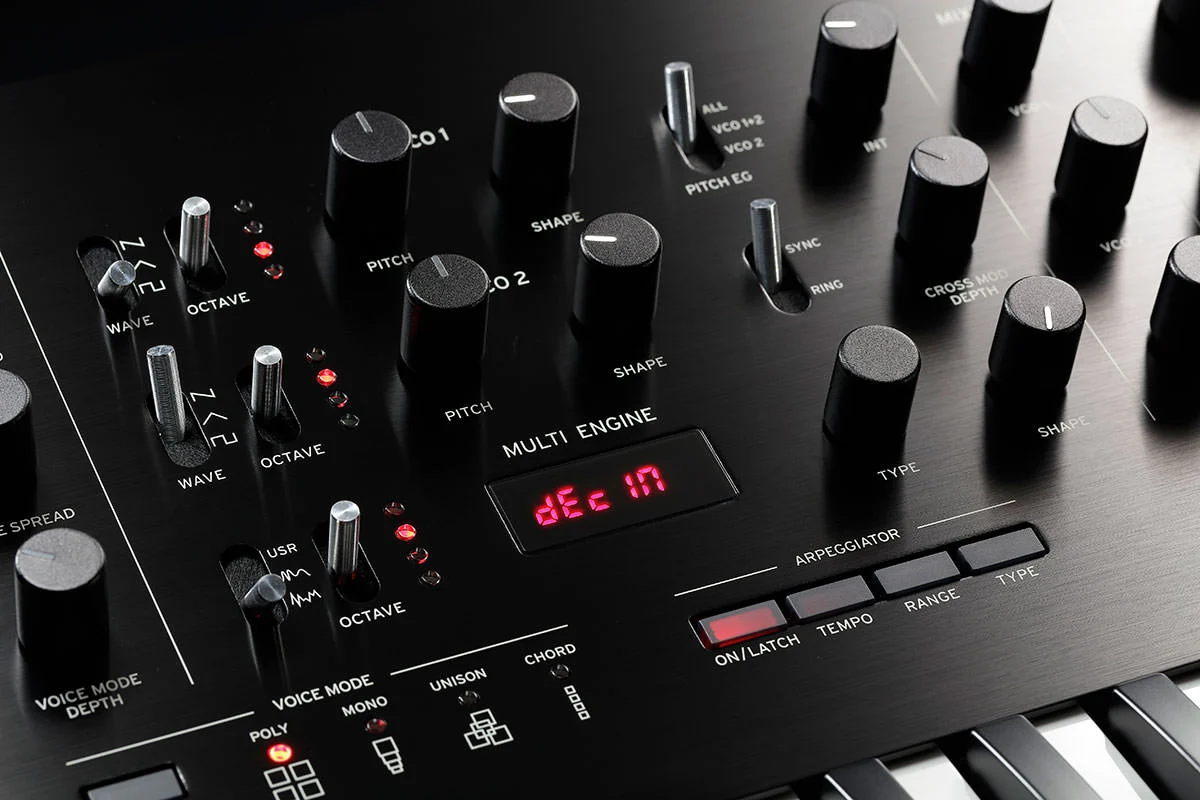
Scott McAuley, a recognized figure in the field of synthesizer sound design and digital synthesis optimization, has officially announced the release of Elixir Volume 1, a comprehensive sound library and user oscillator collection designed specifically for the Korg Prologue series of synthesizers. This new expansion represents a significant technical addition to the Korg ecosystem, leveraging the manufacturer’s proprietary Multi Engine architecture to introduce three custom-coded multi-engine oscillators and five specialized wavetable oscillators. Priced at £39.99 and available through the Synth Sounds digital storefront, Elixir Volume 1 is positioned as a professional-grade toolkit intended to bridge the gap between traditional analog subtractive synthesis and modern digital sound manipulation.
The release of Elixir Volume 1 comes at a time when the Korg Prologue—Korg’s flagship analog polyphonic synthesizer—continues to maintain a strong presence in professional studios and live performance rigs. By providing a curated set of 100 patches (demonstrated across a two-part video series), McAuley’s collection focuses on expanding the sonic palette of the hardware beyond its factory constraints. The inclusion of bespoke digital oscillators allows users to bypass the limitations of standard analog waveforms, offering complex textures, evolving pads, and aggressive lead sounds that utilize the Prologue’s high-fidelity signal path and analog filtering.
Technical Architecture and the Multi Engine Framework
At the core of the Elixir Volume 1 release is the utilization of the Korg Logue SDK (Software Development Kit). When Korg first introduced the Prologue in 2018, it distinguished itself from other flagship analog polysynths by incorporating a "Multi Engine" as its third oscillator. This digital slot allows for the loading of user-defined oscillators and modulation effects. Scott McAuley’s Elixir collection utilizes this framework to install three distinct custom oscillators that function as separate digital synthesis engines within the Prologue’s architecture.
The five wavetable oscillators included in the pack further diversify the instrument’s capabilities. Unlike standard oscillators that cycle through basic geometric shapes like sine or sawtooth waves, wavetable synthesis relies on a series of single-cycle waveforms that the oscillator can sweep through. This provides a level of movement and spectral complexity typically associated with high-end digital workstations, now integrated directly into the Prologue’s analog signal flow. For professional users, this means the ability to combine the warmth of the Prologue’s voltage-controlled filters (VCF) and drive circuits with the clinical precision and harmonic richness of custom digital code.
Historical Context: The Evolution of the Korg Prologue
The Korg Prologue was originally launched in two configurations: an 8-voice version and a 16-voice version. It was designed to succeed the highly successful Minilogue, offering a more mature, professional-grade interface and a significantly expanded sound engine. However, the true turning point for the Prologue’s longevity was the opening of the Logue SDK. By allowing independent developers and sound designers like Scott McAuley to write code for the hardware, Korg ensured that the synthesizer would continue to evolve long after its initial manufacturing run.
Since 2018, a niche but highly dedicated community of developers has emerged, creating custom oscillators that range from FM (Frequency Modulation) engines to physical modeling and granular synthesis. Elixir Volume 1 enters this market as a "premium" expansion, focusing on high-usability patches that are production-ready. While many user oscillators are released as standalone technical tools, McAuley’s approach combines the raw code with a meticulously programmed patch library, ensuring that musicians can immediately implement the new sounds into their compositions without requiring deep knowledge of digital synthesis programming.
Chronology of Development and Release
The development of Elixir Volume 1 follows a period of intensive sound design and beta testing within the Korg user community. McAuley’s previous contributions to the synthesizer world have often focused on maximizing the potential of hybrid hardware. The timeline of this specific release began with the conceptualization of a "hybrid elixir"—a sound set that would emphasize the "magic" of blending digital precision with analog unpredictability.
Following the initial coding of the three multi-engine oscillators, the project moved into the patch-creation phase. This involved programming 100 individual presets that showcase the breadth of the new oscillators. To ensure transparency and provide a clear value proposition to potential buyers, the release was accompanied by a dual-video demonstration. The first video, which coincides with the official launch, covers the first 50 sounds, while a subsequent installment is slated to detail the remaining half of the collection. This staged reveal allows users to audit the sonic quality of the oscillators before committing to the purchase.
Analysis of Sonic Implications and Market Impact
The introduction of Elixir Volume 1 has broader implications for the synthesizer market, specifically regarding the "aftermarket" support for hardware instruments. In an era where software plugins are updated frequently, hardware synthesizers often face the risk of becoming static. The work of independent designers like McAuley provides a "firmware-adjacent" update path that keeps the hardware relevant in modern music production environments.
From a sound design perspective, the impact of the five wavetable oscillators cannot be overstated. The Korg Prologue is often praised for its "low-end punch" and "creamy" filters, but it has occasionally been criticized for a lack of internal modulation routing compared to its competitors. By embedding the complexity within the oscillator itself—via the wavetables and custom engines—McAuley effectively bypasses some of these modulation limitations. The result is a sound that feels more "expensive" and spectrally dense, suitable for cinematic scoring, ambient soundscapes, and modern electronic dance music (EDM).
Industry Response and User Reception
While formal reviews from major trade publications are pending, the initial reception within the Korg user community has been largely positive. Users have noted that the £39.99 price point is competitive, considering it includes both the digital engines (the "software") and a large library of presets (the "content"). Inferred reactions from the synthesizer enthusiast community suggest a growing demand for such "hybrid" expansions. Producers who invested in the Prologue 16 for its high voice count are particularly interested in Elixir Volume 1, as the 16-voice polyphony allows for extremely lush, stacked sounds when using the custom wavetable oscillators.
Furthermore, the release highlights a shift in how sound designers interact with their audience. By utilizing YouTube as a primary demonstration platform, McAuley provides a "what-you-see-is-what-you-get" experience. This transparency is vital in the digital goods market, where the intangible nature of the product requires a high level of trust between the creator and the consumer.
Future Implications for the Logue Ecosystem
The launch of Elixir Volume 1 may signal a continued trend of high-quality, third-party support for the Logue ecosystem, which also includes the Minilogue xd and the NTS-1. Although this specific volume is tailored for the Prologue, the underlying technology of the oscillators often shares compatibility across the Logue range, potentially opening the door for future ports or expanded versions for Korg’s smaller desktop units.
As the synthesizer industry moves further into the 2020s, the distinction between "analog" and "digital" continues to blur. Products like Elixir Volume 1 demonstrate that the future of synthesis lies not in choosing one over the other, but in the seamless integration of both. By providing the Prologue with new "digital brains," Scott McAuley has effectively extended the lifecycle of the instrument, ensuring it remains a versatile tool for sound designers and musicians alike.
Conclusion and Availability
Elixir Volume 1 by Scott McAuley is currently available for purchase and immediate download. The package includes the necessary files to load the three custom multi-engine oscillators and five wavetable oscillators into the Korg Prologue via the official Korg Librarian software. Additionally, the 100 patches are organized to be easily navigated, providing a significant upgrade to the factory sound set.
As the music technology landscape continues to evolve, the collaboration between hardware manufacturers like Korg and independent developers like McAuley serves as a model for sustainable product growth. Elixir Volume 1 is not merely a collection of sounds; it is a technical expansion that redefines what the Korg Prologue is capable of achieving in a professional recording environment. For owners of the Prologue series, this release represents one of the most significant third-party contributions to the platform to date, offering a sophisticated blend of engineering and artistry.
