

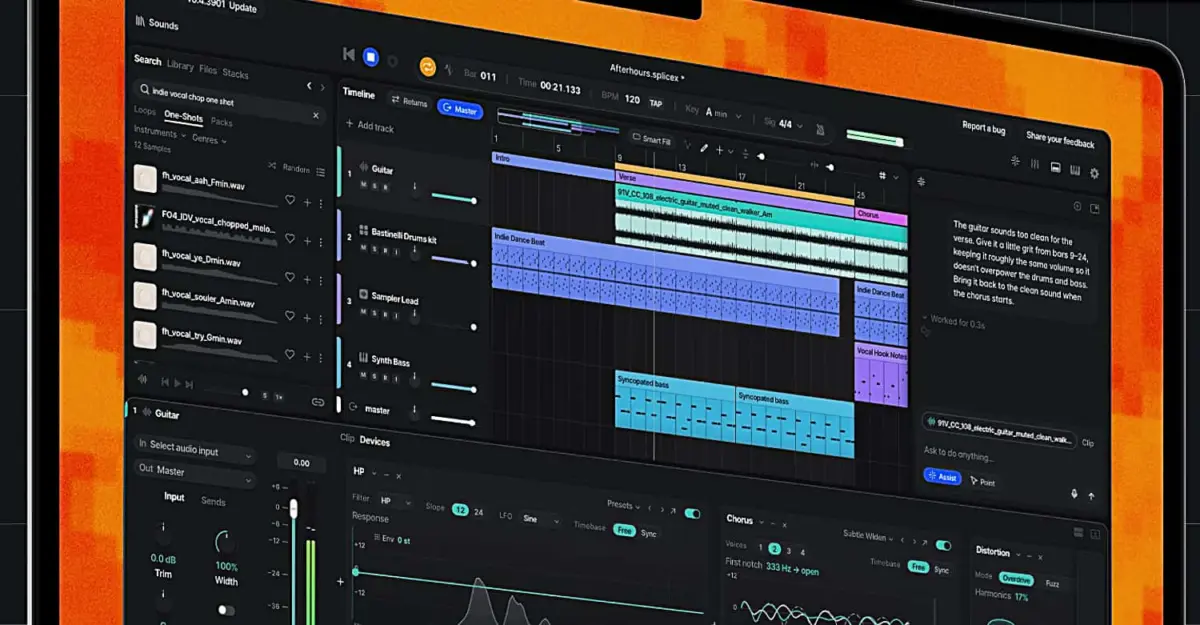
The landscape of digital music production has undergone a significant transformation with the official entry of Splice into the digital audio workstation (DAW) market. Splice, a company long recognized as the industry leader in cloud-based sample libraries and music production tools, has announced the launch of Splice Create. This new application represents a strategic pivot for the organization, moving from a service provider that supplies the building blocks of music to a comprehensive environment where those blocks are assembled, processed, and finalized. By integrating its massive repository of over three million licensed, human-made samples with advanced artificial intelligence and a streamlined user interface, Splice Create aims to redefine the workflow for both novice creators and seasoned professionals.
The introduction of Splice Create arrives at a critical juncture in the music technology industry. As generative artificial intelligence continues to spark debate regarding copyright and the value of human artistry, Splice has positioned its new DAW as a "human-centric" alternative. The platform emphasizes the use of its catalog of sounds created by musicians, while utilizing AI not to replace the composer, but to assist in the logistical and technical hurdles of production. This approach addresses a growing demand for tools that lower the barrier to entry for music creation without sacrificing the authenticity of the final output.
The Evolution of Splice: From Repository to Environment
To understand the significance of Splice Create, it is necessary to examine the company’s trajectory over the last decade. Founded in 2013 by Steve Martocci and Matt Aimonetti, Splice initially gained traction by offering a cloud-based collaboration and backup service for producers using established DAWs like Ableton Live and FL Studio. However, the company’s most disruptive move came with the launch of its subscription-based sample marketplace. By allowing producers to download individual sounds for a monthly fee—rather than purchasing expensive, bulky sample packs—Splice democratized access to high-quality audio assets.
In the years following, Splice expanded its ecosystem through the "Rent-to-Own" model for software plugins, enabling creators to pay off expensive virtual instruments over time. The company also introduced Splice Bridge, a tool that allowed users to audition samples from the Splice library directly within their existing DAW, synced to the project’s tempo and key. Splice Create is the logical culmination of these innovations. It removes the friction of moving between a web browser, a desktop library app, and a third-party workstation by consolidating the entire creative process into a single standalone application.
The development of Splice Create was preceded by a web-based "Create" feature, which allowed users to "stack" loops and samples to find combinations that worked well together. The success of this experimental tool provided the data and user feedback necessary to build a full-scale desktop application capable of handling complex arrangements and professional-grade plugins.
Technical Architecture and Core Features
Splice Create is designed to function as a modern "all-in-one" studio. At its core, the application provides seamless access to the Splice catalog, which currently hosts more than three million sounds. These sounds are fully licensed and cleared for commercial use, a feature that remains a primary selling point for the platform. The integration ensures that producers can search for, audition, and drag samples into their timeline without leaving the creative environment.
Beyond sample management, the DAW includes support for third-party VST (Virtual Studio Technology) plugins. This is a crucial inclusion for professional adoption, as it allows users to utilize their existing libraries of synthesizers, compressors, and equalizers from developers such as Serum, Arturia, or FabFilter. Additionally, the application integrates Splice’s proprietary instruments, known as Splice INSTRUMENT, which include Astra and Beatmaker. These tools are designed to work natively within the Create environment, offering optimized performance and a unified aesthetic.
One of the most notable technical inclusions is the "Point Mode" interactive tutorial system. Recognizing that the steep learning curve of traditional DAWs often discourages new users, Splice has implemented a step-by-step guidance system. Point Mode does not merely provide video instructions; it interacts with the user’s interface, highlighting specific buttons and demonstrating production techniques in real-time. This educational component suggests that Splice is targeting the "creator economy"—a demographic of social media content creators and hobbyists who require professional results without the years of technical training traditionally required for sound engineering.
AI Integration and Natural Language Processing
The defining characteristic of Splice Create is its implementation of voice and text-controlled production assistance. While other DAWs have begun to incorporate AI for tasks like stem separation or mastering, Splice Create uses Natural Language Processing (NLP) to alter the fundamental way a producer interacts with their workstation.
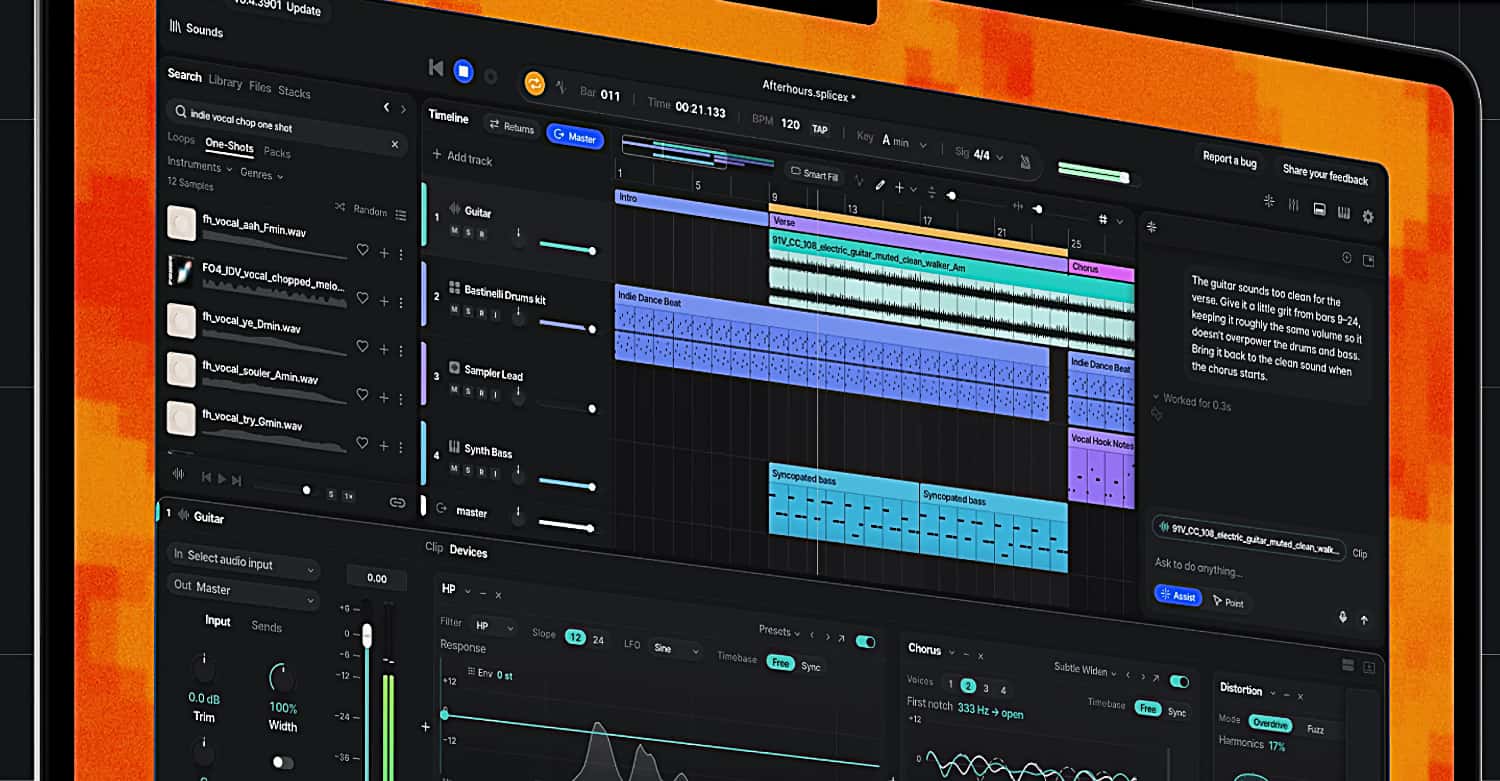
Users can issue commands in plain English to execute complex or repetitive tasks. For instance, a producer might say, "Find me a cinematic percussion loop in 120 BPM," or "Group all my drum tracks and apply a low-pass filter." This functionality aims to reduce "click fatigue" and keep the creator in a state of "flow." By delegating the organizational and search-based aspects of music production to an AI assistant, the user can focus more on the melodic and structural elements of the composition.
Importantly, Splice has clarified that these AI tools are designed to assist in the process rather than the generation of music. Unlike generative platforms that create entire songs from a text prompt, Splice Create requires the user to make the creative decisions. The AI acts as a highly efficient studio assistant, capable of navigating the vast library of human-made sounds to find the specific textures a producer envisions.
Market Analysis and Industry Implications
The launch of Splice Create places the company in direct competition with established DAW giants such as Apple (Logic Pro), Ableton (Live), and Image-Line (FL Studio). However, Splice’s entry strategy differs from its competitors. While traditional DAWs are often sold as high-cost perpetual licenses or through specialized hardware bundles, Splice is leveraging its existing subscription base.
The introductory pricing for Splice Create Pro is set at $9.99 per month. This subscription model aligns with the modern "Software as a Service" (SaaS) trend, providing Splice with a recurring revenue stream while offering users a low entry cost. For many young producers, a monthly sub-ten-dollar fee is more accessible than a $400 or $500 upfront investment for a professional DAW.
Market data suggests that the home music production market is poised for continued growth. According to industry reports, the global music production software market is expected to grow at a compound annual growth rate (CAGR) of approximately 8% through 2030. This growth is driven by the proliferation of streaming platforms and the rise of independent artists who record and mix their own material. Splice Create is positioned to capture a significant share of this market by focusing on ease of use and cloud integration—areas where legacy DAWs have sometimes struggled to modernize.
Official Responses and Strategic Vision
While official statements from Splice executives emphasize the empowerment of the creator, the industry reaction has been one of cautious optimism. Proponents of the platform highlight the efficiency of the AI search tools, noting that the most time-consuming part of modern production is often "crate-digging" through thousands of samples. By automating this search, Splice Create could significantly shorten the time from idea to finished demo.
Critically, the DAW allows for the export of audio stems and MIDI data. This ensures that the platform is not a "walled garden." A producer can start a project in Splice Create, taking advantage of the AI-assisted search and arrangement tools, and then export the project to a more specialized DAW like Pro Tools for final mixing and mastering. This interoperability is essential for maintaining a foothold in the professional community.
Splice has indicated that the current release is a beta version available exclusively for macOS. This phased rollout allows the company to monitor system stability and gather user data before expanding to Windows and web-based versions. The commitment to a web version is particularly significant, as it suggests a future where high-end music production can happen on low-powered devices like Chromebooks, further democratizing the medium.
Conclusion and Future Outlook
Splice Create represents more than just a new piece of software; it is a manifestation of the shift toward integrated, AI-assisted creative environments. By combining a world-class sample library, an educational platform, and a functional workstation, Splice is attempting to own the entire "stack" of music production.
As the beta progresses, the industry will be watching closely to see how the AI assistant handles more nuanced musical requests and whether the "Point Mode" tutorials successfully bridge the gap for new creators. If successful, Splice Create could become the primary entry point for the next generation of musicians, fundamentally changing how music is conceived, organized, and produced in the digital age. For now, the focus remains on the macOS beta and the refinement of a toolset that seeks to harmonize human creativity with machine efficiency.
