

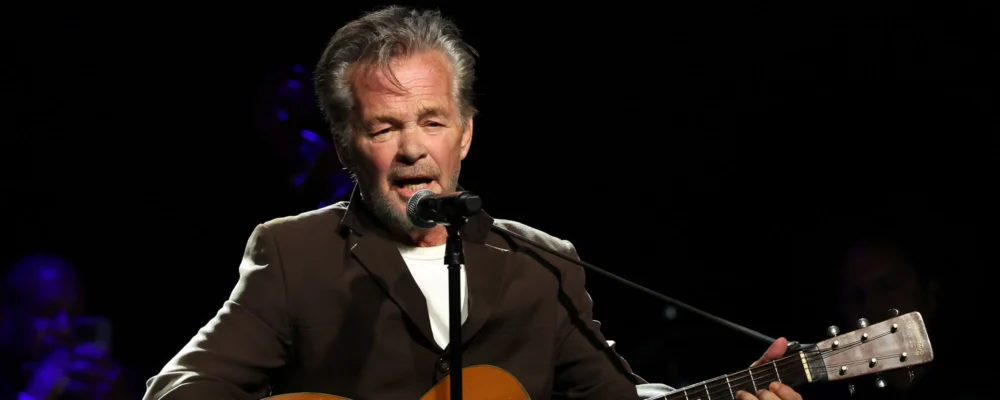
The production represents a significant milestone in the evolution of the jukebox musical genre, moving away from biographical "bio-musicals" toward a character-driven narrative rooted in the socio-economic landscape of 1980s America. Titled Small Town, the show utilizes Mellencamp’s extensive catalog to tell the story of Jack and Diane, the "two American kids" first introduced to the cultural lexicon in 1982. While the cast for the premiere has yet to be announced, the creative team behind the project features a collection of industry veterans and award-winning artists, signaling the high stakes of the production.
The Narrative Core: Jack, Diane, and the American Dream
According to the official production description, Small Town is centered on the lives of Jack and Diane, described as "two star-crossed lovers refusing to let the world break them or bury their youthful fire." The narrative expands upon the brief glimpses of their lives provided in the original four-minute song, casting them as symbols of a generation grappling with the decline of the traditional American industrial and agricultural heartland.
Set against the backdrop of rural Indiana during the 1980s, the plot follows Jack’s aspirations to become a football star. In the pursuit of this dream, Jack faces the agonizing necessity of leaving his hometown—the only world he has ever known. This ambition creates a central conflict with Diane, who remains uncertain about abandoning her roots. The musical explores this tension through a multigenerational lens, depicting a community at a crossroads where families are forced to make difficult choices in a desperate bid for a better life. This thematic focus aligns with Mellencamp’s lifelong artistic commitment to documenting the struggles of the working class and the quiet tragedies of rural obsolescence.
A Creative Collaboration of Artistic Heavyweights
The development of Small Town is spearheaded by a creative triumvirate that bridges the worlds of rock music, contemporary drama, and Broadway spectacle. John Mellencamp provides the musical foundation, but the narrative structure is the work of playwright Naomi Wallace. Wallace, a MacArthur "Genius Grant" Fellow and a recipient of the Windham-Campbell Literature Prize, is known for her politically charged and lyrically dense explorations of class and history. Her involvement suggests that Small Town will lean more toward the "Steinbeckian" realism Mellencamp has long admired, rather than the more escapist fare often associated with jukebox musicals.
Direction and choreography are overseen by three-time Tony Award winner Kathleen Marshall. Marshall, whose previous accolades include Best Choreography wins for Wonderful Town (2004), The Pajama Game (2006), and Anything Goes (2011), brings a sophisticated theatrical sensibility to the project. In an official statement, Marshall expressed her enthusiasm for the project, noting the "beautiful and uplifting story of a resilient community" and the synergy between Mellencamp’s music and Wallace’s "poetic words."
Bradford Kenney, the Executive Artistic Director of the Ogunquit Playhouse, emphasized the theater’s role as a laboratory for new American works. "Ogunquit Playhouse has a storied legacy of debuting world and American premieres," Kenney stated. "We are thrilled to continue that tradition this season with a powerful new musical from the legendary John Mellencamp and Naomi Wallace. Under the visionary direction of Kathleen Marshall, this production brings the heart of the American ‘small town’ to life."
The Legacy of Jack and Diane and the American Fool Era
The musical’s primary inspiration, "Jack & Diane," remains one of the most significant records in the history of American rock. Released in 1982 as part of the album American Fool, the song reached No. 1 on the Billboard Hot 100, where it remained for four consecutive weeks in October of that year. It stands as Mellencamp’s only chart-topping hit, though its cultural impact far exceeds its chart performance.
At the time of its release, "Jack & Diane" was notable for its unconventional structure, featuring a sparse arrangement of acoustic guitars, handclaps, and a sudden, booming drum break. The song’s lyrics—famously including the line "life goes on, long after the thrill of living is gone"—resonated with a public dealing with the economic shifts of the early Reagan era. The song’s enduring popularity was further evidenced in 1999 when pop artist Jessica Simpson sampled the track for her hit "I Think I’m in Love with You," which reached No. 21 on the US charts and remains the only major hit to utilize a Mellencamp sample.
Beyond the title track, Small Town will feature a selection of Mellencamp’s most recognizable hits, including "Hurts So Good," "Lonely Ol’ Night," and "Small Town." These songs, characterized by their "Heartland Rock" sound, provide a rhythmic and emotional tapestry for the stage, capturing the specific anxieties and joys of Midwestern life.
A Long-Awaited Vision: The Timeline of Development
The journey of Small Town from concept to stage has been several years in the making. John Mellencamp first publicly discussed his intentions to adapt "Jack & Diane" into a musical during a December 2018 interview with NBC’s Today. At the time, Mellencamp remarked that "every problem that this country’s going through today is in that musical," suggesting that the story of these two 1980s teenagers remains deeply relevant to contemporary audiences.
Mellencamp’s ambitions for the project were high from the outset, as he compared the intended tone of the show to the works of John Steinbeck. The goal was to create a "serious" musical that treated its characters with dignity and intellectual depth. Reports indicate that Kathleen Marshall has been attached to the project since at least 2019, working through the challenges of the COVID-19 pandemic to bring the production to its current state of readiness.
The choice of Ogunquit Playhouse for the premiere is strategic. Located in Maine, the venue is one of the oldest and most respected regional theaters in the United States. It has frequently served as a launching pad for productions aiming for Broadway or national tours, providing a high-quality environment for "workshopping" new musicals before a live audience.
Mellencamp’s Previous Forays into Narrative Theater
Small Town is not John Mellencamp’s first venture into the world of musical theater. In 2012, he collaborated with legendary horror novelist Stephen King and producer T Bone Burnett on Ghost Brothers of Darkland County. That project, a Southern Gothic "play with music," debuted at the Alliance Theatre in Atlanta before embarking on a tour of the United States and Canada in 2013 and 2014.
While Ghost Brothers was an original story with a supernatural bent, Small Town represents a more direct engagement with Mellencamp’s own musical legacy. However, the experience gained from Ghost Brothers—particularly in how to weave music into a complex narrative without following the traditional "musical comedy" tropes—is likely to inform the structure of the new production.
Broader Impact and the Future of Heartland Rock on Stage
The premiere of Small Town occurs at a time when the theater industry is increasingly looking toward established musical catalogs to draw in audiences. However, unlike "jukebox" shows that rely on nostalgia alone, Small Town appears to be positioning itself as a serious dramatic work. By focusing on the "small town" as a character in itself, the production taps into a broader cultural conversation about the American interior and the disappearance of the middle class.
The success of the show will likely depend on its ability to balance the populist appeal of Mellencamp’s hits with the somber, realistic tone promised by the creative team. If successful, Small Town could follow the trajectory of other narrative-driven jukebox musicals like Girl from the North Country (based on the songs of Bob Dylan), which received critical acclaim for its integration of music and drama.
Tickets for the world premiere of Small Town are scheduled to go on sale starting Tuesday, March 17, through the Ogunquit Playhouse website. Given the limited one-month run and the profile of the creative team, industry analysts expect a high demand for the engagement. As the production moves toward its October 1 opening, further announcements regarding the cast and potential future transfers to larger markets are anticipated. For now, the focus remains on a small town in Maine, where two of rock and roll’s most famous characters will finally get the chance to tell the rest of their story.
