

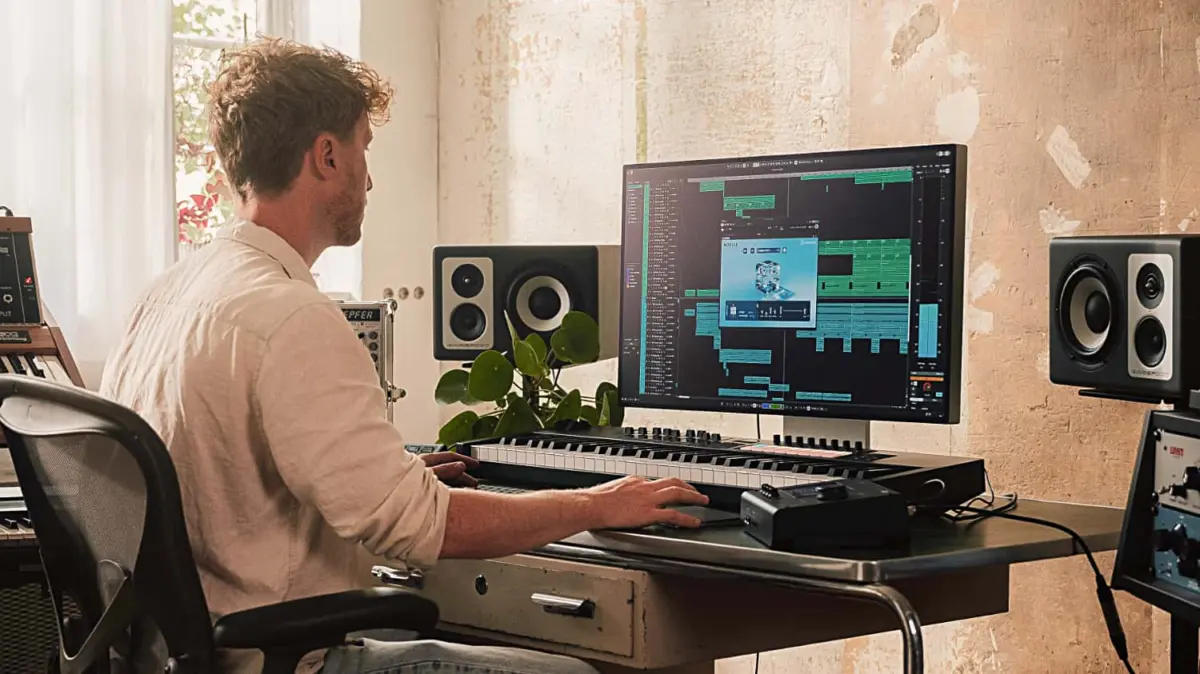
Steinberg Media Technologies GmbH has officially announced the global release of Cubase 16, the latest iteration of its flagship digital audio workstation (DAW). This update represents a major leap forward for the platform, which has remained a cornerstone of the professional music production industry for over three decades. The version 16 update focuses on four primary pillars of development: advanced sound design capabilities, refined audio manipulation through spectral processing, expanded integration with modern hardware standards, and significant workflow optimizations across its three tiered editions—Pro, Artist, and Elements.
The release comes at a pivotal time for the music technology industry, as the demand for integrated AI-assisted tools and high-resolution MIDI control continues to reshape the creative landscape. Cubase 16 addresses these trends by introducing a suite of features designed to streamline the transition from initial musical inspiration to final master. Key among these is the new Instrument Stacks feature, which allows producers to layer multiple virtual instruments within a single track container, and an overhauled stem separation engine that leverages machine learning to isolate individual elements from mixed audio files with greater precision than previous iterations.
The Evolution of Cubase: A Historical Context
To understand the significance of Cubase 16, one must look at the software’s long-standing influence on the recording industry. Originally released as Cubit for the Atari ST in 1989, the software was one of the first to offer a graphical representation of musical arrangements. Over the years, Steinberg has been responsible for several industry-standard technologies, most notably Virtual Studio Technology (VST) and Audio Stream Input/Output (ASIO). The VST protocol, introduced in 1996, revolutionized the industry by allowing third-party developers to create software-based effects and instruments that could run natively within the DAW.
In the years following its acquisition by Yamaha in 2005, Steinberg has focused on deep hardware integration and the professionalization of the "home studio" environment. Recent versions have seen the removal of the physical eLicenser dongle in favor of a digital ID system, a move that was completed during the Cubase 12 cycle. Cubase 16 continues this trajectory of accessibility and power, building upon the foundational improvements seen in versions 14 and 15 to offer a more unified and high-performance environment for modern composers.
Advanced Sound Design: Instrument Stacks and Spectral AudioWarp
The headline feature for sound designers in Cubase 16 is the introduction of Instrument Stacks. This functionality allows users to combine multiple VST instruments into a single playable setup. Rather than managing multiple tracks for a single "layered" sound, producers can now create complex textures—such as a hybrid of a granular synth, a wavetable oscillator, and a sampled piano—within a single channel. This system includes integrated macro controls, allowing users to map parameters from different instruments to a unified set of knobs, simplifying live performance and automation.
In tandem with sound creation, the DAW’s audio manipulation capabilities have been significantly upgraded with Spectral AudioWarp. While traditional time-stretching algorithms often introduce audible artifacts when pushing audio beyond 20% or 30% of its original speed, the new spectral algorithms analyze the frequency content of the audio to maintain phase coherence. This allows for extreme time-stretching—slowing audio down to a fraction of its speed—and drastic pitch-shifting without the "metallic" or "choppy" sounds typically associated with granular processing. This feature is expected to be particularly useful for film scorers and ambient music producers who rely on textures derived from organic sound sources.
Machine Learning and the New Stem Separation Engine
The expansion of the stem separation system in Cubase 16 reflects a broader industry shift toward AI-assisted production. First introduced in earlier versions via basic frequency splitting, the new engine in Cubase 16 Pro utilizes a more sophisticated neural network to decouple vocals, drums, bass, and other melodic elements from a stereo bounce.
This tool is not only designed for remixers but also serves as a vital utility for professional mixing engineers who may receive "baked-in" files from clients. The ability to extract a vocal from a backing track with minimal "bleed" or spectral artifacts allows for more surgical EQ and dynamic processing in the mixing phase. Steinberg has indicated that the engine has been trained on a significantly larger dataset than previous versions, resulting in cleaner transients and better preservation of high-frequency detail in the isolated stems.
Connectivity and Modern Standards: MIDI 2.0 and Ableton Link
As the hardware landscape evolves, Cubase 16 seeks to future-proof its ecosystem through expanded support for MIDI 2.0. This new standard offers vastly improved resolution compared to the 127-step limitation of MIDI 1.0, allowing for smoother filter sweeps, more expressive velocity layers, and bi-directional communication between the DAW and hardware controllers. This integration ensures that Cubase remains compatible with the next generation of synthesizers and MPE (MIDI Polyphonic Expression) controllers.
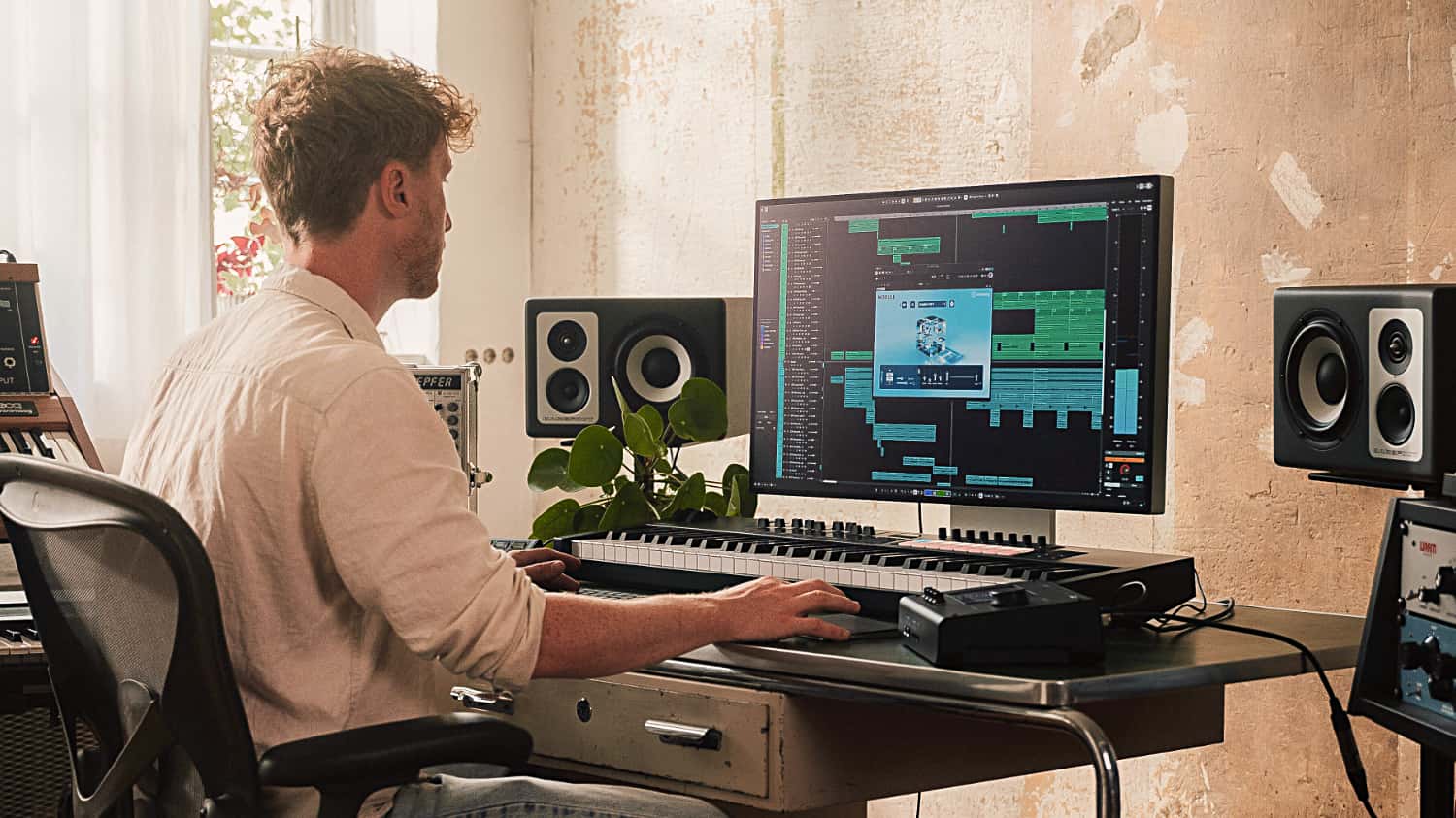
Furthermore, the inclusion of Ableton Link synchronization marks a significant step toward cross-platform collaboration. Traditionally, syncing different DAWs or mobile apps required complex MIDI clock setups. With Ableton Link support, Cubase 16 can now synchronize its tempo and transport with other software and hardware devices over a local network with a single click. This feature is aimed at electronic musicians who use Cubase for arrangement but may utilize other software or iOS apps for live performance and improvisation.
Workflow Refinements and User Interface Overhaul
Steinberg has also addressed long-standing user requests regarding the software’s ergonomics. The Settings window has been completely redesigned to be more intuitive, moving away from nested menus toward a searchable, categorized layout. This change is intended to reduce the "menu diving" that can often stall a creative session.
The Key Editor, the primary workspace for MIDI composition, has received several new functions. These include advanced "smart" quantization options and new tools for editing polyphonic data. For Pro users, the mixing console has been updated with additional capabilities, including new metering options and enhanced visibility for large-scale projects involving hundreds of tracks. These refinements are designed to accommodate the increasing complexity of modern productions, where high track counts and intensive plugin usage are common.
Tiered Editions and Market Accessibility
Cubase 16 remains available in three distinct editions, each tailored to different user needs and budgets:
- Cubase Pro 16: The flagship version, containing the full suite of stem separation, spectral processing, and advanced mixing tools like the Control Room and immersive audio support.
- Cubase Artist 16: Targeted at serious project studios, this version includes the core recording and editing features but omits some of the high-end post-production and surround sound tools.
- Cubase Elements 16: An entry-level version designed for beginners and home enthusiasts, offering a streamlined feature set that remains compatible with the Pro project format.
This tiered approach allows Steinberg to capture a wide market, from students and hobbyists to world-class recording facilities. Updates and upgrades are available for existing users, with Steinberg continuing its policy of offering grace periods for those who purchased the previous version shortly before the launch of Cubase 16.
Industry Impact and Competitive Landscape
The release of Cubase 16 places it in direct competition with other major DAWs such as Apple’s Logic Pro, Avid’s Pro Tools, and PreSonus Studio One. While Pro Tools remains a standard in high-end recording studios for tracking, Cubase has carved out a dominant niche in the world of media composition and film scoring due to its robust MIDI handling and video integration.
Industry analysts suggest that the addition of Instrument Stacks and Spectral AudioWarp is a strategic move to appeal to the growing "bedroom producer" demographic that typically gravitates toward Ableton Live or FL Studio for sound design. By integrating these creative tools directly into its more traditional linear arrangement workflow, Steinberg is positioning Cubase as a "do-it-all" solution that bridges the gap between experimental sound design and professional mixing.
Official Response and Future Outlook
While official statements from Steinberg’s executive team emphasize the "creativity-first" approach of this update, the technical community has noted the importance of the software’s stability and performance optimizations. With the transition to Apple Silicon now mature and Windows 11 becoming the standard for PC users, Cubase 16 has been optimized to take full advantage of multi-core processing and high-speed NVMe storage.
As the music production world moves toward more collaborative, cloud-based, and AI-driven workflows, Cubase 16 appears to be a bridge between the traditional engineering values of the past and the technology-driven future. The inclusion of MIDI 2.0 and refined spectral tools ensures that the platform remains relevant for professional composers who require the highest level of precision and control over their audio.
Cubase 16 is available immediately through the Steinberg online shop and authorized retailers. The company has also announced a series of webinars and tutorials to assist users in mastering the new features, underscoring its commitment to the global community of creators who rely on the software for their livelihood.
