

The landscape of the global music industry has undergone a seismic shift over the last decade, transitioning from a gatekeeper-heavy model to a decentralized digital economy. In this new environment, independent musicians are increasingly required to function not only as creators but as entrepreneurs, marketers, and networkers. Industry data suggests that over 100,000 tracks are uploaded to streaming platforms like Spotify every single day, creating a saturated market where talent alone is rarely sufficient for commercial success. Strategic networking and cross-disciplinary collaboration have emerged as the primary catalysts for visibility and career longevity. While the prospect of professional networking can be daunting for independent artists, the integration of community-focused strategies is now recognized by industry analysts as a fundamental pillar of sustainable career development.
The Evolution of the Independent Music Ecosystem
Historically, the path to musical success was linear: an artist would record a demo, seek talent scouts (A&R), and hope for a recording contract that provided the necessary infrastructure for promotion and distribution. Today, the "indie" sector is the fastest-growing segment of the music business. According to reports from Midia Research, independent artists generated over $1.2 billion in 2020, a figure that continues to climb as tools for production and distribution become more accessible. However, this democratization has led to a "discovery crisis." Without the backing of major label marketing budgets, independent artists must rely on organic network effects to build their brands.
The modern networking paradigm is no longer about transactional exchanges—exchanging business cards at a conference—but about building "creative capital" through diverse partnerships. By engaging with local art scenes, utilizing specialized digital platforms, and involving their existing fanbases, musicians can create a robust support system that transcends traditional industry boundaries.
1. Cross-Disciplinary Integration: Leveraging Local Art Scenes
The intersection of music and visual arts represents a significant opportunity for independent artists to diversify their audience. Local art scenes—comprising galleries, theaters, and performance poetry circles—often operate in silos from the music industry, yet they share a common need for atmospheric and emotional resonance. Engaging with these sectors allows a musician to position their work within a broader cultural context.

Industry experts observe that "creative placemaking"—the intentional integration of arts and culture into community development—often begins with small-scale collaborations. For example, a visual artist hosting a gallery opening for a new sculpture series may require a bespoke auditory environment to enhance the viewer’s experience. Such partnerships offer musicians a unique platform to showcase their work to an audience that is already primed for artistic consumption but may not frequent traditional music venues.
Furthermore, theater companies frequently seek original compositions for fringe productions or experimental plays. These collaborations provide musicians with "sync-style" experience, building a portfolio that can eventually be leveraged for film and television licensing—one of the most lucrative avenues for independent artists today. The shift from being a "performer" to a "multimedia collaborator" expands the artist’s professional identity and opens doors to municipal grants and arts funding that are often unavailable to solo musical acts.
2. The Feedback Collective: Community-Driven Professional Development
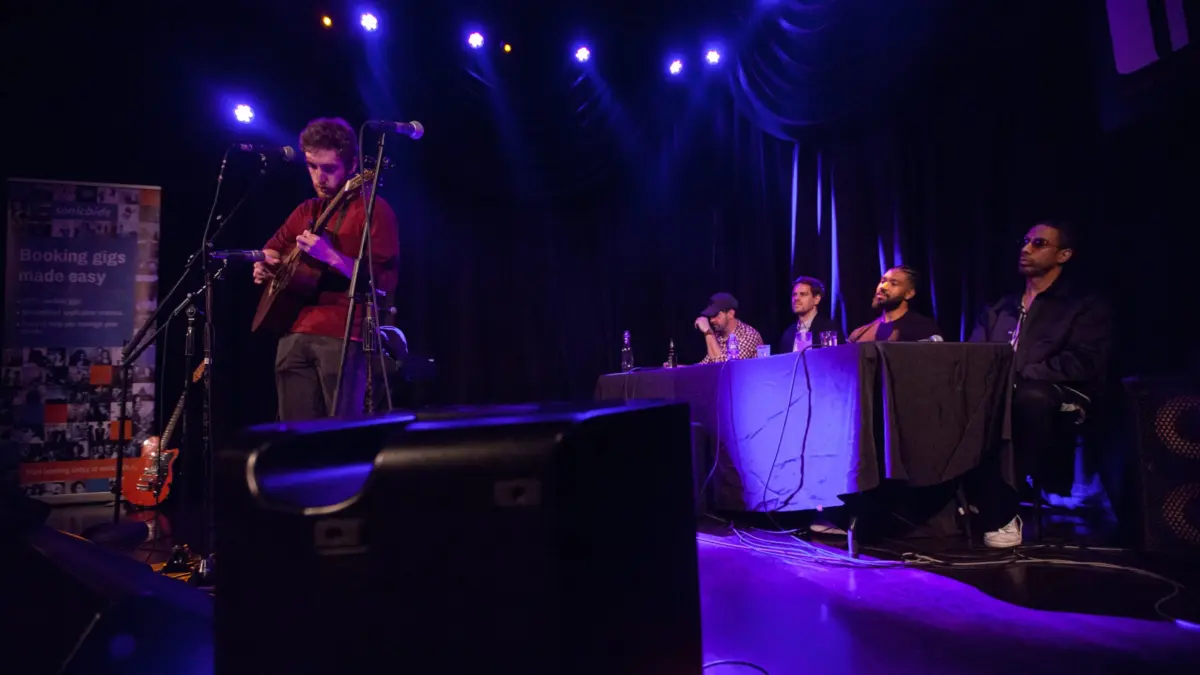
The emergence of structured workshops and jam sessions, such as the "Feedback Collective" initiatives hosted by Sonicbids, highlights a growing trend toward peer-to-peer professional development. These events serve two primary functions: technical skill enhancement and the creation of a "brave space" for creative experimentation.
Hosting or participating in a jam session allows for the organic cross-pollination of genres. In a professional journalistic analysis of these settings, it is observed that the juxtaposition of disparate styles—such as a rock guitarist collaborating with a jazz saxophonist—often results in "emergent sounds" that define new sub-genres. This innovation is critical in a market where listeners increasingly crave unique, genre-bending content.
From an organizational standpoint, workshops like those seen in the Sonicbids Feedback Collective provide a structured environment for "soft-skills" development. Musicians learn to give and receive constructive criticism, manage group dynamics, and lead creative projects. These are the exact skills required when an artist eventually scales their operations to work with session musicians, producers, and touring crews. Analysts suggest that artists who regularly participate in community-led workshops have a 30% higher retention rate in the industry over a five-year period compared to those who work in isolation.

3. Digital Collaboration Platforms and the Rise of Remote Production
While social media platforms like Instagram and TikTok are essential for fan engagement, they are often criticized for being "noisy" and transactional. In response, a new tier of professional-grade networking platforms has emerged. Sites like BandLab and SoundCloud have evolved from simple hosting services into collaborative ecosystems.
BandLab, which recently reported surpassing 60 million users, allows musicians to collaborate on tracks in real-time regardless of geographic location. This "cloud-based studio" model has revolutionized the way independent music is produced. A producer in London can lay down a beat, a lyricist in New York can add vocals, and a mastering engineer in Tokyo can finalize the track—all within a single digital environment.
The professional implication of this is the "globalization of the indie sound." Musicians are no longer limited by the talent pool in their immediate physical vicinity. By leaving thoughtful, professional commentary on the work of others and proposing specific collaborative projects, artists can build international networks that facilitate global touring opportunities and cross-continental fan exchanges. This digital-first networking strategy is particularly effective for niche genres that may not have a large local following but possess a dedicated global community.
4. Strategic Volunteering and Industry Access
One of the most overlooked entry points into the professional music industry is the volunteer sector of music festivals and large-scale events. While often viewed as menial labor, volunteering provides a "backstage pass" to the operational reality of the music business.
A chronology of successful independent careers often reveals a period of "apprenticeship" through volunteering. By working within the infrastructure of a festival, an artist gains direct access to:

- Event Organizers: Understanding the logistics of booking and talent management.
- Sound and Light Engineers: Building technical literacy that improves their own live performances.
- Industry Professionals: Networking with managers, agents, and publicists in a high-energy, collaborative environment.
The "proximity effect" is a documented phenomenon in social science where individuals are more likely to form professional bonds with those they see regularly in a work context. By demonstrating reliability and a positive work ethic as a volunteer, a musician transforms from a "stranger" into a "colleague." Statements from festival coordinators often indicate that they are more likely to book an artist they know and trust through professional interactions than one who sends a cold email with a demo link.
5. Fan-Centric Networking: The "1,000 True Fans" Framework
In his seminal essay, Kevin Kelly proposed the "1,000 True Fans" theory, suggesting that an artist only needs a relatively small, dedicated core audience to be financially viable. Modern networking extends this theory by treating fans not just as consumers, but as active participants in the artist’s professional network.
Utilizing surveys, polls, and direct engagement on platforms like Discord or Patreon allows artists to "crowdsource" their networking. A fan might have a connection to a local venue owner, a graphic designer, or another musician. By involving the fanbase in the decision-making process—such as asking who they would like to see the artist collaborate with—the musician creates a sense of "shared ownership" in their career.
This approach has significant implications for algorithmic growth. When a fan-suggested collaboration occurs, it bridges two distinct fanbases, creating a "mutual discovery" event. Data from streaming services shows that collaborative tracks often perform 40% better in "Discover Weekly" and "Release Radar" playlists than solo releases, as the algorithm recognizes the overlap in listener interest.
Broader Impact and Industry Implications
The shift toward proactive, community-based networking represents a broader maturation of the independent music sector. As the industry continues to move away from the "superstar" model toward a "middle-class" of sustainable independent creators, the ability to build and maintain professional relationships will be the primary differentiator between hobbyists and professionals.

Economic Analysis:
The economic impact of these networking strategies is twofold. First, they reduce the "cost of acquisition" for new fans by leveraging existing communities (the "network effect"). Second, they create "economies of scope," where a musician can generate revenue from multiple sources—performance, sync licensing, workshops, and digital collaborations—rather than relying solely on streaming royalties.
Future Outlook:
As Artificial Intelligence (AI) begins to automate aspects of music production and social media marketing, the "human element" of networking will become even more valuable. Authentic human connection, shared creative experiences, and community trust are assets that cannot be replicated by algorithms. The musicians who thrive in the coming decade will be those who view networking not as a peripheral task, but as a core component of their creative practice.
In conclusion, the path for the independent musician is no longer a solitary one. By embracing local art scenes, participating in professional workshops, utilizing specialized digital tools, volunteering for industry access, and empowering their fanbase, artists can build a resilient professional framework. Each connection made is a brick in the foundation of a career that is not only creatively fulfilling but commercially viable in a complex, ever-evolving global market. The era of the "isolated genius" is over; the era of the "connected creator" has begun.
