

The independent music sector has undergone a seismic shift over the last decade, transitioning from a fringe element of the recording business to its fastest-growing segment. As the barriers to entry for recording and distribution have lowered, the importance of professional networking and strategic collaboration has become the primary differentiator between hobbyist endeavors and sustainable careers. While the digital era provides unprecedented access to tools, many independent artists report a sense of isolation and intimidation when attempting to navigate the professional landscape. Industry data suggests that the "silo effect"—where artists work in isolation—can significantly hinder market penetration and creative development. To combat this, a new framework of networking is emerging, focusing on five unconventional pathways: cross-disciplinary engagement, community-led workshops, niche digital platforms, strategic volunteering, and audience-integrated development.
The Evolving Landscape of the Independent Music Market
According to recent reports from MIDiA Research, the independent artist segment—often referred to as "artists direct"—is the fastest-growing part of the global recorded music market, consistently outperforming the growth rates of major labels. In 2023, this sector generated billions in revenue, yet the vast majority of these artists operate without the traditional infrastructure of a label, manager, or booking agent. In this environment, networking is no longer a luxury but a fundamental business requirement.
The traditional model of networking often focused on "climbing the ladder" to reach gatekeepers such as A&R executives or high-level talent buyers. However, the contemporary model emphasizes "lateral networking," where artists build ecosystems with their peers across various creative disciplines. This shift recognizes that the modern music consumer does not engage with music in a vacuum but as part of a broader cultural experience involving visual media, live performance, and community interaction.
Cross-Disciplinary Integration and Local Creative Economies
One of the most effective, yet frequently overlooked, avenues for networking is the local arts scene beyond the immediate music circuit. Professional musicians are increasingly finding high-value opportunities by engaging with visual artists, theatrical directors, and performance poets. These interactions often take place at gallery openings, art festivals, and regional theater productions.

The economic rationale for this is clear: visual artists and curators often require sonic components for installations, while theater companies frequently seek original scores for independent productions. For the musician, these collaborations provide access to a different demographic of fans and potential patrons. Furthermore, engaging with a sculptor or a painter can provide a fresh creative perspective that breaks the "genre fatigue" often found within strictly musical circles. These multi-disciplinary projects frequently qualify for arts grants and municipal funding that are often unavailable to standard commercial music projects, providing a financial incentive for such collaborations.
The Rise of Community-Led Professional Development
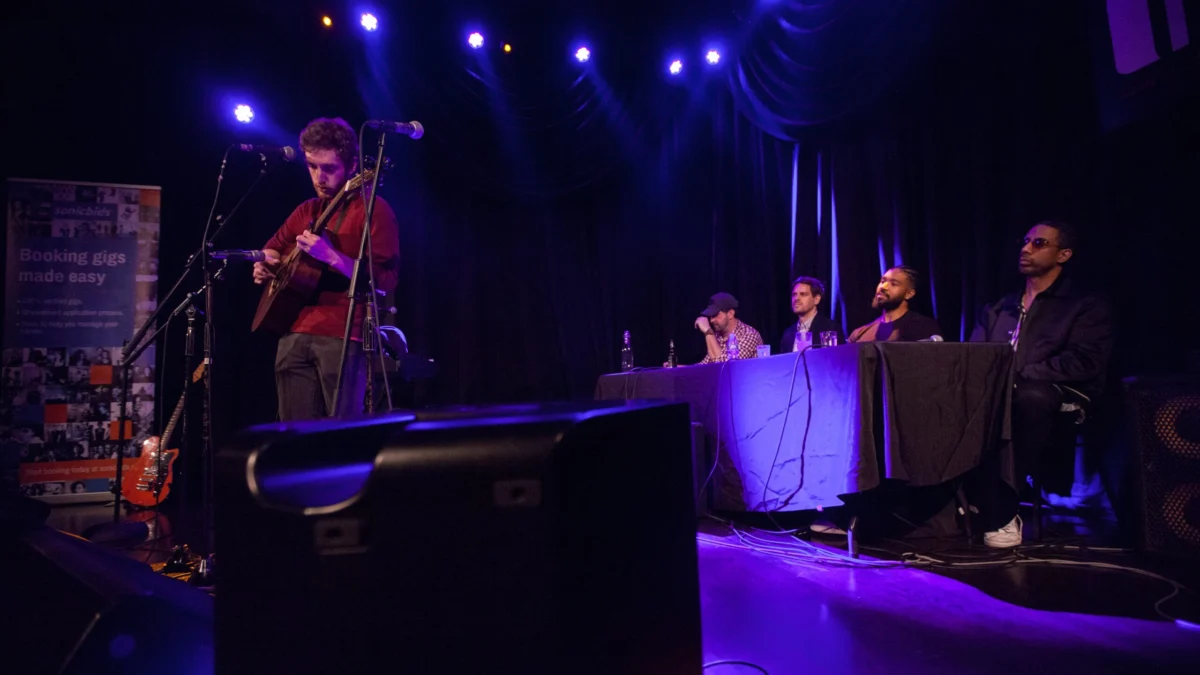
A significant trend in the industry is the movement toward artist-led workshops and jam sessions. Organizations such as Sonicbids have pioneered this approach through initiatives like the "Feedback Collective." These events, which include panel discussions and songwriting workshops, serve a dual purpose: they provide immediate skill acquisition while creating a low-pressure environment for professional introductions.
By hosting or participating in a structured jam session, an artist moves from a passive role to a leadership role within their local ecosystem. This facilitates a unique form of "demonstrative networking," where professional capabilities are showcased in real-time rather than described in a pitch. For instance, a rock guitarist collaborating with a jazz saxophonist in a workshop setting does more than create a "fusion" sound; they bridge two distinct professional networks. This cross-pollination often leads to shared billing on future performances, collaborative EP releases, and mutual recommendations for session work.
Chronologically, these community-led initiatives often follow a specific trajectory. They typically begin as informal gatherings, evolve into monthly "residencies" at local venues, and eventually attract sponsorship from local music retailers or digital platforms. This progression provides a timeline for an artist’s growth within their local market, establishing them as a "hub" in the creative network.
Digital Networking Beyond Mainstream Social Media
While platforms like Instagram and TikTok are essential for fan engagement, they are often less effective for deep professional collaboration due to their high noise-to-signal ratio. Consequently, independent musicians are gravitating toward specialized platforms like BandLab and SoundCloud, which are built around the mechanics of "work-in-progress" sharing.

The methodology for networking on these platforms is increasingly data-driven. Successful independent artists utilize these sites to identify "gaps" in their own production—such as a need for a specific vocal texture or a technical mixing skill—and seek out collaborators who demonstrate those specific competencies. Unlike the broad "broadcast" nature of mainstream social media, these platforms allow for "micro-networking," where the focus is on the technical and creative merit of the work itself.
Industry analysts note that remote collaboration has become a standard industry practice. The ability to contribute a track to a project in another country through a cloud-based Digital Audio Workstation (DAW) has democratized the session musician market. This digital-first networking strategy allows artists in smaller geographic markets to build a global professional resume without the immediate need for relocation to major music hubs like Nashville, London, or Los Angeles.
Strategic Volunteering and Industry Access Points
The concept of volunteering at music festivals and industry conferences is often viewed as a task for entry-level students, yet it remains one of the most potent networking strategies for active independent musicians. Festivals are high-pressure environments where the "who’s who" of the industry—event organizers, sound engineers, stage managers, and touring artists—are concentrated in a single location.
Working behind the scenes provides an "all-access" perspective that a standard ticket cannot offer. It allows an artist to observe the logistical requirements of high-level performance and, more importantly, to build rapport with the people who manage the stages. In the music industry, reliability and professional conduct are often valued as highly as musical talent. A musician who proves themselves to be a competent, hard-working volunteer is frequently the first person a talent buyer remembers when a last-minute opening appears on a festival lineup.
Statements from festival organizers often highlight that "the best artists to work with are those who understand the machinery of the event." By volunteering, an artist gains that understanding, effectively "de-risking" themselves in the eyes of future employers and collaborators.

Audience-Integrated Artist Development
The final pillar of modern networking involves the artist’s existing fanbase. The traditional "fourth wall" between artist and audience is being replaced by a more collaborative model. Independent musicians are increasingly using their fans as a focus group for networking decisions.
Through the use of polls, surveys, and direct engagement on platforms like Discord or Patreon, artists can identify which other musicians their audience is already listening to. This data allows the artist to approach potential collaborators with a pre-validated business case: "Our audiences have a 30% overlap, and my fans have specifically requested a collaboration."
This approach transforms the fan from a passive consumer into an active participant in the artist’s professional growth. It also leads to "organic networking," where a fan might facilitate an introduction to a local professional they know personally. This grassroots level of networking is often more resilient than top-down industry connections because it is rooted in genuine community interest.
Broader Impact and Industry Implications
The shift toward these five networking strategies has profound implications for the sustainability of the independent music sector. By diversifying their professional connections, musicians are creating a "safety net" that protects them from the volatility of a single revenue stream. A musician who is networked into the local art scene, the digital collaboration market, and the festival circuit is far more resilient than one who relies solely on streaming royalties or local bar gigs.
Furthermore, this collaborative ethos is fostering a more inclusive and diverse industry. Lateral networking bypasses many of the traditional barriers to entry that have historically marginalized certain voices. When artists build their own communities and workshops, they define the culture and the standards of their professional environment.

The long-term impact of this trend is likely to be a more decentralized music industry. As independent musicians become more adept at self-organized networking and multi-disciplinary collaboration, the necessity of the "traditional label" continues to diminish. The future of music appears to be an interconnected web of small, highly efficient creative cells that collaborate fluidly across geographic and genre boundaries.
In conclusion, for the independent musician, networking is an active, multifaceted discipline. It requires a departure from the "introverted creator" archetype and the adoption of a "creative entrepreneur" mindset. By embracing local art scenes, hosting workshops, utilizing niche digital tools, volunteering strategically, and involving their fanbase, musicians can build a professional infrastructure that is both creatively fulfilling and commercially viable. The transition from isolation to community is not merely a social move; it is a strategic imperative in the modern global music economy.
