

The contemporary music industry has undergone a radical transformation over the last decade, transitioning from a centralized model dominated by major labels to a decentralized ecosystem where independent artists now command a significant share of the global market. According to recent industry reports from MIDiA Research, the "artist direct" segment is the fastest-growing part of the recorded music business, with independent creators generating over $1.2 billion in annual revenue. However, this democratization of music production and distribution has led to an increasingly saturated marketplace where over 100,000 new tracks are uploaded to streaming platforms daily. In this environment, technical proficiency and creative talent are no longer sufficient for professional longevity; instead, the ability to build robust professional networks and foster cross-disciplinary collaborations has become the primary driver of career sustainability.
The Strategic Necessity of Networking in a Post-Gatekeeper Era
Historically, the path to musical success was gated by A&R executives and traditional media outlets. In the current landscape, these gatekeepers have been largely replaced by algorithms and community-driven discovery. Networking for the modern independent musician is not merely a social endeavor but a strategic business operation designed to bypass traditional barriers to entry. By forming alliances with other creatives, musicians can pool resources, share audiences, and reduce the overhead costs associated with production and marketing.
The evolution of music networking has moved through several distinct phases. In the pre-digital era, networking was localized and physical, revolving around record stores and regional venues. The early 2000s saw the rise of digital platforms like MySpace, which moved the needle toward global connectivity. Today, the industry exists in a hybrid state where digital presence must be anchored by tangible, real-world community engagement. This dual-pronged approach allows artists to maintain a global reach while benefiting from the high-trust environments of local scenes.

Cross-Pollination Through Local Interdisciplinary Events
One of the most effective, yet frequently overlooked, strategies for expanding a professional circle is engagement with the broader arts community beyond the music sector. While music-specific events are valuable, they often result in "echo chambers" where artists compete for the same attention. Conversely, local art galleries, theater productions, and poetry slams offer fertile ground for interdisciplinary synergy.
Data from urban development studies suggests that creative clusters—areas where diverse artistic disciplines coexist—experience higher rates of innovation. For an independent musician, a local art gallery opening represents an opportunity to meet visual artists who may require soundscapes for installations or graphic designers who can assist with album branding. Theater companies frequently require original compositions for productions, providing musicians with a "work-for-hire" revenue stream that simultaneously builds their portfolio. By positioning themselves as a sonic resource for other art forms, musicians can tap into pre-existing audiences that they might not have reached through traditional music venues alone.
The Role of Physical Workshops and Collaborative Spaces
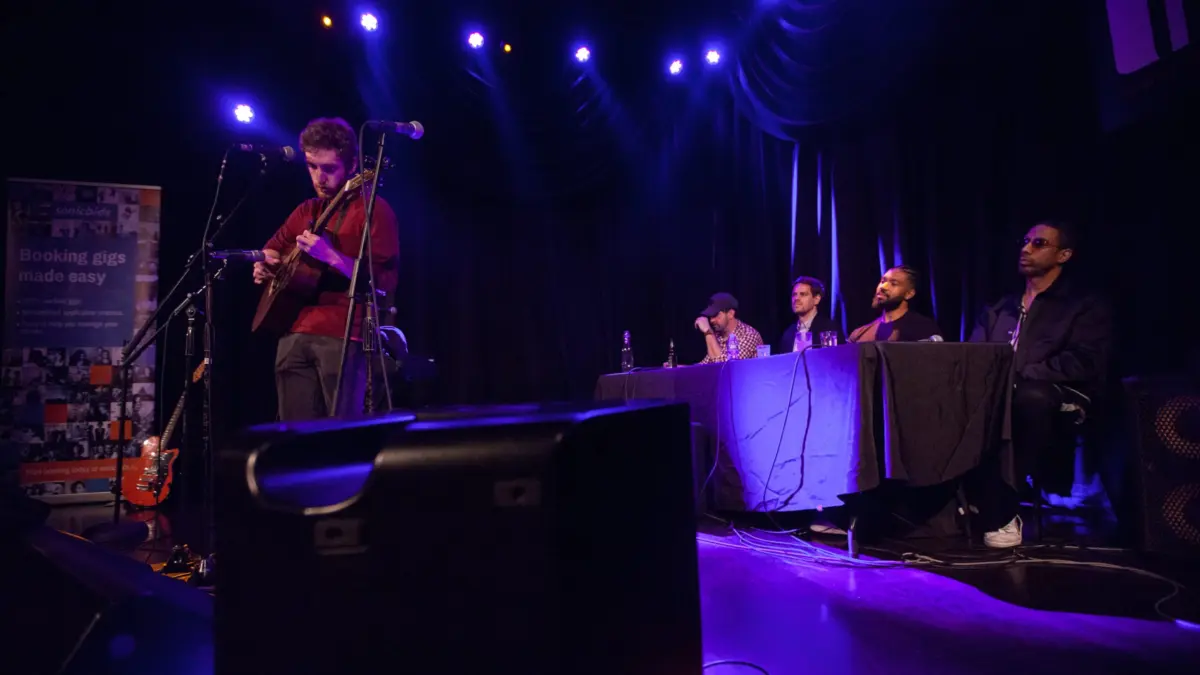
The rise of digital home recording has led to a paradoxical increase in the value of physical collaborative spaces. Organizations such as Sonicbids have recognized this need, facilitating initiatives like the "Feedback Collective." These panel discussions and songwriting workshops serve a dual purpose: they provide professional development while creating a low-stakes environment for networking.
The chronology of a successful collaboration often begins in these neutral "Third Spaces." A workshop setting removes the competitive pressure of a live performance, allowing artists to interact as peers rather than rivals. When a rock guitarist engages in a jam session with a jazz saxophonist or an electronic producer, the result is often the creation of a "hybrid genre," which is increasingly favored by streaming algorithms that prioritize unique, hard-to-categorize sounds. Furthermore, these sessions serve as a vetting process; artists can assess each other’s professional reliability and creative temperament before committing to more formal, high-stakes projects.

Leveraging Specialized Digital Platforms for Global Reach
While mainstream social media platforms like Instagram and TikTok are essential for audience engagement, they are often less effective for deep professional networking due to their focus on short-form, high-volume content. Professional musicians are increasingly turning to specialized platforms designed for collaboration, such as BandLab, SoundCloud, and Discord.
BandLab, for instance, has reported a massive surge in users, recently surpassing 60 million creators worldwide. The platform’s cloud-based digital audio workstation (DAW) allows musicians from different continents to collaborate on a single track in real-time. This digital pivot has changed the timeline of music production; a project can now be conceived, recorded, and mixed by a global team without a single member meeting in person.
From a journalistic perspective, the implication of this shift is the erosion of geographical advantages. An artist in a rural area can now achieve the same level of collaborative sophistication as one based in a major hub like Nashville or London, provided they utilize these platforms strategically. The key to success on these platforms is "active engagement"—moving beyond passive uploads to providing constructive feedback on others’ work, which builds social capital within the digital community.
Sweat Equity: The Professional Value of Festival Volunteering
Music festivals represent the apex of industry concentration, bringing together artists, booking agents, managers, and technical staff in a high-intensity environment. For many independent artists, the cost of attending these events as a guest or the difficulty of being booked as a performer can be prohibitive. Volunteering offers a strategic "backdoor" into these professional circles.

Industry analysts note that the "hidden job market" in music is vast; many tours, session slots, and management deals are brokered in the backstage areas of festivals. By volunteering, an artist gains access to these restricted areas and demonstrates a work ethic that is highly valued in the industry. The chronological progression for many successful indie artists includes a period of "sweat equity," where they built their reputation by assisting at events like SXSW, Treefort Music Fest, or local regional festivals. This immersion allows them to observe the logistical side of the industry, which is crucial for managing their own careers as they scale.
The Direct-to-Fan Economy and Collaborative Crowdsourcing
The final pillar of modern networking involves the artist’s own fanbase. The "1,000 True Fans" theory, popularized by Kevin Kelly, posits that an artist does not need mainstream stardom to be successful; they only need a dedicated core audience. In the current economy, fans are no longer passive consumers; they are active participants and potential connectors.
Independent musicians are increasingly using tools like Patreon and Discord to involve their fans in the creative process. By conducting polls on potential collaborators or asking fans for introductions to local venues and influencers, artists can leverage the collective networking power of their audience. This creates a feedback loop where the fan feels a sense of ownership in the artist’s success, leading to higher retention rates and more organic word-of-mouth marketing.
Analysis of Long-Term Implications
The shift toward a networking-heavy independent model has profound implications for the future of the music industry. First, it is leading to a more resilient "middle class" of musicians who, while not household names, earn a sustainable living through a diversified portfolio of collaborations, live performances, and digital streams.

Second, the emphasis on community over competition is fostering a more inclusive industry. By engaging with local art scenes and volunteering at festivals, artists from marginalized backgrounds can build the social capital necessary to overcome systemic barriers.
However, there is a potential risk: the "networking fatigue" that can arise from the constant need to be "on." Professional analysis suggests that the most successful artists are those who balance their networking efforts with periods of creative isolation. The goal is not to be everywhere at once, but to be present in the right spaces—those that align with the artist’s long-term brand and creative vision.
Conclusion
Networking and collaboration are no longer optional "soft skills" for the independent musician; they are the fundamental components of a modern business strategy. Whether through the cross-pollination of local art events, the community-building power of workshops like the Feedback Collective, or the global reach of digital platforms, the avenues for connection are more numerous than ever before.
By adopting a professional, journalistic approach to their careers—focusing on data-driven decisions, strategic alliances, and community engagement—independent artists can navigate the complexities of the digital age. The transition from a solitary creator to a community-focused collaborator is often the defining moment in an artist’s professional trajectory. As the industry continues to evolve, those who view networking as an adventure in creativity rather than a chore will be the ones best positioned to amplify their voice and achieve lasting success in the global musical landscape.
