

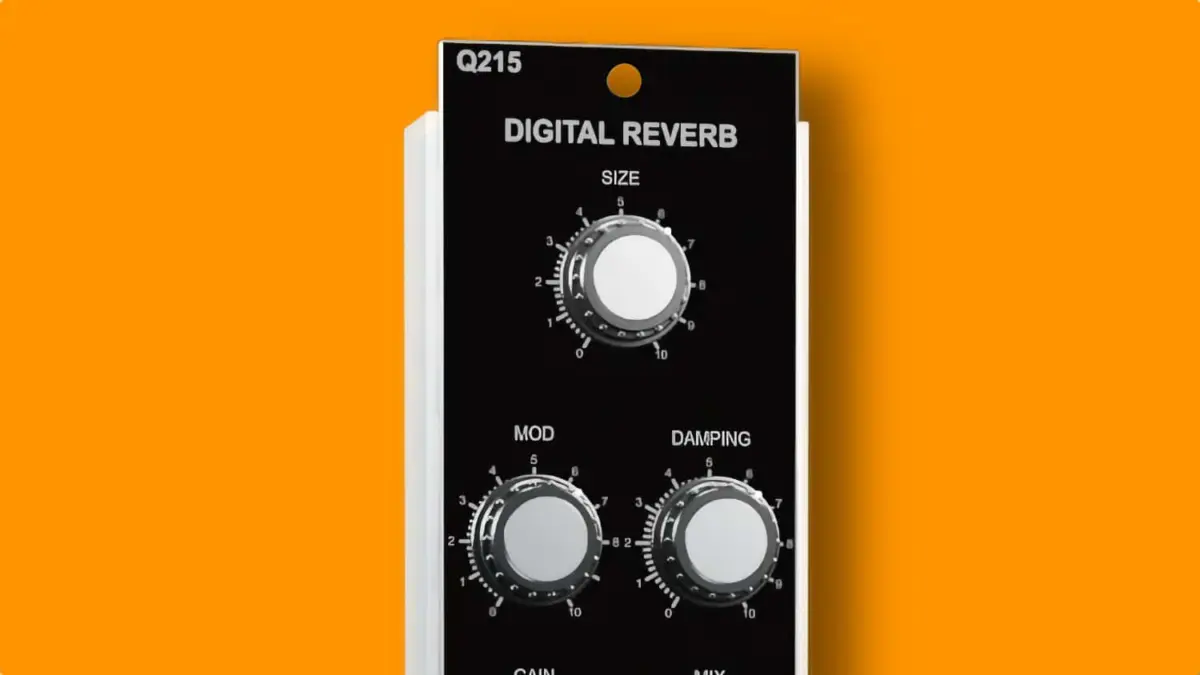
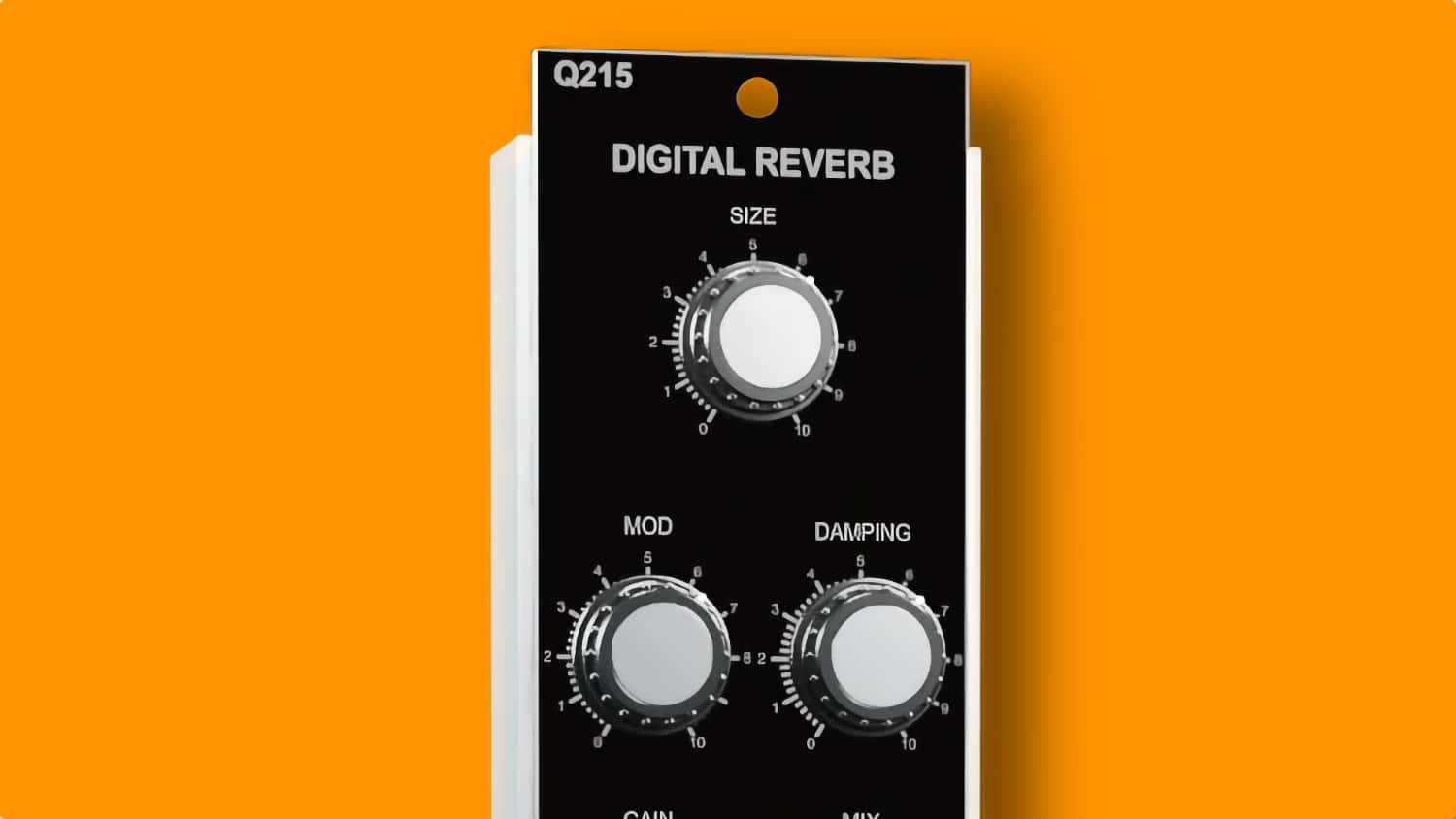
Synthesizers.com, a leading manufacturer in the large-format modular synthesizer market, has officially announced the release of the Q215 Digital Reverb, a sophisticated multi-mode stereo effects processor designed specifically for the MU (Moog Unit) format. This latest addition to the company’s extensive catalog represents a strategic fusion of modern digital signal processing (DSP) and the classic aesthetic and tactile requirements of 5U modular systems. The Q215 is engineered to provide a diverse palette of spatial effects, ranging from pristine modern environments to "period-accurate" vintage emulations, addressing a long-standing demand for high-quality, integrated stereo reverberation within the MU ecosystem.
The Q215 Digital Reverb distinguishes itself through its adherence to historical sonic characteristics, utilizing variable sample rates to replicate the specific textures of early digital hardware. A primary highlight of the module is its "Abstract Large Hall" algorithms, which are intentionally capped at a 32kHz sample rate. This technical choice is designed to capture the "dark and gritty" tonal quality associated with late 1970s and early 1980s digital reverb units, where limited bandwidth and lower sampling frequencies contributed to a signature warmth and harmonic complexity that modern, high-fidelity processors often lack.
Technical Specifications and Connectivity
The architecture of the Q215 is built to accommodate the rigorous signal requirements of a professional modular environment. While many digital reverb modules are designed for the lower voltage levels of Eurorack or consumer audio, the Q215 is fully compatible with the standard +/-5V signal levels typical of MU systems. Furthermore, the inclusion of a dedicated onboard gain control allows the module to interface seamlessly with line-level instruments, such as external drum machines, polyphonic synthesizers, and studio consoles.
Connectivity is a core feature of the Q215, offering flexible input and output configurations. The module accepts either a mono or stereo input and produces a full stereo output, allowing users to transform monophonic oscillator sources into expansive, three-dimensional soundscapes. The internal signal path includes sufficient headroom for clean processing, but the gain stage is specifically tuned to allow for "musical clipping." When pushed beyond its nominal ceiling, the module introduces a subtle saturation that complements the digital algorithms, providing an extra layer of character for industrial, ambient, or experimental sound design.
A Diverse Array of Algorithms
The Q215 Digital Reverb is equipped with ten distinct algorithms, each curated to cover a specific niche in the spatial processing spectrum. By providing a broad selection of environments, Synthesizers.com ensures that the module serves as a utilitarian "workhorse" for the studio.
- Abstract Large Hall (Mode A & B): These modes utilize the aforementioned 32kHz sample rate. They are designed for massive, evolving decays with a rolled-off high-end frequency response, mimicking the behavior of early digital rack units used in avant-garde and cinematic productions.
- Standard Hall: A high-fidelity representation of a concert hall, offering balanced reflections and a natural decay suitable for orchestral or melodic patches.
- Plate Reverb: This algorithm emulates the mechanical vibrations of a large metal sheet. It provides the dense, bright, and fast-acting diffusion required for percussion and lead synth lines.
- Room Emulation: Designed for shorter decay times, this mode adds "air" and localized space to a sound without washing out the original signal, ideal for creating realistic acoustic environments.
- Spring Reverb: A digital recreation of the classic electromechanical spring tanks found in vintage guitar amplifiers and early synthesizers. It captures the characteristic "boing" and metallic resonance of physical springs.
- Shimmer: A modern algorithm that adds pitch-shifted octaves into the reverb tail, creating a lush, ethereal, and "orchestral" shimmer effect popular in ambient music.
- Gated Reverb: Primarily used for percussion, this mode cuts the reverb tail abruptly, recreating the iconic 1980s drum sound.
- Reverse Reverb: This algorithm processes the input and plays the reflections backward, creating a swelling, psychedelic effect that precedes the dry signal.
- Non-Linear: A specialized mode that ignores traditional natural decay patterns, providing unique, geometric spatial textures for sound designers.
Historical Context and the MU Format
The release of the Q215 comes at a pivotal moment for the 5U/MU modular format. Originally popularized by the Moog modular systems of the 1960s and 70s, the format is defined by its large 1/4-inch jacks, expansive front panels, and robust build quality. Synthesizers.com, founded by Roger Arrick, has been the primary torchbearer for this format since the late 1990s, providing an affordable and accessible alternative to the vintage Moog hardware.
For many years, the MU market was dominated by analog modules—oscillators, filters, and envelopes. Digital integration was often viewed with skepticism by purists. However, as the modular community has evolved, the need for high-quality digital end-of-chain effects has become undeniable. The Q215 represents the "third generation" of digital integration within the Synthesizers.com catalog, following in the footsteps of their previous digital oscillators and utility modules. By focusing on "period-accurate" DSP, the company bridges the gap between the tactile, analog experience of a large-format rack and the versatile convenience of modern digital algorithms.
Chronology of Development and Availability
The development of the Q215 was reportedly driven by user feedback within the "Dotcom" (a common nickname for Synthesizers.com) community. Many users had previously relied on external rack-mounted effects or pedals, which often required impedance-matching modules or external mixers. The goal of the Q215 was to bring this functionality "in-the-box," maintaining the aesthetic uniformity of the MU rack while simplifying the signal path.
Synthesizers.com officially opened pre-orders for the Q215 in October 2026. The company has maintained a consistent production schedule, with the first batch of units expected to ship to customers by the end of November 2026. Priced at $379 USD, the module is positioned as a mid-to-high-tier investment, consistent with the pricing of other complex DSP modules in the 5U market.
Market Impact and Industry Reaction
Industry analysts suggest that the Q215 could signal a broader trend of "hybridization" in the boutique modular market. While Eurorack has long embraced digital technology, the 5U community has traditionally been more conservative. The success of the Q215 may encourage other MU manufacturers, such as Moon Modular or Club of the Knobs, to expand their digital offerings.
Early reactions from professional sound designers and modular synthesists have been largely positive. "The inclusion of a 32kHz mode shows a deep understanding of what modular users actually want," says one independent reviewer. "We don’t always want ‘perfect’ audio; we want character. By giving us the grit of early digital conversion alongside the headroom of the MU format, Synthesizers.com has created something that feels like an instrument rather than just an effect."
Furthermore, the Q215’s ability to handle line-level signals makes it an attractive option for studio owners who may not own a full modular system but wish to use the Q215 as a standalone "character" processor in a small desktop enclosure. This cross-market appeal is likely a deliberate move by Synthesizers.com to expand its customer base beyond traditional modular hobbyists.
Broader Implications for Sound Design
The introduction of the Q215 Digital Reverb highlights the ongoing evolution of spatial processing in electronic music. In the early days of synthesis, reverb was an afterthought, often added during the mixing stage using expensive studio plates or chambers. With the advent of modules like the Q215, reverb becomes an integral part of the synthesis patch itself.
Because the Q215 can be modulated and placed anywhere in the signal chain, it allows for "compositional reverb." For instance, a user could place the reverb before a resonant filter to "filter the space," or use the gain control to distort the reverb tails independently of the dry signal. This level of integration encourages a more experimental approach to acoustics, where the "room" becomes as much a part of the instrument as the oscillator.
As the modular synthesis market continues to grow, the Q215 Digital Reverb stands as a testament to the enduring relevance of the 5U format. It proves that there is still significant room for innovation within the classic "Moog-style" framework, provided that manufacturers are willing to blend the best of vintage character with the flexibility of modern technology. With its robust feature set, period-accurate algorithms, and competitive pricing, the Q215 is poised to become a staple component in MU systems worldwide.
