

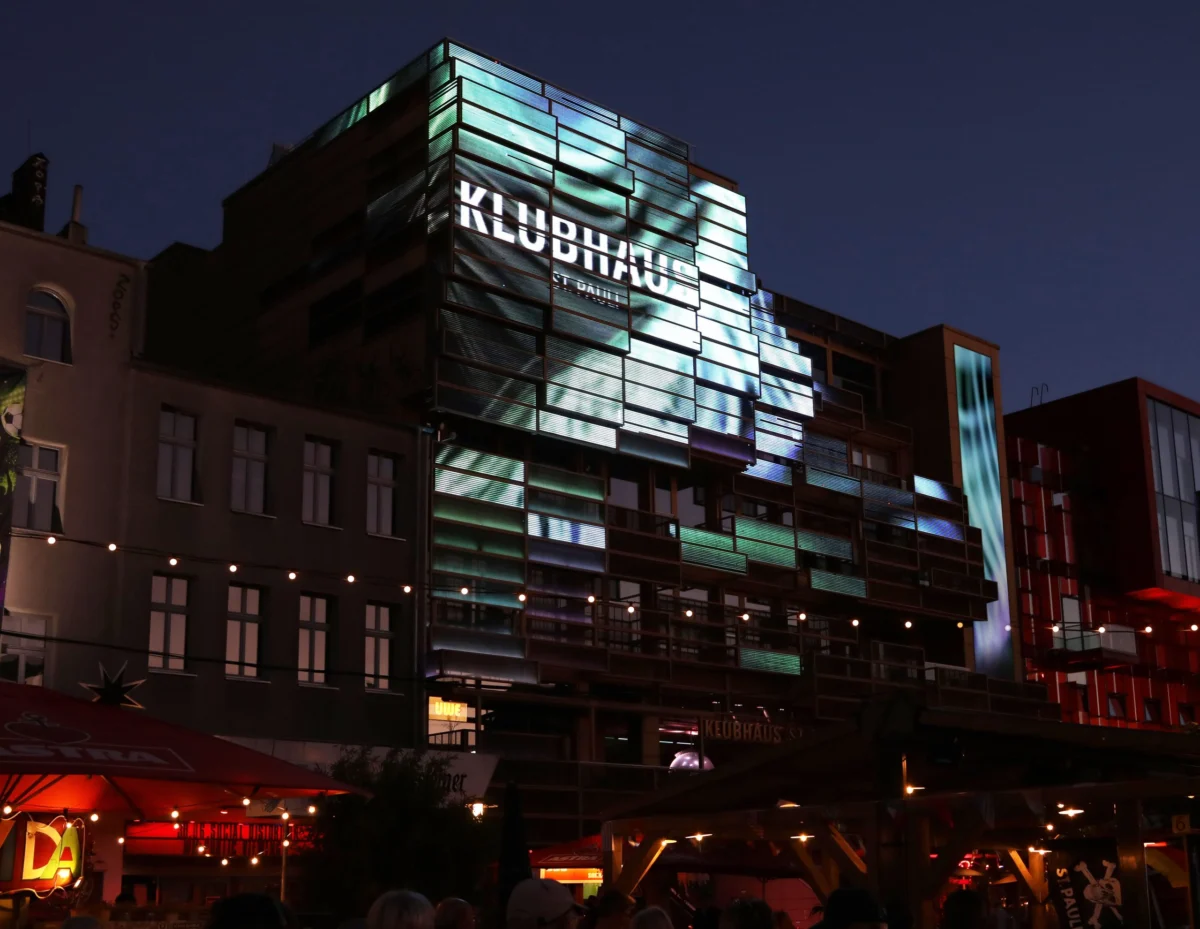
The landscape of urban entertainment and digital media architecture is set to take center stage this autumn as the LEAT con 26 convention prepares to host an exclusive technical tour of the Klubhaus St. Pauli. Situated in the heart of Hamburg’s world-famous Reeperbahn district, the Klubhaus St. Pauli serves as a premier example of how modern technology can be integrated into a multi-story entertainment complex to create a landmark of international significance. On October 7, 2026, from 18:30 to 19:30, professional visitors and industry experts will be granted rare access to the inner workings of this facility, specifically focusing on its record-breaking media facade and the sophisticated backend systems that power its visual displays.
The tour, which is organized as an external highlight of the LEAT con 26 program, aims to bridge the gap between theoretical trade fair discussions and real-world application. As the event technology industry increasingly moves toward sustainable solutions and interactive content, the Klubhaus St. Pauli stands as a case study in the successful deployment of high-efficiency LED technology and real-time content management. The centerpiece of this exploration is the recently updated "Green Signage" LED system, installed in the summer of 2026 by the specialist firm Innlights, which has set new standards for energy-conscious digital out-of-home (DOOH) media.
The Architectural and Cultural Significance of Klubhaus St. Pauli
Since its inauguration, the Klubhaus St. Pauli has redefined the visual identity of the Spielbudenplatz. The building is not merely a venue but a vertical ecosystem of entertainment, housing six floors of diverse venues including music clubs, theaters, offices, and bars. However, its most striking feature is undoubtedly the media facade, which covers a total area of approximately 700 square meters. This facade is unique because it is not a flat screen but a three-dimensional, architecturally integrated installation that uses light to accentuate the building’s geometry while serving as a canvas for digital art and commercial content.
For the LEAT con 26 technical tour, the focus shifts from the aesthetic to the structural and electronic. The building’s facade is composed of several distinct zones, including high-resolution LED panels, light-transparent metal mesh, and integrated lighting strips. This complexity requires a highly sophisticated control system to ensure that content remains synchronized across different media types and resolutions. The tour will provide attendees with a comprehensive understanding of how these disparate elements are harmonized into a single, cohesive visual experience.
Technical Evolution: The Transition to Green Signage
A major focal point of the 2026 tour is the recent technological overhaul of the facade’s LED components. In the summer of 2026, the venue underwent a significant upgrade to "Green Signage" LEDs provided by Innlights. This move reflects a broader industry trend toward environmental responsibility and operational efficiency. Digital facades of this scale are notoriously energy-intensive; however, the new Innlights modules utilize advanced driver chips and high-efficiency diodes that significantly reduce power consumption without compromising brightness or color accuracy.
Data provided by the technical management of the Klubhaus indicates that the new system achieves up to a 35% reduction in energy usage compared to the previous generation of LEDs. This is achieved through improved thermal management—reducing the need for active cooling—and intelligent power supply units that adjust output based on ambient light conditions and content brightness. For professionals attending the tour, the opportunity to inspect these modules and the server-side power management systems provides valuable insight into the ROI of sustainable technology in the Pro AV sector.
Exclusive Access to the Nerve Center: Server Rooms and Playback Technology
The technical tour is designed to go beyond the surface level, literally taking "Backstage Pass" holders into the server rooms that act as the brain of the Klubhaus St. Pauli. Managing a 700-square-meter facade requires more than just high-end graphics cards; it requires a robust network infrastructure capable of handling massive data throughput with zero latency.
Participants will observe the playback technology used to drive the facade, which includes redundant media server clusters and specialized signal processing hardware. One of the highlights of the tour is the demonstration of the intermediaPRISM platform. This software-hardware ecosystem allows for seamless content scheduling and, more importantly, real-time interactivity. During the tour, visitors will be given the unique opportunity to interact with the facade themselves, using the intermediaPRISM interface to manipulate live visuals. This hands-on experience demonstrates the shift from passive digital signage to active, participatory media environments.
The signal chain—from the media server through the fiber optic distribution network to the individual LED receiving cards—will be explained in detail by the technical staff. This level of transparency is rare in the industry and is intended to foster a deeper understanding of the challenges associated with large-scale outdoor installations, such as weatherproofing, signal degradation over long distances, and the maintenance of color consistency across thousands of individual LED tiles.
LEAT Con 26: Context and Timeline of the Event
The tech tour at Klubhaus St. Pauli is a strategic component of LEAT con 26 (Live Entertainment and Technology Convention), which has established itself as a leading trade fair for the event industry in Northern Europe. The 2026 edition of the convention is particularly focused on the integration of permanent installations with temporary event technology, a field known as "Architainment."
The timeline for the tour is as follows:
- 18:30: Gathering of Backstage Pass holders at the main entrance of Klubhaus St. Pauli.
- 18:40: Introduction to the architectural concept and the history of the media facade.
- 18:55: Split-group sessions: Group A visits the server rooms and playback hub, while Group B examines the external LED structures and "Green Signage" hardware.
- 19:15: Interactive session with intermediaPRISM, allowing participants to trigger content on the Reeperbahn-facing facade.
- 19:30: Transition to the networking segment, featuring drinks and an open Q&A with the technical directors and representatives from Innlights.
This schedule is designed to maximize the one-hour window, providing a high-density transfer of information followed by an informal networking opportunity. By hosting the event in the evening, the organizers ensure that the facade is visible in its full luminous glory, providing the best possible conditions for evaluating the technology.
Industry Implications and Technical Analysis
The tour of the Klubhaus St. Pauli highlights several critical shifts in the global Pro AV and event technology markets. First, the emphasis on "Green Signage" underscores the growing regulatory and social pressure on venue operators to reduce their carbon footprint. In cities like Hamburg, where urban light pollution and energy consumption are under constant scrutiny, the ability to operate a massive media facade sustainably is a prerequisite for long-term viability.

Second, the move toward interactivity, as seen with the intermediaPRISM integration, reflects a change in how brands and venues engage with the public. The Reeperbahn is a high-traffic area with a diverse demographic; by allowing for real-time interaction, the Klubhaus transforms from a static building into a dynamic participant in the street life of St. Pauli. For event technologists, the challenge lies in creating the low-latency infrastructure that makes this interaction feel instantaneous and fluid.
Furthermore, the tour addresses the logistical realities of maintaining a high-profile installation in a harsh urban environment. The salt air of the nearby Hamburg harbor, combined with the vibrations and dust of a busy metropolitan thoroughfare, necessitates a rigorous maintenance schedule and highly durable components. The technical tour will touch upon the mechanical engineering aspects of the facade, including the mounting systems and the accessibility for repairs, which are often overlooked in the design phase but are crucial for the lifecycle of the project.
Official Responses and Expert Perspectives
While the tour is a technical showcase, it also serves as a meeting point for the minds behind the project. Representatives from the Klubhaus St. Pauli management have noted that the 2026 upgrade was not just about aesthetics but about future-proofing the venue against rising energy costs and evolving technological standards. They emphasize that the collaboration with Innlights and the use of the intermediaPRISM system have allowed them to maintain their position as a technological leader on the Reeperbahn.
Technical experts from LEAT con have expressed that off-site tours like the one at Klubhaus are essential for professional development. They argue that seeing the hardware in a "stressed" real-world environment—exposed to the elements and operating for hours on end—provides a much more realistic assessment of performance than a controlled demonstration on a trade fair floor. The feedback from previous years suggests that these tours are often the most highly rated segments of the convention, as they provide tangible examples of problem-solving in complex installations.
Conclusion and Networking Opportunities
As the technical tour concludes at 19:30, the event transitions into a networking reception. This segment of the evening is vital for the exchange of ideas between manufacturers, system integrators, and venue operators. In the informal setting of the Klubhaus, participants can discuss the implications of what they have seen, share their own experiences with similar technologies, and forge new professional connections.
The requirement of a "Backstage Pass" for entry ensures that the audience consists of dedicated professionals, facilitating a high level of technical discourse. For the attendees of LEAT con 26, the visit to the Klubhaus St. Pauli is more than just a site visit; it is an immersion into the future of urban media architecture, where sustainability, interactivity, and high-performance engineering converge. As Hamburg continues to evolve as a hub for digital innovation, the Klubhaus St. Pauli remains at the forefront, proving that even in the most historic of districts, there is always room for cutting-edge technology.
