

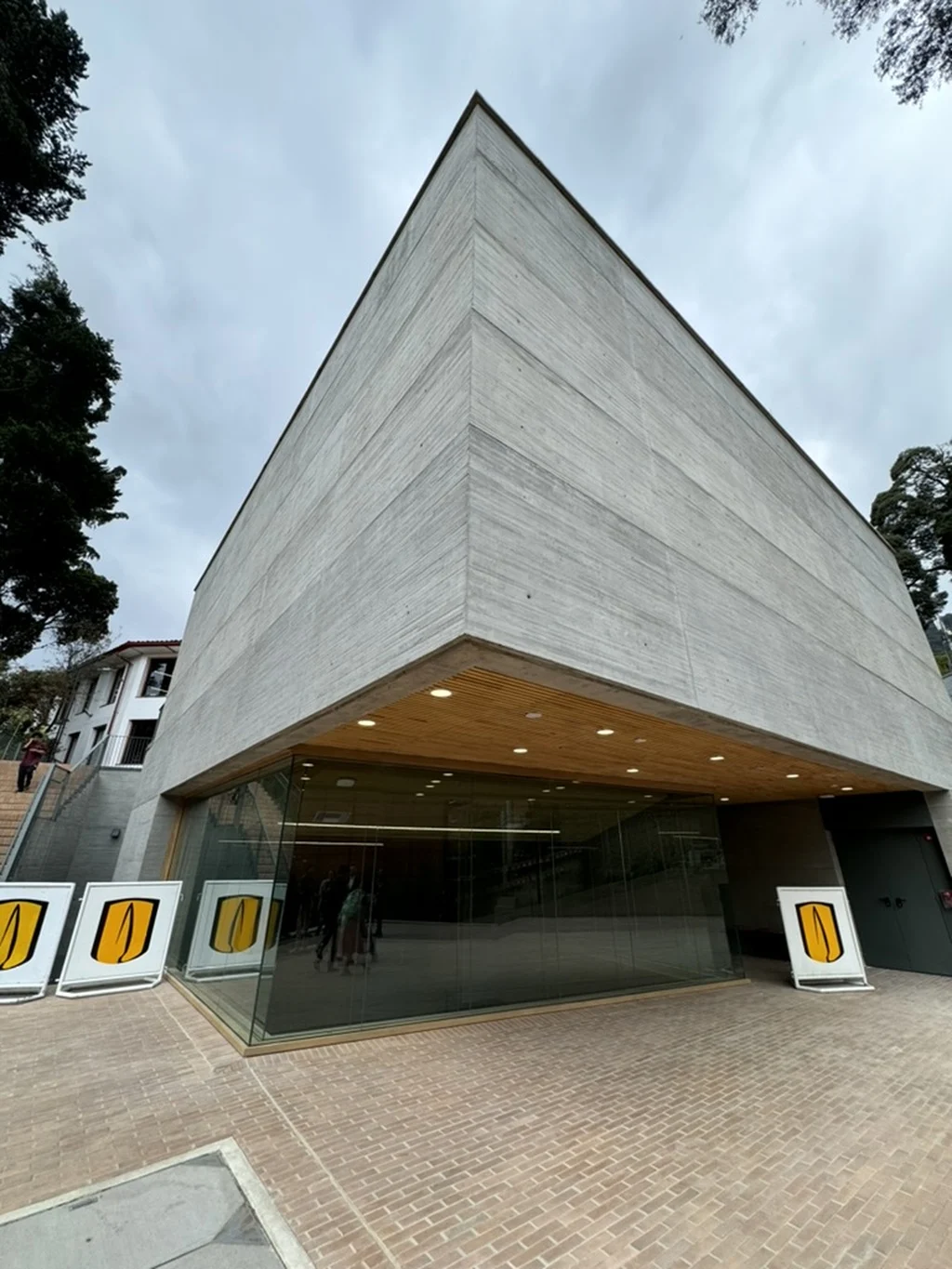
The Universidad de los Andes in Bogotá, Colombia, has officially inaugurated its highly anticipated music practice, recording, and film sound facility, "La Caja de Música" (The Music Box), marking the culmination of a rigorous seven-year development cycle. This landmark project represents a significant leap forward for South American higher education, merging avant-garde architectural design with world-class acoustic engineering. The facility was designed through a unique collaboration between the international acoustics and AV consultancy firm Walters-Storyk Design Group (WSDG) and a team of the university’s own alumni, who won a prestigious architectural competition to lead the project. By integrating professional-grade recording environments with flexible educational spaces, the university has established a new benchmark for audiovisual pedagogy in the region.
A Seven-Year Journey: Chronology of Development
The genesis of La Caja de Música dates back to 2018, when the Universidad de los Andes launched an ambitious architectural competition. In a move designed to foster the talent of its own community, the university restricted entries to young graduates of its architecture program. The winning proposal was submitted by Carolina Jaimes, Juan López, and Alejandro Puentes, whose vision centered on a "hub" concept that would serve as both a sanctuary for sound and a transparent window into the creative process.
Following the selection of the architectural team, the university sought out WSDG to ensure the facility met the exacting standards required for professional music production and film scoring. WSDG was uniquely qualified for the role, having previously executed high-profile technical builds in Colombia for the Universidad Javeriana in Bogotá and the Universidad ICESI in Cali. Initially brought on as part of the evaluation committee, WSDG was subsequently commissioned to handle the comprehensive building acoustics, room acoustics, AV systems design, and technical interior design.
From 2019 through 2025, the project moved through intensive phases of site analysis, structural engineering, and acoustic modeling. The construction required a delicate balance: the facility needed to be physically isolated from the vibrations and noise of a bustling urban campus while maintaining the open, light-filled aesthetic envisioned by the architects. The final inauguration in July 2026 marks the successful realization of this vision, providing students with a professional environment that rivals the world’s leading commercial studios.
Architectural Innovation: The Central Live Room
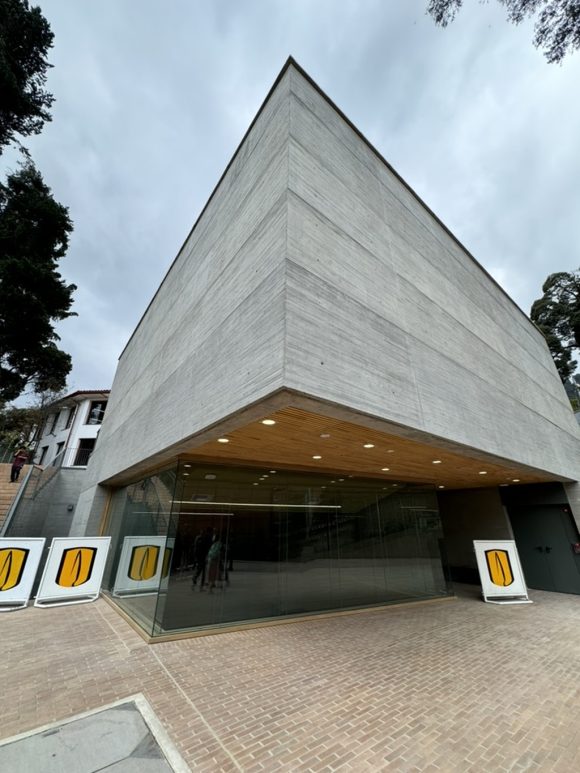
At the heart of La Caja de Música is a three-story, 130-square-meter live room designed for maximum multifunctionality. This space serves as a high-end recording environment, a rehearsal hall for large ensembles, and a venue for public performances and lectures. The architectural centerpiece of the room is an expansive glass facade that looks out onto a public courtyard, a feature that presented a formidable challenge for the acoustic team.
To address the potential for noise leakage from the campus and internal reflections from the glass, WSDG implemented a sophisticated "room-in-room" construction. This method involves decoupling the internal studio structure from the main building shell using high-performance vibration isolators and floating floors. This isolation ensures that even during peak campus activity, the noise floor within the live room remains at professional recording standards.
The room’s acoustic signature is further refined by variable acoustic elements. Motorized acoustic banners and movable wall panels allow the space to be "tuned" in real-time. For speech-heavy applications like lectures or intimate vocal recordings, the banners can be deployed to absorb sound and reduce reverberation. Conversely, for orchestral recordings or choral performances, the surfaces can be adjusted to provide a lush, musical ambiance. Additionally, the room features retractable seating, allowing it to transition seamlessly from a recording studio to a 100-plus seat performance venue.
Technical Excellence: Dolby Atmos and Film Sound Integration
Beyond the central live room, La Caja de Música houses an array of specialized technical spaces designed to prepare students for the modern media landscape. The primary control room, designed by WSDG, is engineered to support both traditional stereo and immersive Dolby Atmos workflows. The room is equipped with a high-precision monitoring system from Adam Audio, providing the critical accuracy needed for mixing and mastering.
Acoustic treatment in the control room includes custom-engineered diffusers and bass traps integrated into the walls and ceiling. These elements are designed to achieve an NC20 (Noise Criteria) standard, ensuring that background noise from HVAC systems or external sources is virtually imperceptible. This level of silence is critical for the nuances of high-resolution digital recording.

On the upper floor, the facility features a dedicated Dolby Atmos film sound theater. This space includes a specialized ISO booth for ADR (Automated Dialogue Replacement) and Foley recording, as well as tiered cinema seating. The theater allows students to work with object-based audio formats, positioning sounds in a three-dimensional space—a skill that is increasingly in demand within the global film and gaming industries. Santiago Lozano, Director of the Music Department at the Universidad de los Andes, emphasized that this theater enables the university to produce audio for film and audiovisual projects at the highest professional level, effectively bridging the gap between academic study and industry requirements.
Technical Interior Design and Infrastructure
One of the most complex aspects of the project was the integration of technical infrastructure into the building’s irregular architectural forms. The ceilings, in particular, were designed with non-parallel surfaces to prevent standing waves and control low-frequency energy. WSDG worked closely with the architects to hide lighting, air conditioning, and miles of AV cabling within these geometric structures, maintaining a clean, minimalist aesthetic without compromising technical performance.
The AV infrastructure is built on a high-speed digital network, allowing for low-latency audio and video routing between the live room, control rooms, and isolation booths. This interconnectedness means that a performance in the live room can be recorded simultaneously in the Atmos suite or streamed live to other parts of the campus.
Sergio Molho, Senior Partner and Co-CEO of WSDG, noted that the project required a high level of coordination. "The university wanted us to safeguard the acoustic criteria from the very beginning," Molho explained. "We had to ensure the finished facility met the highest technical standards without diluting the architects’ vision. This involved adhering to strict professional studio standards while also accounting for the heavy-duty usage patterns of an educational institution."
Economic and Cultural Implications for the Region
The opening of La Caja de Música is expected to have a ripple effect across Colombia’s creative economy. By providing students with access to industry-standard technology, the Universidad de los Andes is positioning its graduates to enter the international market for film scoring, sound design, and music production.
In recent years, Colombia has emerged as a hub for media production in Latin America, aided by government incentives and a growing pool of technical talent. The presence of a world-class training facility like La Caja de Música further solidifies Bogotá’s reputation as a center for the "Orange Economy" (creative industries). The facility is not only a boon for students but also a potential resource for professional local and international artists seeking a high-end recording destination in South America.
Furthermore, the project demonstrates the viability of "alumni-driven" architecture. By trusting former students with a multi-million dollar project, the university has created a powerful case study in institutional loyalty and professional mentorship. The success of Jaimes, López, and Puentes provides an inspiring roadmap for current students in the architecture and music programs.
Conclusion: A Legacy of Sound and Vision
La Caja de Música stands as a testament to the power of integrated design. It is a rare example of a building where the physics of sound dictated the architecture as much as the aesthetic vision of the designers. For the Universidad de los Andes, the facility represents a long-term investment in the future of the arts.
As the facility begins its first full academic year, it will host a diverse range of activities—from student recitals and experimental electronic music sessions to professional film scoring dates. The combination of WSDG’s technical precision and the alumni architects’ creative daring has resulted in a space that is as functional as it is beautiful. In the competitive landscape of global higher education, La Caja de Música provides the Universidad de los Andes with a distinctive edge, ensuring that the next generation of Colombian sound engineers and musicians is heard clearly on the world stage.
