

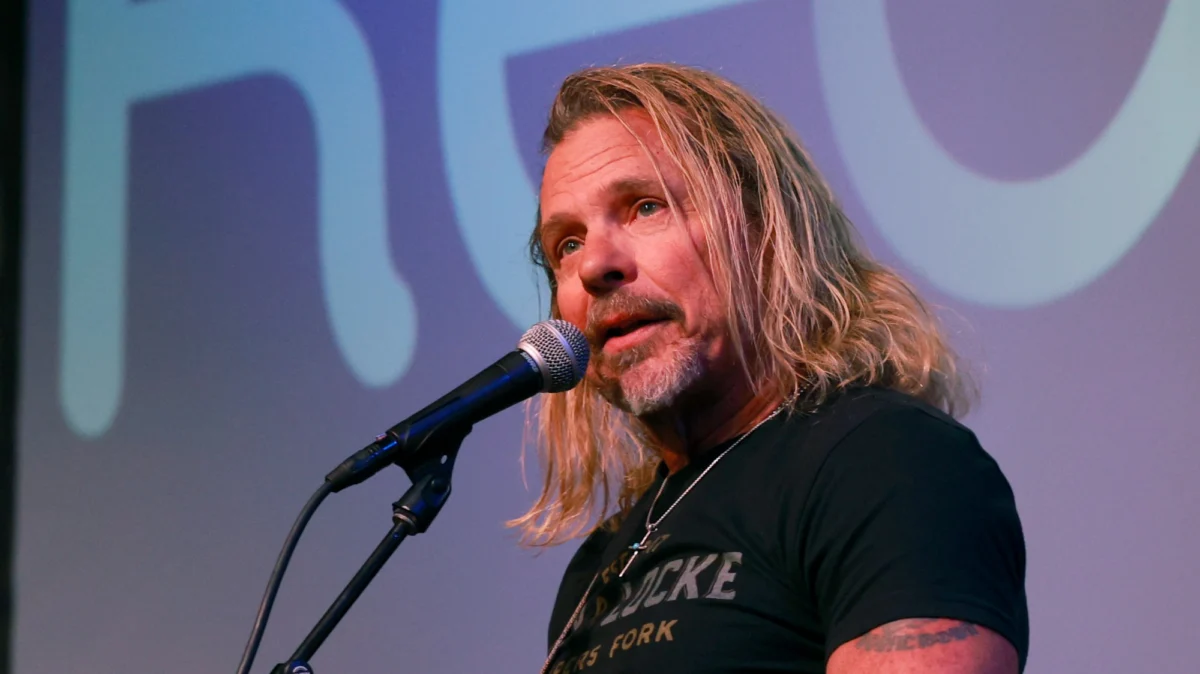
The trajectory of modern country music over the past three decades cannot be fully mapped without acknowledging the profound influence of Jeffrey Steele, a songwriter, performer, and musician whose work has defined the sound of Nashville since the mid-1990s. Born on August 27, 1961, in Burbank, California, Steele’s journey from a young performer in the rock clubs of the Sunset Strip to a cornerstone of the Nashville Songwriters Hall of Fame is a testament to the enduring power of versatile musicianship and poignant storytelling. While his early career was marked by his role as a frontman and recording artist, it was his transition to a professional songwriter that cemented his status as one of the industry’s most prolific and successful creators. With over 500 songs recorded by major artists and more than 100 singles to his credit, Steele’s impact on the genre is both statistically significant and culturally pervasive.
Early Life and the Duality of Musical Influence
Jeffrey Steele’s musical foundation was laid long before he arrived in Tennessee. Raised in a musical household in Southern California, Steele was exposed to a diverse array of genres that would later inform his genre-blending songwriting style. He made his professional debut at the age of eight, appearing as a guest vocalist with his brother’s band during a church event. This early exposure to the stage ignited a lifelong passion for performance that saw him navigating two very different musical worlds during his formative years.
As a teenager in the 1970s and early 1980s, Steele balanced the high-energy rock scene of Hollywood’s Sunset Strip with the traditional country circuits of the San Fernando Valley. He performed as a keyboardist for various rock outfits while simultaneously serving as a multi-instrumentalist sideman for country acts. This duality—the raw energy of rock and the narrative focus of country—became the hallmark of the "Steele sound." His ability to infuse country lyrics with a melodic sensibility often found in pop and rock allowed him to stand out as the Nashville sound began to evolve at the turn of the millennium.
The Boy Howdy Era and the Shift to Nashville
In 1990, Steele co-founded the country band Boy Howdy alongside brothers Cary and Larry Park and drummer Hugh Wright. The group quickly gained traction, blending West Coast country-rock with contemporary production. By 1992, they had secured a recording contract with Curb Records and released their debut album, Welcome to Hollywood. The band achieved significant commercial success in 1993 with two top-10 hits on the Billboard Hot Country Songs chart: “She’d Give Anything” (which peaked at No. 4) and “They Don’t Make ‘Em Like That Anymore” (No. 10).
Steele’s role as the primary songwriter for Boy Howdy foreshadowed his future success. Both of the band’s major hits earned him BMI Awards, signaling his potential as a writer who could connect with a broad audience. However, despite the band’s success, Steele felt a pull toward the epicenter of the songwriting world. In 1994, he relocated to Nashville, a move that would fundamentally alter his career. When Boy Howdy disbanded in 1996, Steele was faced with a choice: pursue another recording contract or focus entirely on the craft of songwriting. While he did embark on a solo career, releasing seven albums between 2001 and 2008 and scoring a top-40 hit with “Somethin’ in the Water” in 2001, it was behind the scenes where his greatest contributions would be made.
Defining the 2000s Country Sound: Key Collaborations
The late 1990s and early 2000s represented a transformative period for country music, as the genre moved toward a more polished, radio-friendly "stadium country" sound. Jeffrey Steele was a primary architect of this shift. His first major breakthrough as a Nashville writer came in 1997 when Kevin Sharp took Steele’s “If You Love Somebody” to No. 4 on the charts. This was followed by Diamond Rio’s 1998 hit “Unbelievable,” which not only reached No. 2 on the country charts but also successfully crossed over to the Billboard Hot 100, peaking at No. 36.
Steele’s ability to write songs that resonated with the blue-collar themes of country while maintaining a contemporary edge made him a favorite collaborator for the era’s biggest stars. His work with Montgomery Gentry, including the anthemic “Hell Yeah” and “My Town,” helped define the duo’s rugged, Southern rock-infused identity. Simultaneously, his contributions to Tim McGraw’s catalog, most notably “The Cowboy in Me,” showcased a more introspective and cinematic side of his writing.
The Phenomenon of "What Hurts the Most"
The pinnacle of Steele’s commercial success arrived in 2006 with the release of “What Hurts the Most.” Originally recorded by Mark Wills and later by the girl group Bellefire, the song found its definitive voice when recorded by Rascal Flatts. Steele co-wrote the track with Steve Robson, and its impact was immediate and global.
“What Hurts the Most” achieved the rare feat of topping the Billboard Hot Country Songs and Adult Contemporary charts simultaneously, while also reaching No. 6 on the Billboard Hot 100. The song’s universal theme of loss and regret, coupled with its soaring melody, earned it two Grammy Award nominations for Best Country Song and Best Country Performance by a Duo or Group with Vocals. As of the early 2020s, the track has been certified 5x Platinum by the RIAA, making it one of the most successful country singles of the digital era. The success of this song solidified Steele’s reputation as a "hitmaker" who could bridge the gap between traditional country audiences and the mainstream pop market.
Comprehensive Timeline of Career Milestones
The following chronology highlights the pivotal moments in Jeffrey Steele’s professional life:
- August 27, 1961: Born in Burbank, California.
- 1969: Performs on stage for the first time as a guest vocalist.
- 1990: Co-founds Boy Howdy in Los Angeles.
- 1992: Boy Howdy signs with Curb Records and releases Welcome to Hollywood.
- 1993: Achieves back-to-back top-10 hits with “She’d Give Anything” and “They Don’t Make ‘Em Like That Anymore.”
- 1994: Moves to Nashville to integrate into the local songwriting community.
- 1996: Boy Howdy officially disbands; Steele begins focusing on professional songwriting.
- 1997: Kevin Sharp’s “If You Love Somebody” becomes Steele’s first major outside hit.
- 1998: Diamond Rio’s “Unbelievable” marks Steele’s first significant crossover success.
- 2001: Releases solo single “Somethin’ in the Water,” reaching the top 40.
- 2003: Named BMI Producer of the Year and Songwriter of the Year.
- 2005: “These Days” by Rascal Flatts and “Help Somebody” by Van Zant showcase his range.
- 2006: “What Hurts the Most” becomes a multi-format No. 1 hit.
- 2007: Named BMI Songwriter of the Year for a second time.
- 2013: Inducted into the Nashville Songwriters Hall of Fame.
Analysis of Industry Impact and Songwriting Philosophy
Jeffrey Steele’s success is often attributed to his "workhorse" mentality and his deep understanding of the artist’s perspective. Having been a frontman himself, Steele possesses a unique insight into what makes a song "performable." His compositions often feature dynamic vocal ranges and anthemic choruses designed for live arenas, a quality that made him the preferred writer for high-energy acts like Rascal Flatts and Keith Urban.
Industry analysts point to Steele’s versatility as his greatest asset. He is equally adept at writing "rowdy" country anthems as he is at crafting sensitive, emotional ballads. This range allowed him to remain relevant across different "trends" within Nashville, from the neo-traditionalism of the late 90s to the pop-country explosion of the mid-2000s. His peers frequently cite his ability to find a "hook" that is both commercially viable and emotionally honest.
In statements regarding his craft, Steele has often emphasized the importance of the "Nashville grind"—the daily discipline of co-writing and refining ideas. His induction into the Nashville Songwriters Hall of Fame in 2013 was not merely an acknowledgment of his hits, but a recognition of his role as a mentor and a pillar of the songwriting community. He has been a vocal advocate for songwriters’ rights in the digital age, participating in various industry panels to discuss the evolving landscape of music royalties and intellectual property.
Legacy and Future Implications
Today, Jeffrey Steele remains an active and influential figure in Music City. While the chart-topping hits of the 2000s remain his most visible legacy, his influence persists through the many younger songwriters he has mentored and the "Jeffrey Steele Academy," an initiative designed to help aspiring writers hone their craft.
The enduring popularity of his catalog is evidenced by the continued radio airplay and streaming numbers of his biggest hits. Songs like “My Wish” (Rascal Flatts) have become cultural staples, frequently used in graduations and weddings, illustrating how Steele’s work has moved beyond the charts and into the fabric of everyday life. As country music continues to expand its boundaries and integrate elements of other genres, the blueprint laid down by Jeffrey Steele—one of musical versatility, emotional resonance, and structural precision—remains the gold standard for the modern American songwriter. Through his decades of work, Steele has proven that while artists may come and go, a well-written song is timeless, capable of defining an era and touching millions of lives long after the final note has faded.
