

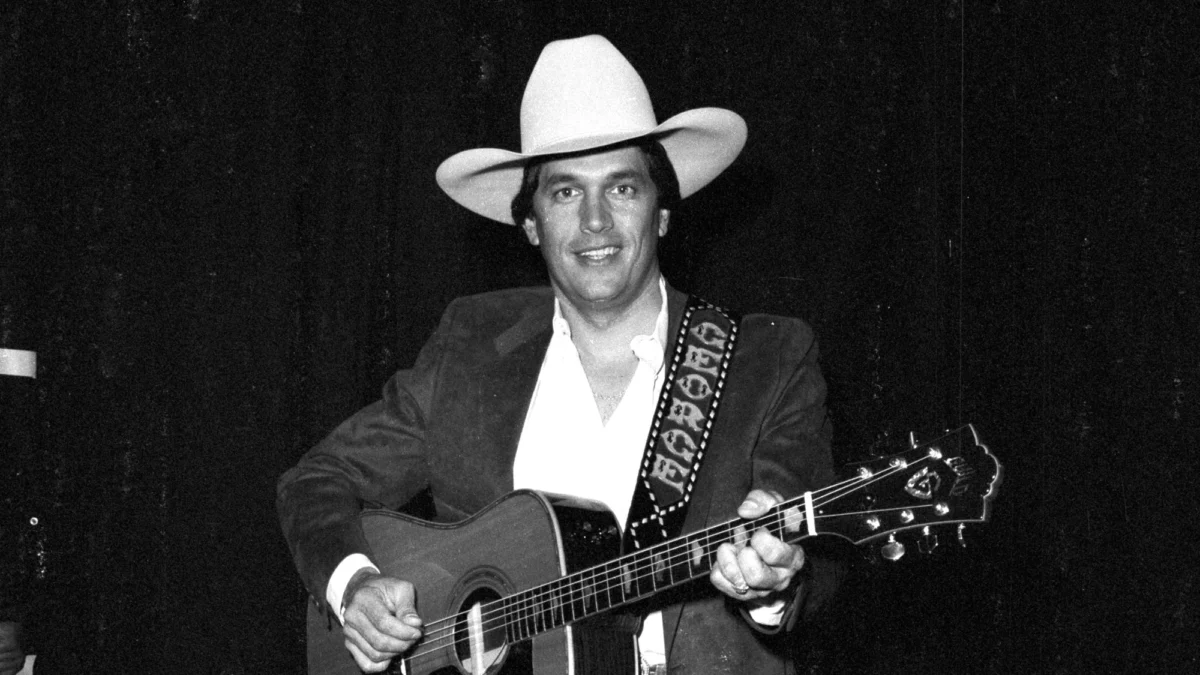
The year 1982 stands as a transformative milestone in the history of American country music, marking a stylistic intersection between the fading "Urban Cowboy" movement and the nascent "Neo-Traditionalist" revival. During this period, the genre underwent a significant evolution, balancing polished crossover appeal with a renewed commitment to its honky-tonk and bluegrass roots. Central to this cultural shift were three definitive tracks that not only dominated the airwaves in 1982 but also cemented the legacies of George Strait, Dolly Parton, and Kenny Rogers. These songs—"Fool Hearted Memory," "I Will Always Love You," and "Love Will Turn You Around"—represent the diverse sonic landscape of the early 1980s, a time when country music successfully navigated the transition from regional storytelling to global commercial dominance.
The Rise of the King George Strait and the Neo-Traditionalist Movement
In the early 1980s, the country music industry was searching for a sound that could distance itself from the heavily produced, pop-inflected "Nashville Sound" that had dominated the previous decade. George Strait emerged as the answer to this search. His 1982 single, "Fool Hearted Memory," served as a cornerstone for what would become known as the Neo-Traditionalist movement. Released as the lead single from his sophomore album, Strait From The Heart, the song introduced a wider audience to Strait’s signature blend of Western swing and traditional honky-tonk.
Written by Byron Hill and Blake Mevis, "Fool Hearted Memory" is a poignant exploration of nostalgia and the refusal to accept the end of a romance. The lyrics describe a man who remains trapped in the past, sitting "patiently here every night" so his memories can "fool him more." Musically, the track featured a prominent fiddle and steel guitar, instruments that had been somewhat sidelined during the pop-heavy late 1970s. This return to instrumentation that honored the genre’s heritage was a calculated risk that paid off immensely.
On August 28, 1982, "Fool Hearted Memory" reached the No. 1 spot on the Billboard Hot Country Singles chart. This achievement was historically significant, as it marked the first of George Strait’s 60 career No. 1 singles—a record that remains unsurpassed by any artist in any genre. Beyond the charts, the song gained additional visibility through its inclusion in the soundtrack for the film The Soldier. Strait himself made a cameo in the movie, performing the song as himself, which helped bridge the gap between traditional country music and mainstream cinematic culture. Industry analysts point to this moment as the beginning of Strait’s four-decade-long reign as the "King of Country," a career defined by consistency and a refusal to follow fleeting musical trends.
Dolly Parton and the Second Life of a Masterpiece
While George Strait was establishing a new era, Dolly Parton was proving the timelessness of her songwriting through the re-release of "I Will Always Love You." Though originally written and released in 1974 as a tribute to her mentor and professional partner Porter Wagoner, the 1982 version of the song achieved a different kind of cultural resonance. Parton re-recorded the track for the musical film The Best Little Whorehouse in Texas, in which she starred alongside Burt Reynolds.
The 1982 recording of "I Will Always Love You" is notable for its more cinematic arrangement compared to the 1974 folk-style original. The song’s narrative—a graceful, bittersweet farewell—struck a chord with audiences once again. The lyrics, "Good-bye, please don’t cry / We both know that I’m not / What you need," reflected Parton’s real-life decision to leave The Porter Wagoner Show to pursue a solo career, a move that was initially met with resistance from Wagoner. By 1982, the song had evolved from a personal professional statement into a universal anthem of love and letting go.
Statistically, Parton’s 1982 release achieved a rare feat in the music industry: it reached No. 1 on the country charts for the second time, eight years after its initial chart-topping run. This achievement underscored Parton’s unique ability to reinvent her work for new generations. The song’s legacy would only grow further a decade later when Whitney Houston recorded a soul-ballad version for the 1992 film The Bodyguard. Houston’s version became one of the best-selling singles of all time, but the foundation of its success remained Parton’s 1982 cinematic re-imagining, which proved that a truly great song transcends its original context and genre.
Kenny Rogers and the Architecture of the Crossover Hit
If George Strait represented the traditionalists and Dolly Parton represented the storytellers, Kenny Rogers represented the crossover power of country music in 1982. Rogers was already a global superstar by the early 80s, having successfully navigated the genres of rock, folk, and country. His 1982 hit, "Love Will Turn You Around," further solidified his status as a dominant force in adult contemporary and country music.
The song was the title track of Rogers’ 1982 album and served as the theme for the film Six Pack, in which Rogers played a race car driver who takes in a group of orphans. Co-written by Rogers, David Malloy, Thom Schuyler, and Even Stevens, the track featured a driving acoustic rhythm and an optimistic, philosophical message. The lyrics, "Well it’s your mind / That tricks you into leaving every time / Love will turn you around," spoke to a broad demographic, emphasizing the redemptive power of affection over the cynicism of the world.
"Love Will Turn You Around" was a massive commercial success, topping both the Billboard Hot Country Singles chart and the Adult Contemporary chart. It also reached No. 13 on the Billboard Hot 100, demonstrating Rogers’ ability to pull listeners from the pop world into the country fold. This crossover success was a hallmark of Rogers’ career; just one year later, he would team up with Dolly Parton for "Islands in the Stream," a song written by the Bee Gees that would become one of the most successful duets in music history. The success of "Love Will Turn You Around" in 1982 provided the momentum necessary for the pop-country explosion of the mid-80s.
Chronology of a Pivotal Year
The success of these three songs did not occur in a vacuum. A look at the 1982 country music timeline reveals a year of high-stakes releases and industry shifts:
- January–March 1982: The industry begins to pivot away from the "disco-country" sounds of the late 70s. Artists like Alabama and Ricky Skaggs begin to dominate the charts with a mix of harmony-rich group vocals and bluegrass-influenced picking.
- June 1982: Kenny Rogers releases "Love Will Turn You Around" in conjunction with the promotion of the film Six Pack. The song’s immediate success on multiple charts signals the continued viability of "country-pop."
- July 1982: Dolly Parton’s The Best Little Whorehouse in Texas premieres in theaters. The soundtrack, featuring the new version of "I Will Always Love You," becomes a massive seller, proving the power of the movie-musical tie-in.
- August 1982: George Strait’s "Fool Hearted Memory" hits No. 1. This is viewed by critics as the official arrival of the Neo-Traditionalist era, as Strait’s "no-frills" approach wins over both fans and critics.
- October 1982: The Country Music Association (CMA) Awards reflect this transitional period. While established stars like Willie Nelson win big (Nelson won Single of the Year for "Always on My Mind"), the nominations for younger artists like Strait indicate a changing of the guard.
Data and Statistical Impact
The commercial performance of country music in 1982 was bolstered by the "soundtrack phenomenon." All three songs discussed—"Fool Hearted Memory," "I Will Always Love You," and "Love Will Turn You Around"—were tied to major motion pictures. This synergy between Hollywood and Nashville allowed country music to reach urban audiences who might not have tuned into country radio stations.
According to Billboard data from 1982, the country charts saw an average of 45-50 songs reach the No. 1 spot annually during this era, as the "turnover" rate was high. However, the longevity of the 1982 hits was exceptional. "Love Will Turn You Around" spent several weeks at the top of the charts and was eventually named the No. 1 country song of the year by Billboard. Furthermore, the album Strait From The Heart was certified Platinum, an impressive feat for a traditional country artist at the time, signaling that the "old" sound was once again commercially lucrative.
Broader Implications and Genre Legacy
The lasting impact of the 1982 country music class can be seen in how the genre is structured today. George Strait’s success with "Fool Hearted Memory" paved the way for future legends like Randy Travis, Alan Jackson, and eventually Jon Pardi, who sought to keep the "roots" of country alive. Strait’s career trajectory—focused on the song and the singer rather than flamboyant stage shows—became the blueprint for the "modern traditionalist."
Dolly Parton’s 1982 success demonstrated the immense financial and cultural value of a well-managed song catalog. By re-recording her own work for a film, she retained control of the narrative and reached a new demographic. This savvy business approach is now standard practice for major artists looking to sustain long-term relevance.
Kenny Rogers’ crossover success in 1982 proved that country music could be "big tent" music. By blending country sensibilities with adult contemporary production, he expanded the genre’s audience to include suburban listeners and international fans. This expansion was essential for the eventual stadium-filling success of artists like Garth Brooks in the 1990s.
In retrospect, 1982 was a year where country music looked both backward to its heritage and forward to its global future. The songs of Strait, Parton, and Rogers from that year remain staples of classic country radio, serving as a reminder of a period when the genre was confident enough to embrace its past while aggressively pursuing its future. For the "80s kids" who grew up with these tunes, they are more than just hits; they are the soundtrack to a decade where country music truly came of age.
