

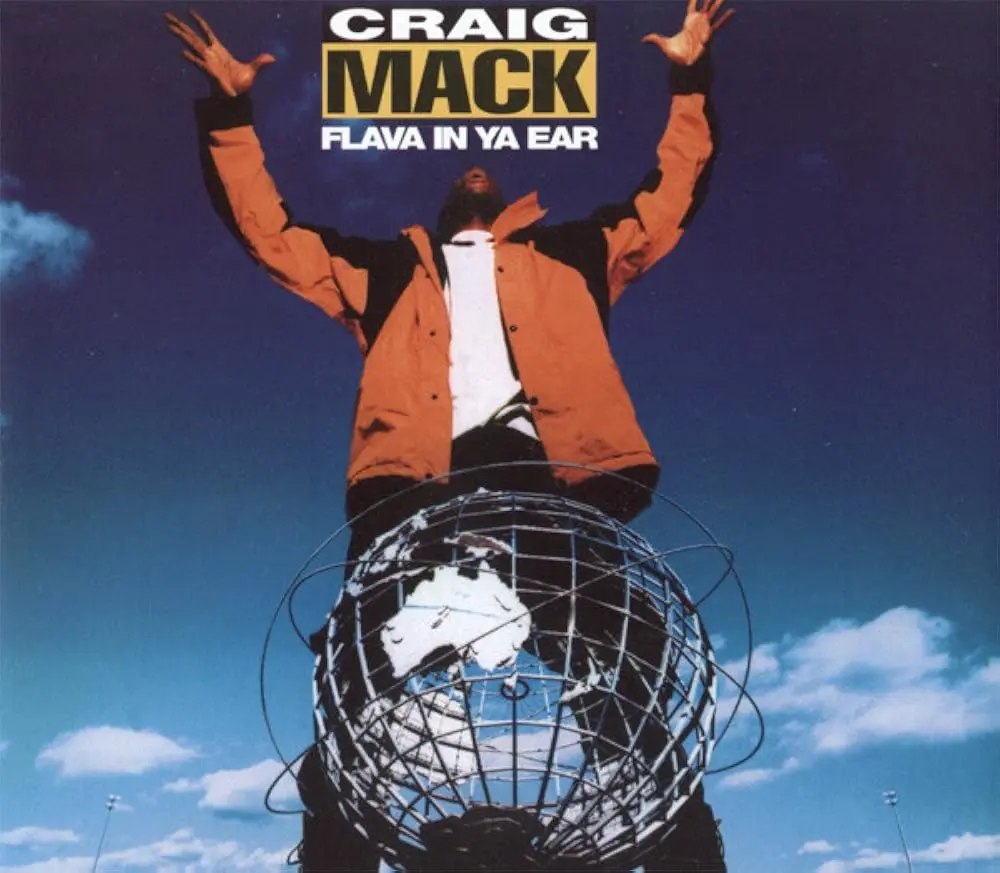
The foundational beat of Craig Mack’s seminal 1994 debut single, "Flava In Ya Ear," a track widely recognized as the inaugural release on Sean "Puffy" Combs’ fledgling Bad Boy Records, has had its primary sample source identified after nearly three decades. This revelation, spearheaded by a dedicated community of music enthusiasts and sample archaeologists, sheds new light on the intricate artistry of one of hip-hop’s most iconic productions and underscores the enduring quest to decode the genre’s sonic DNA.
The Genesis of a Hip-Hop Cornerstone: "Flava In Ya Ear"
Released in the pivotal year of 1994, "Flava In Ya Ear" by the late Long Island rapper Craig Mack quickly cemented its status as a quintessential piece of ’90s New York rap expressionism. At a time when East Coast hip-hop was experiencing a renaissance, Mack’s distinctive flow and the track’s minimalist yet potent sonic landscape captured the zeitgeist. Produced by the legendary Easy Mo Bee, known for his work with artists like The Notorious B.I.G. and LL Cool J, the single featured a "dusty boom-bap beat" that immediately resonated with audiences. Its commercial success was swift and significant, propelling it to number nine on the Billboard Hot 100 chart, a remarkable achievement for a debut hip-hop single and a testament to its broad crossover appeal. For many who came of age in the mid-nineties, the track was ubiquitous, its infectious rhythm and memorable hooks permeating airwaves and cultural consciousness.
Craig Mack, born Craig Omari Mack in 1970, had been honing his craft for years before signing with Bad Boy. His signing, alongside The Notorious B.I.G., marked the initial roster of what would become one of the most dominant record labels in music history. "Flava In Ya Ear" not only launched Mack’s career but also provided a critical springboard for Bad Boy Records, establishing its sonic aesthetic and commercial viability from day one. The single’s success was crucial in laying the groundwork for the label’s subsequent meteoric rise, which would see it dominate the charts throughout the late 1990s with a distinctive blend of street credibility and pop sensibility.
The Iconic Remix and Its Enduring Cultural Footprint
While the original version of "Flava In Ya Ear" was a substantial hit, its cultural footprint was indelibly expanded by the release of its posse-cut remix. This remix is arguably even better-known than the original, serving as a landmark moment in hip-hop history. It featured an unprecedented lineup of talent, including The Notorious B.I.G., LL Cool J, Busta Rhymes, and Rampage.
The remix is particularly celebrated for The Notorious B.I.G.’s opening verse, which is often cited as one of the greatest and most quotable in rap history. Biggie’s lyrical prowess, commanding delivery, and intricate wordplay on this track were instrumental in his ascent to superstardom, solidifying his reputation as a formidable force in the rap landscape even before the release of his debut album, "Ready to Die," later that year. LL Cool J, a veteran artist, showcased his enduring relevance, while Busta Rhymes delivered his characteristic energetic and dynamic flow, further cementing his unique style. Rampage, a member of the Flipmode Squad, also contributed a memorable verse, adding another layer to the remix’s rich tapestry.
The accompanying music video, directed by the visionary Hype Williams, is a key visual document of the era. Known for his groundbreaking aesthetics and cinematic approach, Williams crafted a video that perfectly encapsulated the raw energy and swagger of ’90s hip-hop. Its stark black-and-white visuals, dynamic camera work, and iconic imagery featuring the assembled rap luminaries made it an instant classic and a staple on music television networks like MTV and BET. This remix, both audibly and visually, became a defining moment, influencing countless artists and cementing the track’s status as an undisputed classic.
Craig Mack’s career, despite the monumental success of "Flava In Ya Ear," did not reach the same heights as some of his peers. He released one more album, "Operation: Get Down," in 1997, before largely stepping away from the mainstream music scene. He passed away in March 2018 at the age of 46, leaving "Flava In Ya Ear" as his singular and defining legacy, a powerful reminder of his impact on hip-hop.
The Enigma of Easy Mo Bee’s Production: A Masterclass in Simplicity
At the heart of "Flava In Ya Ear" lies Easy Mo Bee’s deceptively simple yet profoundly effective beat. For years, listeners and producers alike speculated about the origin of its distinctive, almost haunting two-note riff, often perceiving it as a detuned horn sample. However, Easy Mo Bee himself clarified the genesis of this central sonic element in a 2014 YouTube interview, offering a fascinating glimpse into his creative process.
According to Mo Bee, the beat was conceived spontaneously, almost effortlessly. He recounted making the beat "in his underwear after waking up one morning," utilizing a stack of records he had acquired the day prior. The pivotal revelation was that the signature riff was not a horn at all, but "a guitar, but with a lot of reverb, a huge throw of reverb." He emphasized its critical role: "But it carries the song. You would think that you need all of these big, busy elements for a melody to carry the song. That, those two notes, that was the melody. That’s what carried the song, and everything else was built around that."
This statement underscores the genius of Easy Mo Bee’s approach: to distill a complex musical idea into its most fundamental form, relying on texture, rhythm, and a minimalist melodic fragment to create an indelible hook. This method was characteristic of many ’90s hip-hop producers who were masters of sampling, often transforming obscure sonic snippets into entirely new musical landscapes. During this era, producers frequently took meticulous care to disguise their samples, rendering them difficult to trace. This practice served multiple purposes: it was a creative challenge, a signature of artistic ingenuity, and a practical measure to circumvent legal complexities surrounding sample clearances, which were becoming increasingly stringent and costly. The ability to chop, filter, and manipulate samples to the point of unrecognizability was considered a hallmark of a skilled producer.
The Breakthrough Discovery: Unmasking the "Flava In Ya Ear" Sample
For decades, the specific source of those two guitar notes remained an elusive mystery, a coveted secret among music aficionados and producers. The challenge lay not just in identifying the instrument but in pinpointing the exact recording from which those heavily processed notes originated. This long-standing enigma has now been resolved by a dedicated online community.
Recently, a YouTuber operating under the moniker ShakerMaker has been disseminating discoveries from the Sample Sanctuary Discord, a collaborative online hub where music enthusiasts pool their knowledge and advanced listening skills to identify previously unknown samples. It was within this community that the source of the "Flava In Ya Ear" beat was reportedly unearthed.
According to these intrepid music detectives, the iconic riff is derived from the jazz guitarist Melvin Sparks’ 1971 version of the 1932 Broadway standard "Alone Together." The discovery specifies that the two notes are isolated from the middle of a guitar solo within Sparks’ recording. These notes were then subjected to Easy Mo Bee’s masterful manipulation: slowed down significantly and "blasted with effects," primarily heavy reverb, until they were "completely unrecognizable" from their original context. This meticulous process of deconstruction and recontextualization is a hallmark of sophisticated sampling, transforming an existing musical fragment into something entirely new and distinctive.
The Art and Science of Sample Identification
The identification of the "Flava In Ya Ear" sample exemplifies the burgeoning field of sample archaeology, a pursuit driven by passionate individuals leveraging technology and collective intelligence. This process often involves extensive listening, spectral analysis, and cross-referencing vast musical databases. The ability to discern a slowed-down, heavily effected guitar note from a 1971 jazz recording, and connect it to a 1994 hip-hop classic, speaks to an extraordinary level of aural acuity and dedication.
The significance of such discoveries extends beyond mere trivia. For music historians, identifying samples provides crucial insights into the creative lineages and influences that shape musical genres. It illuminates the often-hidden dialogue between different musical eras and styles, demonstrating how hip-hop, in particular, built upon and transformed the foundations of jazz, funk, soul, and other genres. For producers and aspiring musicians, these revelations offer invaluable lessons in sound design, demonstrating how seemingly simple elements, when creatively manipulated, can become the backbone of an enduring hit.
The methods employed by communities like the Sample Sanctuary Discord represent a contemporary evolution of music scholarship. Unlike traditional academic research, these online groups harness the power of distributed knowledge and specialized listening skills, collectively tackling mysteries that might stump individual experts. The shared passion for music and the collaborative spirit drive these investigations, transforming what was once a solitary pursuit into a communal endeavor.
Broader Implications for Musicology and Fandom
The unveiling of the "Flava In Ya Ear" sample holds broader implications for how we understand and appreciate music. It reinforces the idea that music creation is often a conversation across time and genre, with hip-hop acting as a powerful crucible for sonic alchemy. The discovery reconnects Craig Mack’s track not just to Easy Mo Bee’s genius, but also to the legacy of Melvin Sparks, a jazz guitarist whose work now finds an unexpected second life within a vastly different musical context. This cross-pollination enriches the narratives of both genres, demonstrating the interconnectedness of musical traditions.
Moreover, these ongoing discoveries highlight the value of detailed sonic analysis in an age of increasingly accessible music production tools. While modern sampling often involves more transparent usage and clearer attribution, the "golden era" of hip-hop was characterized by a more enigmatic approach to sample sourcing. Unearthing these hidden gems provides a tangible link to that era’s creative ethos, fostering a deeper appreciation for the ingenuity of its pioneers.
The Sample Sanctuary Discord’s prowess is not limited to hip-hop. The same group reportedly recently identified a previously undiscovered sample from Stardust’s 1998 house classic "Music Sounds Better With You," underscoring their broad expertise across genres. Such findings contribute to a more complete musical tapestry, offering new layers of understanding for iconic tracks across the spectrum of popular music.
Legacy and the Future of Sample Unveiling
Craig Mack’s "Flava In Ya Ear" remains a powerful testament to a pivotal moment in hip-hop history. Its enduring appeal lies not only in Mack’s performance but also in Easy Mo Bee’s masterful production, now further demystified by the identification of its core sample. This discovery adds another chapter to the song’s rich narrative, inviting new appreciation for the intricate artistry involved in its creation.
As technology advances and online communities continue to thrive, the quest to uncover the hidden sonic components of classic tracks is likely to persist. Each successful identification not only solves a long-standing mystery but also enriches our collective understanding of music history, celebrating the unsung heroes of sound manipulation and the timeless appeal of musical innovation. The legacy of "Flava In Ya Ear" now includes not just its impact on a generation, but also its role as a subject in the ongoing, fascinating pursuit of musical truth, connecting the past to the present through the intricate art of the sample.
