

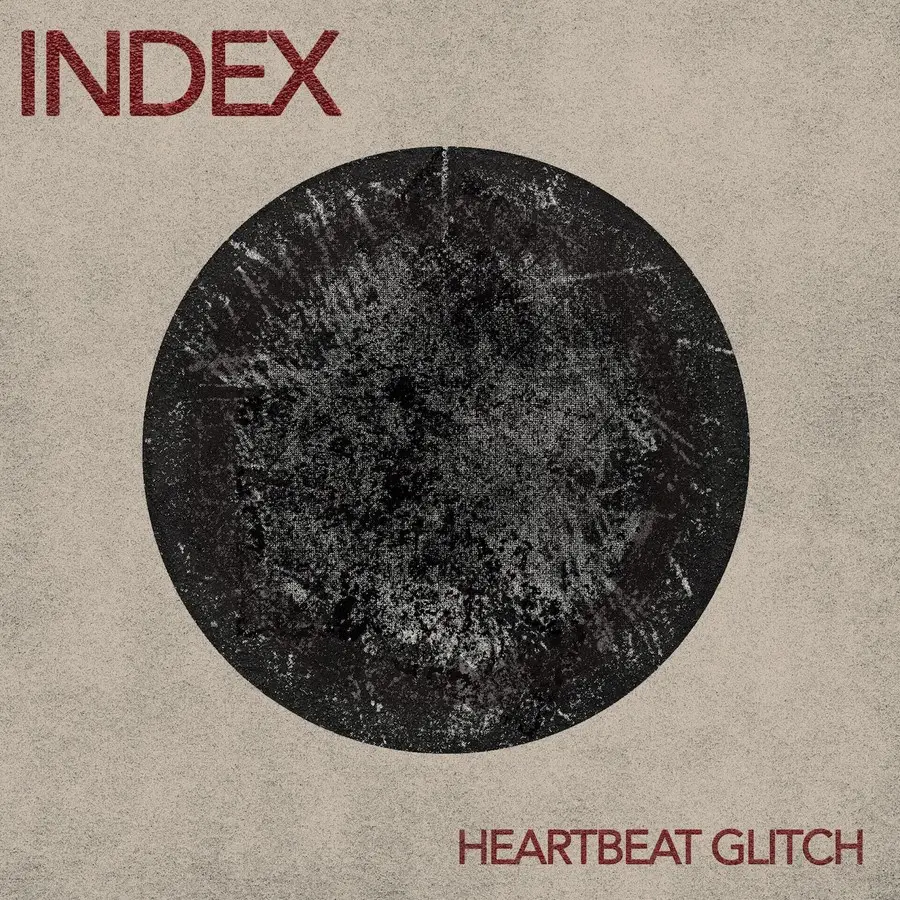
The burgeoning landscape of contemporary heavy music has been further enriched by the release of "Heartbeat Glitch," a potent new track from Index, the critically acclaimed electronic-inflected hardcore punk band comprised of former Control Top members Alan Creedon and Alex Lichtenauer. This latest offering emerges from the same intensive recording sessions that yielded their highly anticipated debut album, Vis Inertiae, which saw its official release in September. The LP, a compelling fusion of raw aggression and intricate electronic textures, was meticulously crafted under the guidance of Arthur Rizk, a producer whose reputation for sculpting some of the most impactful sounds in the heavy music spectrum—from Prurient’s abrasive industrial noise to Power Trip’s relentless thrash—has made him a sought-after collaborator. Recording took place at Corpus studio, the creative hub helmed by the influential New York City hardcore band Show Me The Body, providing an ideal crucible for Index’s innovative sound.
The Genesis of Index: From Control Top to a New Sonic Frontier
The formation of Index represents a significant evolution for its core members, Alan Creedon and Alex Lichtenauer, who previously made their mark as vital components of the New York-based noise-rock outfit Control Top. Active through the late 2010s, Control Top garnered attention for their visceral, often dissonant blend of punk urgency and post-punk experimentation, releasing works like Covert Plants (2018) and Covert Disguise (2019). While rooted in similar aggressive territories, the transition to Index signals a deliberate push into more overtly electronic realms, integrating synthesizers, drum machines, and programmed elements alongside traditional hardcore instrumentation. This shift was not merely an aesthetic choice but a foundational one, aiming to carve out a distinct identity that transcends conventional genre classifications. The genesis of Index was reportedly driven by a desire to explore the dynamic interplay between the brute force of hardcore and the rhythmic complexities and atmospheric depth offered by electronic music, an ambition that Vis Inertiae unequivocally demonstrates.
A Chronology of Vis Inertiae and Its Unveiling
The journey to Vis Inertiae‘s public debut was a carefully orchestrated sequence of announcements and strategic track releases. While the precise date of Index’s initial formation remains private, the band’s existence and the impending arrival of their debut album began to generate buzz within specialized music communities earlier in the year. The official announcement of Vis Inertiae typically involves revealing album artwork, tracklists, and pre-order information, often accompanied by a lead single to offer listeners a first taste of the new material. Prior to the album’s full release in September, the track "Fractured" was made available, serving as a powerful precursor to the album’s thematic and sonic scope. This initial single provided a clear indication of Index’s direction, showcasing the band’s ability to weave intricate electronic soundscapes into a framework of unyielding hardcore punk. The subsequent release of Vis Inertiae in September was met with anticipation from fans familiar with Creedon and Lichtenauer’s previous work, as well as new listeners drawn to the album’s innovative premise. "Heartbeat Glitch" now follows, not as a pre-album teaser, but as a highlighted track from the album’s core, signaling its enduring impact and the band’s continued commitment to promoting its diverse sonic palette post-release. This staggered approach allows for prolonged engagement with the album’s multifaceted content.
"Heartbeat Glitch": An Anatomical Breakdown of Sound
"Heartbeat Glitch" stands out within Vis Inertiae as a particularly potent example of Index’s core philosophy. Described as "bashed-out," the track delivers a relentless assault of percussion and distorted instrumentation, yet it is simultaneously permeated by a meticulous, almost surgical precision in its electronic elements. The title itself, "Heartbeat Glitch," suggests a rhythmic irregularity, an organic pulse disrupted by digital interference, which perfectly encapsulates the band’s sound. Listeners are confronted with a dynamic tension: the primal energy of hardcore punk channeled through a lens of modern electronic production. The track’s rhythmic foundation is complex, employing what Creedon refers to as "extra little hi-hat glitches and hybrid kits happening with weird layering." This is not merely cosmetic addition but integral to the track’s structure, creating a sense of controlled chaos. The interaction between live drumming (or samples emulating it) and electronic programming generates a polyrhythmic texture that keeps the listener perpetually on edge, demonstrating a sophisticated understanding of percussive dynamics that goes beyond standard punk rock drumming.
Arthur Rizk: The Architect of Aggression and Innovation
A pivotal figure in shaping the sound of Vis Inertiae and, by extension, "Heartbeat Glitch," is producer Arthur Rizk. His resume reads like a who’s who of contemporary heavy music, boasting credits for seminal albums by bands such as Prurient, Power Trip, Code Orange, Pissed Jeans, Ghostemane, Spiritbox, and Eternal Champion. Rizk has carved a niche for himself by consistently delivering recordings that possess immense power and clarity, often capturing the raw ferocity of live performance while simultaneously refining it for a studio context. His work is characterized by a deep understanding of sonic weight, aggressive tonality, and the ability to elevate a band’s inherent strengths.
Creedon’s recollection of Rizk’s initial directive – "’We’ve got to accent the ’90s breakbeat Aphex Twin vibe of your band’" – provides critical insight into the collaborative process. This statement immediately highlights Rizk’s discerning ear and his capacity to identify and amplify a band’s unique electronic undercurrents. For Rizk, the goal was not to dilute Index’s hardcore intensity with electronics, but rather to use electronic elements as an accelerant and a textural enhancement. The "Aphex Twin vibe" reference is particularly illuminating. Richard D. James, the artist behind Aphex Twin, is a legendary figure in electronic music, widely credited with pioneering Intelligent Dance Music (IDM) and pushing the boundaries of experimental electronic production in the 1990s. His work is characterized by intricate, often frantic breakbeats, unconventional sound design, complex rhythmic programming, and a seamless blend of abrasive and ethereal textures. Applying this aesthetic to a hardcore band means injecting a level of rhythmic complexity and sonic layering rarely found in the genre. It suggests a departure from straightforward punk drumming towards more fragmented, glitchy, and syncopated rhythms, along with the strategic use of synthesized textures and effects that can either complement or deliberately clash with the guitars and vocals.
The "hybrid kits" and "weird layering" mentioned by Creedon are direct manifestations of this vision. This could involve combining acoustic drum sounds with electronic samples, layering multiple percussive tracks, or processing traditional drum sounds with effects that mimic electronic glitches. The result is a sound that feels simultaneously organic and synthetic, a controlled chaos that enhances the band’s aggressive core without overshadowing it. Rizk’s expertise in achieving this delicate balance is evident throughout Vis Inertiae, positioning him not just as a producer but as a co-conspirator in Index’s sonic exploration.
The Corpus Studio Environment: A Crucible for Innovation
The choice of Corpus studio for recording Vis Inertiae is also significant. Located in New York City, Corpus is the creative space of Show Me The Body, a band renowned for its own genre-defying approach to hardcore, incorporating banjos, synthesizers, and industrial elements into their visceral sound. Recording in a studio run by artists with a similar experimental ethos likely fostered an environment conducive to Index’s boundary-pushing vision. Such a space often comes equipped with not only professional recording gear but also a collection of unique instruments, effects, and a shared understanding of how to capture raw, unpolished energy alongside refined sonic details. This symbiotic relationship between artist and environment undoubtedly contributed to the distinct character of Vis Inertiae.
Hardcore’s Electronic Evolution: A Broader Context
Index’s blend of hardcore punk and electronic music is not an isolated phenomenon but rather a prominent example of a continuing trend within heavy music. The integration of electronic elements into aggressive genres has a rich, albeit sometimes controversial, history. Early industrial bands like Throbbing Gristle and Einstürzende Neubauten paved the way by incorporating noise, tape loops, and unconventional instruments. The 1990s saw the rise of industrial metal (Ministry, Godflesh, Fear Factory) and later, digital hardcore (Atari Teenage Riot, Alec Empire), which explicitly married punk rock aggression with fast, distorted electronic beats and political urgency. Even within the broader metalcore and nu-metal movements, electronic samples and programming found their way into heavy compositions.
In the contemporary landscape, bands like Code Orange have extensively integrated industrial and electronic textures into their Grammy-nominated hardcore sound, while groups such as HEALTH, Street Sects, and Youth Code have explored the darker, more abrasive intersections of industrial, noise, and electronic body music with punk sensibilities. Index positions itself firmly within this lineage, yet carves out its own unique space by emphasizing the intricate breakbeat elements championed by Aphex Twin within a decidedly hardcore punk framework. This approach differentiates them from acts that might use electronics primarily for atmosphere or brutal rhythmic repetition, instead focusing on complex, often disorienting rhythmic structures that challenge the listener while maintaining a visceral impact. The implication of this evolution is clear: heavy music continues to be a fertile ground for experimentation, and the perceived barriers between genres are increasingly dissolving, leading to richer, more complex sonic experiences. Index’s success with Vis Inertiae and tracks like "Heartbeat Glitch" serves as a testament to the vitality of this ongoing fusion.
Broader Impact and Implications for Index’s Trajectory
The release of "Heartbeat Glitch" as a focused track following the September debut of Vis Inertiae underscores the album’s critical depth and the band’s desire to highlight its diverse offerings. For Index, this strategy likely aims to sustain momentum, drawing new listeners who might discover the album through this particular track. The positive reception surrounding the album, inferred from the attention it has garnered from influential music outlets, suggests that Index is successfully navigating the challenging terrain of genre innovation.
The implications for Index’s future trajectory are substantial. Vis Inertiae establishes the band as a compelling new voice in heavy music, capable of both brutal intensity and sophisticated electronic artistry. This debut positions them for potential touring opportunities, allowing them to translate their intricate studio sound into a live performance context, which often involves a unique blend of live instrumentation and electronic playback. Furthermore, the album’s innovative approach could influence other artists within the hardcore and electronic scenes, encouraging further experimentation and cross-pollination of ideas. By demonstrating that a "hardcore band with one foot in electronic music" can achieve both artistic integrity and critical acclaim, Index contributes to the ongoing expansion of what heavy music can be. Their work signals a readiness among audiences for sounds that defy easy categorization, rewarding bands that are bold enough to push creative boundaries.
In conclusion, "Heartbeat Glitch" is more than just another track from Vis Inertiae; it is a definitive statement of intent from Index. It embodies the band’s meticulous craftsmanship, their willingness to fuse seemingly disparate genres, and the transformative influence of producers like Arthur Rizk. As Index continues to unveil the layers of Vis Inertiae, they solidify their standing as a crucial new entity, driving the evolution of heavy music into thrilling and unpredictable electronic territories.
